
ᐅ Mortaring a Basement Wall – Is It Worthwhile, or Is It Better to Just Apply Lime Plaster?
Created on: 17 Jul 2025 12:22
J
JankraftHello,
I have two basement walls where the plaster is very crumbly, meaning the first approximately 10mm (0.4 inches) is quite loose.
On the northwest wall, there is slightly more moisture coming in from outside; at least, a hydraulic lime mortar was applied at the bottom to prevent water ingress. Since then, moisture has been slowly rising from the bottom upwards. In one spot, there was even mold forming temporarily near the ceiling edge.
Therefore, I am wondering whether I should first seal this wall with hydraulic lime mortar, or if lime plaster would have the same effect. The wall on this side is about 70-80cm (28-31 inches) thick. Structurally, it probably hasn’t made much difference that around 10mm (0.4 inches) of the wall has come loose after possibly 40 years. However, I question whether lime plaster is as permeable to moisture as hydraulic lime mortar since, as mentioned, I believe the moisture has slightly moved towards the ceiling.
Is the extra effort of using mortar worthwhile? I don’t intend to keep the house; I want to sell it this year. However, I don’t want to appear unreliable either.
Aesthetically, it looks suboptimal without lime plaster on the mortar, but that can probably be overlooked if necessary.
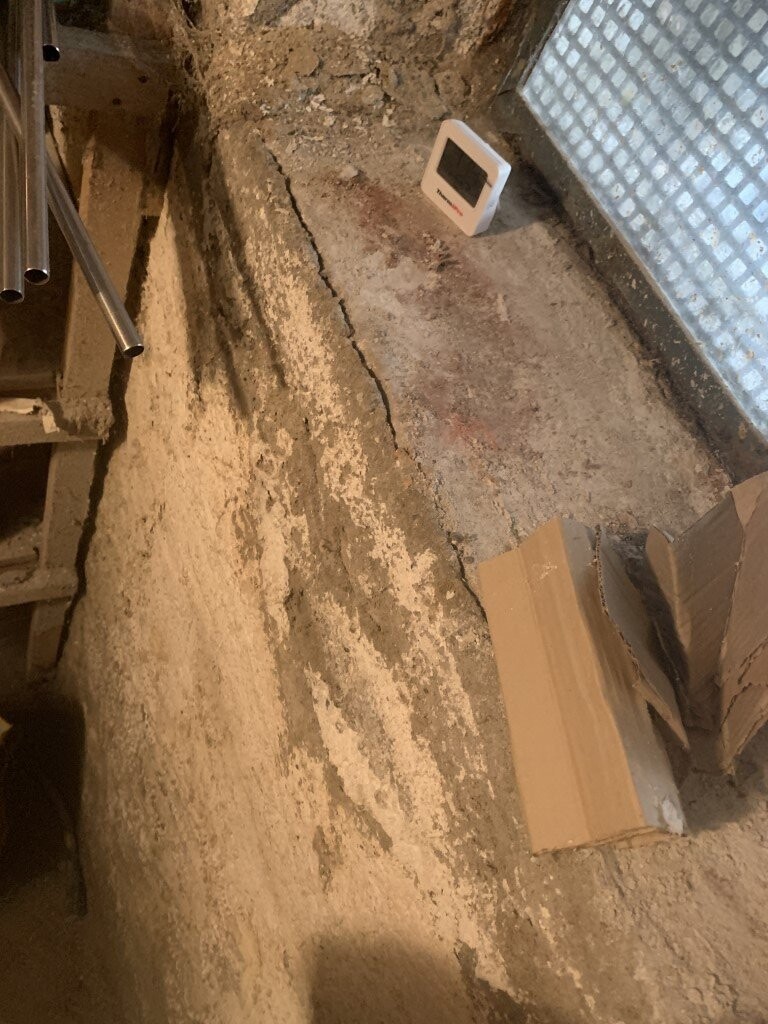
In one spot below a window, a thicker layer of about 2cm (0.8 inches) has come loose, and there is a crack there because a sack weighing about 20kg (44 pounds) was placed there for several years.
At another basement window, a hole was drilled to pass a garden hose through. A crack formed there (see photo).
The other crumbly wall is also on this side of the house, but on the south side, directly opposite. There is a fire-resistant wall behind it. The other walls in this basement do not crumble like this; their plaster is still intact.
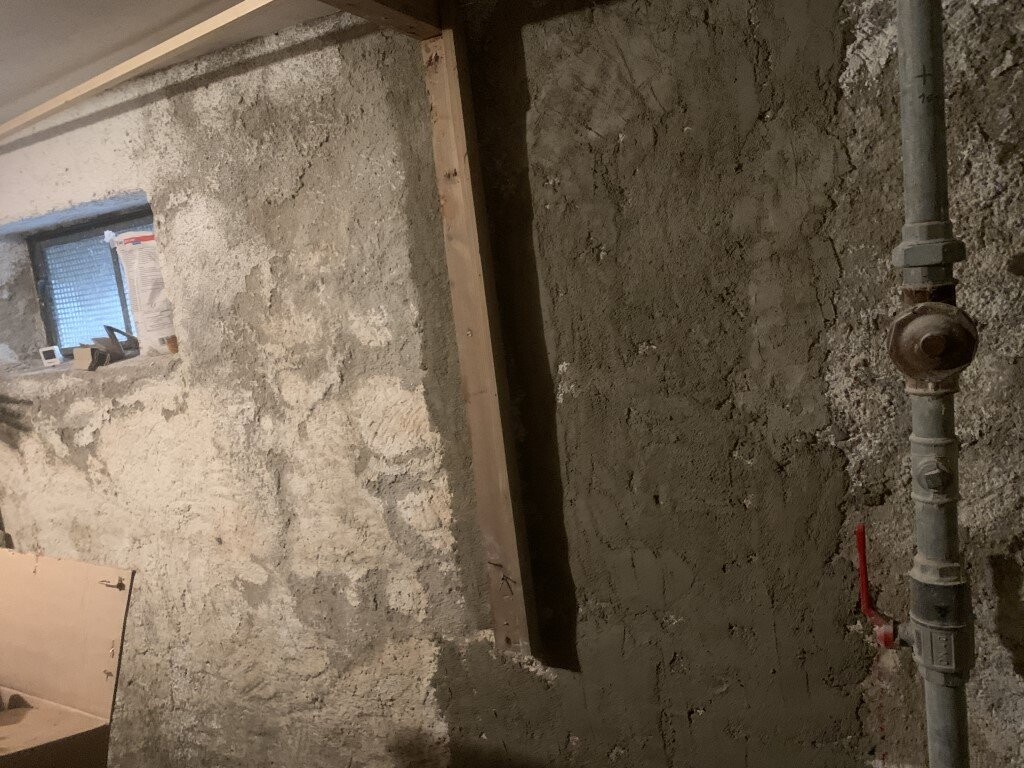

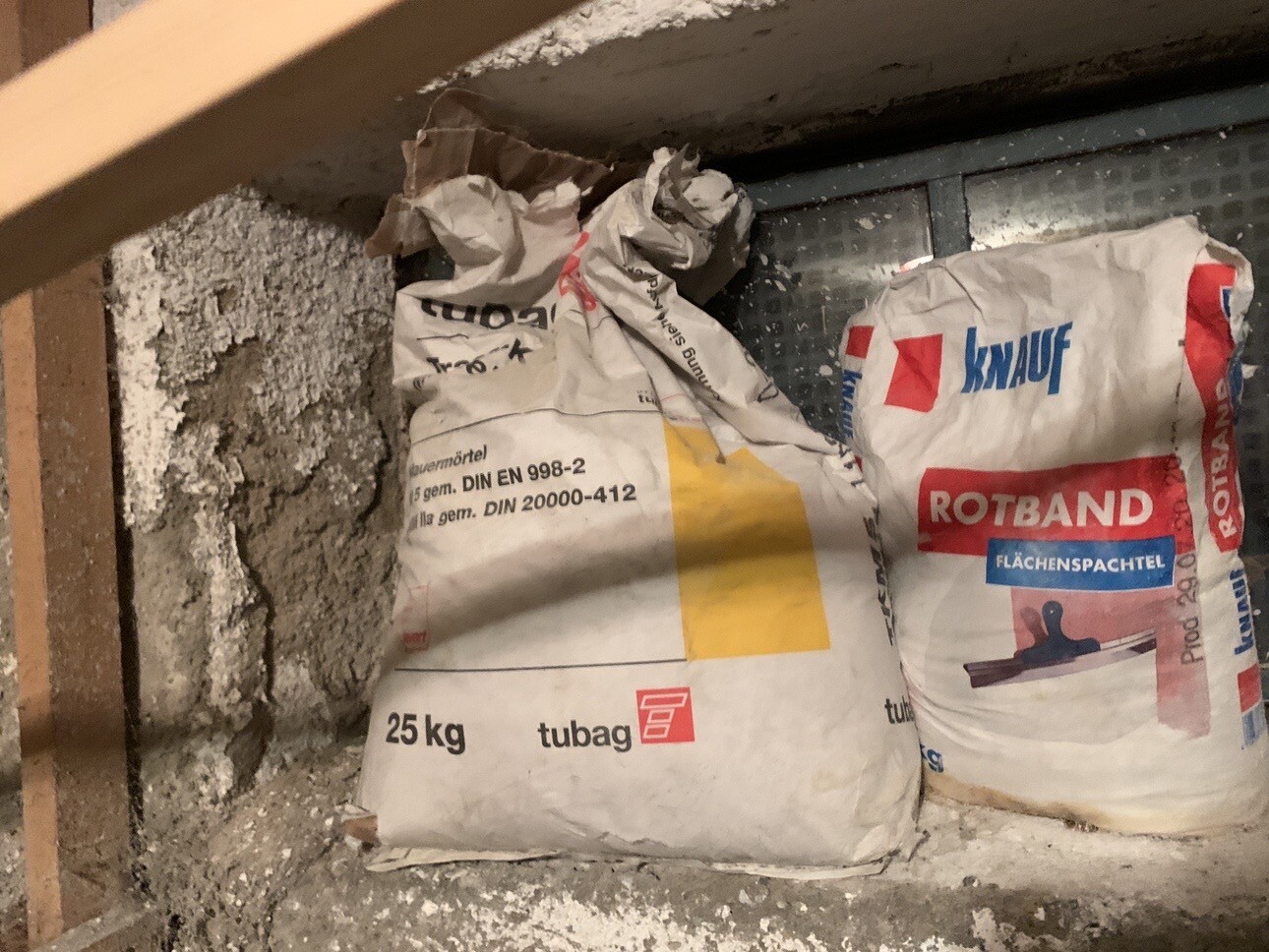

I have two basement walls where the plaster is very crumbly, meaning the first approximately 10mm (0.4 inches) is quite loose.
On the northwest wall, there is slightly more moisture coming in from outside; at least, a hydraulic lime mortar was applied at the bottom to prevent water ingress. Since then, moisture has been slowly rising from the bottom upwards. In one spot, there was even mold forming temporarily near the ceiling edge.
Therefore, I am wondering whether I should first seal this wall with hydraulic lime mortar, or if lime plaster would have the same effect. The wall on this side is about 70-80cm (28-31 inches) thick. Structurally, it probably hasn’t made much difference that around 10mm (0.4 inches) of the wall has come loose after possibly 40 years. However, I question whether lime plaster is as permeable to moisture as hydraulic lime mortar since, as mentioned, I believe the moisture has slightly moved towards the ceiling.
Is the extra effort of using mortar worthwhile? I don’t intend to keep the house; I want to sell it this year. However, I don’t want to appear unreliable either.
Aesthetically, it looks suboptimal without lime plaster on the mortar, but that can probably be overlooked if necessary.
In one spot below a window, a thicker layer of about 2cm (0.8 inches) has come loose, and there is a crack there because a sack weighing about 20kg (44 pounds) was placed there for several years.
At another basement window, a hole was drilled to pass a garden hose through. A crack formed there (see photo).
The other crumbly wall is also on this side of the house, but on the south side, directly opposite. There is a fire-resistant wall behind it. The other walls in this basement do not crumble like this; their plaster is still intact.
Hi,
From your description, many signs indicate that the moisture issue is caused or worsened by rising damp or lateral water penetration. Hydraulic lime mortar is indeed more resistant to moisture compared to standard lime plaster and is traditionally used for sealing and preventing rising damp. On the other hand, lime plaster remains significantly more vapor-permeable, allowing moisture to diffuse through.
Your idea to keep additional effort to a minimum is completely understandable, especially if you plan to hand over the house soon. From this perspective, there is no objection to repairing the damaged areas specifically with hydraulic lime mortar and perhaps applying a thin layer of lime plaster on top for a more uniform appearance, if the look is not an issue. This approach does not compromise the structural integrity of the wall, especially in thick masonry. A careful “cosmetic” repair will also not be considered unprofessional, as long as the moisture source is properly controlled and no serious hidden damage is concealed.
Good luck!
From your description, many signs indicate that the moisture issue is caused or worsened by rising damp or lateral water penetration. Hydraulic lime mortar is indeed more resistant to moisture compared to standard lime plaster and is traditionally used for sealing and preventing rising damp. On the other hand, lime plaster remains significantly more vapor-permeable, allowing moisture to diffuse through.
Your idea to keep additional effort to a minimum is completely understandable, especially if you plan to hand over the house soon. From this perspective, there is no objection to repairing the damaged areas specifically with hydraulic lime mortar and perhaps applying a thin layer of lime plaster on top for a more uniform appearance, if the look is not an issue. This approach does not compromise the structural integrity of the wall, especially in thick masonry. A careful “cosmetic” repair will also not be considered unprofessional, as long as the moisture source is properly controlled and no serious hidden damage is concealed.
Good luck!
Similar topics