
F
freezy28029 Jul 2023 17:56Hello,
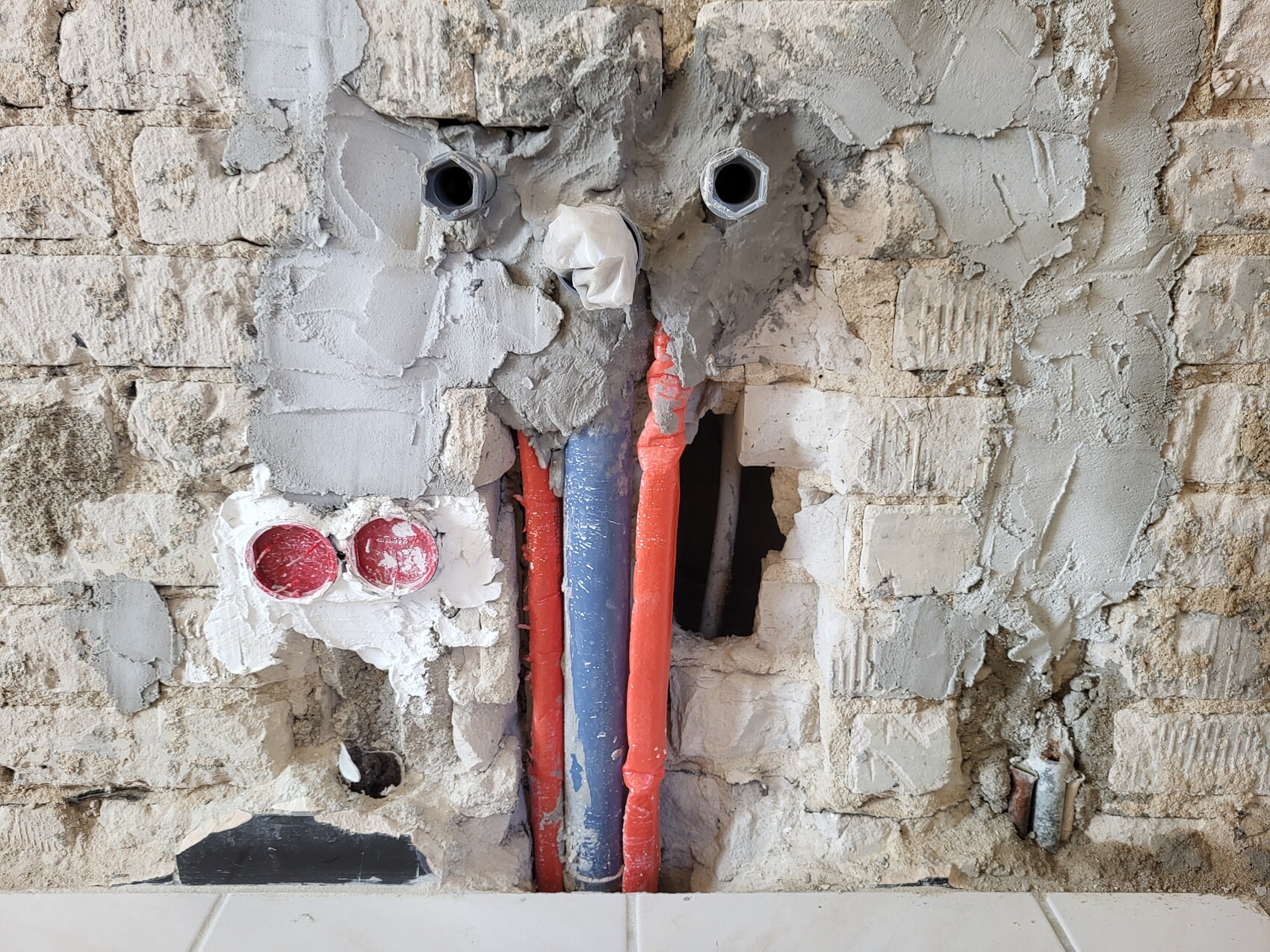
I want to plaster over the water connection in the kitchen, but I’m not entirely sure how to do it.
First, I plan to close the hole leading to the chimney shaft (on the right in the picture) with a brick and then fill it with lime-cement plaster. Is that the correct approach?
After that, should I simply plaster over the pipes so that only the openings remain visible at the top? Or should I install some kind of prefabricated panel with the appropriate openings as a cover?
How should I proceed with the old drain pipe (on the left in the picture)?
Thank you in advance for your advice and best regards!
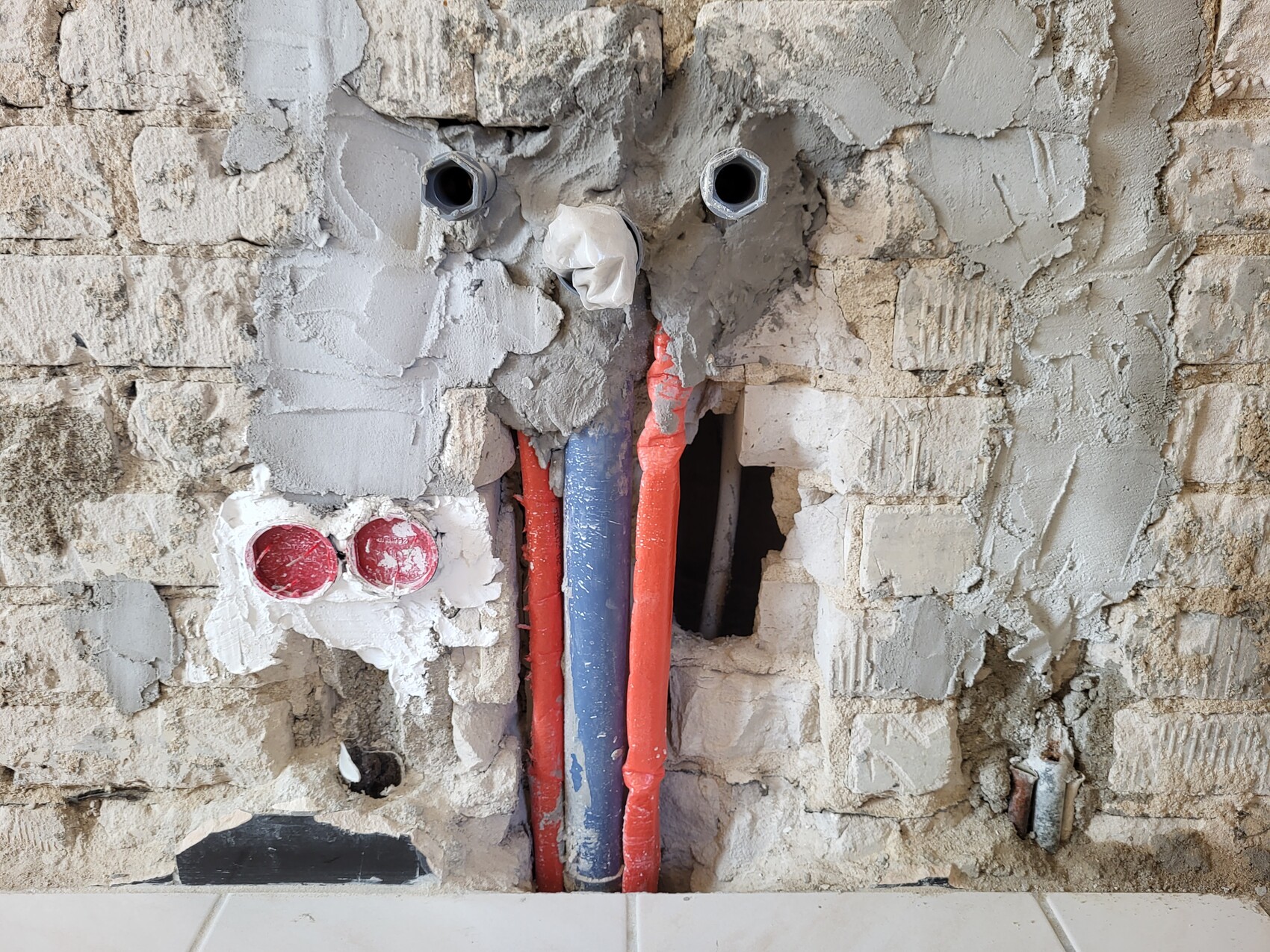
I want to plaster over the water connection in the kitchen, but I’m not entirely sure how to do it.
First, I plan to close the hole leading to the chimney shaft (on the right in the picture) with a brick and then fill it with lime-cement plaster. Is that the correct approach?
After that, should I simply plaster over the pipes so that only the openings remain visible at the top? Or should I install some kind of prefabricated panel with the appropriate openings as a cover?
How should I proceed with the old drain pipe (on the left in the picture)?
Thank you in advance for your advice and best regards!
Will someone come and finish plastering the rest of the wall?
You can fill the hole with masonry mortar plus bonding agent or bonding plaster and also fill the grooves next to the water pipes. That’s sufficient as long as it matches the appearance of the surrounding repaired areas, even if the pipes are still visible. It’s better to use less rather than more, otherwise it will be thicker than the planned plaster layer, which would cause extra work.
You don’t need templates or anything like that, just a brick trowel and maybe a finishing trowel, although usually not even those are necessary for holes.
Afterwards, a full-surface layer of plaster will be applied and smoothed using appropriate tools and aids (plaster guides, finishing trowels, float, corner trowel/flat scraper, sander).
You can fill the hole with masonry mortar plus bonding agent or bonding plaster and also fill the grooves next to the water pipes. That’s sufficient as long as it matches the appearance of the surrounding repaired areas, even if the pipes are still visible. It’s better to use less rather than more, otherwise it will be thicker than the planned plaster layer, which would cause extra work.
You don’t need templates or anything like that, just a brick trowel and maybe a finishing trowel, although usually not even those are necessary for holes.
Afterwards, a full-surface layer of plaster will be applied and smoothed using appropriate tools and aids (plaster guides, finishing trowels, float, corner trowel/flat scraper, sander).