
ᐅ Planning a central ventilation system – airflow volume, positioning?
Created on: 27 Nov 2019 13:25
0
0per8or
Hello everyone,
I am currently planning the mechanical ventilation with heat recovery for my new build (solid construction). Here are the key details:
- Area: 251 m2 (2,701 sq ft), ceiling height basement: 2.55 m (8 ft 4 in), ceiling height ground floor and attic: 2.60 m (8 ft 6 in)
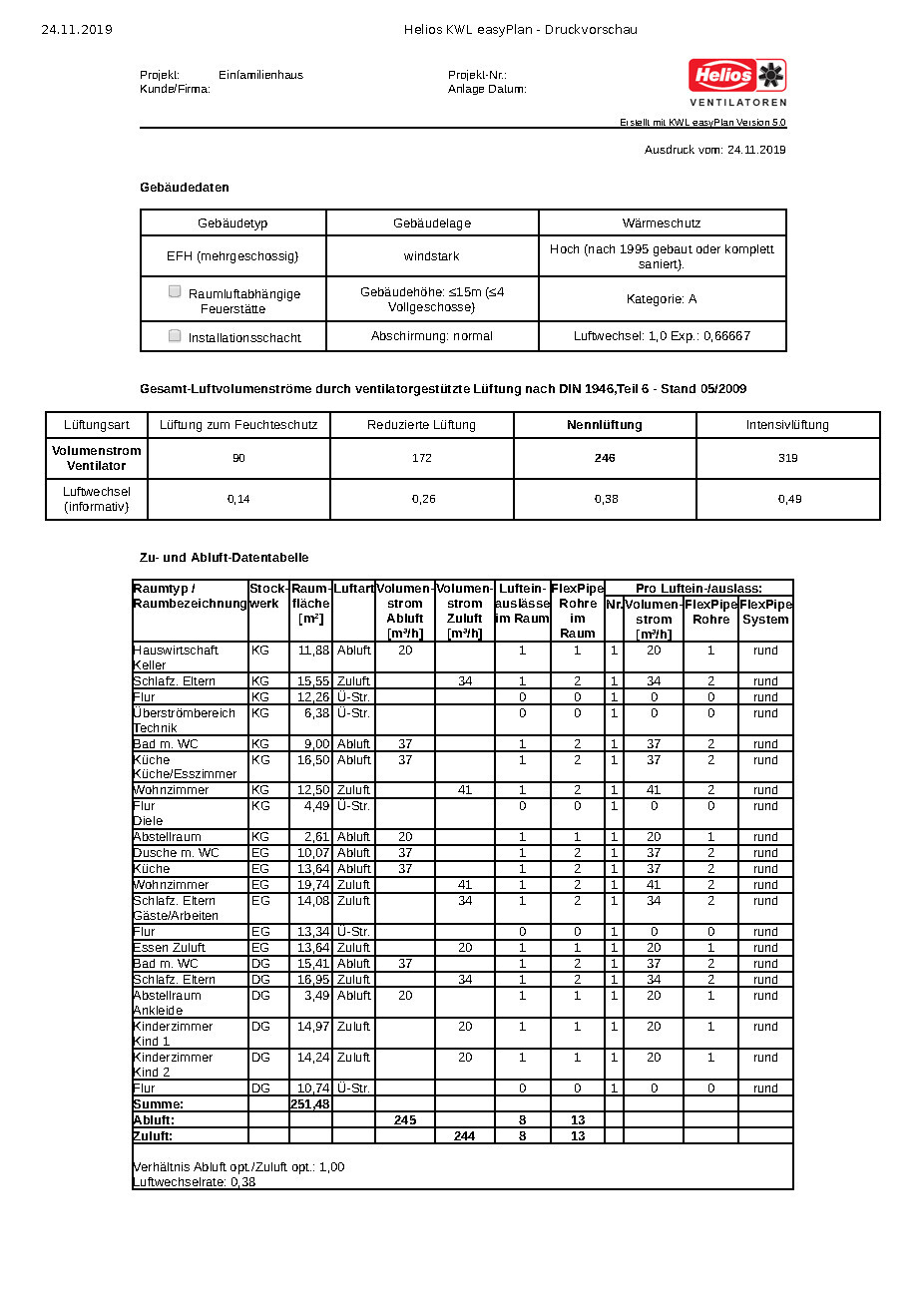
- Airflow rates (according to Helios planning tool) attached
- Central mechanical ventilation with heat recovery planned in the basement
- Fresh air intake through an exterior wall, exhaust air outlet through the roof
- Planned ventilation units: Zehnder ComfoAir Q450 TR Enthalpy or Helios EC500 W
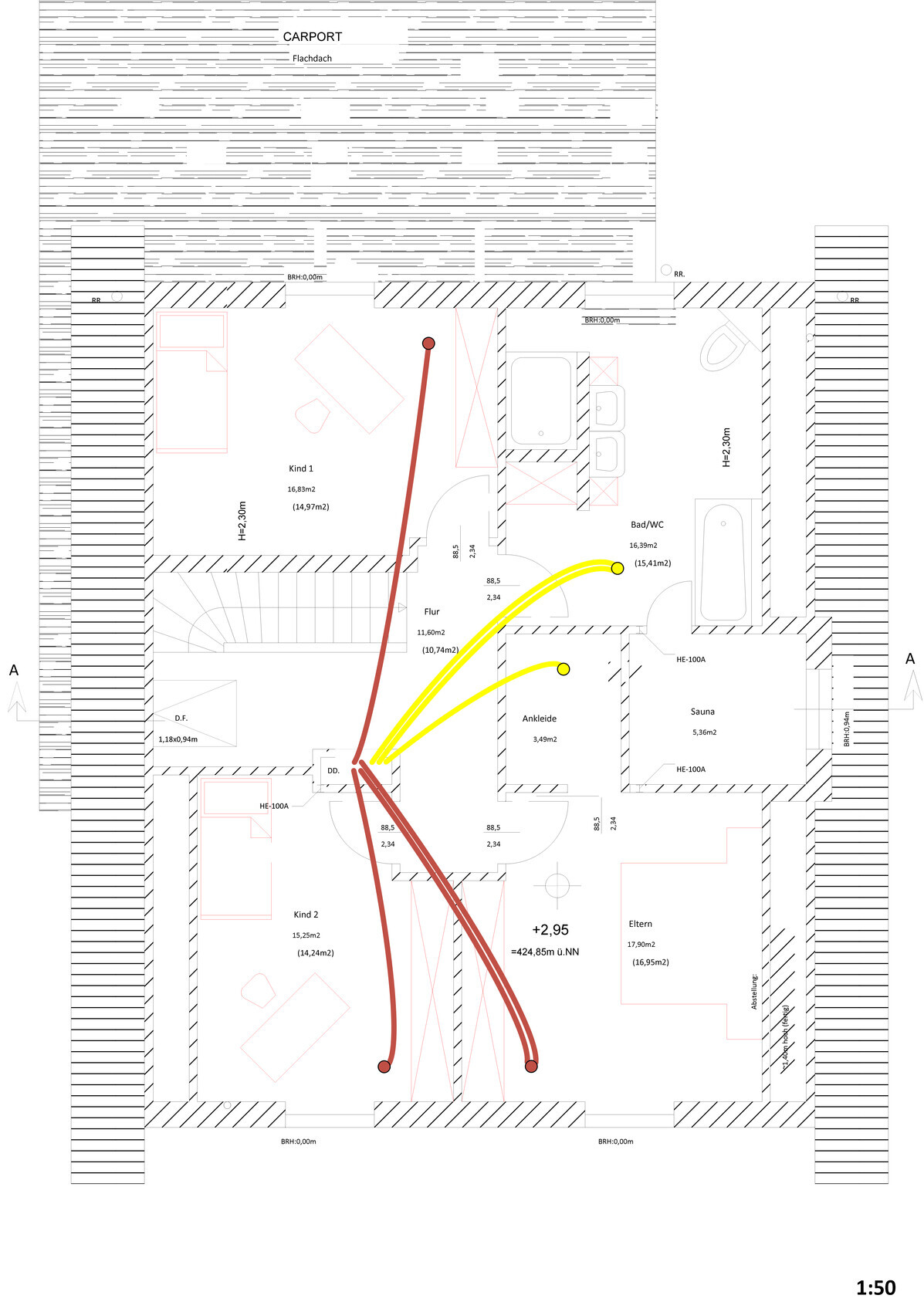
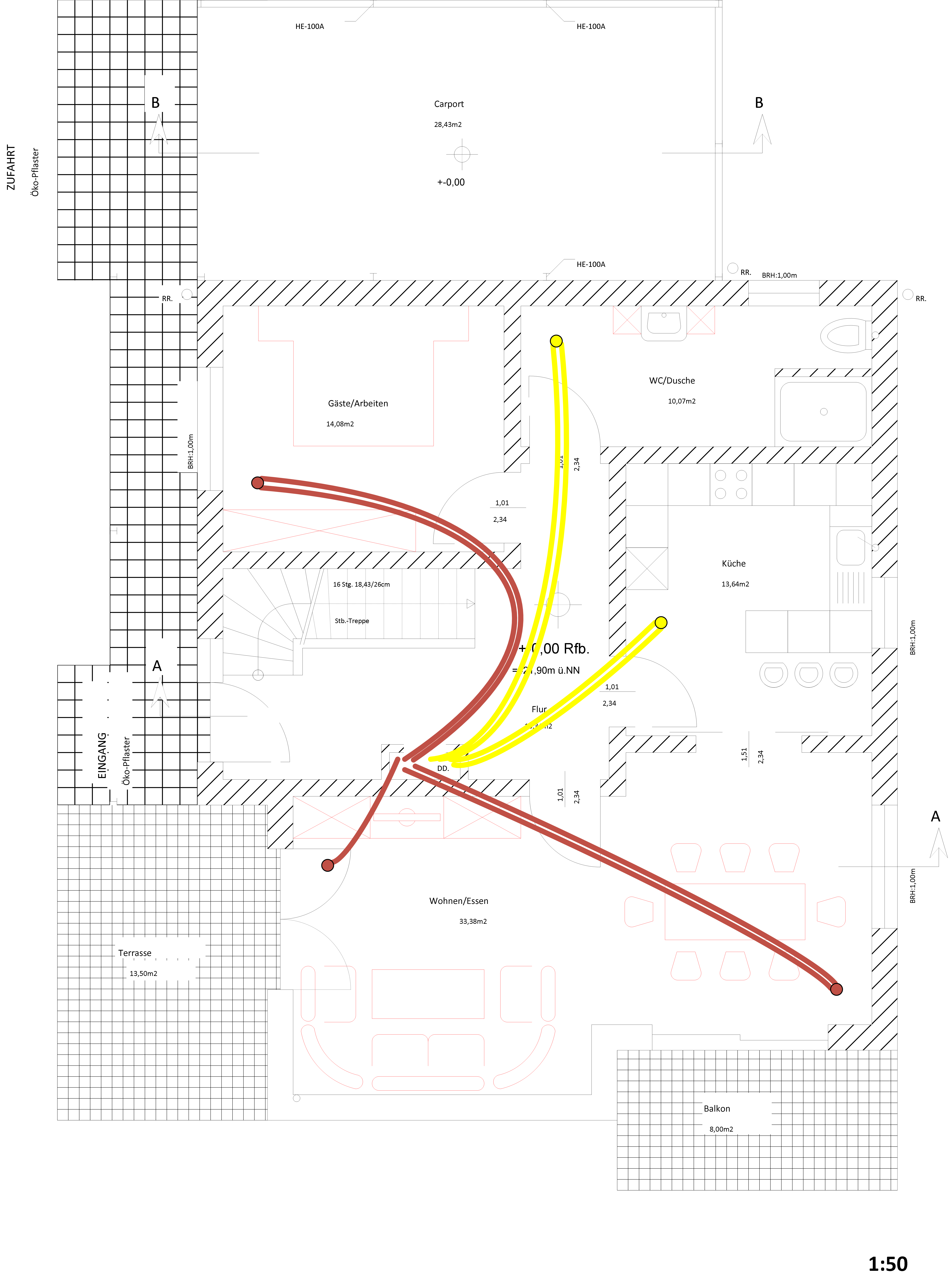
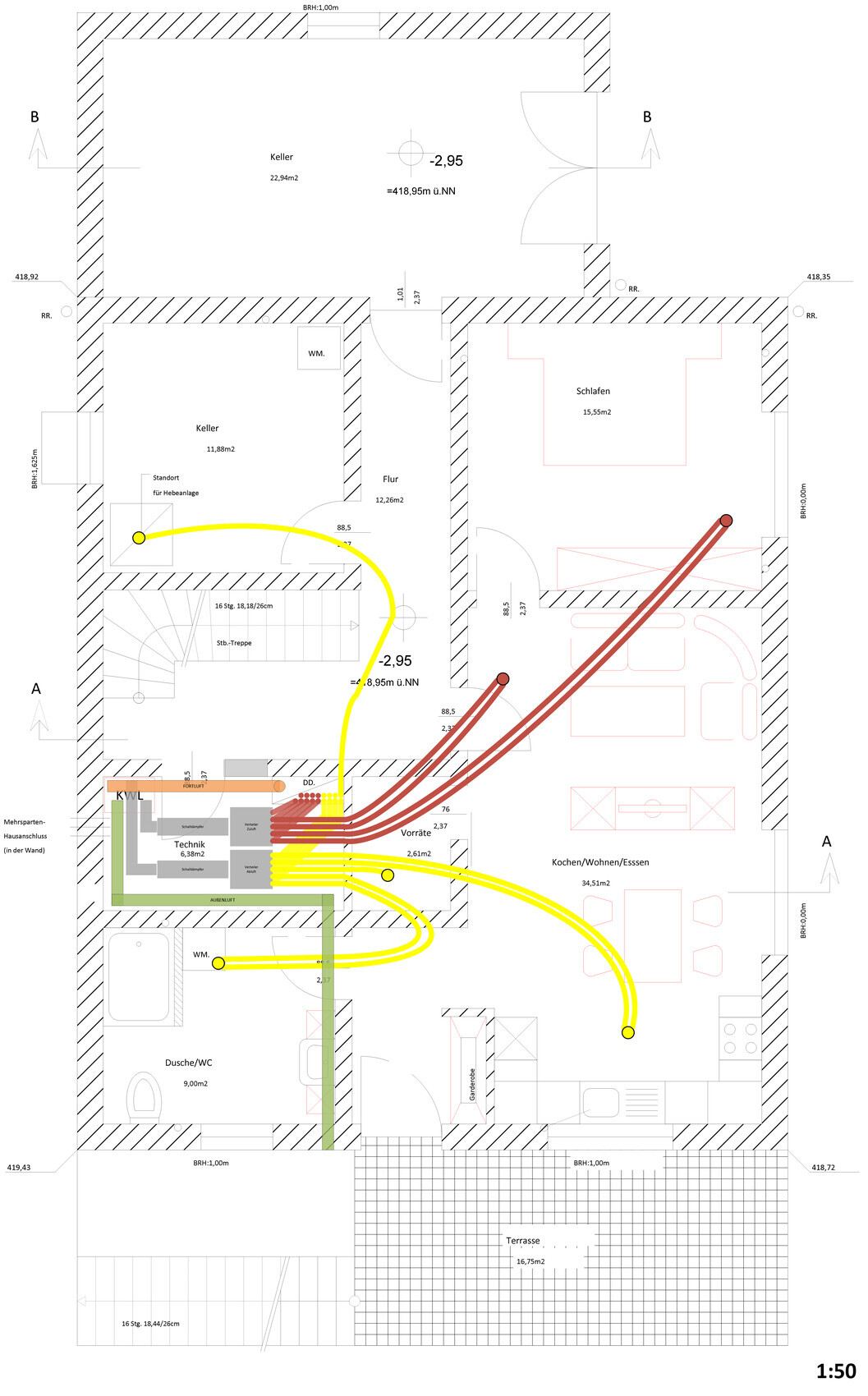
- Floor plans with valve and duct layout attached
- 75 mm (3 inches) ducts in the precast slab ceiling
- Air velocity designed to be below 2.0 m/s (6.6 ft/s)
- Transfer grilles installed in the door frames
- Intended for mostly owner installation
I have the following specific questions:
1. Are the airflow rates and the placement of the supply and exhaust valves appropriate?
2. A separate basement apartment is planned. Is it possible to design the airflow so that supply and exhaust are equal, and omit the transfer grille in the door to the corridor? The main and the apartment would then form two independent ventilation zones.
3. A Finnish sauna (used 2-3 times per month) is planned in the attic. Would you include this room in the mechanical ventilation system, or vent its exhaust air through the bathroom instead?
4. Should the technical room housing the ventilation unit have its own supply or exhaust air outlet?
5. Should the supply-to-exhaust air ratio be roughly balanced per floor? Currently, the ground floor and attic have significantly more supply air, while the basement has more exhaust air.
6. The exhaust duct for the storage room in the basement is very short. Could this cause noise issues?
Best regards,
0per8or
I am currently planning the mechanical ventilation with heat recovery for my new build (solid construction). Here are the key details:
- Area: 251 m2 (2,701 sq ft), ceiling height basement: 2.55 m (8 ft 4 in), ceiling height ground floor and attic: 2.60 m (8 ft 6 in)
- Airflow rates (according to Helios planning tool) attached
- Central mechanical ventilation with heat recovery planned in the basement
- Fresh air intake through an exterior wall, exhaust air outlet through the roof
- Planned ventilation units: Zehnder ComfoAir Q450 TR Enthalpy or Helios EC500 W
- Floor plans with valve and duct layout attached
- 75 mm (3 inches) ducts in the precast slab ceiling
- Air velocity designed to be below 2.0 m/s (6.6 ft/s)
- Transfer grilles installed in the door frames
- Intended for mostly owner installation
I have the following specific questions:
1. Are the airflow rates and the placement of the supply and exhaust valves appropriate?
2. A separate basement apartment is planned. Is it possible to design the airflow so that supply and exhaust are equal, and omit the transfer grille in the door to the corridor? The main and the apartment would then form two independent ventilation zones.
3. A Finnish sauna (used 2-3 times per month) is planned in the attic. Would you include this room in the mechanical ventilation system, or vent its exhaust air through the bathroom instead?
4. Should the technical room housing the ventilation unit have its own supply or exhaust air outlet?
5. Should the supply-to-exhaust air ratio be roughly balanced per floor? Currently, the ground floor and attic have significantly more supply air, while the basement has more exhaust air.
6. The exhaust duct for the storage room in the basement is very short. Could this cause noise issues?
Best regards,
0per8or
Hmm, something different: why should the extra apartment be connected to it... if you turn it up upstairs because you’re having a party/sauna/fondue or other needs, the person downstairs can’t sleep because the unit (which is unnecessary for them) is running at level 3.
And if they simply close or open their valve more (since they can’t regulate it differently), it messes everything up for you upstairs.
I don’t think that’s an ideal situation.
And if they simply close or open their valve more (since they can’t regulate it differently), it messes everything up for you upstairs.
I don’t think that’s an ideal situation.
I understand that the shared centralized mechanical ventilation system for both residential units also has downsides for the secondary apartment. However, I hadn’t considered the issue with closing the valve. What would be the alternative? A second centralized mechanical ventilation system? I would generally say that’s too expensive. So that leaves decentralized ventilation units for the secondary apartment, right?
B
boxandroof27 Nov 2019 20:44You can lock the valves, which creates a small obstacle. At least, that works with our ones from Wolf.
However, the exhaust valves should have filters that need to be replaced regularly, even inside the apartment.
The alternative is a decentralized system for the apartment. Our controlled mechanical ventilation almost never runs in party mode. That would be appropriate for divided ventilation and is also no big deal. If in doubt, you can always ventilate the traditional way. This is recommended anyway for large gatherings.
However, the exhaust valves should have filters that need to be replaced regularly, even inside the apartment.
The alternative is a decentralized system for the apartment. Our controlled mechanical ventilation almost never runs in party mode. That would be appropriate for divided ventilation and is also no big deal. If in doubt, you can always ventilate the traditional way. This is recommended anyway for large gatherings.
guckuck2 schrieb:
Use Zehnder’s planning service as a base. If you install their equipment and have Zehnder handle the commissioning, the warranty is extended to 5 years. Is your information still up to date? Last year, I asked Zehnder if they could review the planning for controlled residential ventilation. They replied that this service no longer exists and advised me to contact my specialist contractor.
That's true, when there are many people, the ventilation system can’t keep up, so you have to open windows anyway.
We have various sensors connected; it’s kind of fun to experiment with, for example, a humidity sensor that increases the ventilation once a certain level is reached. It's also set so that if the range hood runs on level 3 for a longer time, the ventilation system ramps up as well. There’s a CO2 sensor in the bedroom, and so on.
To the point:
I would definitely separate the granny flat and give it its own decentralized unit.
We have various sensors connected; it’s kind of fun to experiment with, for example, a humidity sensor that increases the ventilation once a certain level is reached. It's also set so that if the range hood runs on level 3 for a longer time, the ventilation system ramps up as well. There’s a CO2 sensor in the bedroom, and so on.
To the point:
I would definitely separate the granny flat and give it its own decentralized unit.
Zaba12 schrieb:
Is your information still up to date? Last year I asked Zehnder if they could review the planning for the mechanical ventilation system. I was told that the service is no longer available and that I should contact my specialist company. I guess it’s worth giving it a try.
Similar topics