
ᐅ Planning a central ventilation system – airflow volume, positioning?
Created on: 27 Nov 2019 13:25
0
0per8orHello everyone,
I am currently planning the mechanical ventilation with heat recovery for my new build (solid construction). Here are the key details:
- Area: 251 m2 (2,701 sq ft), ceiling height basement: 2.55 m (8 ft 4 in), ceiling height ground floor and attic: 2.60 m (8 ft 6 in)
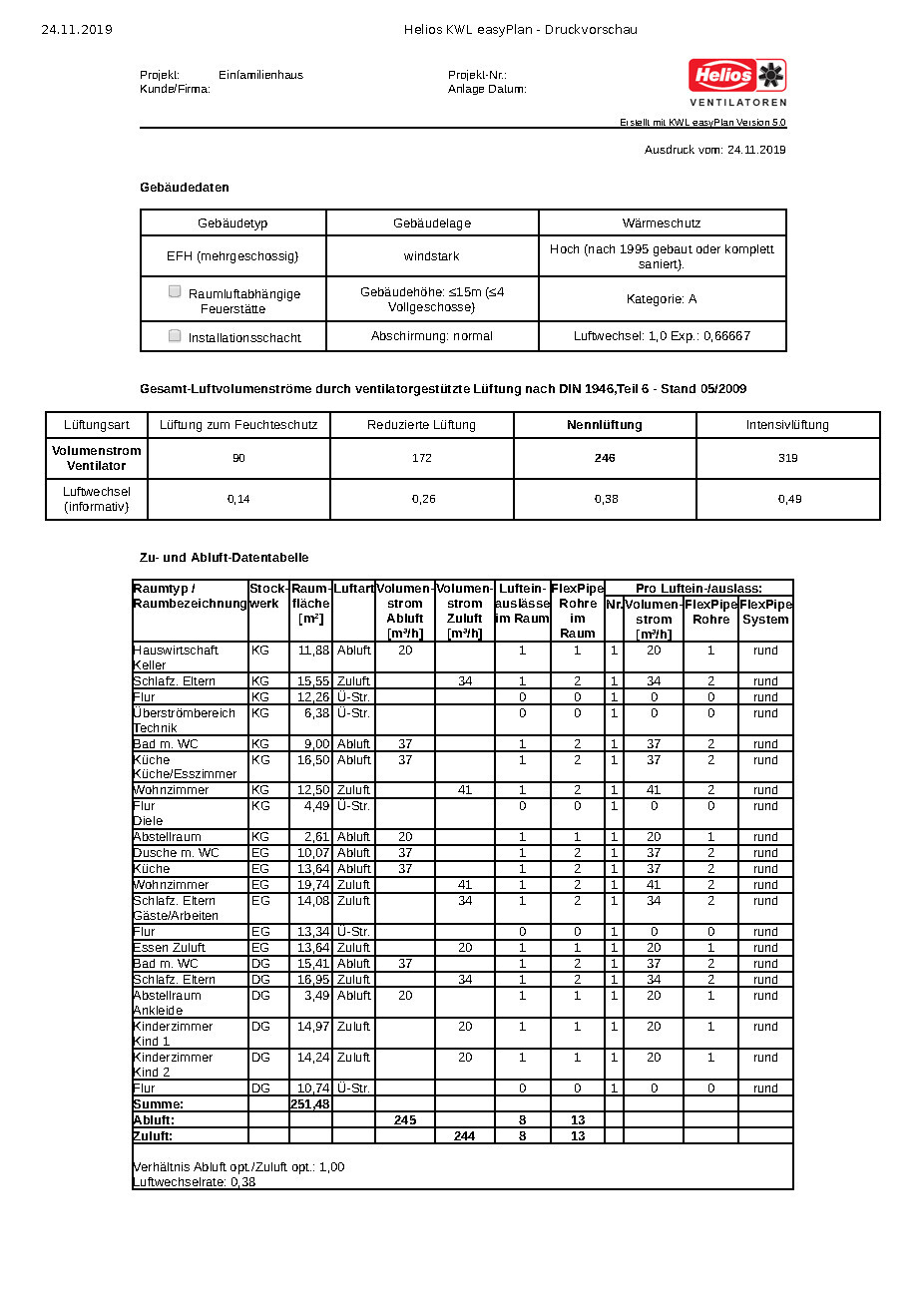
- Airflow rates (according to Helios planning tool) attached
- Central mechanical ventilation with heat recovery planned in the basement
- Fresh air intake through an exterior wall, exhaust air outlet through the roof
- Planned ventilation units: Zehnder ComfoAir Q450 TR Enthalpy or Helios EC500 W
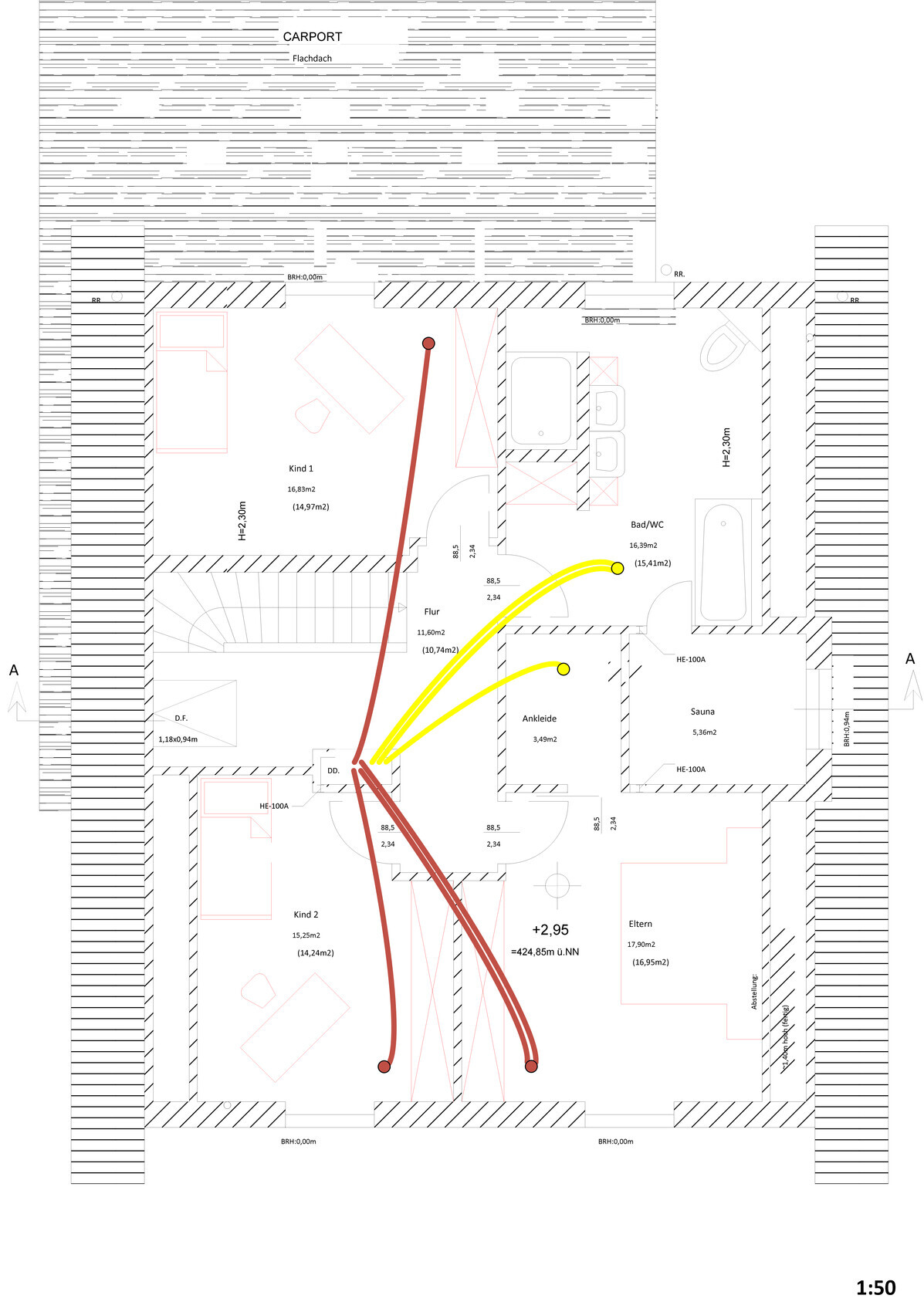
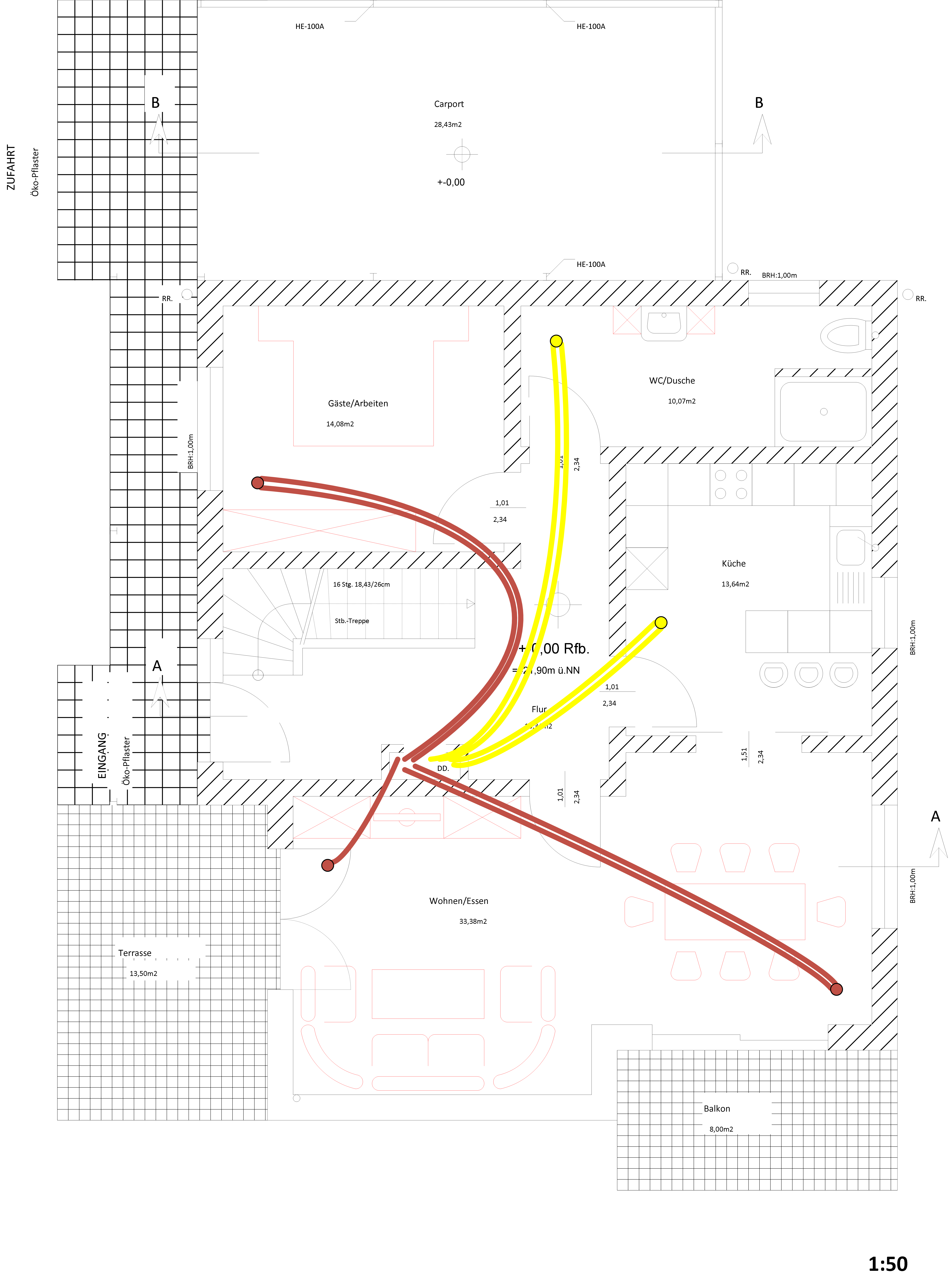
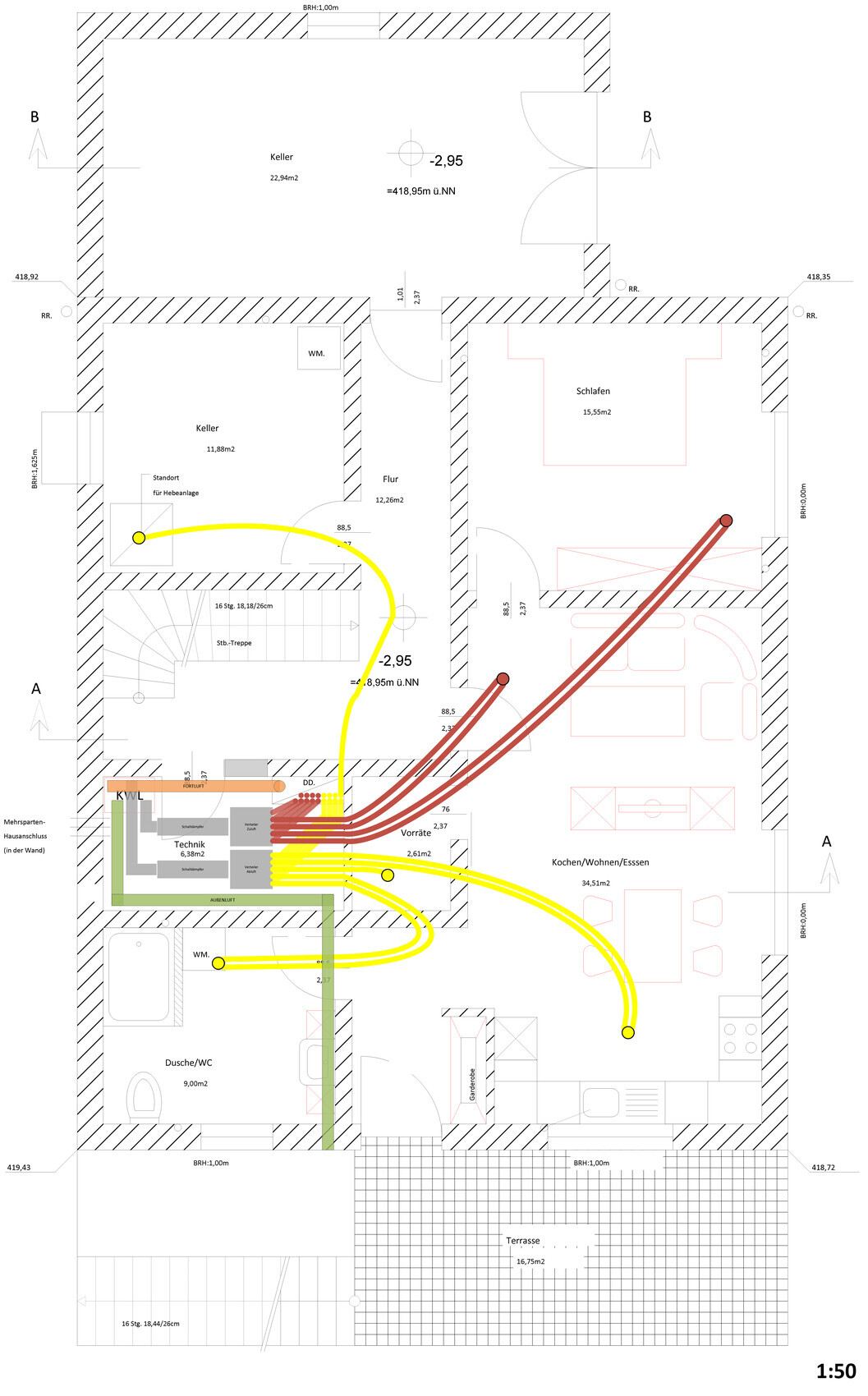
- Floor plans with valve and duct layout attached
- 75 mm (3 inches) ducts in the precast slab ceiling
- Air velocity designed to be below 2.0 m/s (6.6 ft/s)
- Transfer grilles installed in the door frames
- Intended for mostly owner installation
I have the following specific questions:
1. Are the airflow rates and the placement of the supply and exhaust valves appropriate?
2. A separate basement apartment is planned. Is it possible to design the airflow so that supply and exhaust are equal, and omit the transfer grille in the door to the corridor? The main and the apartment would then form two independent ventilation zones.
3. A Finnish sauna (used 2-3 times per month) is planned in the attic. Would you include this room in the mechanical ventilation system, or vent its exhaust air through the bathroom instead?
4. Should the technical room housing the ventilation unit have its own supply or exhaust air outlet?
5. Should the supply-to-exhaust air ratio be roughly balanced per floor? Currently, the ground floor and attic have significantly more supply air, while the basement has more exhaust air.
6. The exhaust duct for the storage room in the basement is very short. Could this cause noise issues?
Best regards,
0per8or
I am currently planning the mechanical ventilation with heat recovery for my new build (solid construction). Here are the key details:
- Area: 251 m2 (2,701 sq ft), ceiling height basement: 2.55 m (8 ft 4 in), ceiling height ground floor and attic: 2.60 m (8 ft 6 in)
- Airflow rates (according to Helios planning tool) attached
- Central mechanical ventilation with heat recovery planned in the basement
- Fresh air intake through an exterior wall, exhaust air outlet through the roof
- Planned ventilation units: Zehnder ComfoAir Q450 TR Enthalpy or Helios EC500 W
- Floor plans with valve and duct layout attached
- 75 mm (3 inches) ducts in the precast slab ceiling
- Air velocity designed to be below 2.0 m/s (6.6 ft/s)
- Transfer grilles installed in the door frames
- Intended for mostly owner installation
I have the following specific questions:
1. Are the airflow rates and the placement of the supply and exhaust valves appropriate?
2. A separate basement apartment is planned. Is it possible to design the airflow so that supply and exhaust are equal, and omit the transfer grille in the door to the corridor? The main and the apartment would then form two independent ventilation zones.
3. A Finnish sauna (used 2-3 times per month) is planned in the attic. Would you include this room in the mechanical ventilation system, or vent its exhaust air through the bathroom instead?
4. Should the technical room housing the ventilation unit have its own supply or exhaust air outlet?
5. Should the supply-to-exhaust air ratio be roughly balanced per floor? Currently, the ground floor and attic have significantly more supply air, while the basement has more exhaust air.
6. The exhaust duct for the storage room in the basement is very short. Could this cause noise issues?
Best regards,
0per8or
We also have a Helios controlled mechanical ventilation system.
For comparison:
1) We have about the same number of ducts on 165m² (1776 ft²) as you planned for 251m² (2703 ft²), and for 2 rooms that actually turns out to be too few (in hindsight).
3) We also have a sauna in the bathroom, but it’s not connected separately – the bathroom ventilation is sufficient.
4) Yes, we do.
5) Yes, that’s how we planned it; for example, we have exhaust ducts in the hallways, which you are missing.
6) Yes, that’s possible.
Which controlled mechanical ventilation unit are you planning to use?
For comparison:
1) We have about the same number of ducts on 165m² (1776 ft²) as you planned for 251m² (2703 ft²), and for 2 rooms that actually turns out to be too few (in hindsight).
3) We also have a sauna in the bathroom, but it’s not connected separately – the bathroom ventilation is sufficient.
4) Yes, we do.
5) Yes, that’s how we planned it; for example, we have exhaust ducts in the hallways, which you are missing.
6) Yes, that’s possible.
Which controlled mechanical ventilation unit are you planning to use?
B
boxandroof27 Nov 2019 15:190per8or schrieb:
5. Should the ratio of supply air to exhaust air per floor be roughly equal? Currently, the ground floor and attic have significantly more supply air, and the basement has considerably more exhaust air.We have more supply air on the upper floor, meaning air also flows down through the staircase into the ground floor. This was planned that way and results from the way we arrange our rooms. Dust settles on the stairs instead of somewhere else. I don’t see any advantages or disadvantages in this.Lumpi_LE schrieb:
Which mechanical ventilation system with heat recovery are you planning to use?So far, a Zehnder ComfoAir Q450 TR enthalpy unit or a Helios EC500 W is being considered. The final decision has not been made yet.
Lumpi_LE schrieb:
4) Yes, we doHow did you design the supply/exhaust air opening in the utility room? Did you install a duct going into the ceiling, looped once around with a ceiling diffuser attached? Or are there valves that you can connect directly to the manifold, or to a short duct hanging below the ceiling?
Similar topics