
ᐅ Planning the Location of the House and Garage Within the Building Envelope *Preliminary Planning*
Created on: 9 Aug 2016 10:52
H
Häuslebau3r
Hello everyone,
I have been following the forum for quite some time now and am gradually approaching the “house building” project step by step, trying to learn as much as possible in advance.
Thanks to the many experts here, this has truly been an enjoyable experience in the way the community contributes. (end of flattery mode) 🙂
As I already mentioned in my first major thread, we are currently working on preliminary planning and considering the house design and its orientation on the plot, even before our first meetings with potential builders.
Taking several factors into account regarding the plot, such as price and an undeveloped east-facing location (sloping gently down to the east), we found a micro-location that we really like. We weren’t able to get our ideal size, but with 770m² (8300 sq ft), I think it’s more than sufficient. The main advantage for us is that the land can be fully paid for from our own funds, so until construction starts in early 2018, we will continue saving equity and paying off any remaining debts.
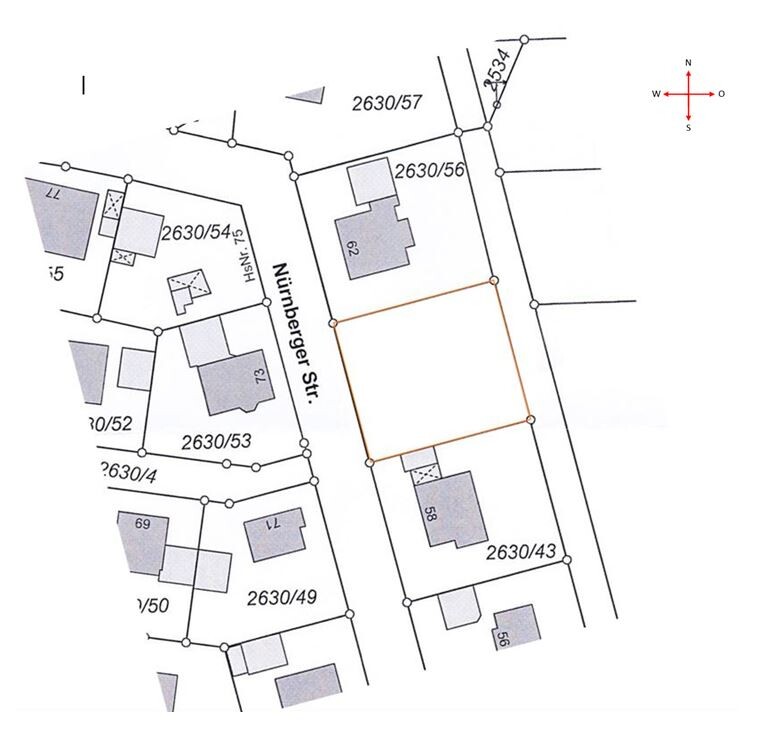
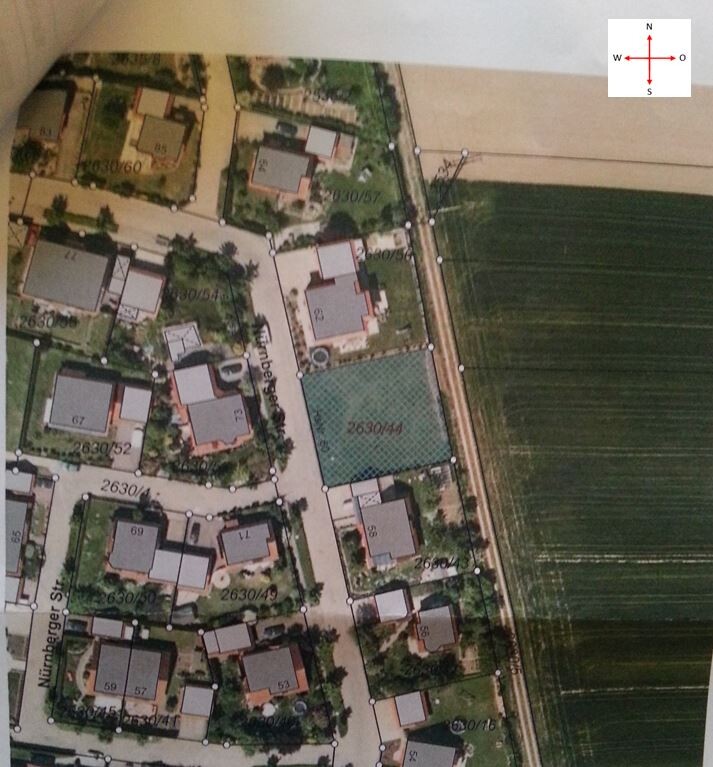
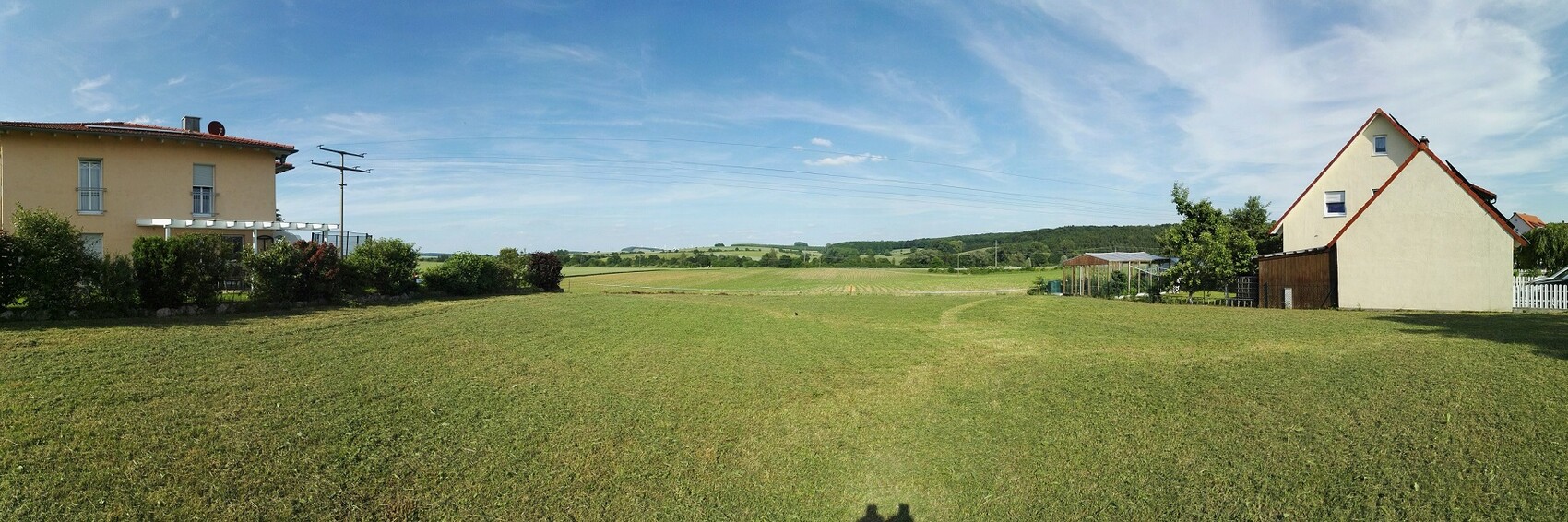
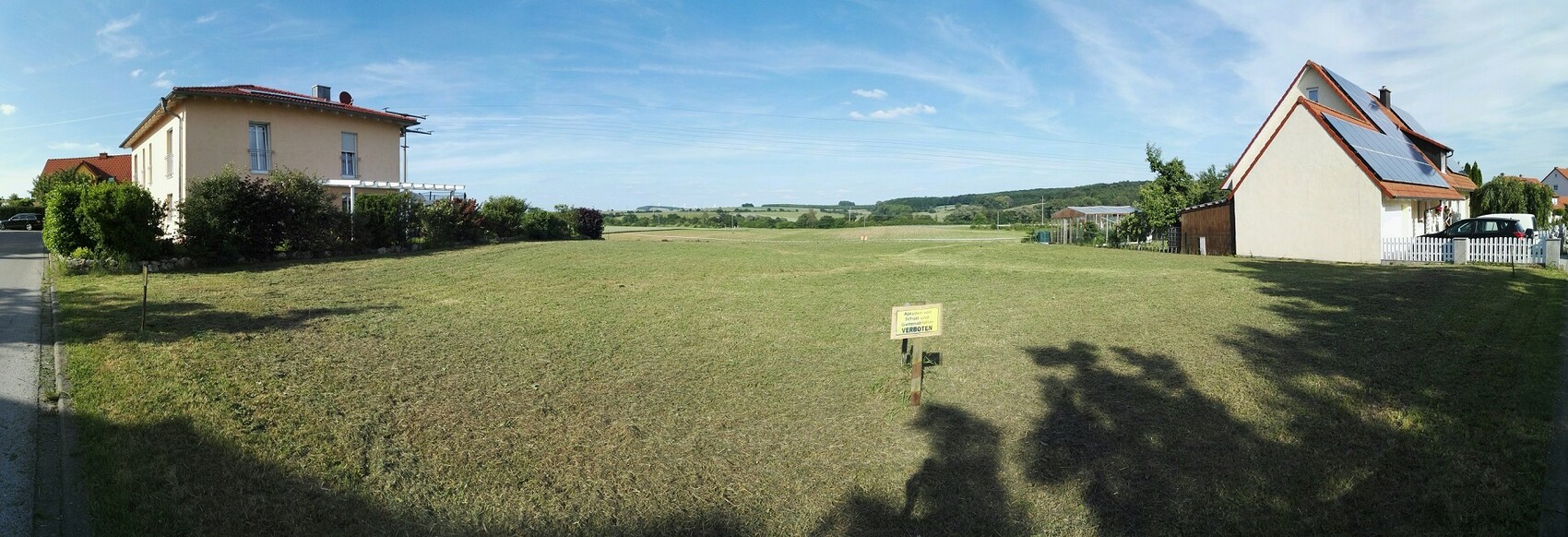
Source: Excerpts from the development plan / self-created images
A building permit inquiry (building permit / planning permission) has already been submitted regarding the desired architectural style, and I have received approval to expand the building envelope up to 8 meters (26 feet) along the eastern boundary.
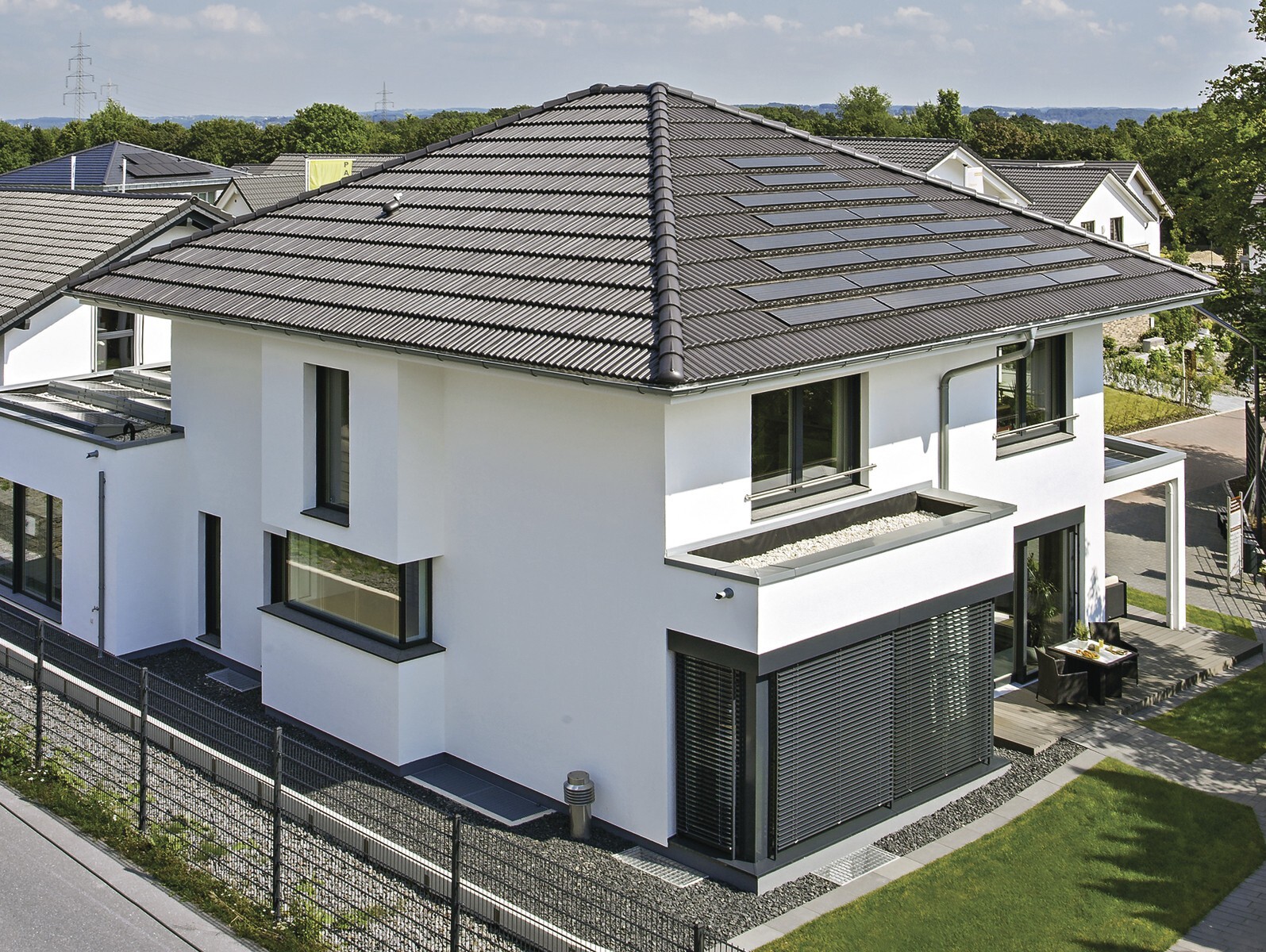
At the moment, we are leaning toward a rather classic city villa style (2 full floors with a hipped roof at 25° and a double garage).
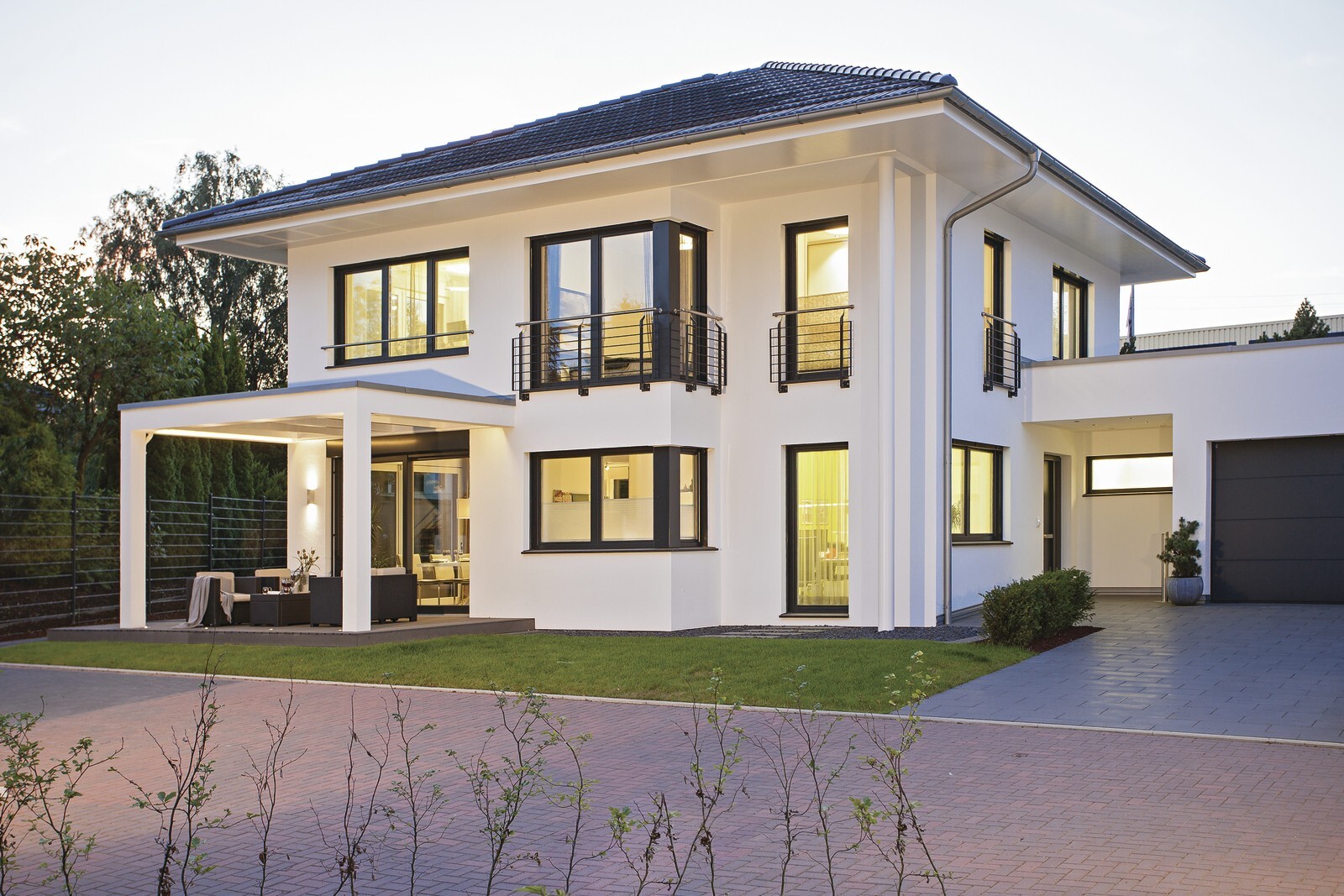
Source: Weberhaus
Based on the budget we have personally set, we are initially planning without a basement. If it turns out to be feasible later on, we can still include it.
We have already visited model homes that appealed to us in terms of external design and even traveled from Bavaria to the Rhineland, and from there to Wuppertal for inspiration.
Right now, before the first planning meetings, we want to focus on finding the best possible orientation for the house and garage on the property, for example:
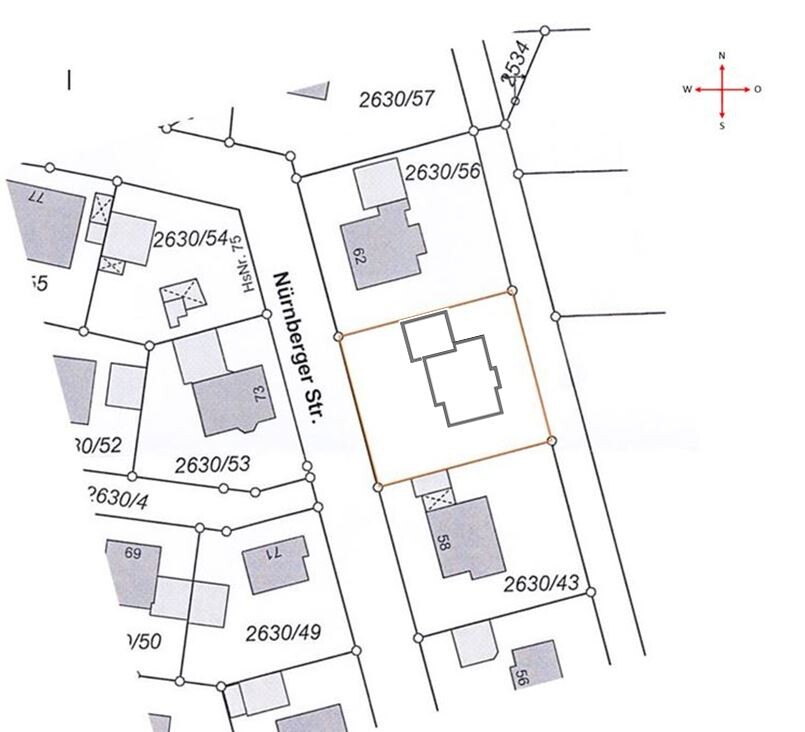
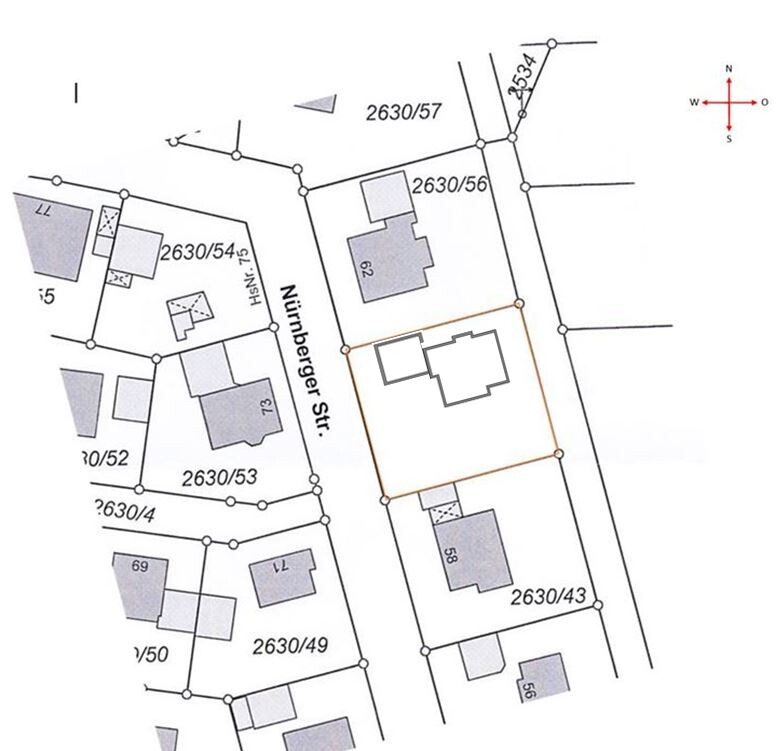
Source: Excerpts from the development plan
For me, one thing is already decided: the staircase, which I want to have exactly like this due to the fantastic light conditions. It captivated me at first sight.
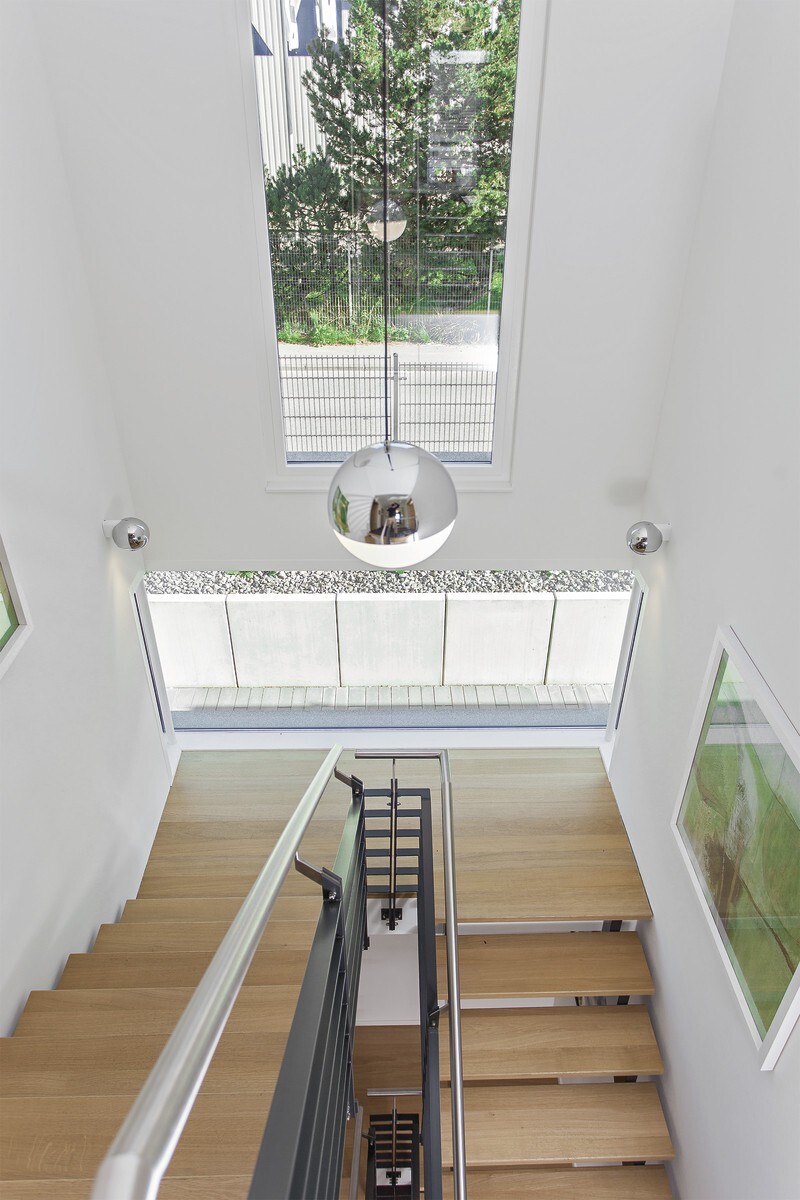
Source: Weberhaus
Furthermore, we want to keep as much space as possible on the west and south sides to create what I consider an ideal sunny aspect and garden atmosphere.
This is also the tricky part, as the arrangement between house and garage is causing us some headaches.
Many questions arise, such as whether the garage should be placed in front of the house to free up more space on the south side, or rather beside the house (which would include a covered entrance area). A passage from the garage directly into the house is also under consideration. Or should the main entrance be on the west side instead, which might mean it would be uncovered?
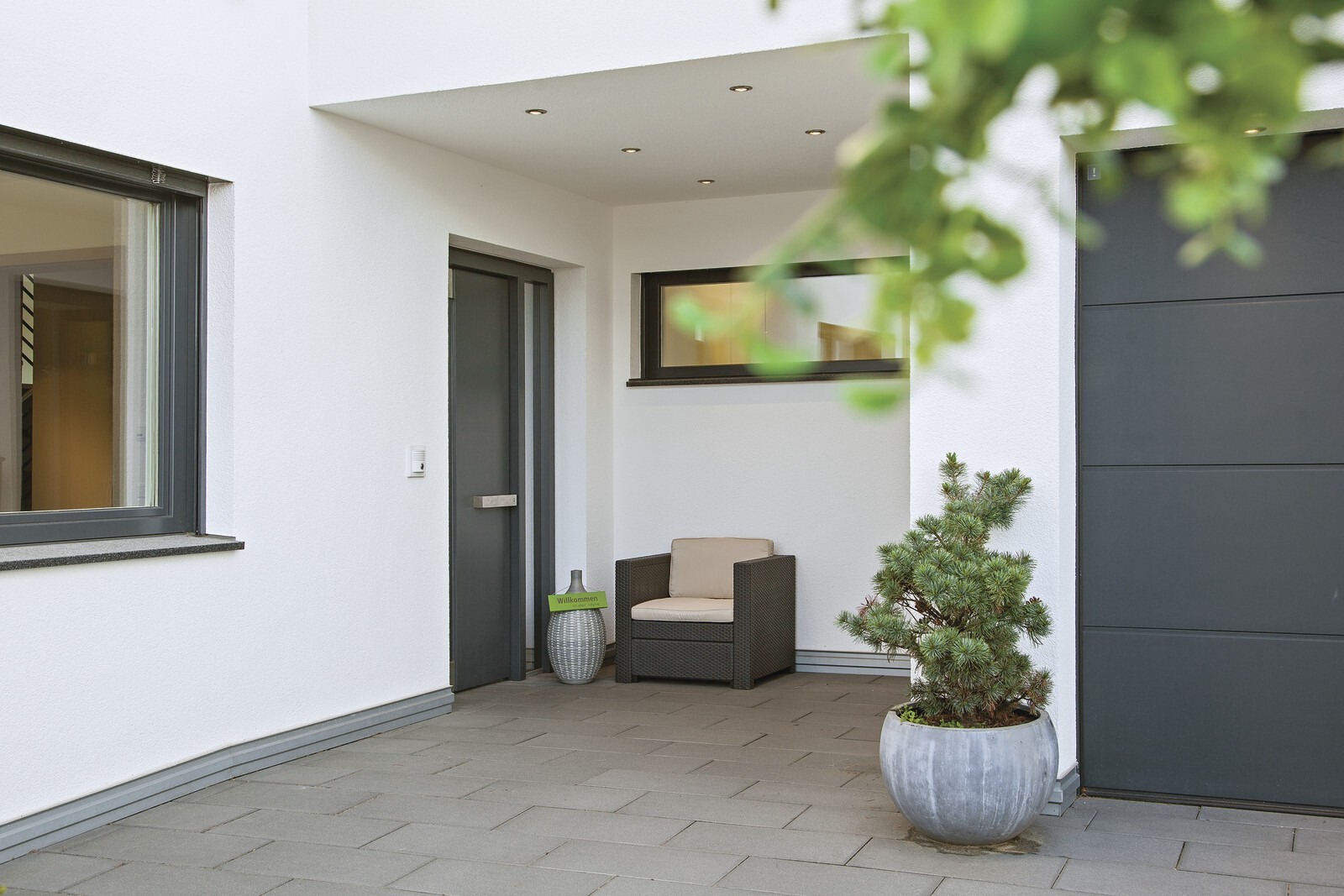
Source for covered entrance: Weberhaus
I will post further key data throughout the thread as needed, in case I have forgotten anything important.
However, these points above need to be clarified first before we can continue planning the positioning of the dining, living, and kitchen areas, etc. (Of course, with a preference for south/west orientation).
I would appreciate any information and lively discussions.
Best regards, Andreas, and thank you in advance!
I have been following the forum for quite some time now and am gradually approaching the “house building” project step by step, trying to learn as much as possible in advance.
Thanks to the many experts here, this has truly been an enjoyable experience in the way the community contributes. (end of flattery mode) 🙂
As I already mentioned in my first major thread, we are currently working on preliminary planning and considering the house design and its orientation on the plot, even before our first meetings with potential builders.
Taking several factors into account regarding the plot, such as price and an undeveloped east-facing location (sloping gently down to the east), we found a micro-location that we really like. We weren’t able to get our ideal size, but with 770m² (8300 sq ft), I think it’s more than sufficient. The main advantage for us is that the land can be fully paid for from our own funds, so until construction starts in early 2018, we will continue saving equity and paying off any remaining debts.
Source: Excerpts from the development plan / self-created images
A building permit inquiry (building permit / planning permission) has already been submitted regarding the desired architectural style, and I have received approval to expand the building envelope up to 8 meters (26 feet) along the eastern boundary.
At the moment, we are leaning toward a rather classic city villa style (2 full floors with a hipped roof at 25° and a double garage).
Source: Weberhaus
Based on the budget we have personally set, we are initially planning without a basement. If it turns out to be feasible later on, we can still include it.
We have already visited model homes that appealed to us in terms of external design and even traveled from Bavaria to the Rhineland, and from there to Wuppertal for inspiration.
Right now, before the first planning meetings, we want to focus on finding the best possible orientation for the house and garage on the property, for example:
Source: Excerpts from the development plan
For me, one thing is already decided: the staircase, which I want to have exactly like this due to the fantastic light conditions. It captivated me at first sight.
Source: Weberhaus
Furthermore, we want to keep as much space as possible on the west and south sides to create what I consider an ideal sunny aspect and garden atmosphere.
This is also the tricky part, as the arrangement between house and garage is causing us some headaches.
Many questions arise, such as whether the garage should be placed in front of the house to free up more space on the south side, or rather beside the house (which would include a covered entrance area). A passage from the garage directly into the house is also under consideration. Or should the main entrance be on the west side instead, which might mean it would be uncovered?
Source for covered entrance: Weberhaus
I will post further key data throughout the thread as needed, in case I have forgotten anything important.
However, these points above need to be clarified first before we can continue planning the positioning of the dining, living, and kitchen areas, etc. (Of course, with a preference for south/west orientation).
I would appreciate any information and lively discussions.
Best regards, Andreas, and thank you in advance!
J
j.bautsch19 Aug 2016 13:49I have been working on my own floor plans for months to determine the space and room requirements we need (and because it’s so much fun and helps pass the time), but I also created a spreadsheet where I listed minimum dimensions and a room program (as well as the desired roof style and some pictures of stairs, floors, etc.). When my husband and I are ready to consult a designer, architect, or similar professional, I will ONLY bring the spreadsheet and pictures. I can still compare everything at home to the floor plans I have already created. This way, the planner won’t start with any “blinders” on.
 Häuslebau3r19 Aug 2016 13:57
@Baufie and @j.bautsch, as well as everyone else, yes, that is probably true.
You naturally tend to think a lot about it, and as has already been said, "because it makes it even more fun," you might even get a bit carried away.
Ultimately, for us it was about not going into any preliminary discussions (pre-planning) completely unprepared and without any considerations. But it’s easy to get caught up in too many details...
As @j.bautsch said, the most important thing is that the planner brings in their experience and ideas without any blinders.
Is it common or conceivable to commission preliminary planning from several planners or architects? Of course, with regard to potential costs, etc.
Best regards, Andreas
You naturally tend to think a lot about it, and as has already been said, "because it makes it even more fun," you might even get a bit carried away.
Ultimately, for us it was about not going into any preliminary discussions (pre-planning) completely unprepared and without any considerations. But it’s easy to get caught up in too many details...
As @j.bautsch said, the most important thing is that the planner brings in their experience and ideas without any blinders.
Is it common or conceivable to commission preliminary planning from several planners or architects? Of course, with regard to potential costs, etc.
Best regards, Andreas

Of course. This is just an initial exploratory meeting where you get a sense of whether you work well together, whether you like the planner’s style, and so on. That’s completely normal!
If you decide to go with a builder (BU), they often have one or more architects they prefer to work with. In the end, we chose the architect that our builder regularly collaborates with, following the motto "never change a winning team." Although, without the builder’s recommendation, we probably would have chosen someone else.
Basically, we also liked the ideas of the architect favored by the builder, and on a personal level, it worked well, so we went with that option. By now, we’re not entirely convinced about this choice, but that’s not related to the architect’s quality. It’s more that you usually have to push him two or three times before anything happens. That’s frustrating, but obviously you wouldn’t find that out during an initial meeting.
My last resort at the moment is that if nothing gets done and the architect doesn’t respond again, I contact the builder, who then pressures the architect, and then things finally move. Annoying, but at least since these two are capable, it does get done.
If you decide to go with a builder (BU), they often have one or more architects they prefer to work with. In the end, we chose the architect that our builder regularly collaborates with, following the motto "never change a winning team." Although, without the builder’s recommendation, we probably would have chosen someone else.
Basically, we also liked the ideas of the architect favored by the builder, and on a personal level, it worked well, so we went with that option. By now, we’re not entirely convinced about this choice, but that’s not related to the architect’s quality. It’s more that you usually have to push him two or three times before anything happens. That’s frustrating, but obviously you wouldn’t find that out during an initial meeting.
My last resort at the moment is that if nothing gets done and the architect doesn’t respond again, I contact the builder, who then pressures the architect, and then things finally move. Annoying, but at least since these two are capable, it does get done.

Climbee schrieb:
that you always have to kick the guy two to three times before anything happensThese are professionals, it has to be that way
Häuslebau3r19 Aug 2016 19:14Yes, in the end, you probably shouldn’t worry too much if you have done a preliminary plan elsewhere or are planning to do so, and the final construction contract is awarded to someone else. As shown in your example @Climbee, you can never be completely safe from choosing the wrong architect or planner.
So, it means calling and making appointments with architects and companies nearby to discuss initial consultations or preliminary planning.
So, it means calling and making appointments with architects and companies nearby to discuss initial consultations or preliminary planning.
Similar topics