
ᐅ Place tongue-and-groove boards between the rafters. Without installing a breathable membrane or insulation.
Created on: 8 Jan 2018 19:35
I
ISO1101
Dear Sir or Madam,
Brief info about my construction project:
I am new to this forum and currently renovating/restoring my newly purchased house. I am now in the final stages. The budget has been almost completely used up, and unfortunately, there is no more money left to cover and redo the roof. I am quite skilled with manual work and have carried out the complete gutting of the building myself. Electrical, water, and heating systems have been fully renewed, and the pipes have been insulated according to current standards.
Brief info about my attic:
My house has a pitched roof attic, which is completely uninsulated and as it was from 1960. You can see the rafters, battens, and tiles (see pictures). The roof is watertight (everything stays dry during heavy rain), but unfortunately not windproof. Snowdrifts blow snow through the tiles from underneath, and in summer, dust and dirt also enter the attic. We want to fix this condition. The attic is only intended to be used for storage (Christmas decorations, Easter ornaments, boxes, and crates...).
The roof tiles are double-fired, glazed, and of good quality. They do not need to be replaced, so I want to avoid re-roofing.
I consider insulation between the rafters too risky because I am concerned about the rafters rotting unnoticed. I have researched this extensively and believe it is best not to do that but rather to sufficiently insulate only the top floor ceiling.
By the way, the roof windows, like the rest of the house, have triple-pane insulated glazing. That was not my choice.
My plan:
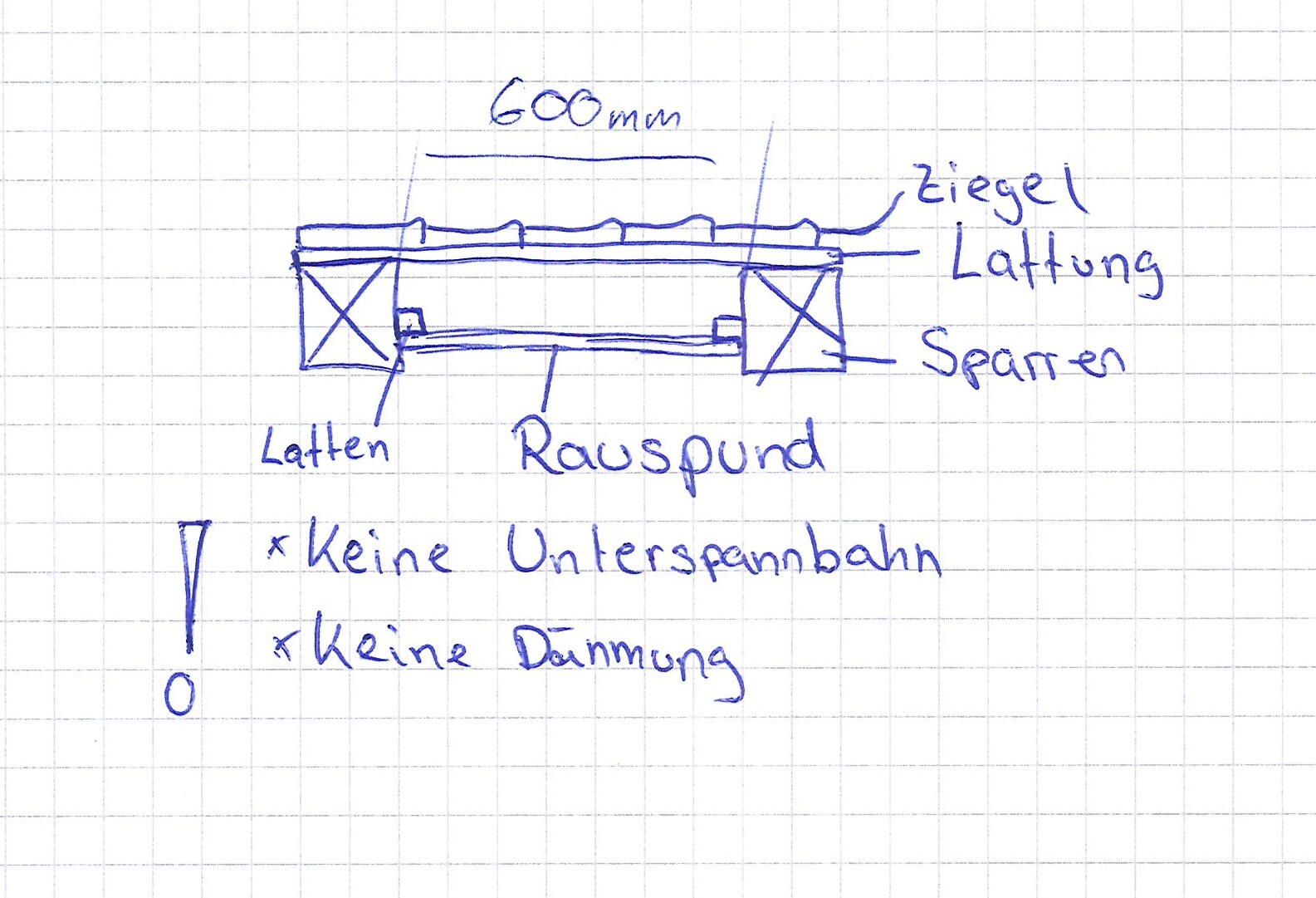
I have decided to install a small sub-roof between the rafters. Essentially, to lay 21mm (0.8 inches) thick rough-sawn Douglas fir tongue-and-groove boards between the rafters. This will only provide minimal insulation, but that is not my goal. Wind can still pass freely between the boards and tiles, so the entire roof remains breathable without me having to worry about moisture and mold. I want to avoid installing an underlay membrane and vapor barrier as much as possible. I don't want to insulate, only cleanly cover it so that snow no longer blows in, and no dust or dirt can enter.
If strong wind pushes snow under the tiles, or if there is a chance rain could be blown up under the tiles and leak inside the attic, it should be fine because the attic is sufficiently ventilated and can dry out.
Should I be concerned about anything else?
Do you have any other ideas that could be implemented for a modest budget? I can spend up to 5,000€ (around) for the attic work. Anything beyond that is not worth it for me.
Please do not write suggestions related to energy-saving regulations or similar…
Thank you very much and best regards!
Lukas-Michael
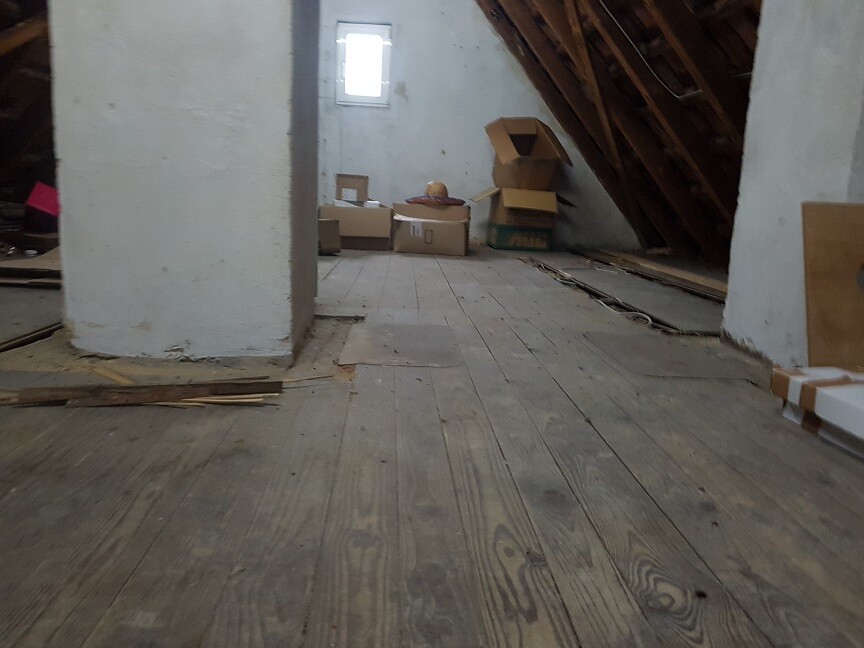
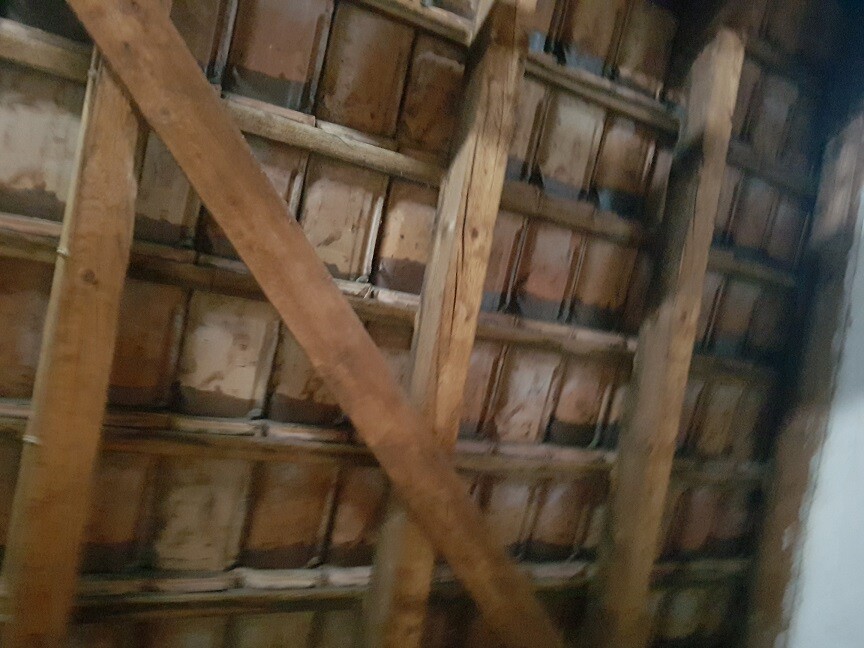
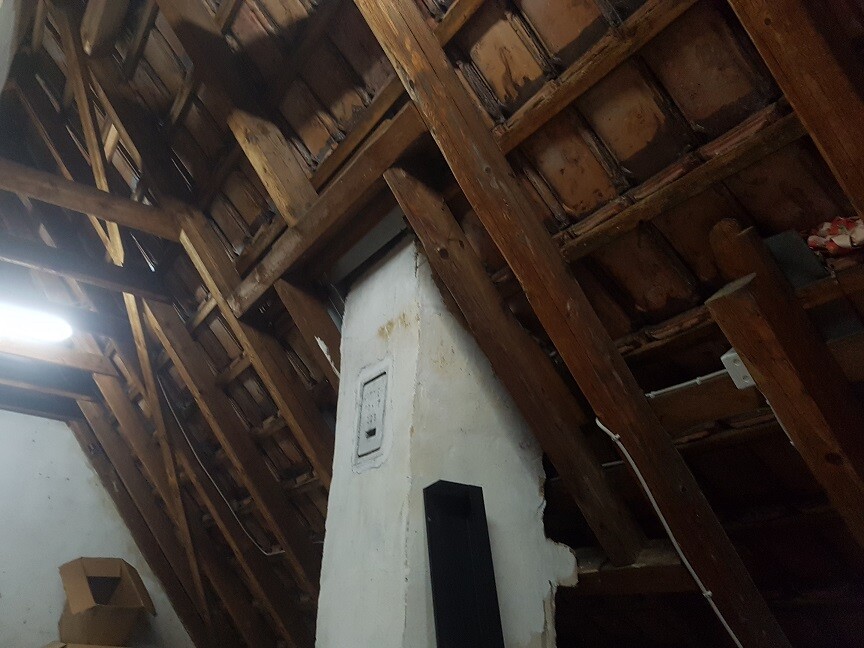
Brief info about my construction project:
I am new to this forum and currently renovating/restoring my newly purchased house. I am now in the final stages. The budget has been almost completely used up, and unfortunately, there is no more money left to cover and redo the roof. I am quite skilled with manual work and have carried out the complete gutting of the building myself. Electrical, water, and heating systems have been fully renewed, and the pipes have been insulated according to current standards.
Brief info about my attic:
My house has a pitched roof attic, which is completely uninsulated and as it was from 1960. You can see the rafters, battens, and tiles (see pictures). The roof is watertight (everything stays dry during heavy rain), but unfortunately not windproof. Snowdrifts blow snow through the tiles from underneath, and in summer, dust and dirt also enter the attic. We want to fix this condition. The attic is only intended to be used for storage (Christmas decorations, Easter ornaments, boxes, and crates...).
The roof tiles are double-fired, glazed, and of good quality. They do not need to be replaced, so I want to avoid re-roofing.
I consider insulation between the rafters too risky because I am concerned about the rafters rotting unnoticed. I have researched this extensively and believe it is best not to do that but rather to sufficiently insulate only the top floor ceiling.
By the way, the roof windows, like the rest of the house, have triple-pane insulated glazing. That was not my choice.
My plan:
I have decided to install a small sub-roof between the rafters. Essentially, to lay 21mm (0.8 inches) thick rough-sawn Douglas fir tongue-and-groove boards between the rafters. This will only provide minimal insulation, but that is not my goal. Wind can still pass freely between the boards and tiles, so the entire roof remains breathable without me having to worry about moisture and mold. I want to avoid installing an underlay membrane and vapor barrier as much as possible. I don't want to insulate, only cleanly cover it so that snow no longer blows in, and no dust or dirt can enter.
If strong wind pushes snow under the tiles, or if there is a chance rain could be blown up under the tiles and leak inside the attic, it should be fine because the attic is sufficiently ventilated and can dry out.
Should I be concerned about anything else?
Do you have any other ideas that could be implemented for a modest budget? I can spend up to 5,000€ (around) for the attic work. Anything beyond that is not worth it for me.
Please do not write suggestions related to energy-saving regulations or similar…
Thank you very much and best regards!
Lukas-Michael

ISO1101 schrieb:
Does the following setup, like in the picture, possibly make sense?Nordlys schrieb:
That’s beyond me.I would say: give it a try. That means: start the way you initially suggested – it’s basically like the first tongue-and-groove layer of this setup. Then see how far that gets you, and after about a year following the initial step, we can discuss adding more layers or improvements.https://www.instagram.com/11antgmxde/
https://www.linkedin.com/company/bauen-jetzt/