
HELLO, after an 8-year break!
I am currently planning a small outbuilding (not intended for permanent living space!), which will have a green shed roof and will be built using a timber frame construction. Unfortunately, I have not been able to find a “proper” construction method or decide which is best:
1. Idea = traditional build
-> supposedly completely outdated and serious issues if the vapor barrier fails.
2. Idea = ventilated cavity
-> somewhat lower insulation value, but a potentially defective vapor barrier would be less critical!
3. Idea = external (above-rafter) insulation
-> better heat storage capacity, but a relatively tall construction and probably the most expensive option.
Do you have any thoughts on these ideas, or should I consider something completely different?
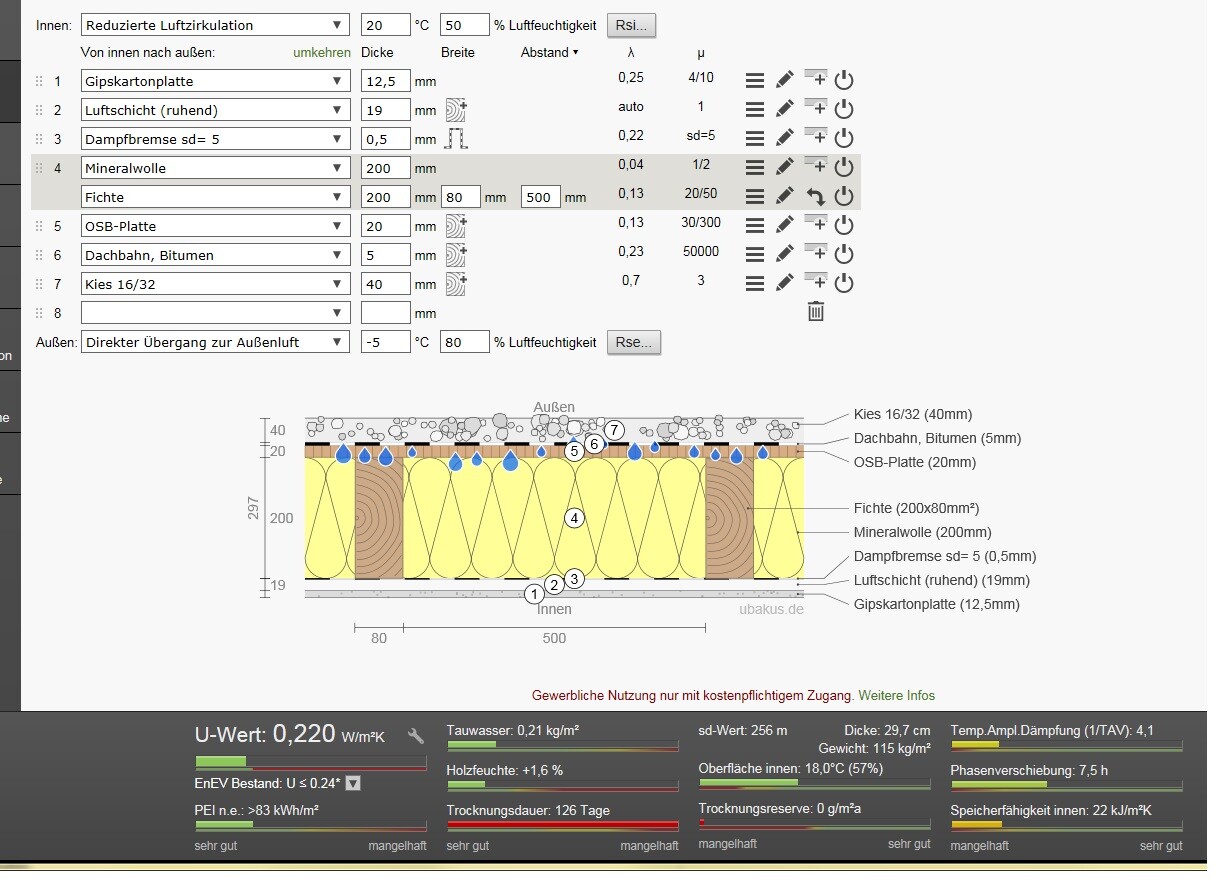
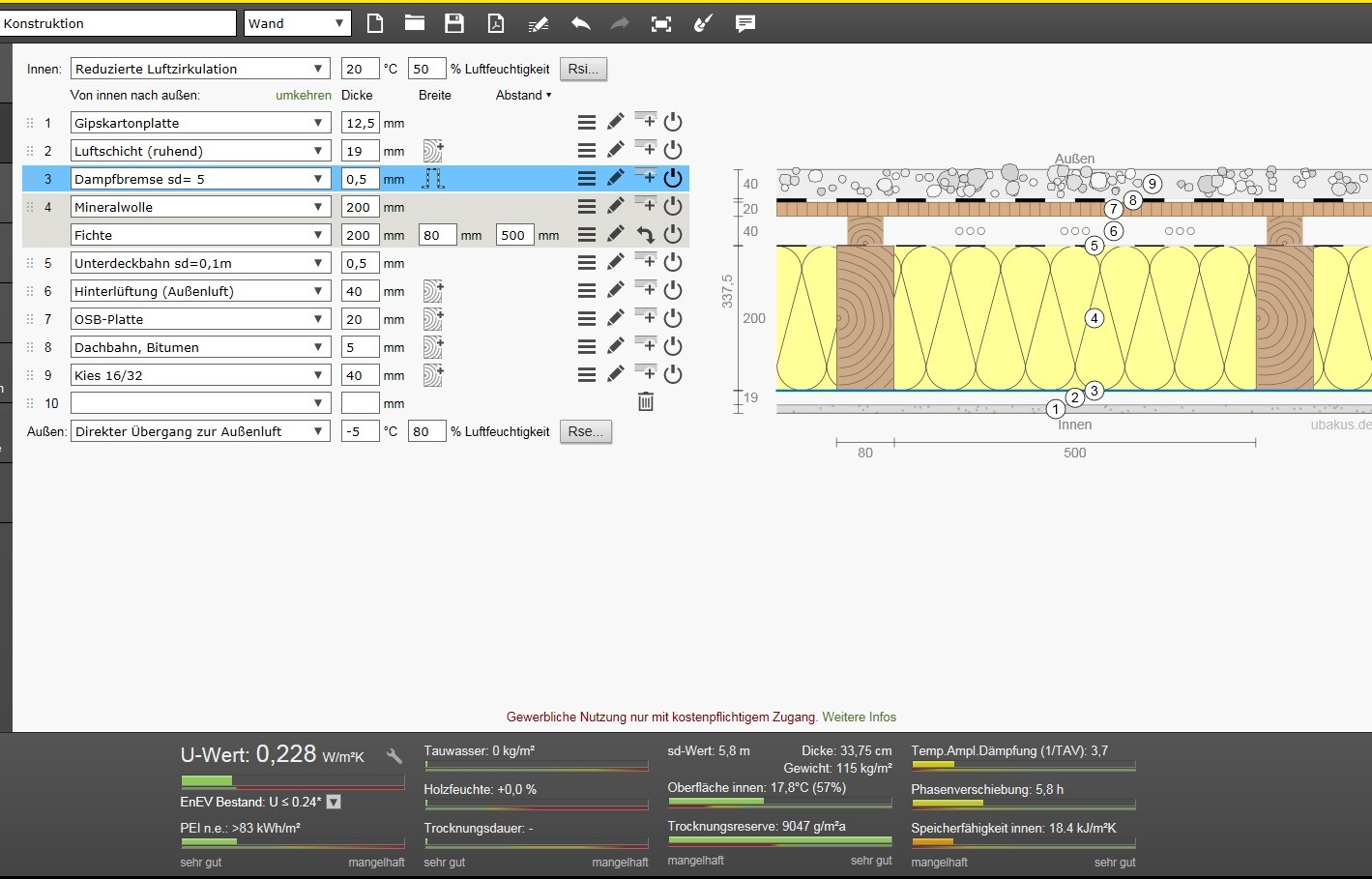
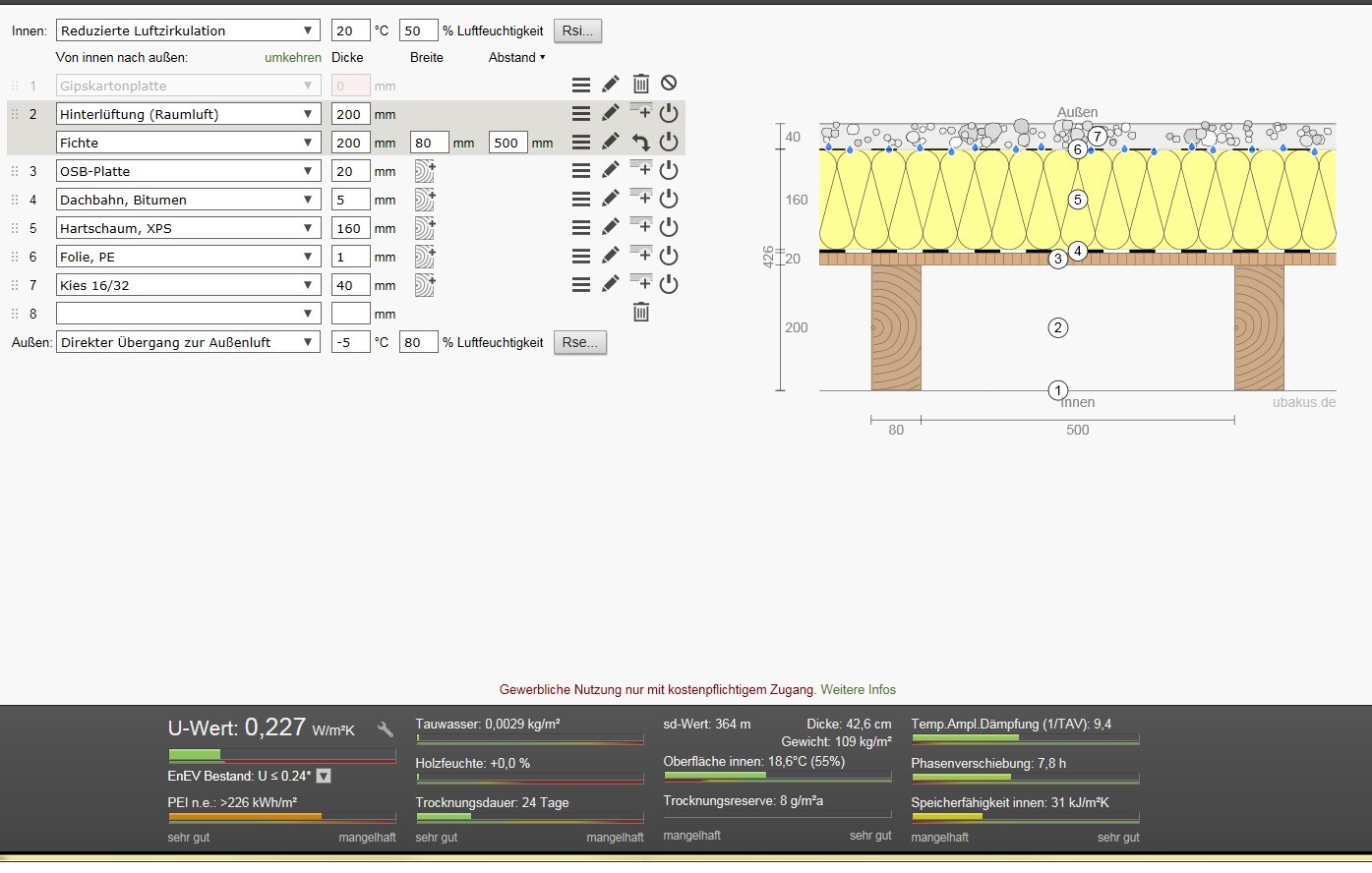
I am currently planning a small outbuilding (not intended for permanent living space!), which will have a green shed roof and will be built using a timber frame construction. Unfortunately, I have not been able to find a “proper” construction method or decide which is best:
1. Idea = traditional build
-> supposedly completely outdated and serious issues if the vapor barrier fails.
2. Idea = ventilated cavity
-> somewhat lower insulation value, but a potentially defective vapor barrier would be less critical!
3. Idea = external (above-rafter) insulation
-> better heat storage capacity, but a relatively tall construction and probably the most expensive option.
Do you have any thoughts on these ideas, or should I consider something completely different?
What pitch should the roof have?
How will the building be used?
I strongly recommend version 2 or 3.
For version 2, increase the ventilation cross-section: the flatter the pitch, the larger it should be to ensure proper airflow (for example, at 10° at least 80mm (3 inches)).
For version 3, install the vapor barrier as a bitumen membrane, for example Bauder Tec.
How will the building be used?
I strongly recommend version 2 or 3.
For version 2, increase the ventilation cross-section: the flatter the pitch, the larger it should be to ensure proper airflow (for example, at 10° at least 80mm (3 inches)).
For version 3, install the vapor barrier as a bitumen membrane, for example Bauder Tec.
So, the building is intended to be a kind of mini summer holiday house.
The roof pitch must be below 15° (degrees), but I probably don’t want to use the full limit, as I still need to consider the visual aspect and height restrictions.
Thanks a lot for the tip about ventilation; that was new to me!
By Bauder vapor barrier, do you mean using it under the gravel/soil?
I had actually thought of a bitumen membrane plus a 1.5mm (0.06 inch) foil on top (not shown), but I’m not 100% confident about the long-term waterproofing of bitumen membranes.
Best regards, René
The roof pitch must be below 15° (degrees), but I probably don’t want to use the full limit, as I still need to consider the visual aspect and height restrictions.
Thanks a lot for the tip about ventilation; that was new to me!
By Bauder vapor barrier, do you mean using it under the gravel/soil?
I had actually thought of a bitumen membrane plus a 1.5mm (0.06 inch) foil on top (not shown), but I’m not 100% confident about the long-term waterproofing of bitumen membranes.
Best regards, René

Similar topics