
ᐅ Photovoltaic System: How Many kWp Are Sufficient for a House?
Created on: 19 Mar 2020 09:10
L
lin0r87
Hello everyone!
We are building a semi-detached house and want to install a photovoltaic system on the roof. The orientation would be south/west and north/east. We intend to use most of the electricity ourselves. A battery is not planned, as the cost is quite high for such a system and it probably doesn’t make financial sense.
We have received an offer that includes:
- 14x IBC MonoSol 360 (there is still space on the north/east side... does that make sense?)
- SMA SB 3.6-1AV-40 inverter
- DEHNcube YPV SCI 2MPP surge protection device
- Meter cabinet (+ accessories)
- Installation
The price is about 7,500€ gross.
The system will have a capacity of 5.04 kWp.
Currently, there are three people living in the house (2 adults, 1 child). Four are planned.
Our roof is quite simple but well oriented.
We are wondering if 5.04 kWp is sufficient?
Our electricity consumption in the apartment was always below 3,500 kWh per year, but we expect it to increase with the house. We estimate about 4,500 kWh.
Regarding the 24/7 electrical loads:
There will be an air-to-water heat pump from Novelan and a ventilation system with heat recovery.
I would really appreciate some advice.
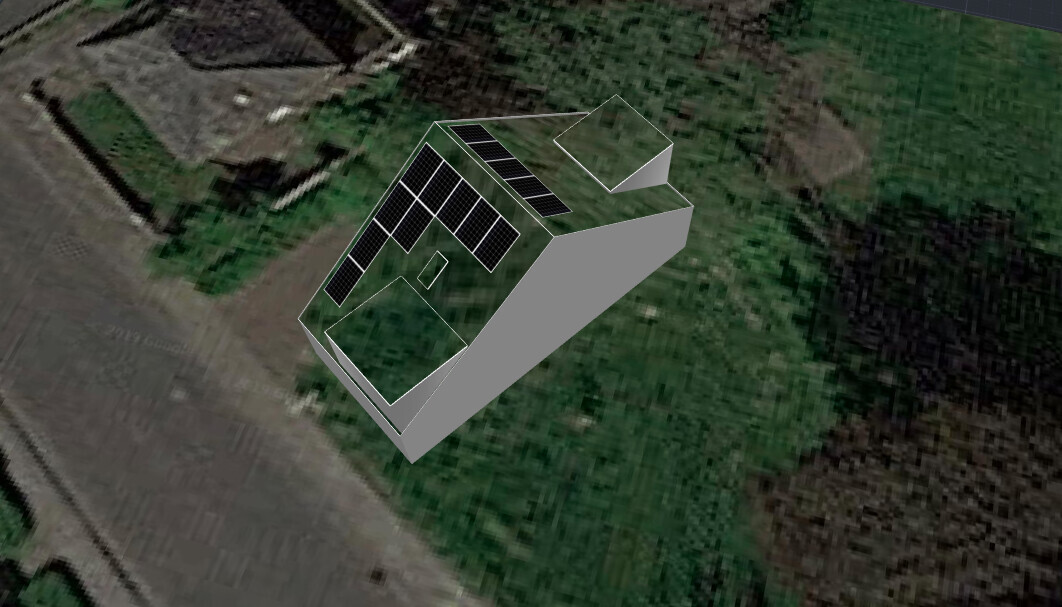
We are building a semi-detached house and want to install a photovoltaic system on the roof. The orientation would be south/west and north/east. We intend to use most of the electricity ourselves. A battery is not planned, as the cost is quite high for such a system and it probably doesn’t make financial sense.
We have received an offer that includes:
- 14x IBC MonoSol 360 (there is still space on the north/east side... does that make sense?)
- SMA SB 3.6-1AV-40 inverter
- DEHNcube YPV SCI 2MPP surge protection device
- Meter cabinet (+ accessories)
- Installation
The price is about 7,500€ gross.
The system will have a capacity of 5.04 kWp.
Currently, there are three people living in the house (2 adults, 1 child). Four are planned.
Our roof is quite simple but well oriented.
We are wondering if 5.04 kWp is sufficient?
Our electricity consumption in the apartment was always below 3,500 kWh per year, but we expect it to increase with the house. We estimate about 4,500 kWh.
Regarding the 24/7 electrical loads:
There will be an air-to-water heat pump from Novelan and a ventilation system with heat recovery.
I would really appreciate some advice.

We are currently looking into the Outlander PHEV as well. We are currently driving the gasoline version and like the size. It’s a quite practical car. The steering is a bit soft and the build is robust – but it has proven itself. What I find interesting about the PHEV is that it can drive around 45 km (28 miles) purely on electric power. That’s enough for many trips nearby, and for longer distances, you then have a gasoline engine on board.
hampshire schrieb:
The trailer discussion is one-sided. Many households have two cars.That may be true, but it doesn’t help me if, for cost and environmental reasons, I don’t see the point in getting a second car without a real need.I just fear that I will have to wait until electric cars become widely available and are also equipped with a tow hitch.
Since I commute by train plus bicycle, and thus could probably charge the car about 80-90% with my own photovoltaic electricity, it would be very practical for us.
Specki schrieb:
That may be the case, but it doesn’t help me if, for cost and environmental reasons, I don’t see the need to get a second car without a real necessity.
I just worry that I’ll have to wait until electric cars become widespread and also come equipped with a trailer hitch.
Since I commute to work by train and bike, I could likely charge the car about 80-90% with my own photovoltaic electricity, so it would be a very good fit for us. … trailer hitch for the bikes. What you’re hoping for won’t come in the next 20 years. So it’s not really about widespread adoption. Driving fast is already a problem for range—and by fast, I mean anything over 120km/h (75 mph). Tesla models aren’t any different in that regard.
Nummer12 schrieb:
We are currently looking into the Outlander PHEV as well. We’re currently driving the gasoline version and like the size. It’s a pretty practical car. The steering is a bit soft and more rugged – but it has proven reliable. What I find interesting about the PHEV is that you can drive about 45 km (28 miles) purely on electric power. That’s enough for many local trips, and for longer distances you still have the gasoline engine on board. We had considered that too, but then we’d have to manage with 1,500 kg (3,300 lbs), which means only one horse at a time... I’m definitely not willing to spend that kind of money on a Tesla X...
Well, since I need to tow a 750 kg (1,650 lbs) trailer several times a year for my own garden and also for my small business, it’s unavoidable.
Overall, we only drive about 12,000 km (7,500 miles) per year, and I don’t need to go faster than 120 km/h (75 mph).
So actually, the Ioniq would be perfect if the tow hitch had a towing capacity and wasn’t just for bicycles.
Anyway...
So, I’ve just read my meters.
The meters were installed on 20/03/2020. Since then, I have the following readings:
Grid consumption: 303 kWh
Generated: 5,013 kWh
Fed back into the grid: 4,408 kWh
From this, it follows that we used 605 kWh of the generated electricity ourselves and have consumed a total of 908 kWh since 20/03/2020. This results in a self-sufficiency rate of 67%. And this is without a battery.
I find that quite reasonable.
By the way, this is for 4 adults and 4 children between 3 and 10 years old.
And yes, we do try to use electricity during sunny periods, but we don’t push ourselves too hard on that.
Overall, we only drive about 12,000 km (7,500 miles) per year, and I don’t need to go faster than 120 km/h (75 mph).
So actually, the Ioniq would be perfect if the tow hitch had a towing capacity and wasn’t just for bicycles.
Anyway...
So, I’ve just read my meters.
The meters were installed on 20/03/2020. Since then, I have the following readings:
Grid consumption: 303 kWh
Generated: 5,013 kWh
Fed back into the grid: 4,408 kWh
From this, it follows that we used 605 kWh of the generated electricity ourselves and have consumed a total of 908 kWh since 20/03/2020. This results in a self-sufficiency rate of 67%. And this is without a battery.
I find that quite reasonable.
By the way, this is for 4 adults and 4 children between 3 and 10 years old.
And yes, we do try to use electricity during sunny periods, but we don’t push ourselves too hard on that.
Nummer12 schrieb:
We are currently looking into the Outlander PHEV as well. What I find interesting about the PHEV is that it can drive about 45 km (28 miles) purely on electric power. That’s enough for many local trips, and for longer distances, you have a gasoline engine on board. I once considered a station wagon for this as well. Electric for commuting and shopping would have been sufficient, and for vacations, the combustion engine. Then I looked at the size and complexity of the cars and wondered if I really needed the combustion engine and station wagon. Either way, you’re carrying around the dead weight of the combustion engine or the electric drive. The complexity probably means no repairs without an expensive authorized service center, and the number of components increases the probability of failure. In the end, I found a fully electric solution suitable for us. I also don’t need a tow hitch for a caravan or horse trailer.
Similar topics