
Hello,
During our last two visits to different building material suppliers, I noticed samples of “polymeric joint sand” (one was called Stones Eco Fugensand) at the counter. This joint sand is supposed to be suitable for regular concrete pavers and hardens when watered. It is said to reduce weed growth in the joints. Does anyone have experience with this type of joint material, or is it better to avoid it?
Best regards,
Sabine
During our last two visits to different building material suppliers, I noticed samples of “polymeric joint sand” (one was called Stones Eco Fugensand) at the counter. This joint sand is supposed to be suitable for regular concrete pavers and hardens when watered. It is said to reduce weed growth in the joints. Does anyone have experience with this type of joint material, or is it better to avoid it?
Best regards,
Sabine
Tubag has very good products, as does GFTK. The ones based on synthetic resin are permeable to water, while those based on cement are watertight.
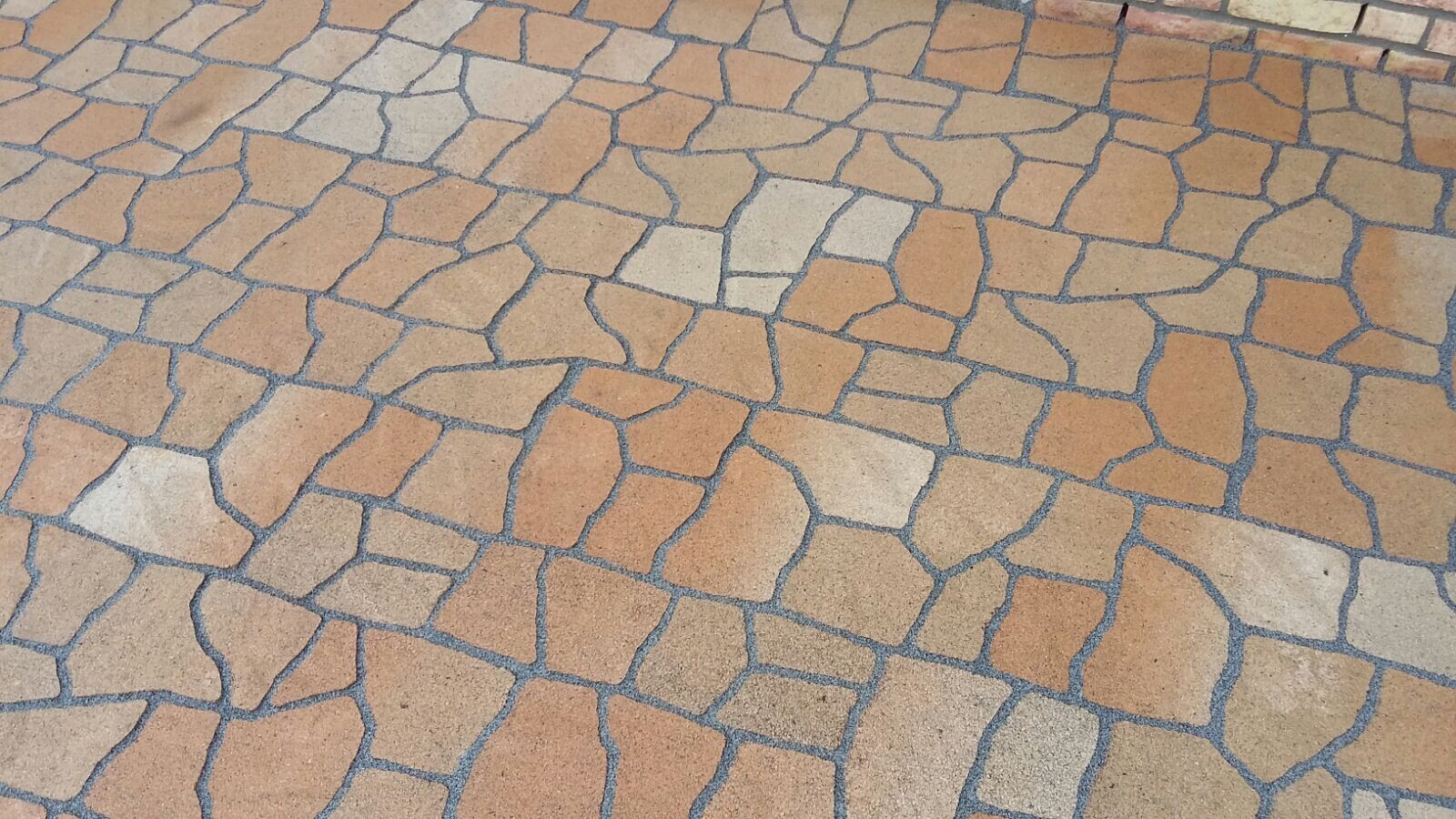
I personally used GFTK on my terrace, applying the VDW 800 in basalt with a joint width of 15 cm (6 inches) for polygonal concrete paving.
It is very easy to work with, and I have had it for 5 years now, cleaning it thoroughly every year with a pressure washer equipped with a surface cleaner—no rinsing, no damage.
Ultimately, all other products from companies like PCI, Baumit, Sakret, Romex, DanSand, and others are likely just as good.
For the courtyard area, because the joints were too narrow (1–2 mm (0.04–0.08 inches)), I only filled them with quartz sand and then treated it with a joint stabilizer. Although this is normally intended only for pedestrian areas, it has worked well so far, probably because my base layer is solid and firm, using fine recycled concrete gravel as the bedding layer.
I personally used GFTK on my terrace, applying the VDW 800 in basalt with a joint width of 15 cm (6 inches) for polygonal concrete paving.
It is very easy to work with, and I have had it for 5 years now, cleaning it thoroughly every year with a pressure washer equipped with a surface cleaner—no rinsing, no damage.
Ultimately, all other products from companies like PCI, Baumit, Sakret, Romex, DanSand, and others are likely just as good.
For the courtyard area, because the joints were too narrow (1–2 mm (0.04–0.08 inches)), I only filled them with quartz sand and then treated it with a joint stabilizer. Although this is normally intended only for pedestrian areas, it has worked well so far, probably because my base layer is solid and firm, using fine recycled concrete gravel as the bedding layer.

I visited the building materials supplier again today.
He wasn’t familiar with Dansand, but he knew about the resin-based types. He said that while these are technically permeable to water, they do not meet the eco-standard required to officially qualify for reduced wastewater fees. However, it’s possible that no one actually checks this.
From my own experience in the house’s demonstration garden, weeds will grow there after several years. This happens because soil gradually accumulates on top and allows plants to take root—unless you, for example, pressure wash it every year or spray algae remover.
I will stick with regular gravel 1-3mm (0.04-0.12 inches).
He wasn’t familiar with Dansand, but he knew about the resin-based types. He said that while these are technically permeable to water, they do not meet the eco-standard required to officially qualify for reduced wastewater fees. However, it’s possible that no one actually checks this.
From my own experience in the house’s demonstration garden, weeds will grow there after several years. This happens because soil gradually accumulates on top and allows plants to take root—unless you, for example, pressure wash it every year or spray algae remover.
I will stick with regular gravel 1-3mm (0.04-0.12 inches).
Kaspatoo schrieb:
Meets eco-standard requirements that are officially necessary for reduced wastewater charges.It is a misconception that, for example, permeable paving is automatically exempt from stormwater fees. This depends on the individual regulations. Here, we pay the full amount anyway, as the fee is based on the impermeable surface area, not the material.
It is not true that weeds can grow in a fully sealed joint. If they do, it means there was an error during installation and the joint was not completely filled. For example, if there is a half-centimeter (0.2 inch) gap left at the top, dirt, soil, and seeds can accumulate there, allowing plants to grow.
The only possible exception might be paving stones with rounded surfaces, such as the Nordland paving from Berding Beton, which is designed in the style of an old village street. In the rounded, large chamfers between the stones, dirt can gather, and moss tends to grow if the surface is not regularly swept. However, since the joint is sealed, cleaning is very easy, whether with a sweepers, broom, or pressure washer. For example, I have some moss between stones of this type in front of my carport due to standing moisture, shaded location, and a lot of debris from trees. See the photo of the gray/anthracite stones attached, taken right after installation, where you can clearly see the rounded edges.
In contrast, regular sharp-edged paving stones, whether with standard or micro chamfers, do not retain enough dirt for weeds to grow. See the photo of my terrace with yellow/beige polygonal concrete pavers, where the joint is slightly lower than the stone.
If weeds do grow in such cases, it is usually because the base is too weak, causing the stones to sink and the sealed joint to break open. In that case, weeds will clearly grow through.
By the way, DanSand is known for joint sand, stone powder, and similar dry jointing products, but I am not familiar with their joint mortar yet.
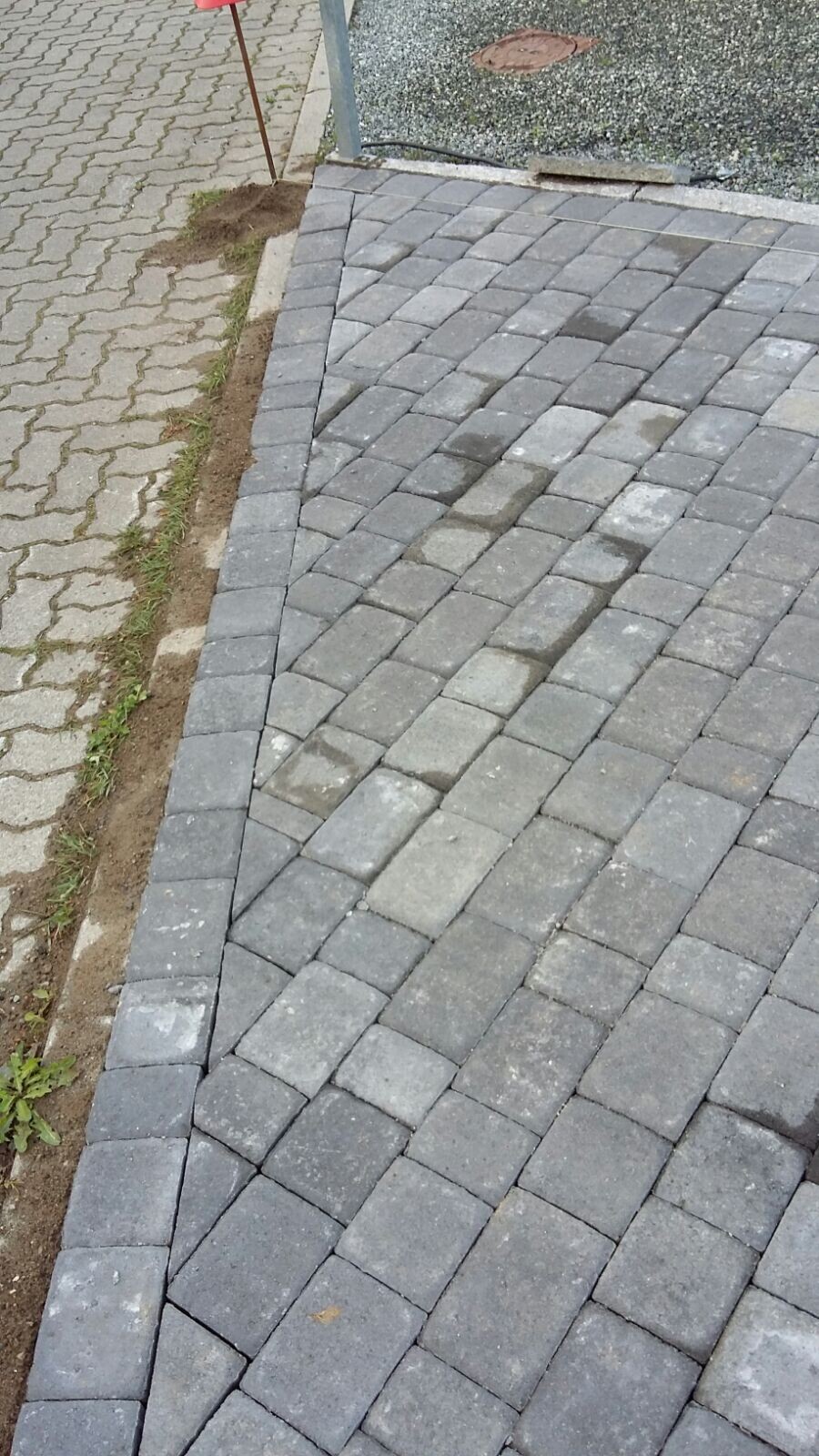
The only possible exception might be paving stones with rounded surfaces, such as the Nordland paving from Berding Beton, which is designed in the style of an old village street. In the rounded, large chamfers between the stones, dirt can gather, and moss tends to grow if the surface is not regularly swept. However, since the joint is sealed, cleaning is very easy, whether with a sweepers, broom, or pressure washer. For example, I have some moss between stones of this type in front of my carport due to standing moisture, shaded location, and a lot of debris from trees. See the photo of the gray/anthracite stones attached, taken right after installation, where you can clearly see the rounded edges.
In contrast, regular sharp-edged paving stones, whether with standard or micro chamfers, do not retain enough dirt for weeds to grow. See the photo of my terrace with yellow/beige polygonal concrete pavers, where the joint is slightly lower than the stone.
If weeds do grow in such cases, it is usually because the base is too weak, causing the stones to sink and the sealed joint to break open. In that case, weeds will clearly grow through.
By the way, DanSand is known for joint sand, stone powder, and similar dry jointing products, but I am not familiar with their joint mortar yet.
Similar topics