
ᐅ Penetrating Moisture in the South Wall of the Old Building – Musty Odor
Created on: 9 Jan 2026 20:21
A
Altbau37Hello everyone,
I’m new to the forum and am not entirely sure if I have posted in the right category or subforum – if my post is in the wrong place, please let me know, and it can be moved if necessary. I live in an older building originally constructed in 1973. In my extension from the 1970s, I notice a musty smell inside near an exterior wall, rising between the screed and the outer wall. No mold or damp spots are visible.
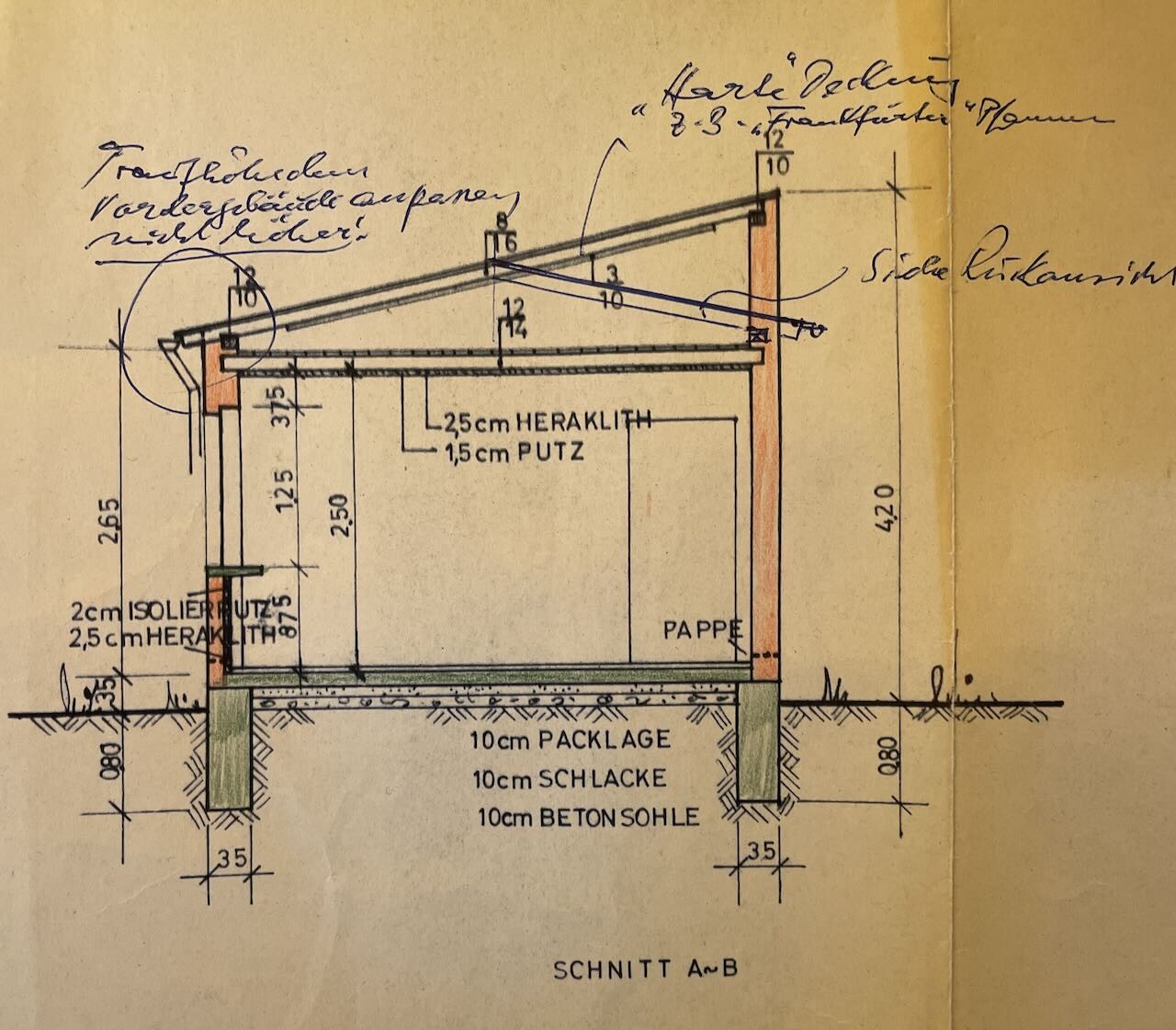
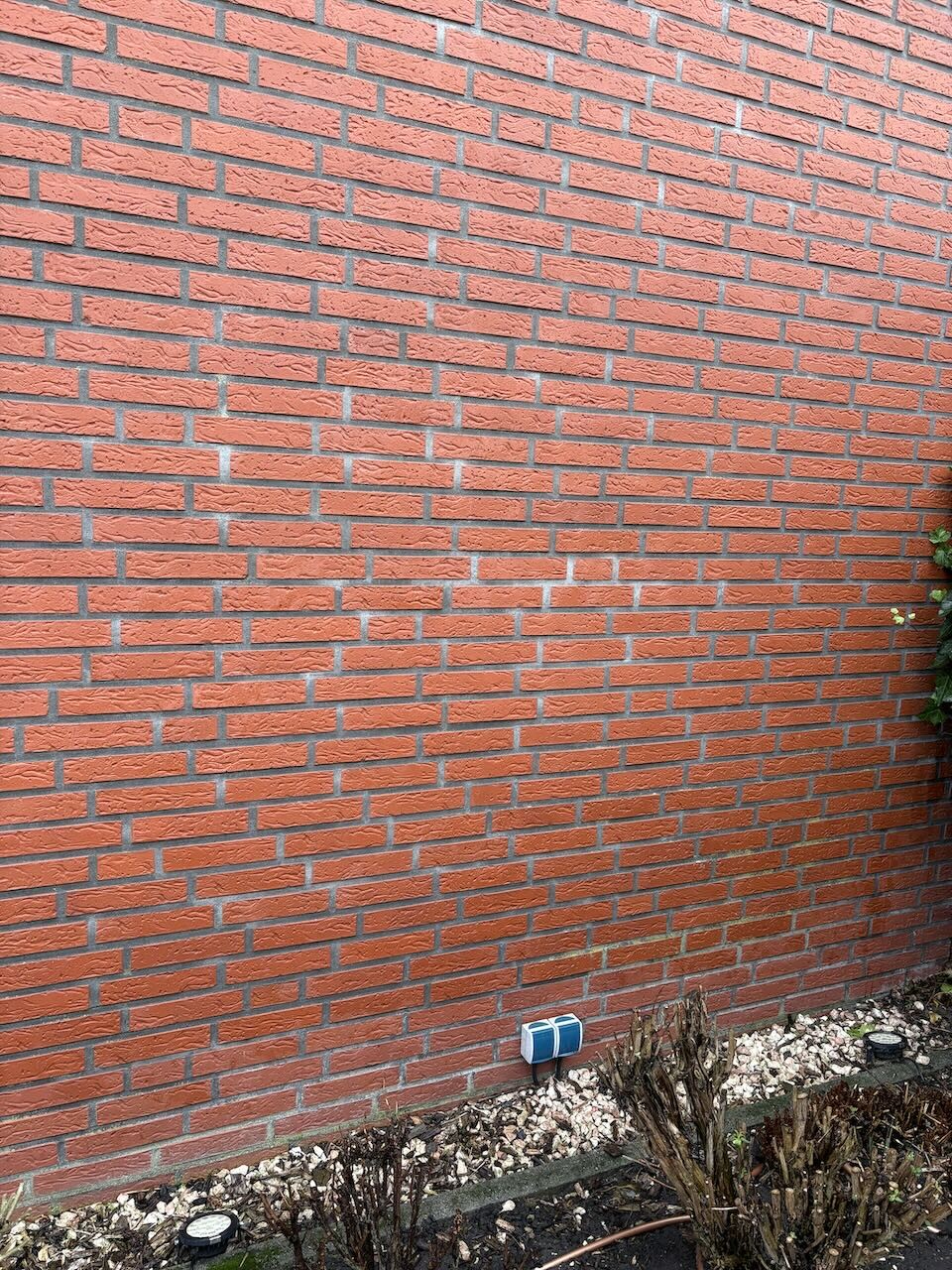
This concerns the south-facing side. I have attached photos of the exterior wall and the original drawing of the base structure. What stands out to me is:
- The lower part of the facing is dry (see the lower rows of bricks).
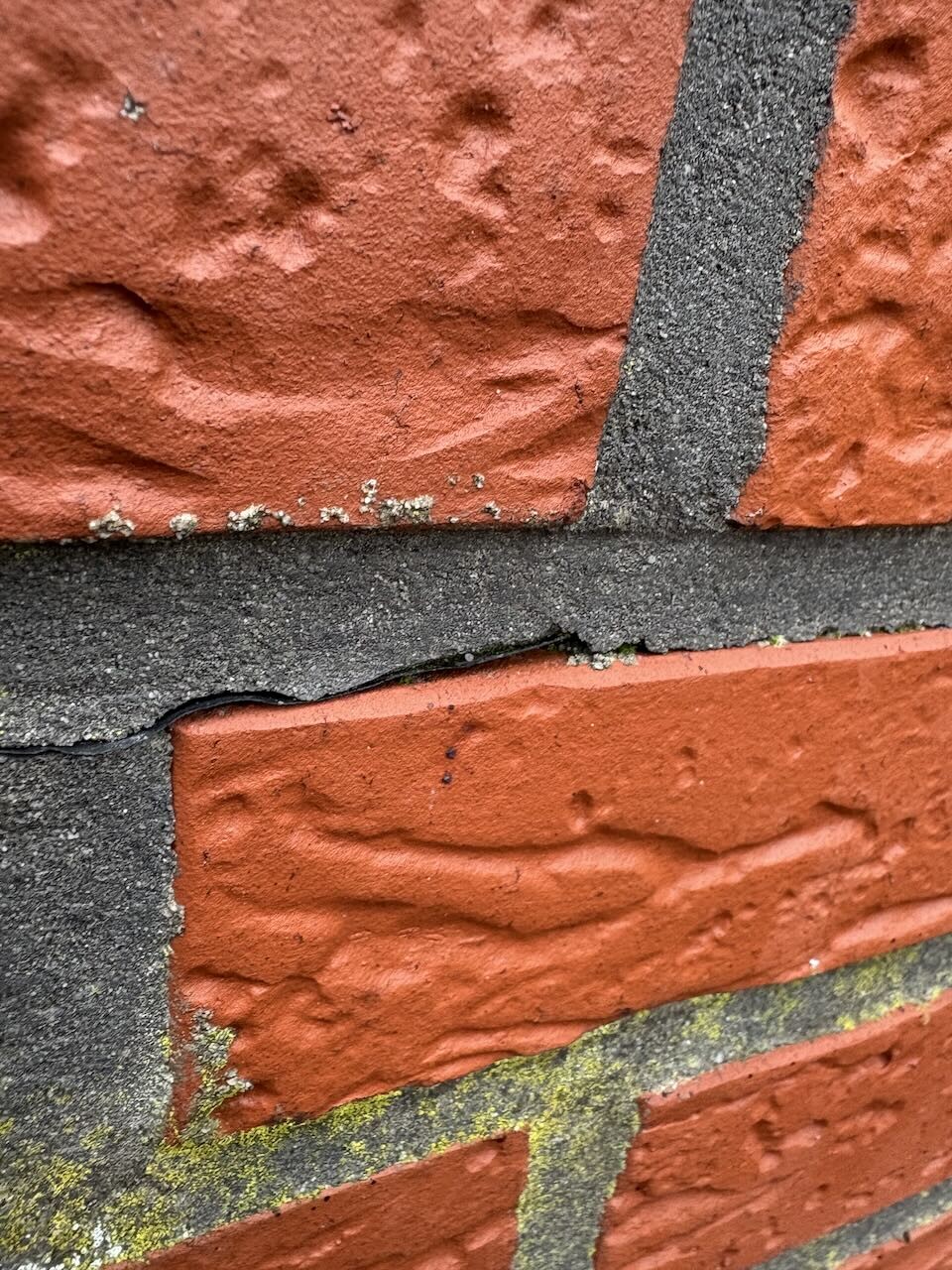
- Moisture only starts above the applied waterproofing – visible in the second photo between the bricks. The wall doesn’t always look like this and also dries on the surface when it’s dry; however, especially after rain, as it is now, you can see this uneven drying. To me, this suggests that it might not be rising damp?
- The top edge of the floor, and thus the problem area at the screed, is even higher – the top of the finished floor is approximately at the level of the 7th fully visible row of bricks.
About 1.5 years ago, we renovated the affected room – before that, there were no problems. The major change was the floor construction.
Before: old PVC flooring loosely laid on screed, with laminate on top.
Now: leveling compound on the screed to even out unevenness – only a few millimeters (mm) high. On top of that, a PE vapor barrier (not tightly connected to the wall on the sides), followed by impact sound insulation, with click vinyl flooring installed floating on top.
This issue does not occur on other exterior walls, only the south wall. There are no supply or drainage pipes in this part of the building. Heating pipes were installed in or under the screed during the renovation but in a different area of the room and roughly within the problem area without any joint connections.
I suspect the moisture is coming from outside but don’t really know where to start looking. Is the uneven drying of the exterior wall a problem, or is it possibly normal? So many questions – maybe someone has the crucial first hint.
Best regards,
Luca
Additional information: The building drawing views the exterior wall from the south, matching the photos. The roof is built as originally drawn, as a single-pitch roof, not as indicated with pen on the drawing. The neighbor’s semi-detached house adjoins on the right side.
I’m new to the forum and am not entirely sure if I have posted in the right category or subforum – if my post is in the wrong place, please let me know, and it can be moved if necessary. I live in an older building originally constructed in 1973. In my extension from the 1970s, I notice a musty smell inside near an exterior wall, rising between the screed and the outer wall. No mold or damp spots are visible.
This concerns the south-facing side. I have attached photos of the exterior wall and the original drawing of the base structure. What stands out to me is:
- The lower part of the facing is dry (see the lower rows of bricks).
- Moisture only starts above the applied waterproofing – visible in the second photo between the bricks. The wall doesn’t always look like this and also dries on the surface when it’s dry; however, especially after rain, as it is now, you can see this uneven drying. To me, this suggests that it might not be rising damp?
- The top edge of the floor, and thus the problem area at the screed, is even higher – the top of the finished floor is approximately at the level of the 7th fully visible row of bricks.
About 1.5 years ago, we renovated the affected room – before that, there were no problems. The major change was the floor construction.
Before: old PVC flooring loosely laid on screed, with laminate on top.
Now: leveling compound on the screed to even out unevenness – only a few millimeters (mm) high. On top of that, a PE vapor barrier (not tightly connected to the wall on the sides), followed by impact sound insulation, with click vinyl flooring installed floating on top.
This issue does not occur on other exterior walls, only the south wall. There are no supply or drainage pipes in this part of the building. Heating pipes were installed in or under the screed during the renovation but in a different area of the room and roughly within the problem area without any joint connections.
I suspect the moisture is coming from outside but don’t really know where to start looking. Is the uneven drying of the exterior wall a problem, or is it possibly normal? So many questions – maybe someone has the crucial first hint.
Best regards,
Luca
Additional information: The building drawing views the exterior wall from the south, matching the photos. The roof is built as originally drawn, as a single-pitch roof, not as indicated with pen on the drawing. The neighbor’s semi-detached house adjoins on the right side.
Hi Luca,
A musty smell without visible moisture almost always indicates that something is drying more slowly than before, and your new floor construction unfortunately plays a role in this. Not extending the polyethylene (PE) vapor barrier up the wall may seem trivial, but it is often exactly where moisture accumulates, which previously could still diffuse somewhat through the screed and PVC. The fact that the south-facing wall is affected fits the pattern—driving rain combined with warming tends to push moisture sideways inward, especially with connections from the 1970s. The uneven drying on the outside is not initially critical but shows that water is entering the system and cannot properly drain downwards, so this is unlikely to be classic rising damp. It is also interesting that the waterproofing layer is located lower than the problem area inside, which often leads to moisture pockets that are first noticed by smell and only measured later.
A musty smell without visible moisture almost always indicates that something is drying more slowly than before, and your new floor construction unfortunately plays a role in this. Not extending the polyethylene (PE) vapor barrier up the wall may seem trivial, but it is often exactly where moisture accumulates, which previously could still diffuse somewhat through the screed and PVC. The fact that the south-facing wall is affected fits the pattern—driving rain combined with warming tends to push moisture sideways inward, especially with connections from the 1970s. The uneven drying on the outside is not initially critical but shows that water is entering the system and cannot properly drain downwards, so this is unlikely to be classic rising damp. It is also interesting that the waterproofing layer is located lower than the problem area inside, which often leads to moisture pockets that are first noticed by smell and only measured later.
Hi,
thanks for the assessment! I definitely want to avoid changing the floor structure again – removing the vinyl flooring without damage would hardly be possible in my case, and due to the laying direction, it would also require dismantling some furniture that is typically “assembled once and never touched again.”
So the question now is how I can ideally counteract this moisture buildup in another way. Is there a way to encourage the masonry to dry out from the outside? Adding another layer of waterproofing from outside would likely trap the moisture even more. Would, for example, joint vents be an option? But I guess I would first need to determine whether there is an air gap at all, right?
Additionally, as soon as the weather permits, I will have a look at the roof from above to rule out moisture ingress from there. Or is the extent of the problem even conceivable from moisture absorbed solely through the exterior wall?
Regards
Luca
thanks for the assessment! I definitely want to avoid changing the floor structure again – removing the vinyl flooring without damage would hardly be possible in my case, and due to the laying direction, it would also require dismantling some furniture that is typically “assembled once and never touched again.”
So the question now is how I can ideally counteract this moisture buildup in another way. Is there a way to encourage the masonry to dry out from the outside? Adding another layer of waterproofing from outside would likely trap the moisture even more. Would, for example, joint vents be an option? But I guess I would first need to determine whether there is an air gap at all, right?
Additionally, as soon as the weather permits, I will have a look at the roof from above to rule out moisture ingress from there. Or is the extent of the problem even conceivable from moisture absorbed solely through the exterior wall?
Regards
Luca
Similar topics