
ᐅ Paving the terrace for a newly built single-family home with a low foundation
Created on: 10 Jan 2023 23:22
J
JackraptorJ
Jackraptor10 Jan 2023 23:22Hello Forum,
a brief introduction about myself:
I am currently having a single-family house built by a general contractor. This is my first house, and I am not a professional in the construction industry or anything similar.
Due to the city’s regulations, my single-family house with a pitched roof was only allowed a ridge height of 7.00 meters (23 feet) above street level. Therefore, the architect from the general contractor suggested partly “embedding” the house by 30 cm (12 inches), which was done accordingly.
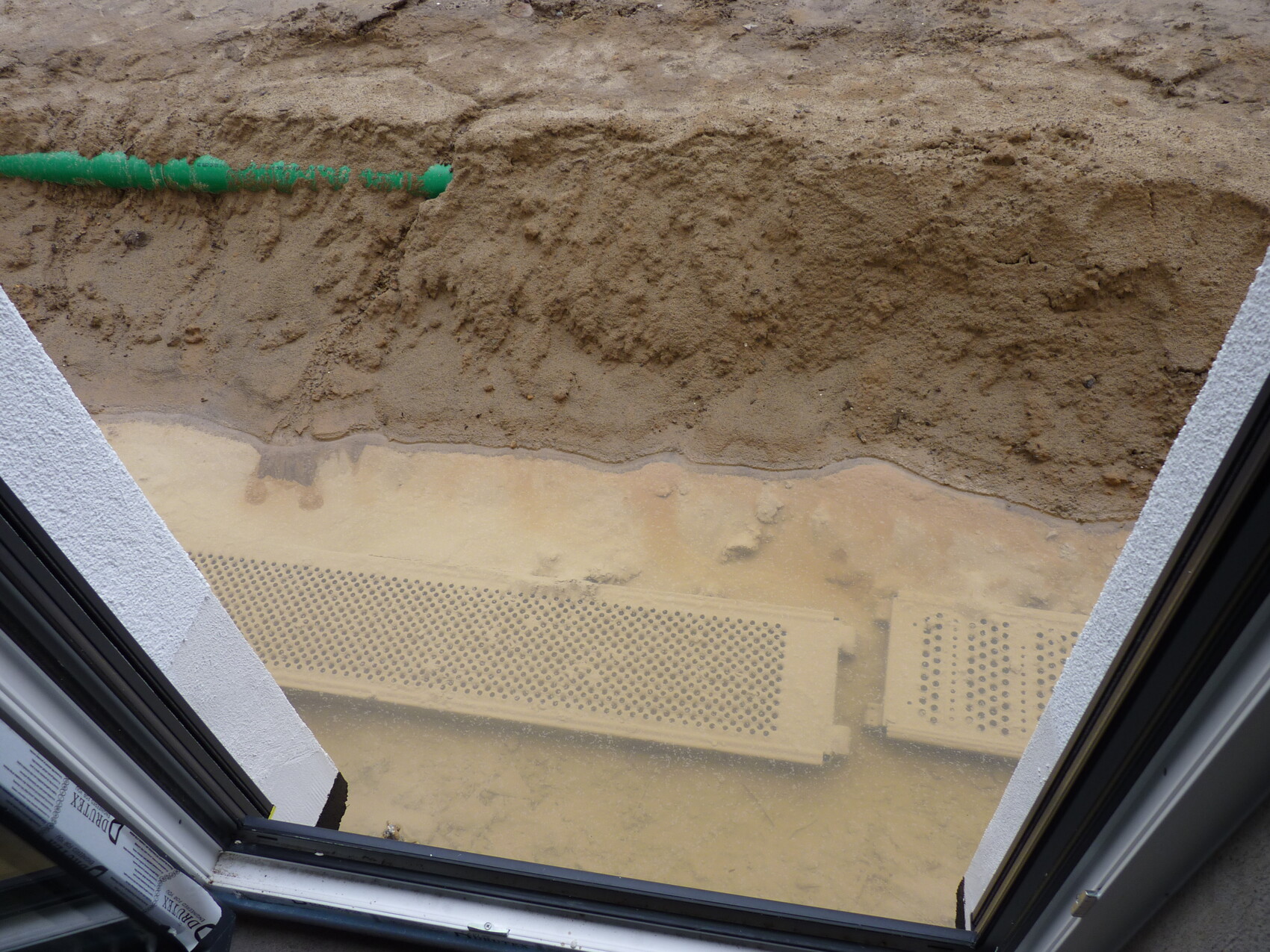
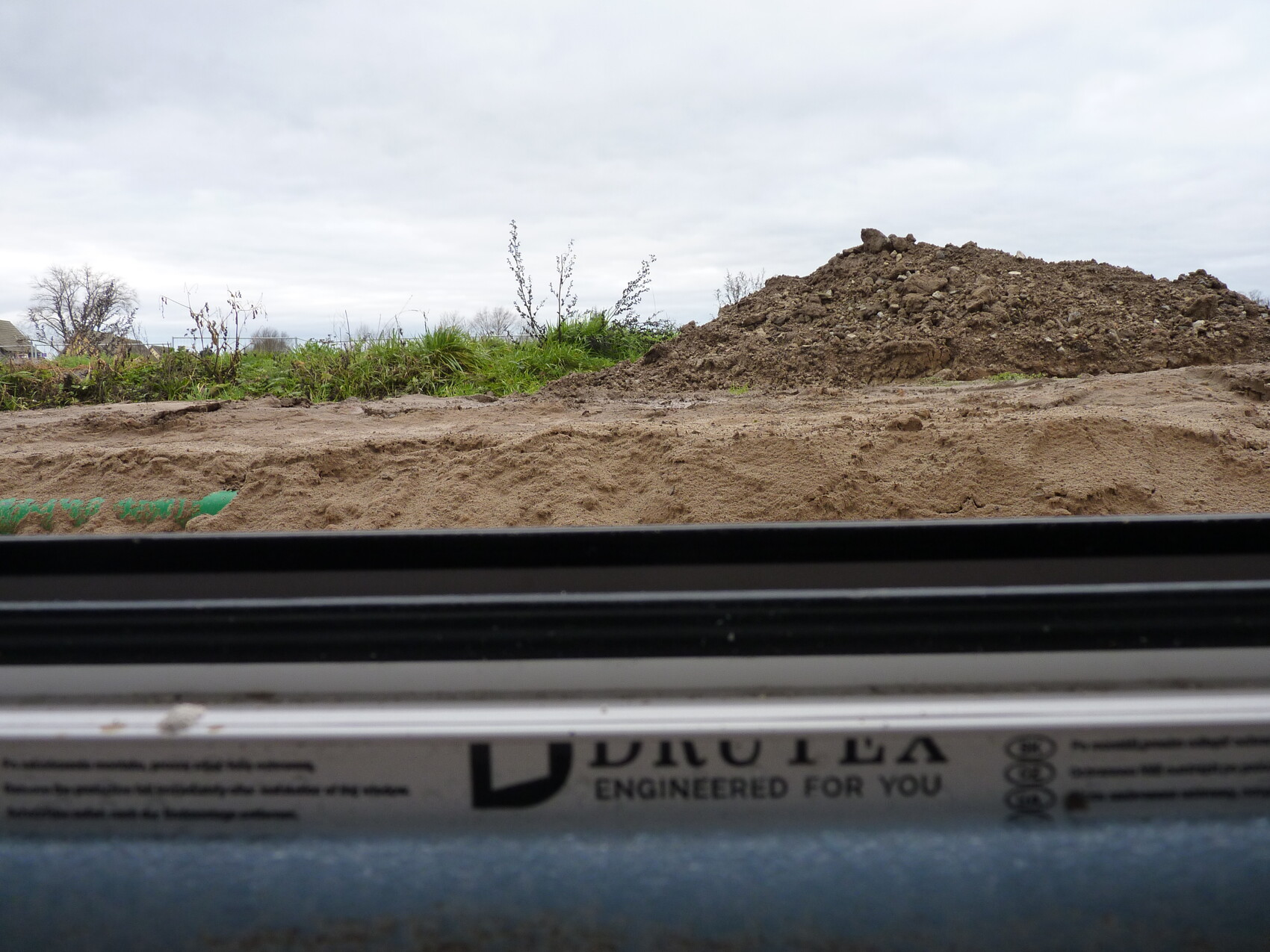
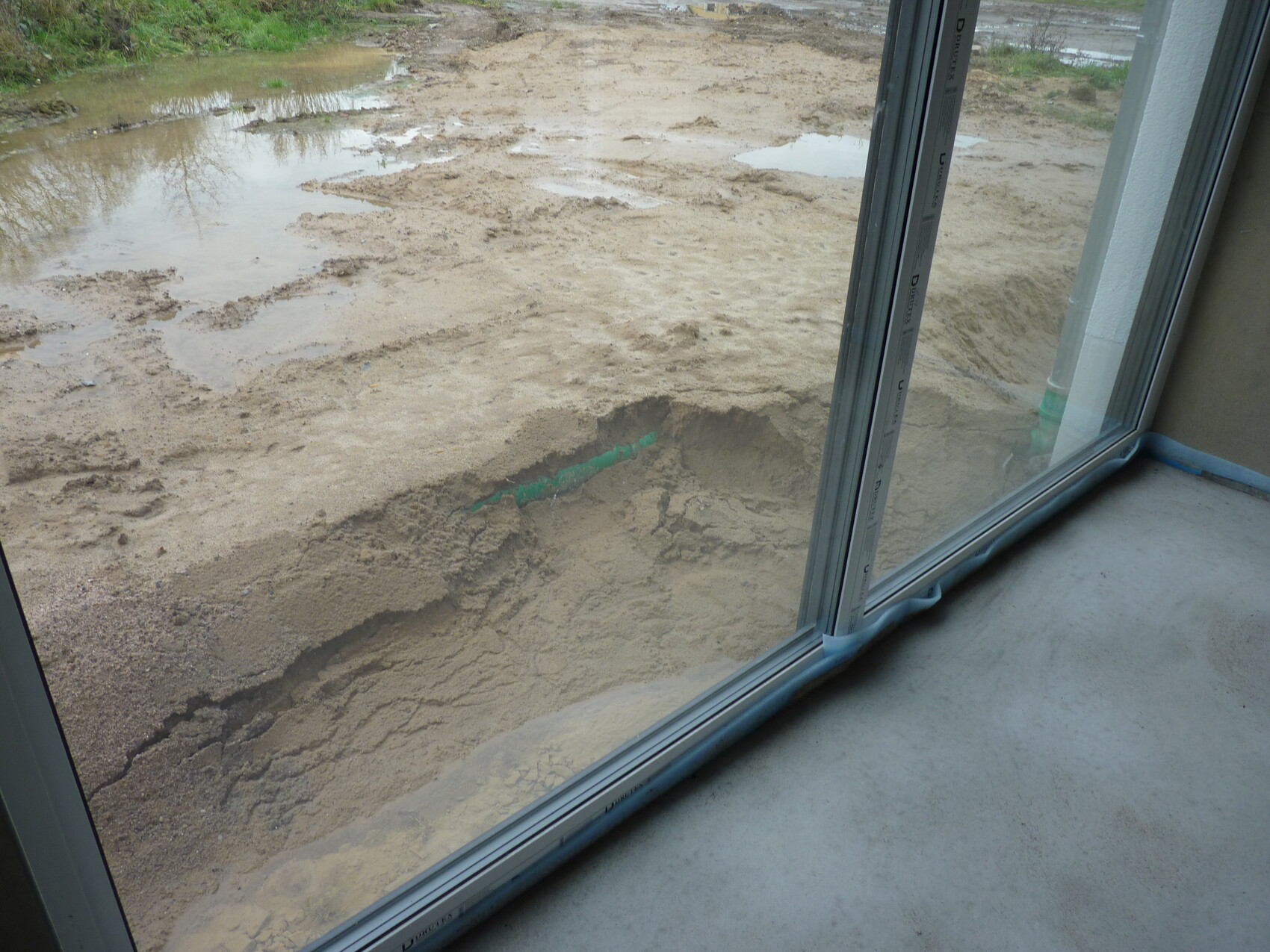
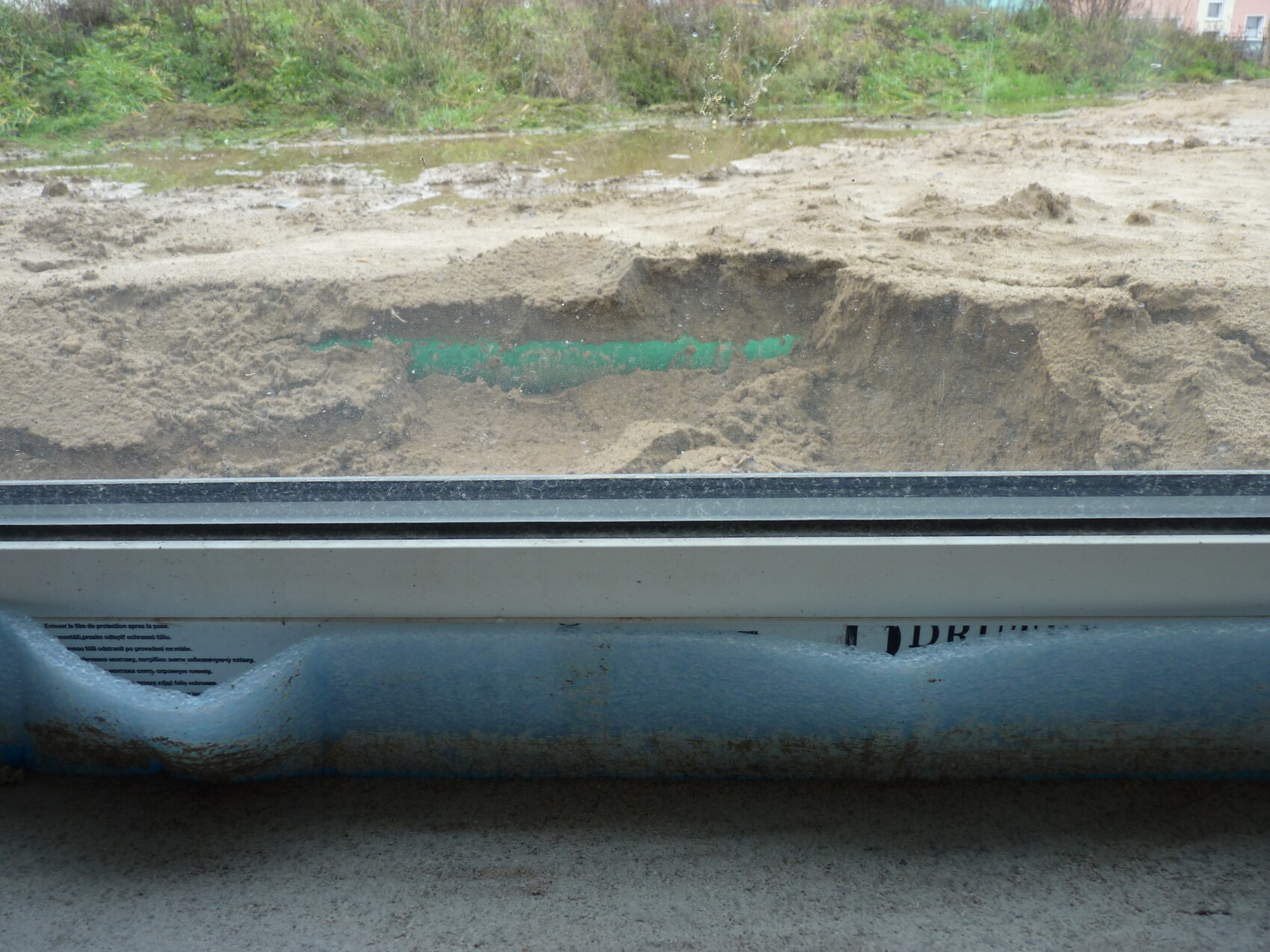
Now, the rainwater pipes have been connected to the gutters. However, the pipes, which should actually be underground, seem to me to be installed quite “high.”
The excavation contractor, who performed this work, told me that he cannot bury the pipes any deeper because the public connection to the rainwater system would then be below the required level, meaning there would be no proper slope leading away from the house.
My questions are therefore: Is it still possible to pave a terrace over this? Has the house been set too low? Is this common practice? And if so, in case of necessity, can I pave around the pipes and cover them in another way? I am worried that due to all the sand, this might not be possible in principle...
(Yes, there is currently a lot of water around the house. A landscaping gardener will soon install drainage, and I also have a sewage pump.)
I would be very grateful for your suggestions!
a brief introduction about myself:
I am currently having a single-family house built by a general contractor. This is my first house, and I am not a professional in the construction industry or anything similar.
Due to the city’s regulations, my single-family house with a pitched roof was only allowed a ridge height of 7.00 meters (23 feet) above street level. Therefore, the architect from the general contractor suggested partly “embedding” the house by 30 cm (12 inches), which was done accordingly.
Now, the rainwater pipes have been connected to the gutters. However, the pipes, which should actually be underground, seem to me to be installed quite “high.”
The excavation contractor, who performed this work, told me that he cannot bury the pipes any deeper because the public connection to the rainwater system would then be below the required level, meaning there would be no proper slope leading away from the house.
My questions are therefore: Is it still possible to pave a terrace over this? Has the house been set too low? Is this common practice? And if so, in case of necessity, can I pave around the pipes and cover them in another way? I am worried that due to all the sand, this might not be possible in principle...
(Yes, there is currently a lot of water around the house. A landscaping gardener will soon install drainage, and I also have a sewage pump.)
I would be very grateful for your suggestions!

Please show several pictures of how the house is situated on the site overall. And, of course, the connection of the downspouts to the drainage pipe (also in the detailed drawing). There are many knowledgeable people here in construction, but no mind readers.
https://www.instagram.com/11antgmxde/
https://www.linkedin.com/company/bauen-jetzt/
https://www.instagram.com/11antgmxde/
https://www.linkedin.com/company/bauen-jetzt/
W
WilderSueden10 Jan 2023 23:47How far below the ground floor level are the pipes? The paving has a thickness of 6-8cm (2.5-3 inches), plus 3-5cm (1-2 inches) of gravel/bedding sand and a base layer of 20-30cm (8-12 inches) of crushed stone. On top of that, there is the slope away from the house. Roughly, you need about 35-40cm (14-16 inches) of coverage above the pipes.
O
Oberhäslich10 Jan 2023 23:54Are those the green pipes? They are only about 10cm (4 inches) up to the top edge of the floor. Normally, wastewater pipes should be buried at least 30-40cm (12-16 inches) deep, preferably more.

So far, you’ve been lucky that the puddles outside are not inside your house, and your patio doors are not watertight submarine windows.
From the pictures, your house is at the lowest point on the property.
Please plan a drainage system quickly with an outlet, possibly including pumps to the stormwater sewer.
Do you have sandy soil or clay soil?
From the pictures, your house is at the lowest point on the property.
Please plan a drainage system quickly with an outlet, possibly including pumps to the stormwater sewer.
Do you have sandy soil or clay soil?

I have so many questions right away...
Is there an external construction supervisor or expert involved? (If not, why not?!)
Why is this only being noticed now, and who created the drainage plan? (My guess: no one)
Is the house solid construction (masonry) or timber frame? (If it’s timber, then good luck...)
Why on earth would someone spend half a million without a plan, meaning they undertake usually the most expensive and unique project of their life (well, marriage often costs more ;-) ) without consulting an expert? (I’m not talking about the general contractor, who just does whatever they think is right!)
Now to the question: Is there really no alternative to “paving”?
And why do I often/always see pictures here (in the forum) where the situation can only be guessed at because nothing clear is shown? So: Please provide sections, drawings, and plenty of good images of the issue—then there will be much less guessing...
Although I trained over 30 years ago in civil and road construction, here I think it’s enough to just use some common sense. 🙂
He should definitely have mentioned that earlier; there are always alternatives (inspection chamber, lifting station, pump, etc.), but of course those cost quite a bit of money...
Is there an external construction supervisor or expert involved? (If not, why not?!)
Why is this only being noticed now, and who created the drainage plan? (My guess: no one)
Is the house solid construction (masonry) or timber frame? (If it’s timber, then good luck...)
Why on earth would someone spend half a million without a plan, meaning they undertake usually the most expensive and unique project of their life (well, marriage often costs more ;-) ) without consulting an expert? (I’m not talking about the general contractor, who just does whatever they think is right!)
Now to the question: Is there really no alternative to “paving”?
And why do I often/always see pictures here (in the forum) where the situation can only be guessed at because nothing clear is shown? So: Please provide sections, drawings, and plenty of good images of the issue—then there will be much less guessing...
Although I trained over 30 years ago in civil and road construction, here I think it’s enough to just use some common sense. 🙂
Jackraptor schrieb:
... The civil engineer who did the work told me he can’t bury the pipes any deeper because the public connection to the stormwater system would then be below grade and there would be no slope away from the house.
...
He should definitely have mentioned that earlier; there are always alternatives (inspection chamber, lifting station, pump, etc.), but of course those cost quite a bit of money...
Similar topics