
Dear professionals,
I will soon be moving into a ground-floor apartment where parquet flooring has been installed throughout. The building is 3 years old.
There is an unpleasant sweetish odor in the living and sleeping areas that seems to be coming from the floor.
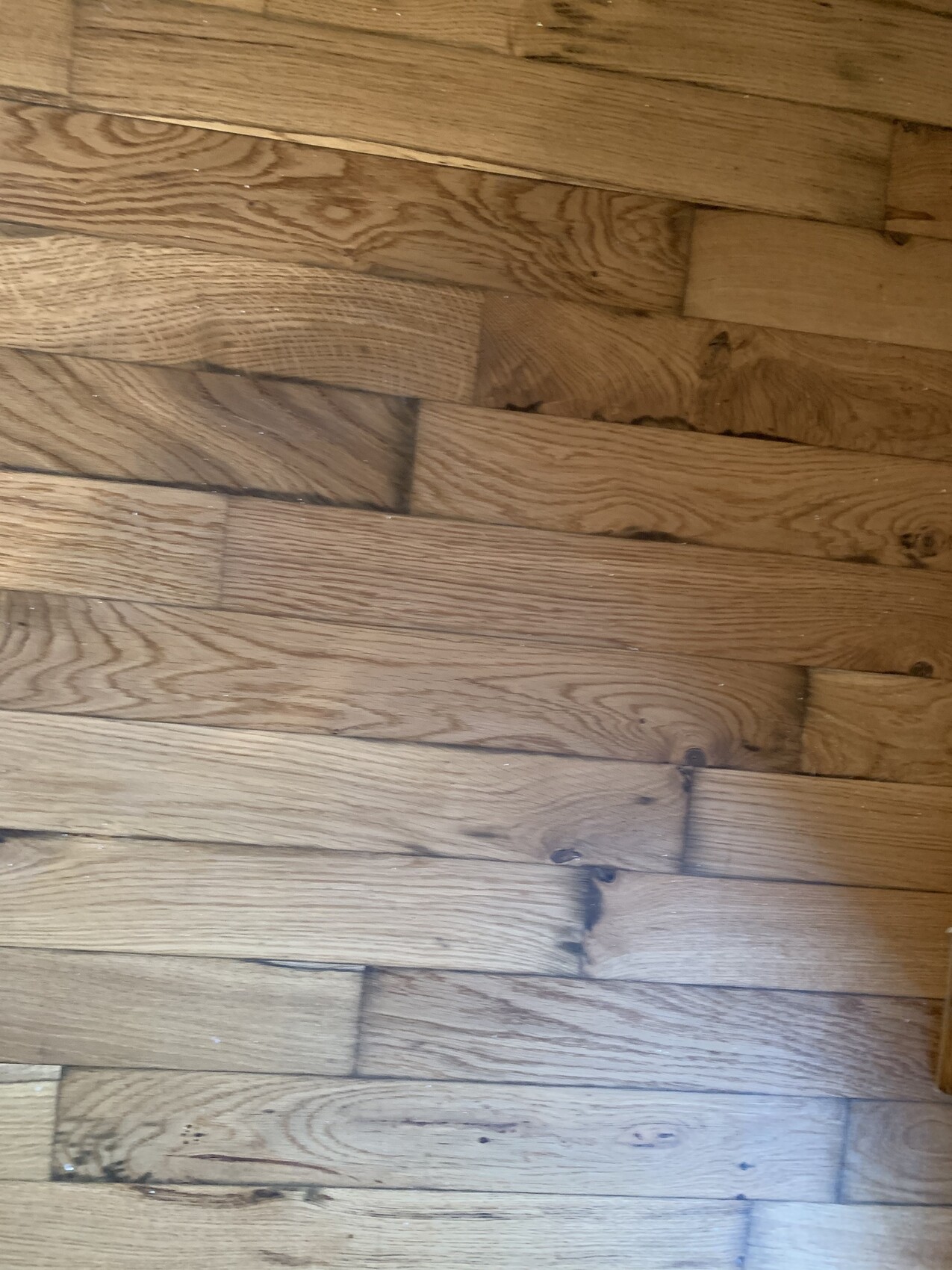
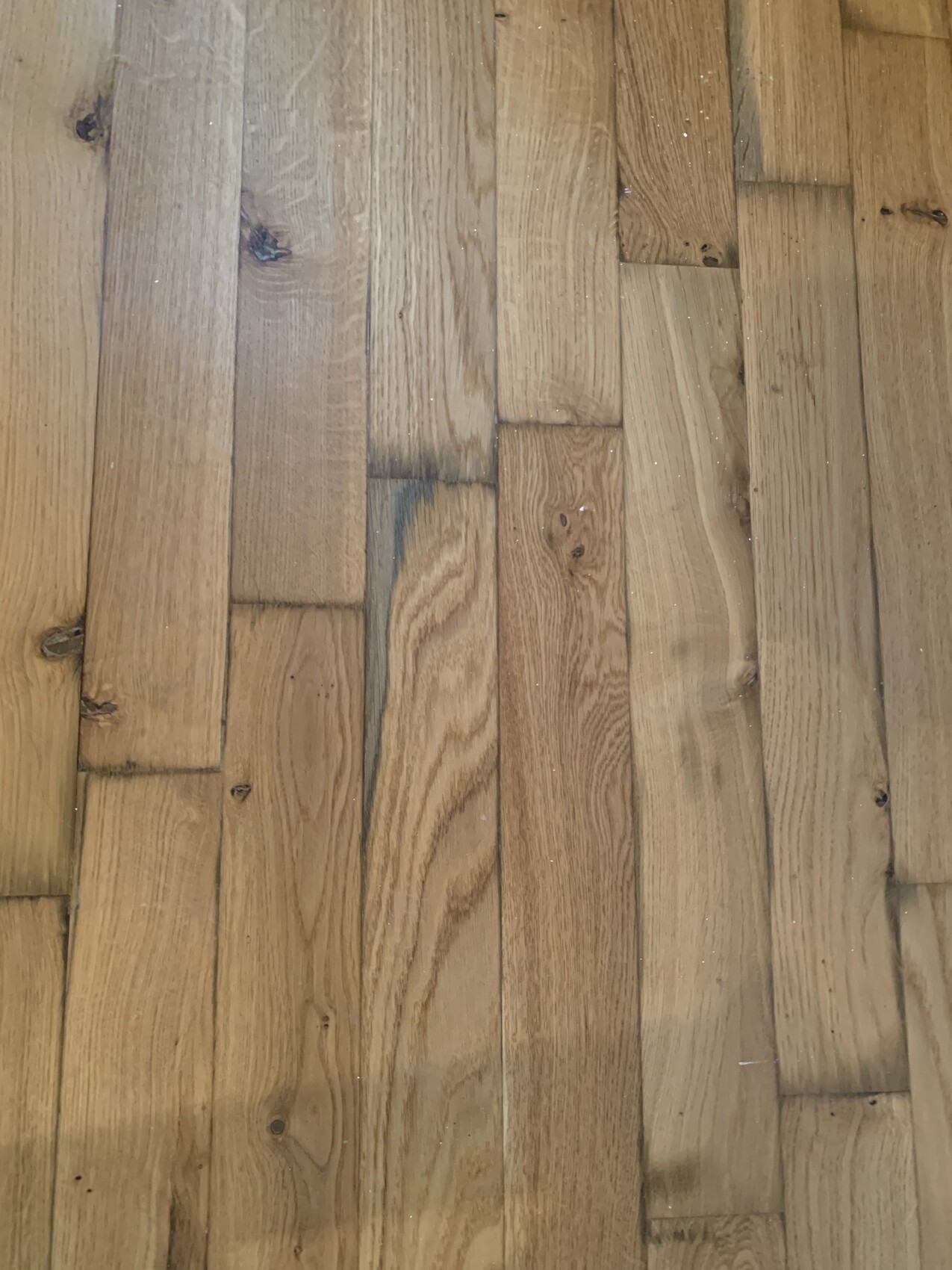
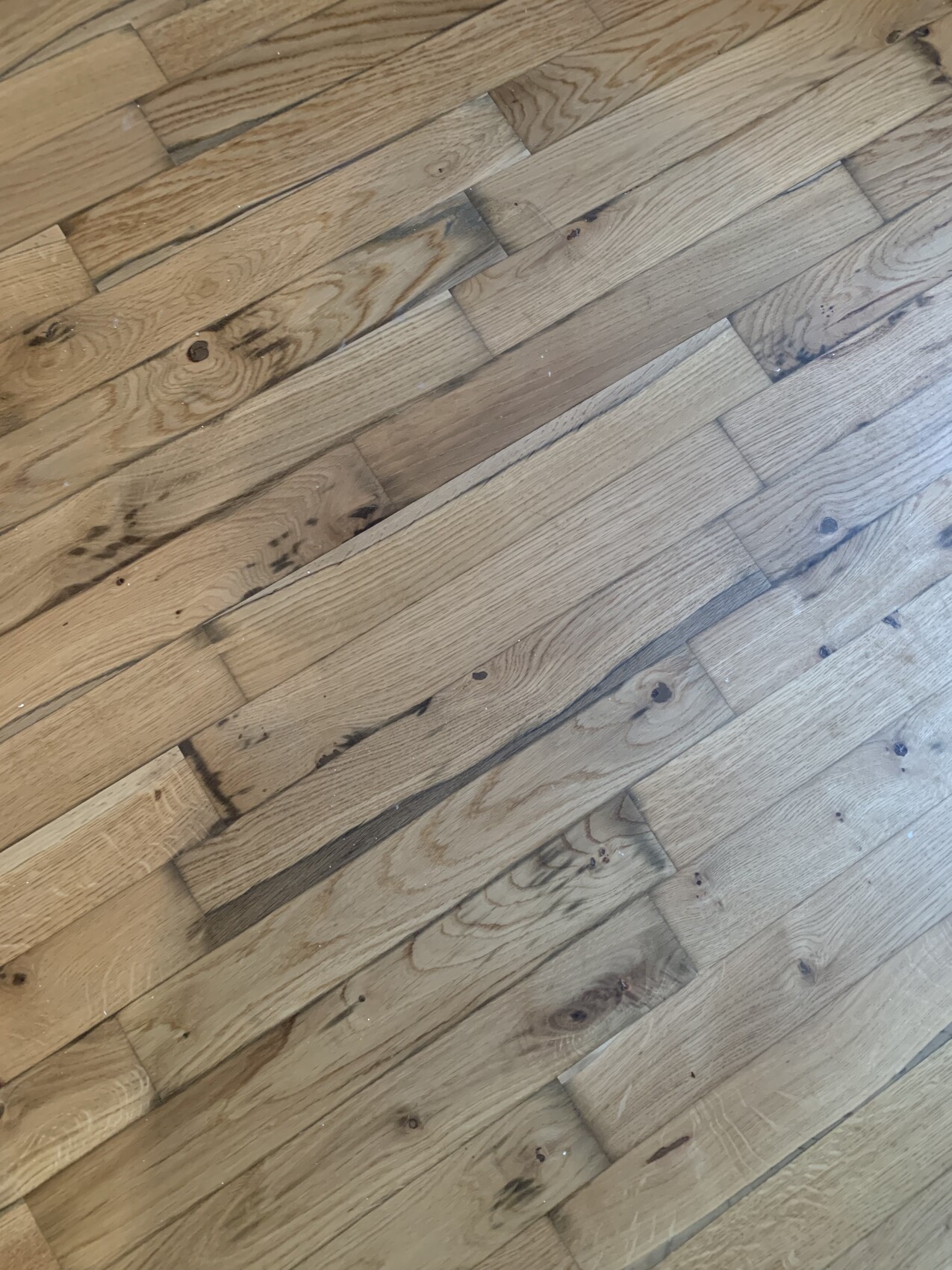
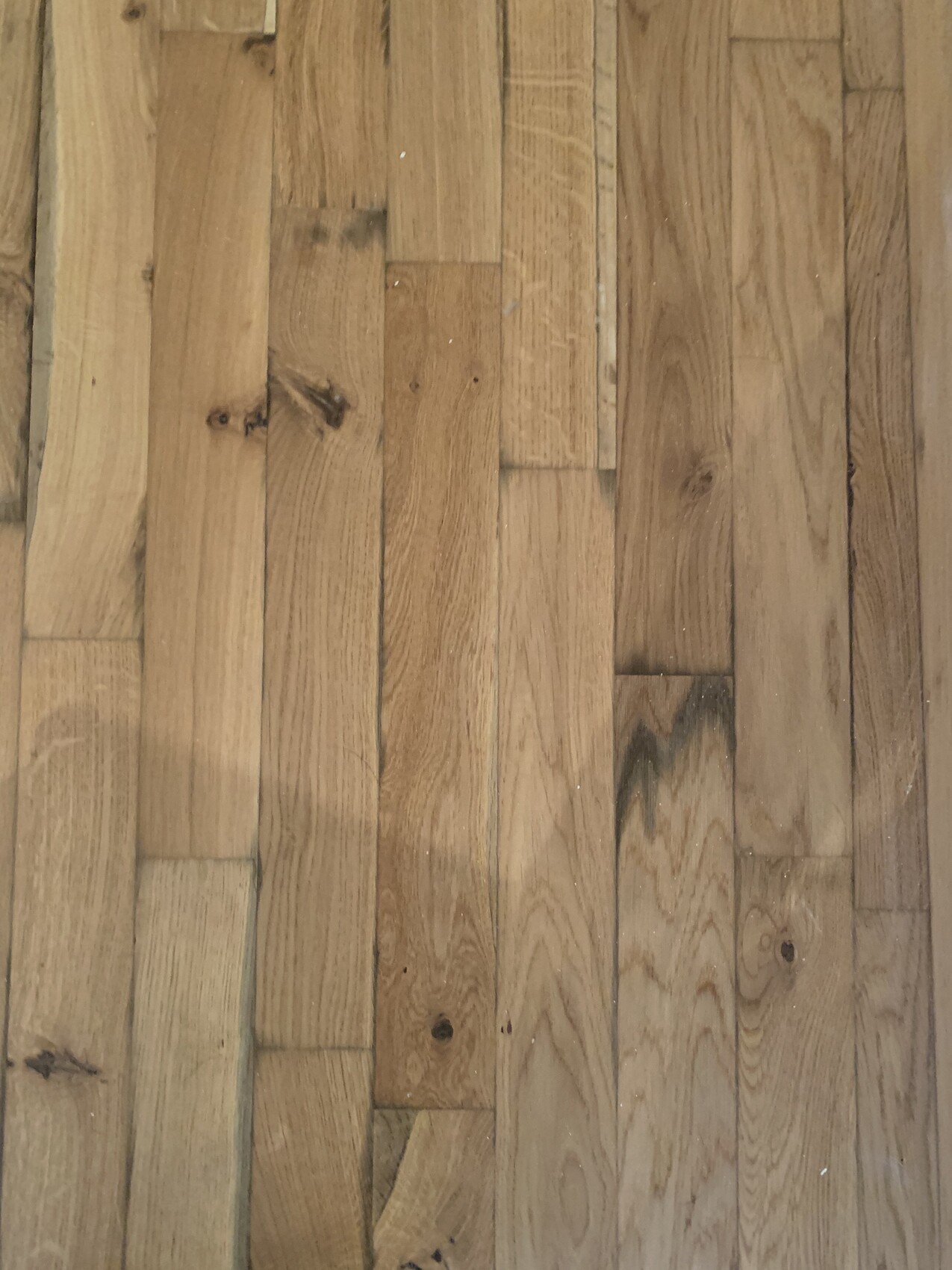
The parquet is damaged in some places, see photos.
Can a professional tell whether the moisture causing this is coming from inside or outside?
I wonder if the moisture is coming from below/outside, or if the previous tenant just let their dogs urinate everywhere.
Any ideas or suggestions on how to get rid of this smell? I don’t mind the appearance of the parquet since there will be furniture and rugs anyway; my main concern is the odor.
Sanding the floor is unfortunately not an option, as the property management is unwilling to contribute.
Thanks in advance for all expert opinions!
Facts:
- Apartment is on the ground floor with access to a terrace
- Parquet is in the open-plan kitchen/living room (15sqm (161sq ft)) and the bedroom (15sqm (161sq ft))
- Previous tenant had two dogs
- Property management has no interest in maintenance
- I have painted over with a nicotine-blocking primer to rule out the walls as the source of the smell
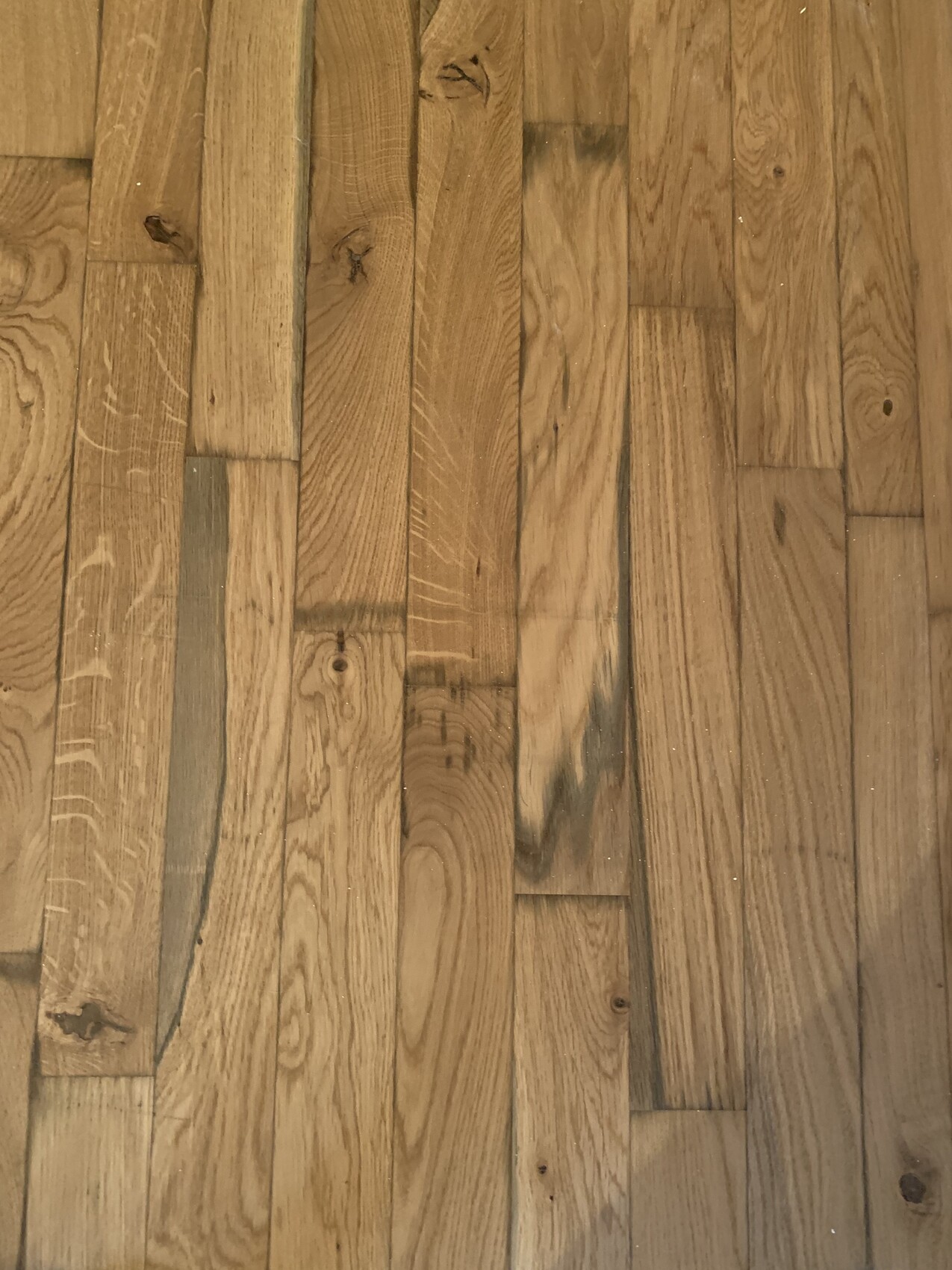
I will soon be moving into a ground-floor apartment where parquet flooring has been installed throughout. The building is 3 years old.
There is an unpleasant sweetish odor in the living and sleeping areas that seems to be coming from the floor.
The parquet is damaged in some places, see photos.
Can a professional tell whether the moisture causing this is coming from inside or outside?
I wonder if the moisture is coming from below/outside, or if the previous tenant just let their dogs urinate everywhere.
Any ideas or suggestions on how to get rid of this smell? I don’t mind the appearance of the parquet since there will be furniture and rugs anyway; my main concern is the odor.
Sanding the floor is unfortunately not an option, as the property management is unwilling to contribute.
Thanks in advance for all expert opinions!
Facts:
- Apartment is on the ground floor with access to a terrace
- Parquet is in the open-plan kitchen/living room (15sqm (161sq ft)) and the bedroom (15sqm (161sq ft))
- Previous tenant had two dogs
- Property management has no interest in maintenance
- I have painted over with a nicotine-blocking primer to rule out the walls as the source of the smell

Hello "Miriami,"
The parquet flooring includes planks with varying proportions of sapwood, visible knots, and different cuts from the tree trunk. It may appear "rustic," but this is considered a "rustic" or "characterful" grade.
There is no visible sign of exposure to elevated moisture, which can also be confirmed by examining the end joints of the parquet planks.
Whether the dogs urinated there can possibly be estimated by the smell in the room.
A sweetish odor does not indicate that animals caused such exposure in the past.
A barrier layer applied over wall plaster does not protect against emissions. Without a doubt.
In a legal dispute years ago, I dealt with a case where several cats had urinated on a carpet during the tenancy.
The odor, which can only be described as foul, had also penetrated into the pores of the wall plaster.
At that time, I recommended removing the entire wall plaster and reapplying it.
Therefore, my advice is to leave the parquet flooring as it is.
Try intensive ventilation to see if the odor returns with the same intensity.
If it does, it would indeed suggest that the smell is continuously emanating from some building component.
Regards, KlaRa
The parquet flooring includes planks with varying proportions of sapwood, visible knots, and different cuts from the tree trunk. It may appear "rustic," but this is considered a "rustic" or "characterful" grade.
There is no visible sign of exposure to elevated moisture, which can also be confirmed by examining the end joints of the parquet planks.
Whether the dogs urinated there can possibly be estimated by the smell in the room.
A sweetish odor does not indicate that animals caused such exposure in the past.
A barrier layer applied over wall plaster does not protect against emissions. Without a doubt.
In a legal dispute years ago, I dealt with a case where several cats had urinated on a carpet during the tenancy.
The odor, which can only be described as foul, had also penetrated into the pores of the wall plaster.
At that time, I recommended removing the entire wall plaster and reapplying it.
Therefore, my advice is to leave the parquet flooring as it is.
Try intensive ventilation to see if the odor returns with the same intensity.
If it does, it would indeed suggest that the smell is continuously emanating from some building component.
Regards, KlaRa

Well, it’s probably a moisture-related damage. It could also be that plants were once there and water was absorbed over a longer period. To be honest, I have exactly the same appearance in a few (much smaller) spots in my apartment. However, I don’t have any sweetish smell.
It’s also possible that juice spilled there at some point and was left to soak in for a while.
Try using an odor-neutralizing agent. For example, spread baking soda with a damp cloth. Don’t leave it on for too long to avoid (further) damage to the floor; rather, repeat the process more often.
It’s also possible that juice spilled there at some point and was left to soak in for a while.
Try using an odor-neutralizing agent. For example, spread baking soda with a damp cloth. Don’t leave it on for too long to avoid (further) damage to the floor; rather, repeat the process more often.

I have reviewed the pictures three times and could not identify any damage that would reasonably be called as such.
The cause of the dark discoloration at the joints has already been explained in another thread.
Otherwise, the proximity to the patio doors can lead to the following possible sources of issues (not an exhaustive list):
Entry of:
• increased light (not everyone likes it; the floor may be prone to changes)
• dirt (foot traffic marks)
• increased moisture (from feet or, if on the windy side and with a flush threshold, often directly through the door)
P.S. The pictures are of limited quality; opening them in a separate window and zooming in does not help at all – unfortunately.
The cause of the dark discoloration at the joints has already been explained in another thread.
Otherwise, the proximity to the patio doors can lead to the following possible sources of issues (not an exhaustive list):
Entry of:
• increased light (not everyone likes it; the floor may be prone to changes)
• dirt (foot traffic marks)
• increased moisture (from feet or, if on the windy side and with a flush threshold, often directly through the door)
P.S. The pictures are of limited quality; opening them in a separate window and zooming in does not help at all – unfortunately.
X
xMisterDx15 Nov 2022 22:08I am aware that the rental housing market is quite tight, as is the used car market, by the way...
But... what would happen if you went to a car forum asking, "I'm about to buy a used car that’s making strange noises?"
What advice would you get other than "Stay away, keep looking!"?
It’s a rental apartment; nothing that was already there when you moved in belongs to you. In that sense, it’s really not your responsibility to spend your time searching for the source of odors in a forum.
Even if the cause is identified here... you tell your landlord, and they will likely say, "Why? We showed you the apartment; everything was fine then. I’m not fixing anything. Otherwise, you’ll have to find somewhere else; I have plenty of interested tenants..."
This is not meant to be harsh at all... but when you rent, especially in a tight market, you have to take the apartment as it is.
By the way, I know the problem—I rented a place myself eight years ago that needed significant improvements, which we had to do ourselves before moving in. Nobody thanked us for that; on the contrary. If you make changes to the property, the landlord can even respond by increasing your rent. For any changes or work on the flooring, you must get written permission stating that you are allowed to make those modifications...
Always remember:
You are a tenant... it doesn’t belong to you, you are just using it.
But... what would happen if you went to a car forum asking, "I'm about to buy a used car that’s making strange noises?"
What advice would you get other than "Stay away, keep looking!"?
It’s a rental apartment; nothing that was already there when you moved in belongs to you. In that sense, it’s really not your responsibility to spend your time searching for the source of odors in a forum.
Even if the cause is identified here... you tell your landlord, and they will likely say, "Why? We showed you the apartment; everything was fine then. I’m not fixing anything. Otherwise, you’ll have to find somewhere else; I have plenty of interested tenants..."
This is not meant to be harsh at all... but when you rent, especially in a tight market, you have to take the apartment as it is.
By the way, I know the problem—I rented a place myself eight years ago that needed significant improvements, which we had to do ourselves before moving in. Nobody thanked us for that; on the contrary. If you make changes to the property, the landlord can even respond by increasing your rent. For any changes or work on the flooring, you must get written permission stating that you are allowed to make those modifications...
Always remember:
You are a tenant... it doesn’t belong to you, you are just using it.
Similar topics