
B
Bremen_8318 Aug 2016 14:46Hello,
A few months ago, we bought a house from the 1980s. We now want to paint the eaves and the gables. As a non-professional, I am not entirely sure how to proceed in the best way to avoid having to repaint everything again in just two years. Initially, I thought of the following:
Thanks in advance for your advice!
Best regards
Jörn
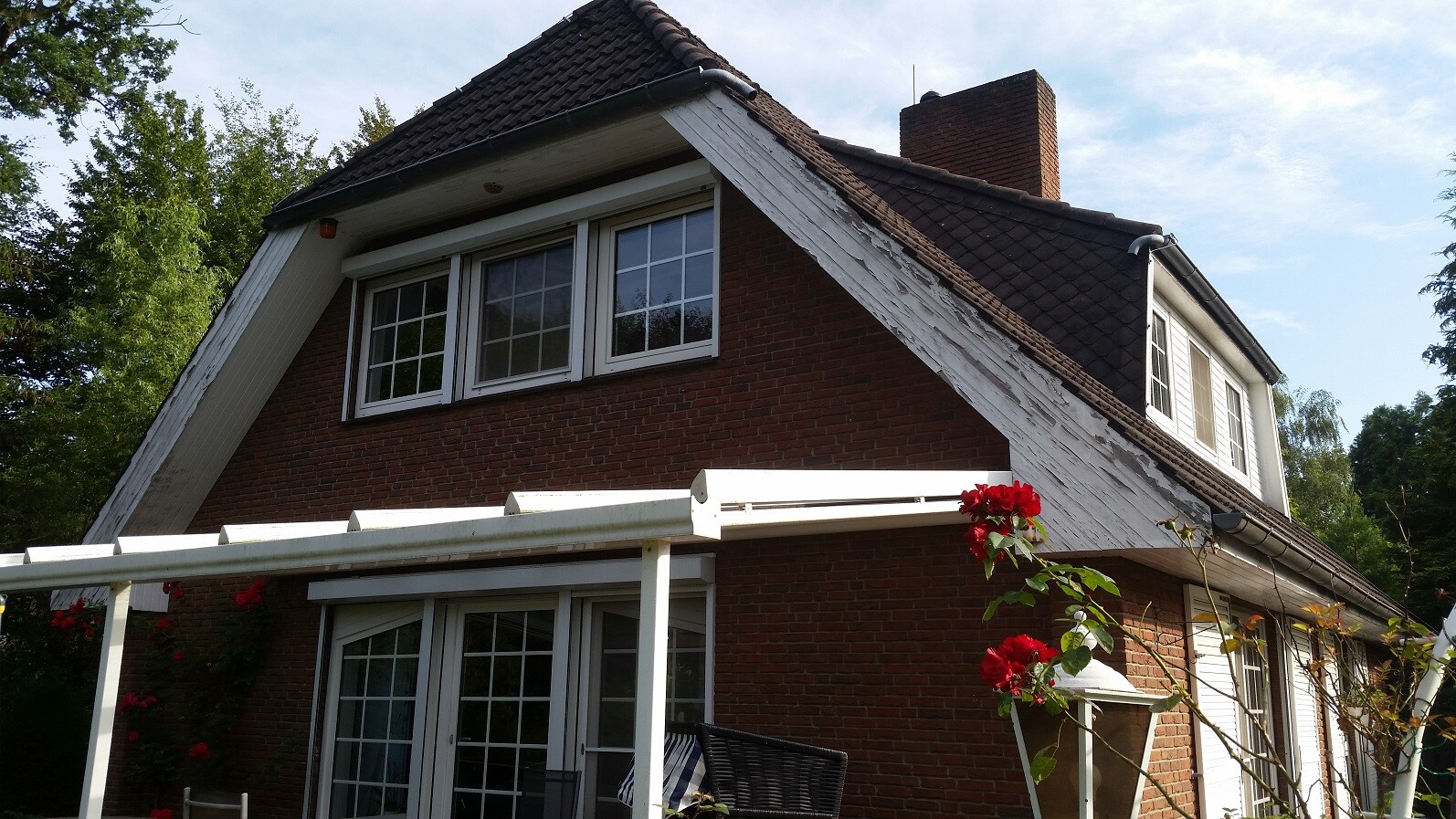
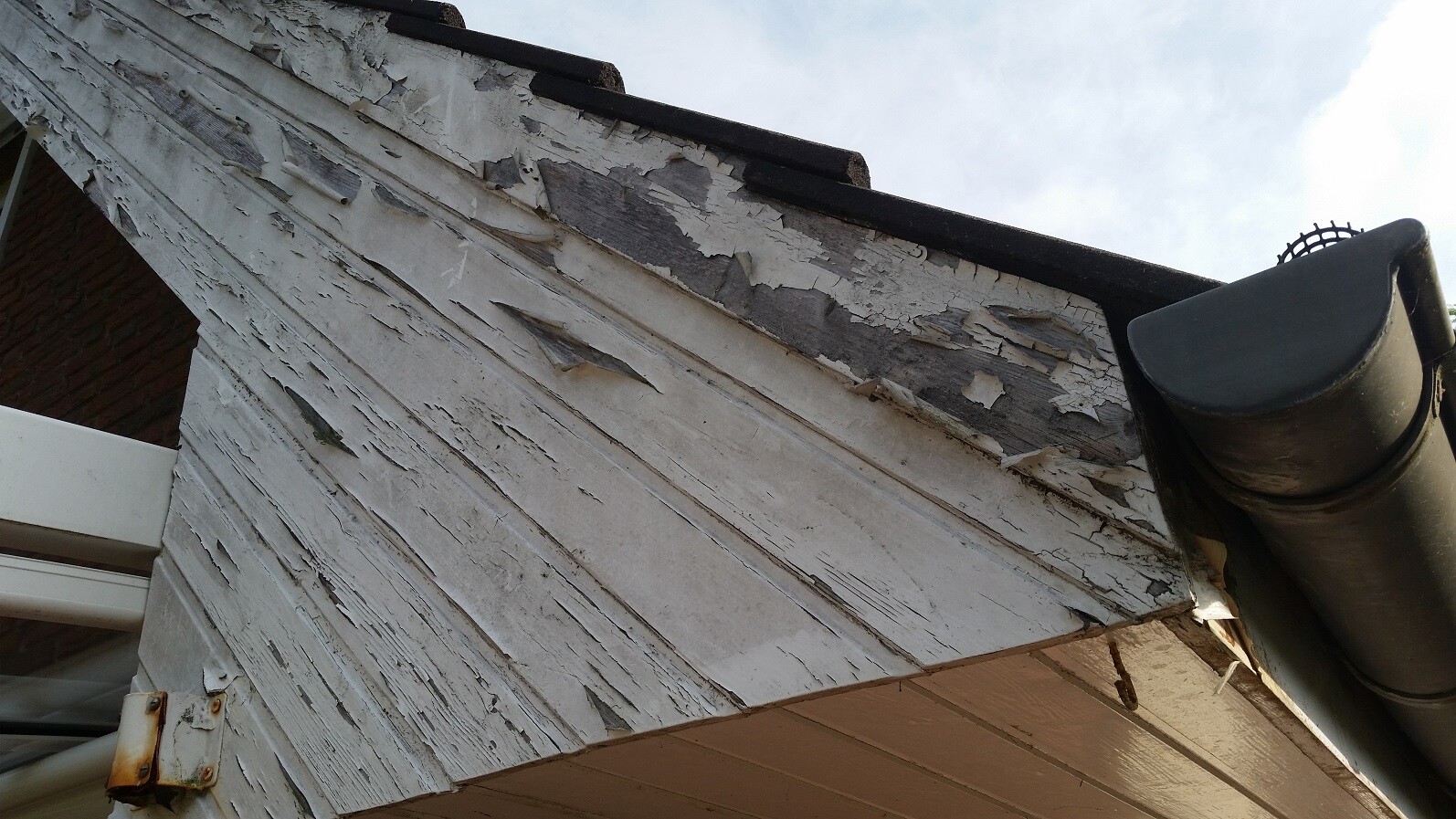
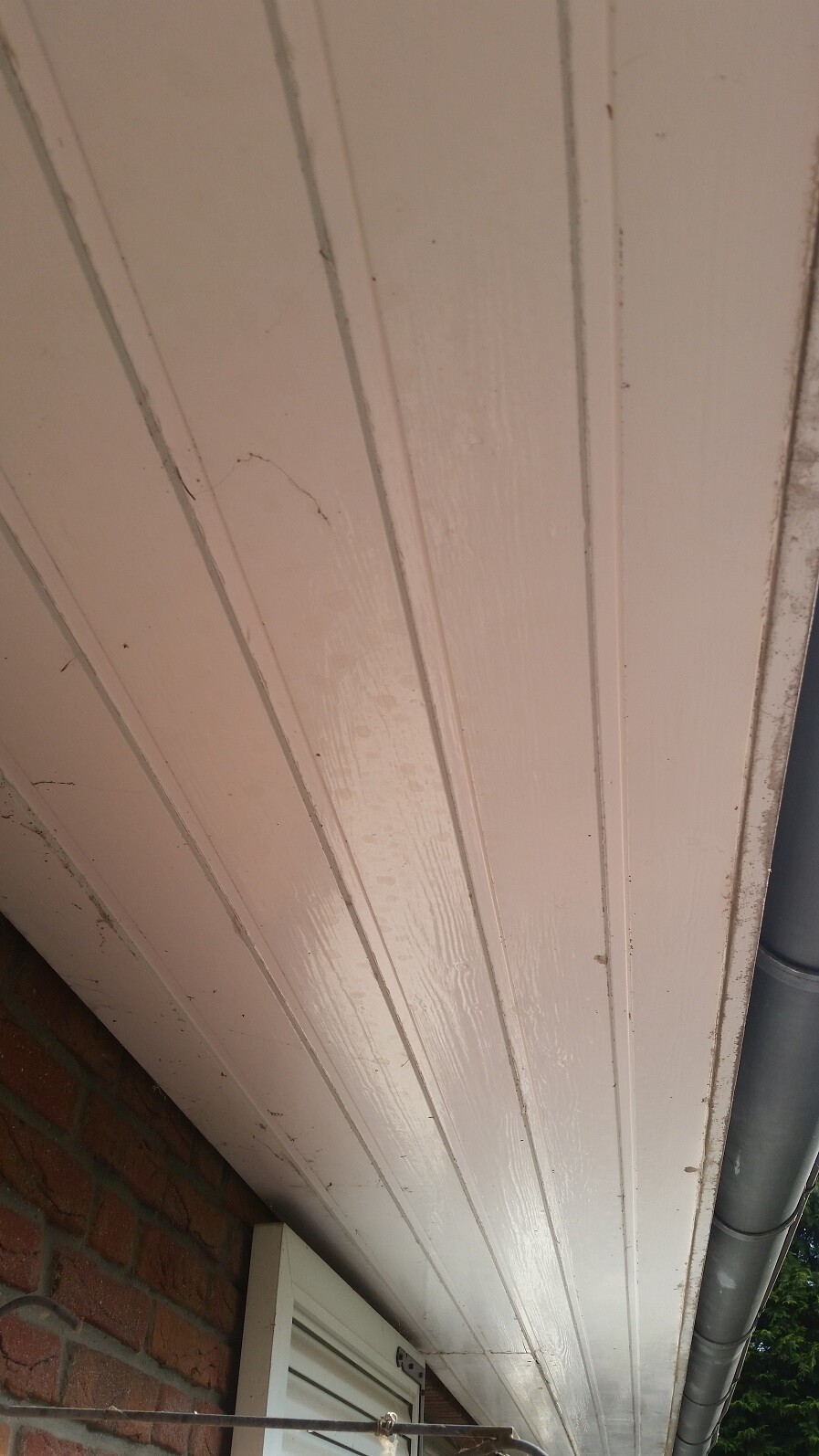
A few months ago, we bought a house from the 1980s. We now want to paint the eaves and the gables. As a non-professional, I am not entirely sure how to proceed in the best way to avoid having to repaint everything again in just two years. Initially, I thought of the following:
- The gables look pretty bad (see photo). I plan to sand down to the bare wood (there isn’t much paint left anyway). The topmost board will probably need to be replaced. Afterwards, I would apply 2 coats of wood primer, 2 coats of water-based isolating primer, and finally 2 coats of weatherproof paint. Is this a suitable approach?
- The eaves still look relatively good. The paint hardly has any cracks (see photo, before sanding). I have already sanded the old paint with an orbital sander and a Bosch sanding roller (for the grooves). The wood now shows through only in a few spots. I would like to apply 1 coat of water-based isolating primer and then 2 coats of weatherproof paint. My question here is: Is it sufficient to just sand the paint, or should I completely remove all old paint? After sanding, the remaining paint seems to adhere very well. Also, the sanding was already very exhausting. For fully sanding the paint off, I might need a more powerful sanding tool…
Thanks in advance for your advice!
Best regards
Jörn

I would recommend a glaze based on natural resin. On one hand, it saturates the wood fibers, preventing moisture from penetrating, and on the other hand, it forms a protective layer on the wood surface. And as already mentioned, make sure to thoroughly sand off the old paint.
For surfaces that are not walked on, we have chosen Sikkens Cetol HLS and Cetol Filter 7 (used in combination, first a thin-layer glaze, then a thick-layer glaze).
When we moved in 2004, we painted the window frames (2 coats of thin-layer glaze, 2 coats of thick-layer glaze), then again in 2009 (1 coat of thick-layer glaze), and have done nothing since. Only upon close inspection of the horizontal surfaces (lower part of the window frame) does it slowly show that it might need repainting. However, it is still completely waterproof and looks flawless from about 1 meter (3 feet) away. That’s already 7 years now. The windows face direct sunlight.
I got this tip from our nearby carpenter, who also had consistently good experience with these products. According to an acquaintance working in a paint testing laboratory, “manufacturer S” is clearly the market leader in wood stain products.
This aligns with my personal experience, as everything else we tried was by far not as durable. With other products, repainting was necessary after at most 2 years, often already after 1 year.
Unfortunately, this material is not suitable for walk-on areas or mechanically stressed surfaces like terraces, as it wears off.
For example, our door sign (solid oak with a self-CNC-routed name engraving— at least my crazy hobby has some benefits ^^) was only painted twice with 2 coats immediately after production in 2005, and never since. It hangs in direct sunlight all morning and still looks like new.
When we moved in 2004, we painted the window frames (2 coats of thin-layer glaze, 2 coats of thick-layer glaze), then again in 2009 (1 coat of thick-layer glaze), and have done nothing since. Only upon close inspection of the horizontal surfaces (lower part of the window frame) does it slowly show that it might need repainting. However, it is still completely waterproof and looks flawless from about 1 meter (3 feet) away. That’s already 7 years now. The windows face direct sunlight.
I got this tip from our nearby carpenter, who also had consistently good experience with these products. According to an acquaintance working in a paint testing laboratory, “manufacturer S” is clearly the market leader in wood stain products.
This aligns with my personal experience, as everything else we tried was by far not as durable. With other products, repainting was necessary after at most 2 years, often already after 1 year.
Unfortunately, this material is not suitable for walk-on areas or mechanically stressed surfaces like terraces, as it wears off.
For example, our door sign (solid oak with a self-CNC-routed name engraving— at least my crazy hobby has some benefits ^^) was only painted twice with 2 coats immediately after production in 2005, and never since. It hangs in direct sunlight all morning and still looks like new.
F
fach1werk20 Aug 2016 08:00What a charming house! It really draws you in at the door! Such a cozy home.
It’s a good idea to buy whatever paint you choose from a specialized retailer. It’s not necessarily more expensive, just better quality.
If you prefer eco-friendly options, restorers are a great point of contact.
If you’re not dealing with a strict heritage preservation order yourself, you can also get valuable information from the heritage preservation authority to properly maintain older gems.
Enjoy your home!
Gabriele
It’s a good idea to buy whatever paint you choose from a specialized retailer. It’s not necessarily more expensive, just better quality.
If you prefer eco-friendly options, restorers are a great point of contact.
If you’re not dealing with a strict heritage preservation order yourself, you can also get valuable information from the heritage preservation authority to properly maintain older gems.
Enjoy your home!
Gabriele
Similar topics