
ᐅ Outdoor area has screed – how to seal expansion joints without a baseboard?
Created on: 11 May 2018 12:52
K
Kaspatoo
Hello,
I have a solid room outside the house with masonry and concrete walls and a concrete ceiling.
The size is 6 x 4 meters (20 x 13 feet). It has a screed floor without any pipes or cables underneath.
The room is used like a garden shed.
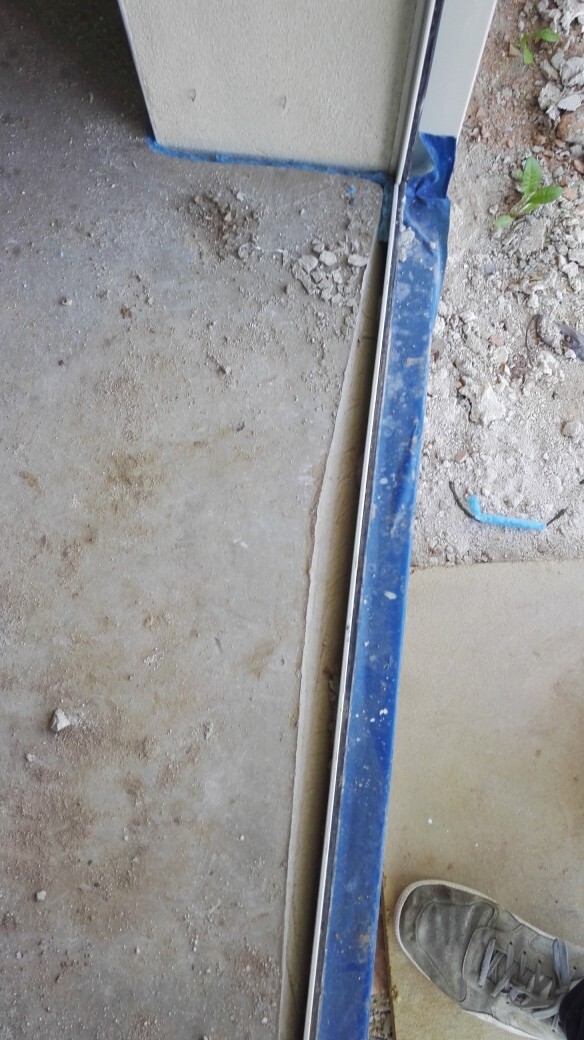
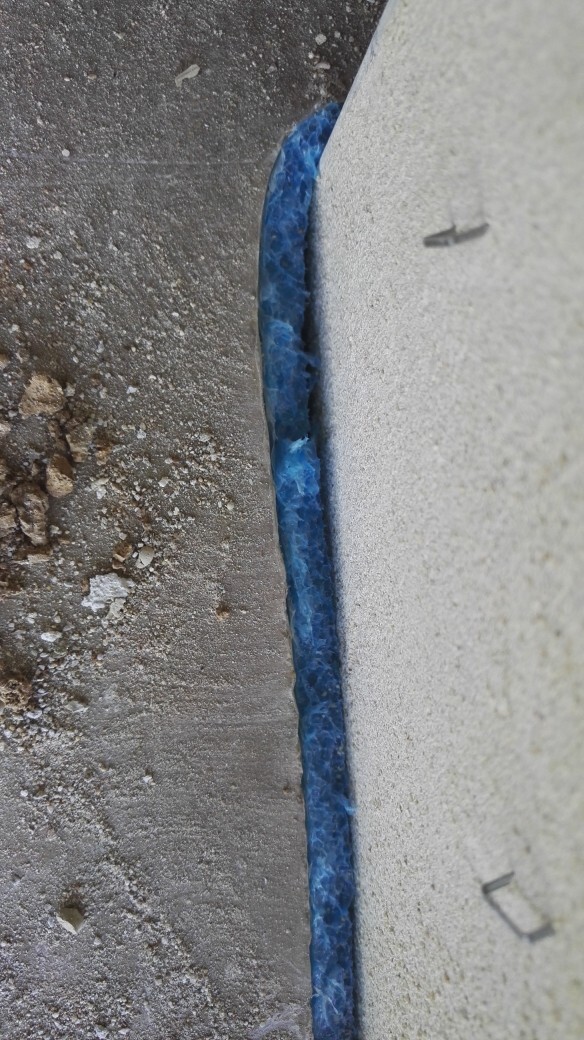
Around the screed, as common in house construction, a (blue) foam strip was installed as an expansion joint. In house construction, this is usually covered by the floor covering or baseboards.
In my case, I simply want to apply a special concrete coating directly onto the screed.
This is generally possible and not in question. I do not want to use tiles.
However, the problem is that the edge strip isn’t solid but made of plastic. I cannot just pour the coating over it.
I also don’t want to apply a full surface leveling compound to create an entire new floor layer, as the screed is already nicely flat and smooth.
Now I wonder if I could simply pour some quick-setting screed at the edges and smooth it out with the regular screed.
But I am concerned that the substrate might not support it well enough and that the edges could become brittle over time.
Does anyone have an opinion on this?
Here are a few pictures showing the edge strip as well as a gap at the door.
I have a solid room outside the house with masonry and concrete walls and a concrete ceiling.
The size is 6 x 4 meters (20 x 13 feet). It has a screed floor without any pipes or cables underneath.
The room is used like a garden shed.
Around the screed, as common in house construction, a (blue) foam strip was installed as an expansion joint. In house construction, this is usually covered by the floor covering or baseboards.
In my case, I simply want to apply a special concrete coating directly onto the screed.
This is generally possible and not in question. I do not want to use tiles.
However, the problem is that the edge strip isn’t solid but made of plastic. I cannot just pour the coating over it.
I also don’t want to apply a full surface leveling compound to create an entire new floor layer, as the screed is already nicely flat and smooth.
Now I wonder if I could simply pour some quick-setting screed at the edges and smooth it out with the regular screed.
But I am concerned that the substrate might not support it well enough and that the edges could become brittle over time.
Does anyone have an opinion on this?
Here are a few pictures showing the edge strip as well as a gap at the door.

Alex85 schrieb:
If paint feels rubbery, it means it was applied too thickly or should have been applied in several thinner coats. But well, if you simply pour out the can, that’s probably a different approach altogether. You are probably right, I did work poorly. I will apply some more soon and fix the spots. What I do like now, especially, is that the room and floor can be easily swept with a broom with soft bristles.
I bought the paint locally from a nearby company (REMEI).