
Dear forum members,
We bought a plot of land last autumn and are currently deep into the floor plan design. We would like to share our current draft with you and welcome any comments and opinions.
[F]irst some preliminary information about the plot and its buildability:[/F]
Best regards
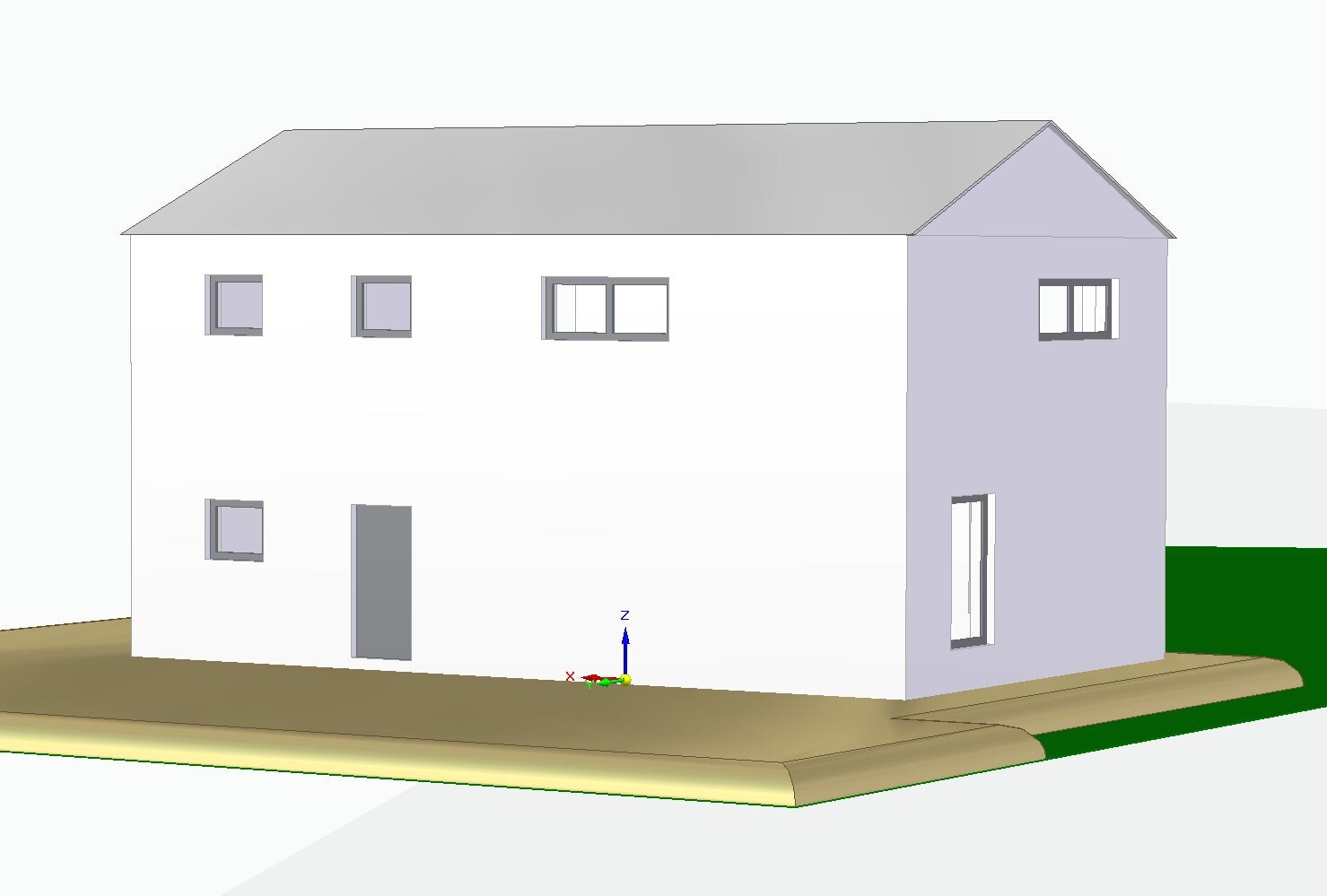
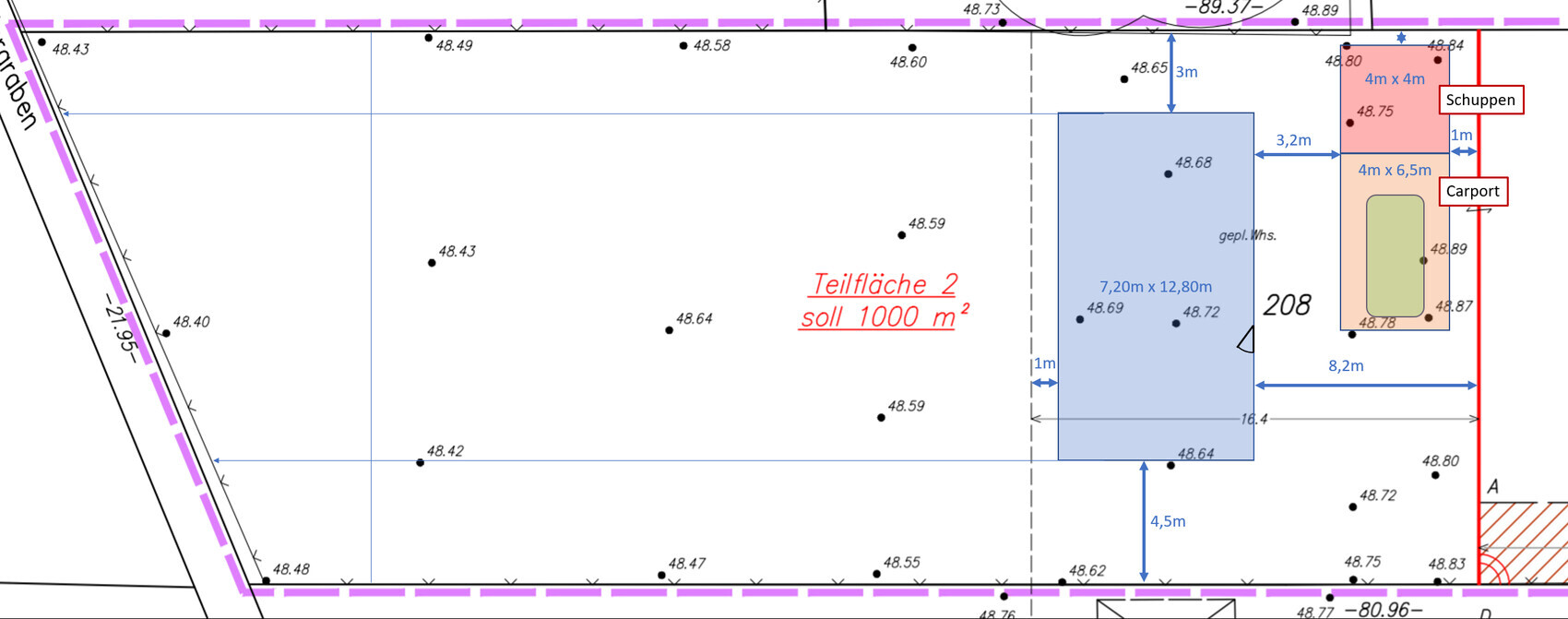
We bought a plot of land last autumn and are currently deep into the floor plan design. We would like to share our current draft with you and welcome any comments and opinions.
[F]irst some preliminary information about the plot and its buildability:[/F]
- 1000 m² (10,764 sq ft) rear plot, southwest facing (so southwest is on the left side of the site plan)
- Building boundary up to approx. 16 m (52 ft) behind the property line (up to the dashed line on the site plan)
- No zoning plan (construction according to § 34 of the Building Code)
- Groundwater at surface level and peaty soil (exact geotechnical report pending), so piled foundation required and no basement
- Affordable! (Our maximum budget for the house including foundation slab is €230,000)
- Country house style
- Bright, large windows facing south/garden
- Open living/dining/kitchen area
- Family of four, 1 bedroom and 2 children’s rooms
- Not oversized, max 150 m² (1,615 sq ft), preferably less
- Solid construction using Ytong blocks (for us the most cost-effective option, although we would have liked to build with wood as well).
- Developed ourselves after studying various floor plans (including from the book "Affordable Building with a Small Budget" by Achim Linhardt) with support from architect friends and our planner (an independent civil engineer).
- Dimensions 12.50 x 7.50 m (41 x 25 ft) (the measurements shown on the site plan are from an earlier draft).
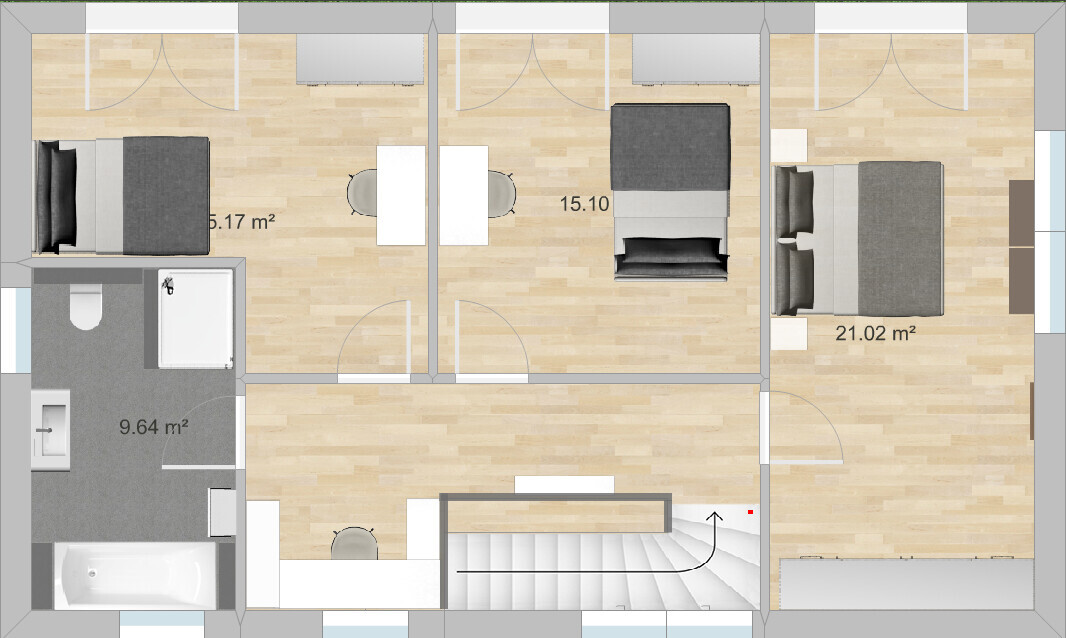
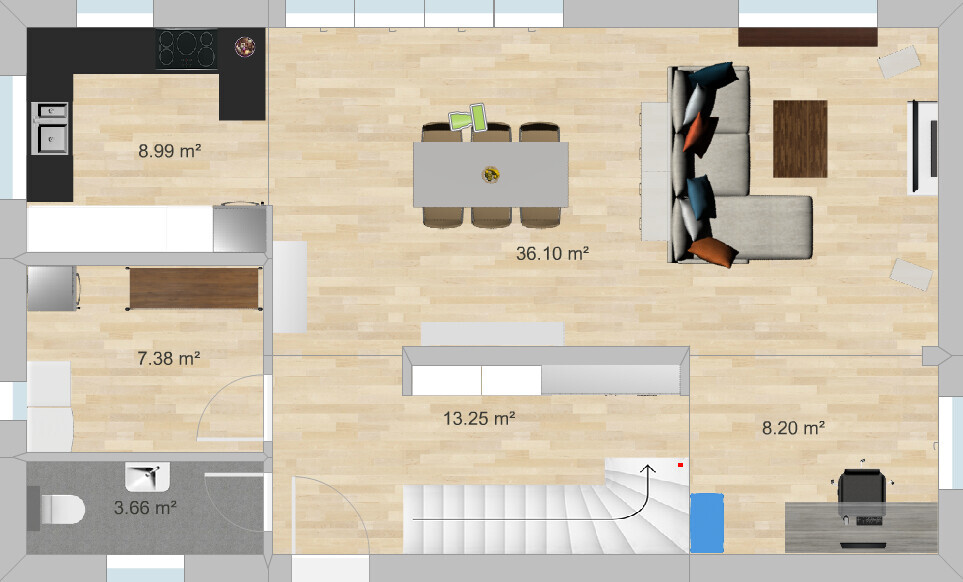
- What we like: open living area, all main rooms have large windows facing the garden, efficient size, although the children’s and bedroom could be smaller, sewing/work nook behind the stairs upstairs, plenty of wall space for large wardrobes in the upstairs bedroom and hallway on the ground floor, light shaft in the stairwell, staircase (we originally wanted a straight run staircase but it would have taken too much space; the one with three quarter turns is also fine with us).
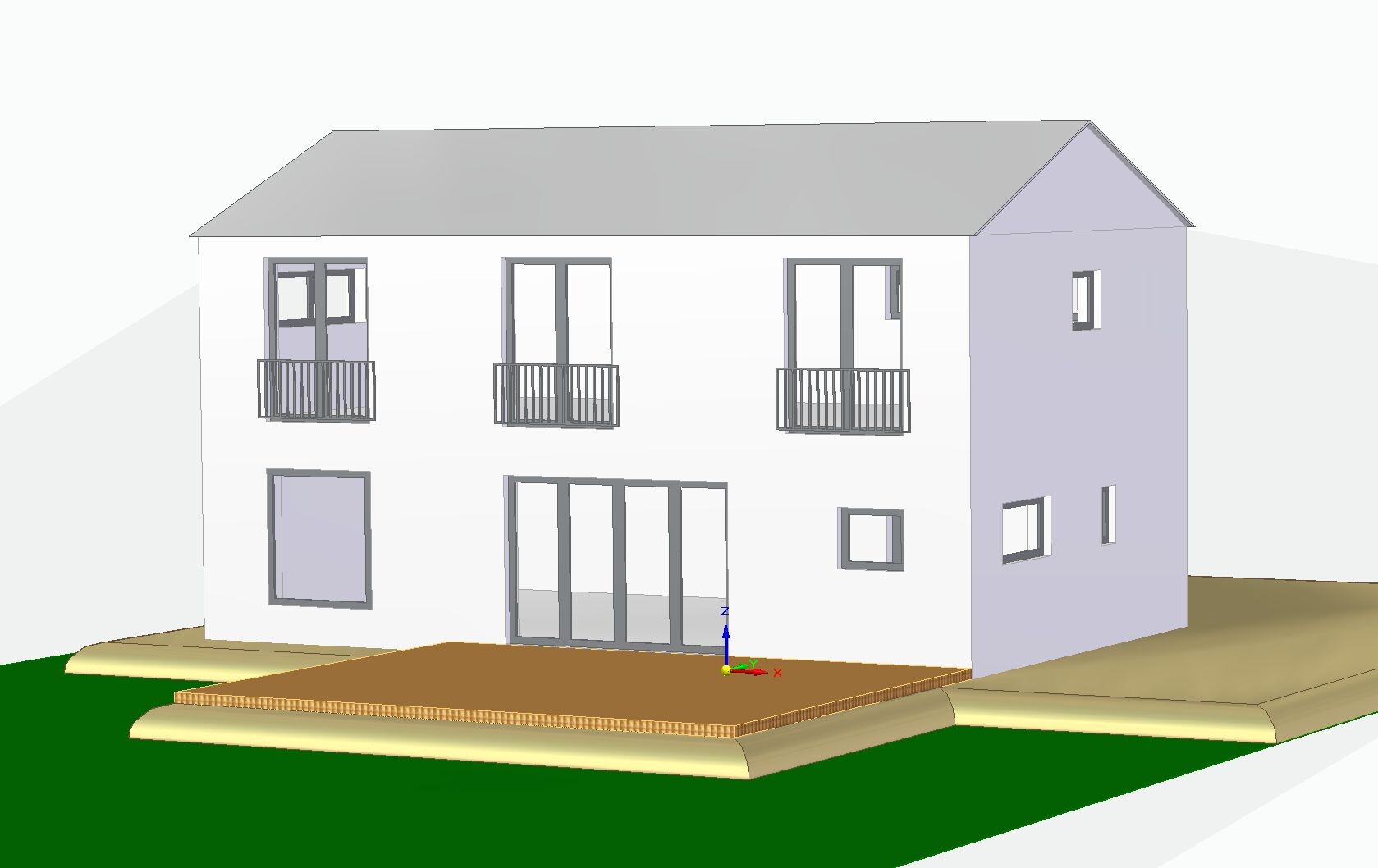
- What we don’t like 100% yet: the height of the house from the outside. It is currently planned as a two-story house with an eaves height of 6.2 m (20 ft), with the ground floor 2.84 m (9 ft 4 in) high and the upper floor 2.60 m (8 ft 6 in) high. The gable roof will be an uninsulated, unfinished cold roof, mainly because of the economical prefabricated truss construction method. This is a bit disappointing because I really like sloped ceilings and did not want the character of a townhouse. Lowering the roof with a knee wall of about 1.90 m (6 ft 3 in) and an insulated roof with open sloped ceilings would probably be more expensive due to the rafter/beam construction. We would also lose the garden view through the floor-to-ceiling bedroom windows.
- Simple: What do you think about the floor plan?
- Can you still imagine the relatively tall two-story house having a country house character? Maybe it depends on the facade design and choice of materials? Do you think it looks too “blocky,” especially from the front entrance side? Or would a lower eaves height with an attic conversion including a knee wall be preferable?
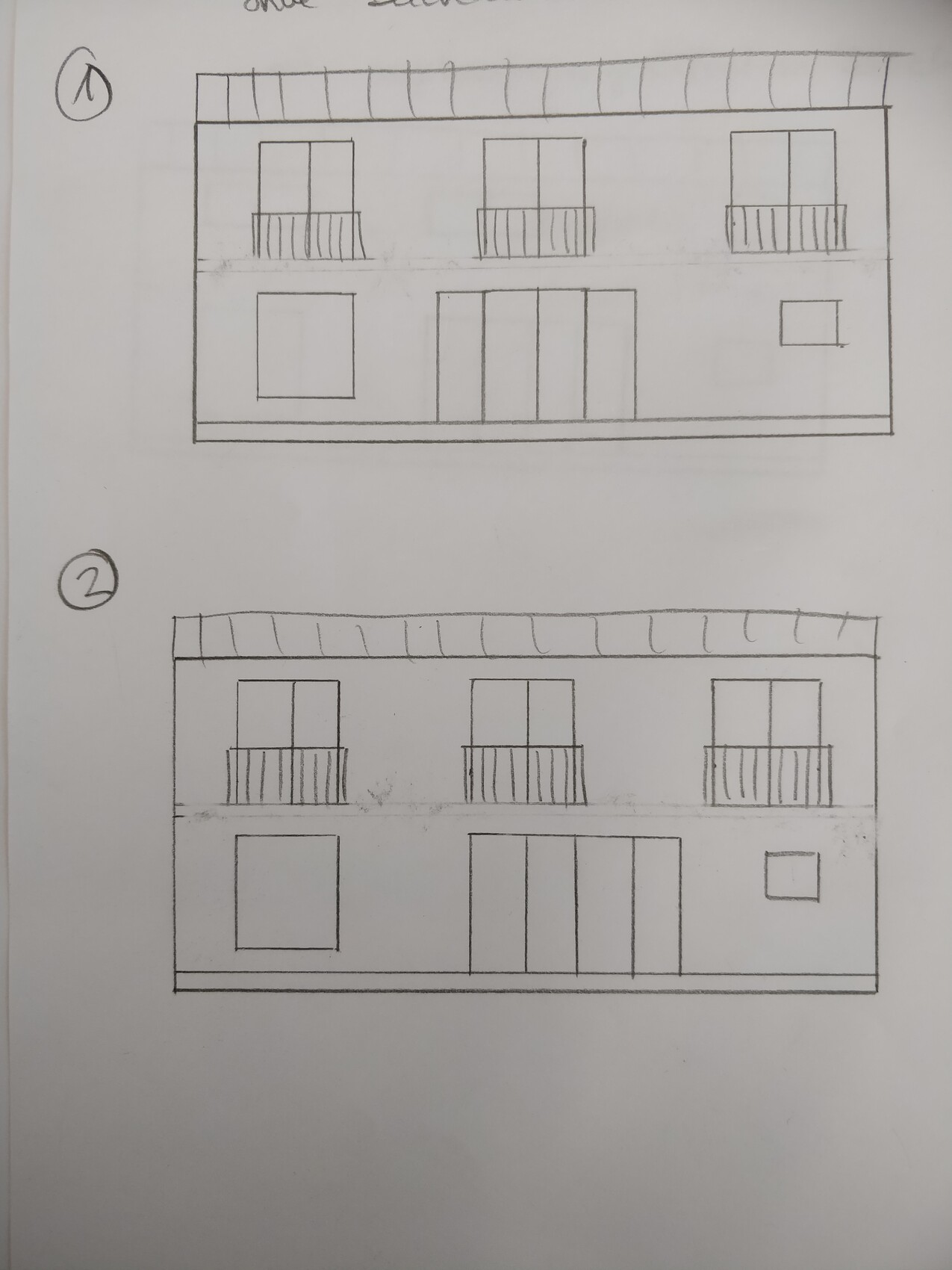
- We are still unsure how to arrange the windows on the garden side. The drawing with the elevations shows two possible versions. We actually prefer it when the upper floor window is centered over the lower window front. However, this does not align the interior line of sight from the entrance door to the garden/patio door (see ground floor plan). This represents version two; for version one, the window front would have to be shifted about one window width to the right, so that the patio door is behind the dining table. With the window front shifted left, the interior looks better to us, but from the outside it looks strange if it is offset from the upper floor window, right? What do you think?
Best regards

If the main goal is to keep costs low and considering the plot itself (no slope or anything requiring special attention or treatment), why not choose a Flair 113 (or something similar) instead of a custom-designed house?
With a custom-designed house and your requirements, I don’t see a feasible solution. That would be like trying to square the circle. I would opt for an affordable, suitable off-the-shelf house, and even then, it might be tight. Maybe a shell house?
With a custom-designed house and your requirements, I don’t see a feasible solution. That would be like trying to square the circle. I would opt for an affordable, suitable off-the-shelf house, and even then, it might be tight. Maybe a shell house?
H
hampshire4 Mar 2020 10:36The task you mentioned is often addressed in holiday home parks in the Netherlands. You can find inspiration, for example, from the Villa 4B type at Roompot Park De Banjaard. Of course, holiday homes have different storage solutions compared to standard German residential houses—but your concept is not focused on storage either.
From a functional point of view, I recommend larger roof overhangs, as they save you a lot of money on shading the upper floor and protect the facade.
I would take the recommendations on passage widths seriously—at least the main “runways” inside the house should work properly.
What kind of self-work are you planning to contribute?
From a functional point of view, I recommend larger roof overhangs, as they save you a lot of money on shading the upper floor and protect the facade.
I would take the recommendations on passage widths seriously—at least the main “runways” inside the house should work properly.
What kind of self-work are you planning to contribute?
Climbee schrieb:
If the main goal is to keep costs low and considering the plot (no slope or other factors requiring special attention or treatment), why not choose something like the Flair 113 model instead of a custom-designed house? Exactly, it’s simply not feasible otherwise at that price—especially not for 150m² (1,615 sq ft).
 la.schnute4 Mar 2020 12:01
Hello and first of all, wow, thank you for all the opinions and contributions.
I realize now that I initially left out some important information. So here’s a more detailed explanation, especially regarding the budget, financing, and feasibility of the whole project:
I find that a bit too general and I do believe we can achieve both. After visiting model homes and going through brochures, I don’t feel that prefab houses always deliver value for their prices. We know where to set priorities and what is less important to us, and above all, we have the process under control. It will certainly be stressful, but we are willing to endure that for a limited time—and maybe it will even be fun sometimes . And to completely drop the house project now that we have already bought the land (and not lightly) would honestly be quite crazy.
Now to your individual comments about design and the plans. I have attached a floor plan with key measurements. I’ll try to summarize the topics:
What do you mean? I’m confused. Wouldn’t the view from inside speak for version 2, and the external perspective for version 1?
Please feel free to share your further thoughts. Especially on the two-story design, window arrangement, sewing corner vs. spacious bedrooms and children’s rooms, I welcome opinions and feedback.
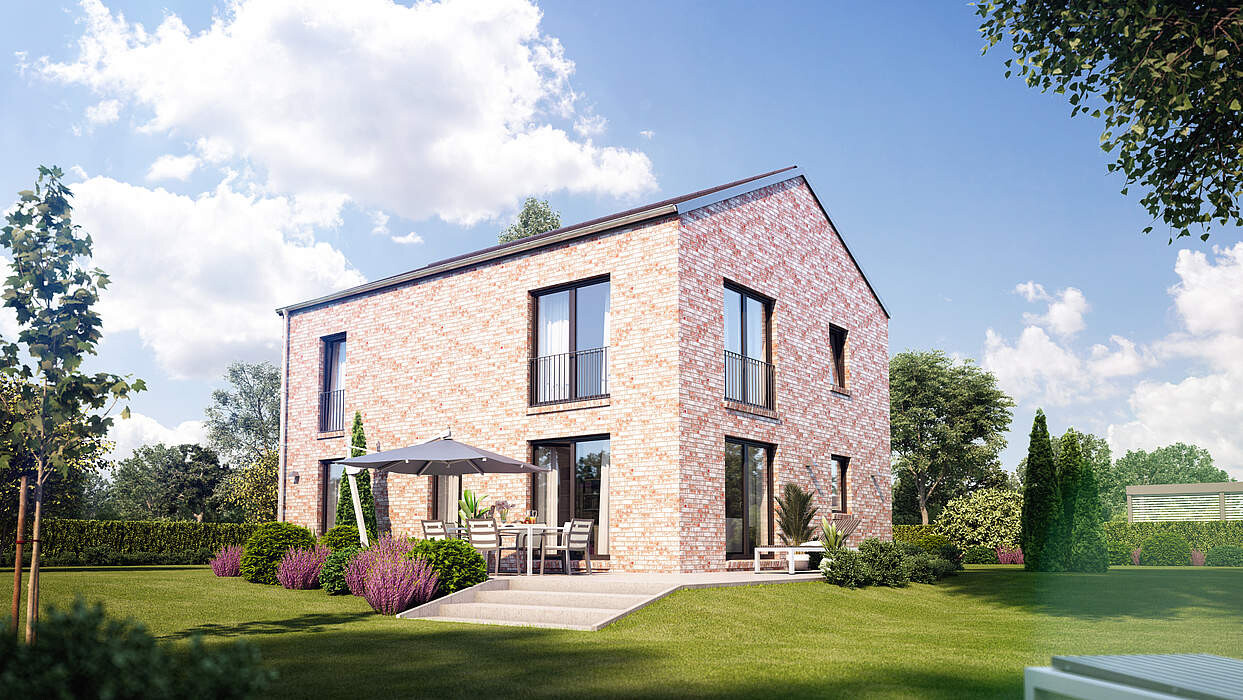
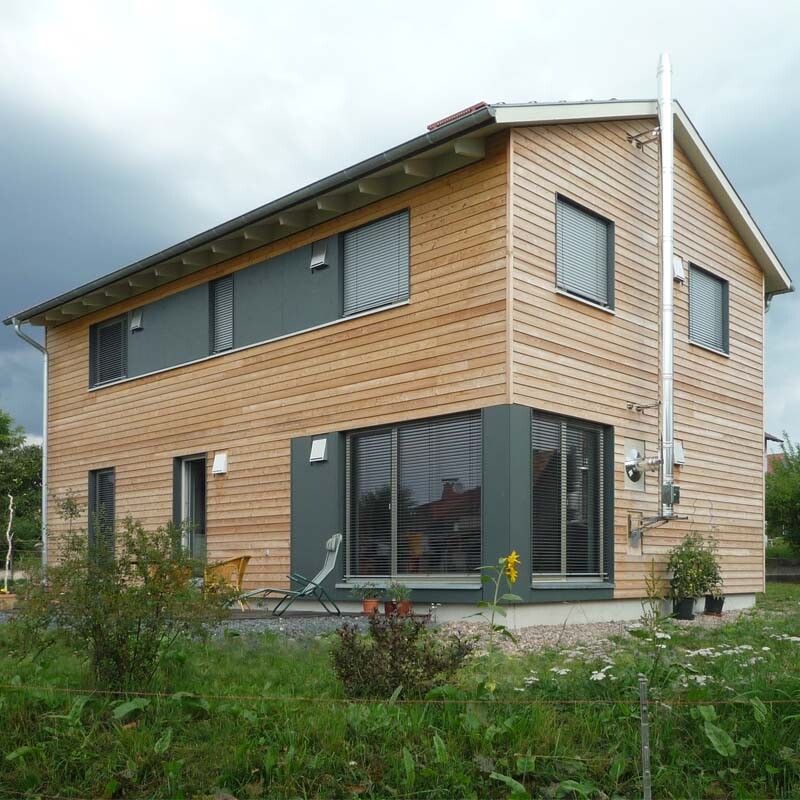

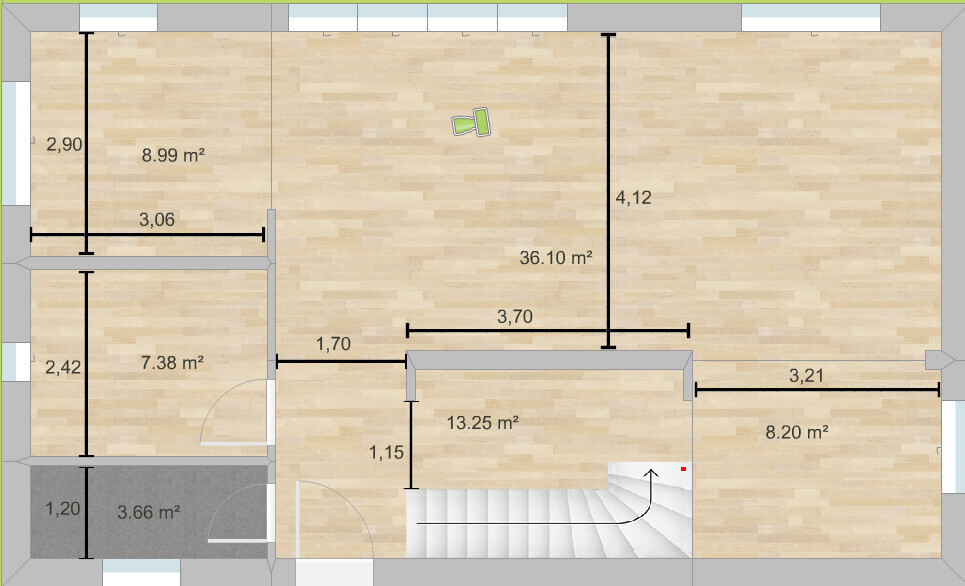
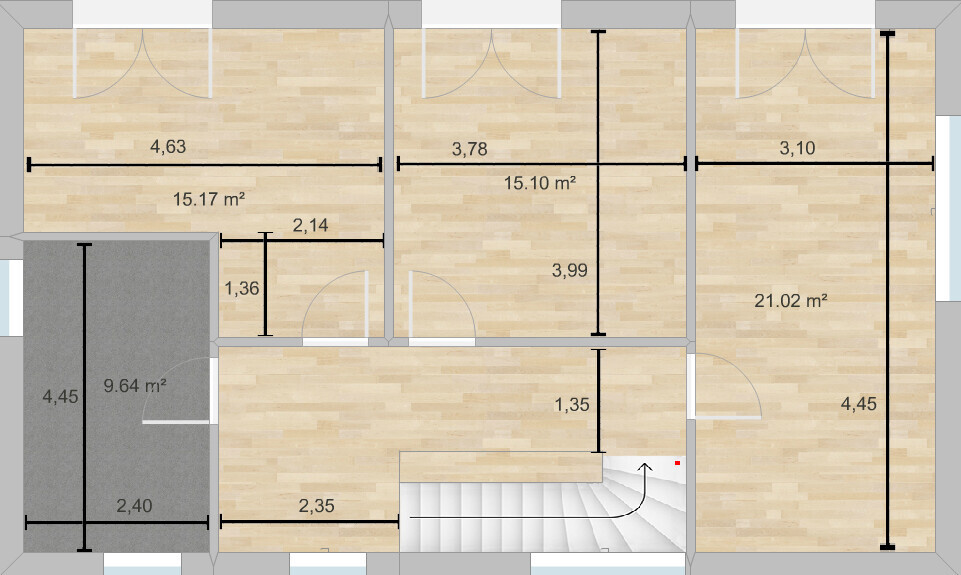
I realize now that I initially left out some important information. So here’s a more detailed explanation, especially regarding the budget, financing, and feasibility of the whole project:
- Regarding the budget: The planned amount of 230,000 € is, of course, EXCLUSIVE of pile foundations (and also exclusive of outdoor landscaping, but includes the foundation slab). We understand that otherwise it would be completely unrealistic and also not easy. However, we based our calculations on current prices from prefab house manufacturers and homeowners in our circle of friends, where two years ago a 163m² (1,750 sq ft) townhouse was built with solid construction for 217,000 € (excluding foundation slab). At Eco-System Haus we found similar prices, so we don’t think it’s impossible. But it definitely requires good planning, that’s absolutely true, and prices increase every year. Our current estimate (many prices are not yet backed by official quotes but calculated based on researched market prices and a construction cost index) is about 210,000 €.
- Regarding financing: Our incomes are approximately at 70% of the social average, so not too bad. However, land prices in Berlin have risen significantly over the past five years, and we only started looking 1.5 years ago. The plot had a fairly low land cost (below the reference value), but it is quite large, so the total price is considerable. Added to that, due to unfavorable soil conditions, pile foundations are necessary, and the site development is quite expensive (since it is also a rear property). The total cost for the land plus ancillary costs is just under 400,000 €. So now the truth is out—it’s really expensive! But it’s also a very beautiful plot, and after careful consideration with our parents and supporters, we believe we can manage it.
- DIY/own work: Here is exactly where we are thinking about how to make it work. At first, we did look at standard houses from general contractors and did find some options we liked. Now, my father-in-law is a trained plumber and has worked in building materials sales for years. He almost rebuilt his own house by himself and has a large network of tradespeople. When he told them that his son wanted to build a house, people asked why we didn’t do it ourselves with his support. So: we discarded the prefab house plan and decided to do it ourselves, hoping to have a bit more freedom in design while still keeping good costs. We can also mostly get materials at wholesale prices through my father-in-law.
- Design (indeed, it comes from us after reviewing many floor plans—I know it’s not always welcomed, but we have a strong DIY mentality and I love designing myself)
- Roof construction (at least my father-in-law thinks we can do this ourselves with prefabricated trusses)
- Heating system
- Plumbing
- Flooring
- Painting
- Outdoor landscaping (terrace, carport, shed, etc.) later on
- Possibly facade design (if wood cladding)
- Simple building shape without bay windows, dormers, projections, or recesses
- Affordable building materials like aerated concrete blocks (Ytong), roof covering planned as aluminum sheet metal
- Simple floor plan with load-bearing walls in the center to reduce beam spans; bathrooms and plumbing stacked vertically
- Cost-effective cold roof with prefabricated nail plate trusses (an expanded attic with dormers is actually not cheaper, especially if the knee wall is to have a comfortable height of around 1.80 m (5 ft 11 in). Even without dormers, a roof structure with rafters and insulation is more expensive)
nordanney schrieb:
What do you want? A great house or a cheap house? You can’t have both with your wishes.
Conclusion (without knowing all details): It won’t work and if there are no special reasons for building a house, then you should stop. You will only invite stress (construction stress if you hire the cheapest (illegal) workers and/or do a lot yourself, and financial stress because the budget is almost certainly not enough).
I find that a bit too general and I do believe we can achieve both. After visiting model homes and going through brochures, I don’t feel that prefab houses always deliver value for their prices. We know where to set priorities and what is less important to us, and above all, we have the process under control. It will certainly be stressful, but we are willing to endure that for a limited time—and maybe it will even be fun sometimes . And to completely drop the house project now that we have already bought the land (and not lightly) would honestly be quite crazy.
Now to your individual comments about design and the plans. I have attached a floor plan with key measurements. I’ll try to summarize the topics:
- Country house character: Yes, so far I also find the design quite villa-like. To give you an idea of what I envision or aim for, I’ve attached some example images. We’re leaving the facade design aside for now. I know plaster is cheaper than wood cladding or brick slips, but maybe we can do some of that ourselves later or partially... let’s see. Perhaps “country house” isn’t the right word. It should also be quite modern—like a barn or country house in a modern interpretation. Definitely without roof overhangs and rather straight-lined windows without mullions or the like. The comment about organic-shaped windows is a good one and worth considering.
- Which brings me to the window arrangement: It’s certain that each bedroom gets a large window facing the garden. Some windows could be moved around; with the children’s room on the left, we could think about adjustments—thanks for the hint @Itenzer. It’s questionable whether a window in the kitchen facing the garden is necessary there. We already have one on the short side (east) because my partner likes morning sun in the kitchen. But without a window on the kitchen side of the south-facing facade, it might look odd from outside, right?
- Workspaces: Yes, there is another desk in the upstairs hallway. That’s my sewing corner. I’m passionate about sewing, and right now in our rental apartment the sewing machines are in the bedroom. But due to noise, we didn’t want them there or next to the TV, so putting the sewing corner in the hallway seemed practical (although I’ll need to keep it tidier than I do now ). The desk downstairs is for PC work, paperwork, and so on.
- Thin lines: Those were added in Roomsketcher only to show the square meters of the “rooms” or functional units, even though there are no walls between them.
- Bathrooms: Correct, a shower will be added downstairs. At first, we thought we might save about 1,200 € by leaving it out, but after talking to friends and acquaintances, we decided to include the shower there. The bathroom upstairs is small, but that’s honestly not so important to us. We don’t need a huge bathroom. As long as it’s well arranged and has a bathtub and shower, I’m happy. That bathroom corner is almost as important as the sewing corner next to it, so we needed that space.
- Bedrooms: Yes, there’s a lot of unused space. I’m not exactly sure what to do with it or how to use it more efficiently. On the ground floor, I don’t feel we can really save square meters. Maybe we’ll keep it as a reserve in case a third child comes along (even though that’s not planned).
- Living room/sofa: The sofa fits more than two people, don’t worry. We put the exact dimensions of our current huge casual sofa that we bought last year as a family sofa ! And yes, from the sofa you look at a wall—the TV. We are unfortunately series addicts, so the TV is important! The sound system around it is very important to my partner, so we need a lot of wall space. The only alternative would be with the back to the garden, but that would be even worse because you’d want to look outside sometimes. Now the sofa has its back to the dining table. That might be a bit unsocial when guests are over, but we don’t mind much. This creates a nice seating area with the window seat next to the couch. The living room is about 4 m (13 ft) deep. Friends with a similar floor plan have 4.20 m (14 ft), and there’s still plenty of space around the table. So with 20 cm (8 inches) less, it should be fine.
- Ceiling height: I know, the 2.84 m (9 ft 4 in) ceiling height on the ground floor and the planned hardwood flooring throughout (except in bathrooms and utility room) are our little luxuries that we want to afford if possible. If the budget gets too tight, we will reduce the ceiling height; I could live with that (my partner less so 🙄 ). Since we are building with aerated concrete blocks (Ytong), it is most efficient to think in whole blocks: 2.84 m (9 ft 4 in), 2.60 m (8 ft 6 in), or 2.36 m (7 ft 9 in) would be the next levels, and 2.36 m would be already too low. If necessary, both floors will have ceilings at 2.60 m (8 ft 6 in).
Zaba12 schrieb:
I like version 1. It’s about the symmetrical view from the inside out, not how it looks outside.
What do you mean? I’m confused. Wouldn’t the view from inside speak for version 2, and the external perspective for version 1?
Please feel free to share your further thoughts. Especially on the two-story design, window arrangement, sewing corner vs. spacious bedrooms and children’s rooms, I welcome opinions and feedback.
S
Sparfuchs774 Mar 2020 12:24la.schnute schrieb:
- Own Work: Here’s exactly what we’ve been thinking about how to manage this. At first, we actually looked at ready-made houses from general contractors and found some options we liked. But my father-in-law is a trained plumber and has worked in the building materials trade for years. He built his own house almost entirely by himself and has a large network of tradespeople. When he told people that his son wanted to build a house, everyone asked why we didn’t do it ourselves with his support. So: we discarded the prefab house plan and decided to take matters into our own hands, hoping to have a bit more creative freedom while still keeping costs reasonable. We can also mostly source materials at cost through my father-in-law.
Planned own work includes:
- Design (which actually comes from us after reviewing many floor plans... I know it’s not always welcomed, but we have a strong DIY mindset and I love designing myself)
- Roof construction (at least my father-in-law thinks we can do this ourselves using timber trusses)
- Heating
- Plumbing
- Flooring
- Painting
- Outdoor areas (terrace, carport, shed, etc.) later on
- Potentially facade work (if using wood cladding)
IF you can manage all this own work, I think it’s doable within budget. But don’t rely on “oh, we’ll manage somehow” – plan everything thoroughly and question your helpers in detail about how they will carry out the tasks. With this amount of own work, you will end up with a house, but compromises will be necessary.
- Have the design reviewed by an architect (someone has to submit the building permit / planning permission anyway), otherwise you’ll regret planning errors big time
- Get quotes for the required materials
- Plan the execution of each trade carefully
- Schedule your own work realistically (you’ll be working your regular jobs alongside this)
- “Later” can get very expensive—don’t underestimate it and think about how you will pay for the “later” work
A lot of own work demands a lot of time. I’m experiencing this myself and currently only see my daughter briefly before bedtime.
PS: You can forget about brick veneer; it probably won’t fit the budget.

la.schnute schrieb:
It might be a bit antisocial when there are more guests,That’s not a big issue either; at my relatives’ family gatherings, they simply turn the sofa around.Similar topics