
Dear forum members,
We bought a plot of land last autumn and are currently deep into the floor plan design. We would like to share our current draft with you and welcome any comments and opinions.
[F]irst some preliminary information about the plot and its buildability:[/F]
Best regards
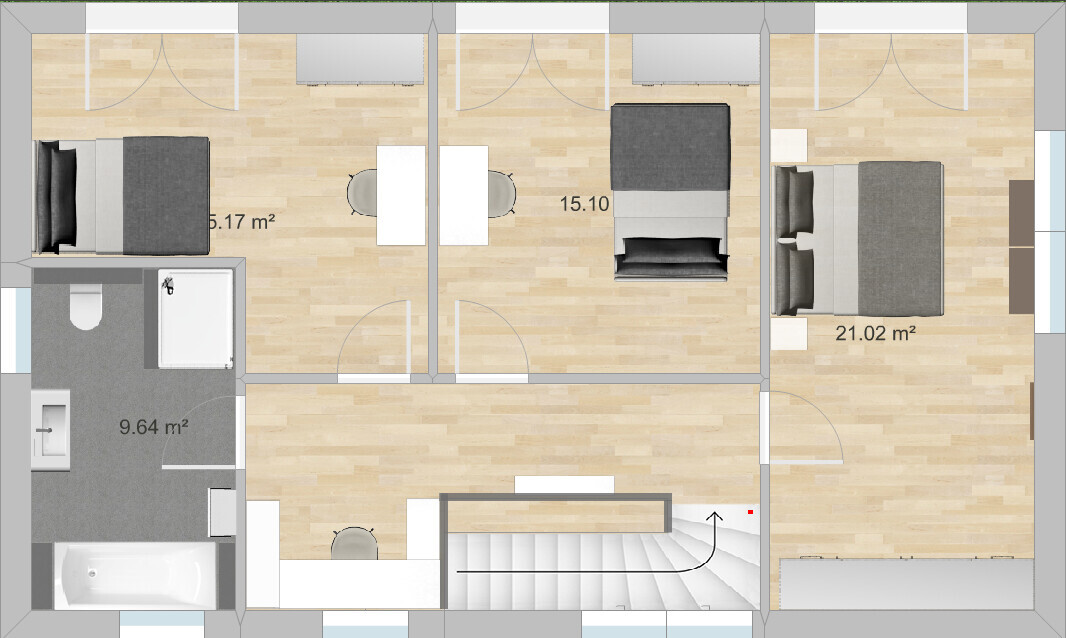
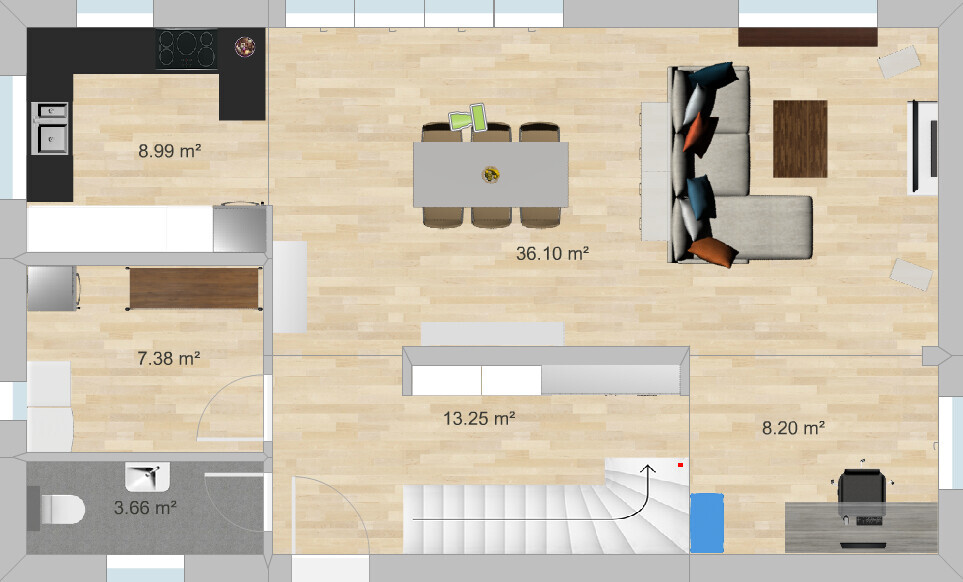
We bought a plot of land last autumn and are currently deep into the floor plan design. We would like to share our current draft with you and welcome any comments and opinions.
[F]irst some preliminary information about the plot and its buildability:[/F]
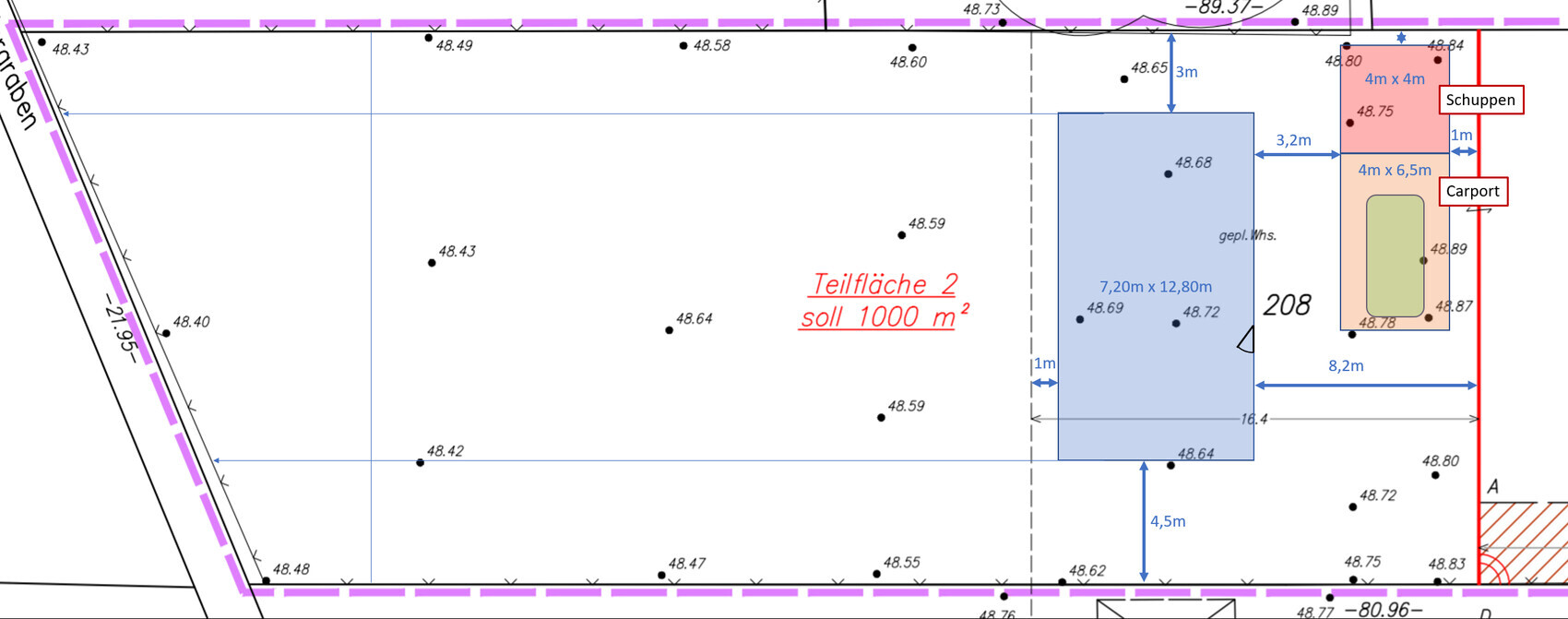
- 1000 m² (10,764 sq ft) rear plot, southwest facing (so southwest is on the left side of the site plan)
- Building boundary up to approx. 16 m (52 ft) behind the property line (up to the dashed line on the site plan)
- No zoning plan (construction according to § 34 of the Building Code)
- Groundwater at surface level and peaty soil (exact geotechnical report pending), so piled foundation required and no basement
- Affordable! (Our maximum budget for the house including foundation slab is €230,000)
- Country house style
- Bright, large windows facing south/garden
- Open living/dining/kitchen area
- Family of four, 1 bedroom and 2 children’s rooms
- Not oversized, max 150 m² (1,615 sq ft), preferably less
- Solid construction using Ytong blocks (for us the most cost-effective option, although we would have liked to build with wood as well).
- Developed ourselves after studying various floor plans (including from the book "Affordable Building with a Small Budget" by Achim Linhardt) with support from architect friends and our planner (an independent civil engineer).
- Dimensions 12.50 x 7.50 m (41 x 25 ft) (the measurements shown on the site plan are from an earlier draft).
- What we like: open living area, all main rooms have large windows facing the garden, efficient size, although the children’s and bedroom could be smaller, sewing/work nook behind the stairs upstairs, plenty of wall space for large wardrobes in the upstairs bedroom and hallway on the ground floor, light shaft in the stairwell, staircase (we originally wanted a straight run staircase but it would have taken too much space; the one with three quarter turns is also fine with us).
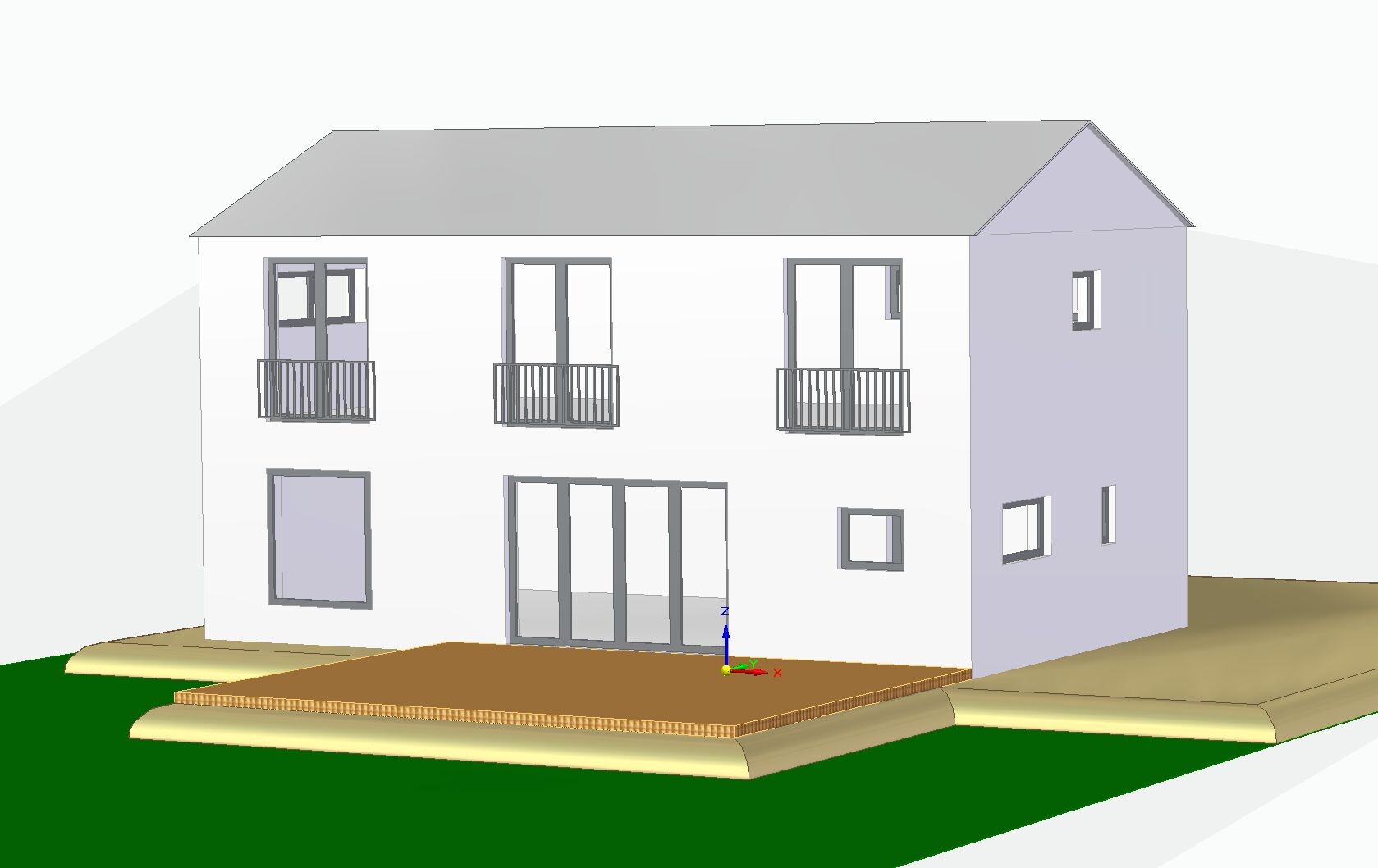
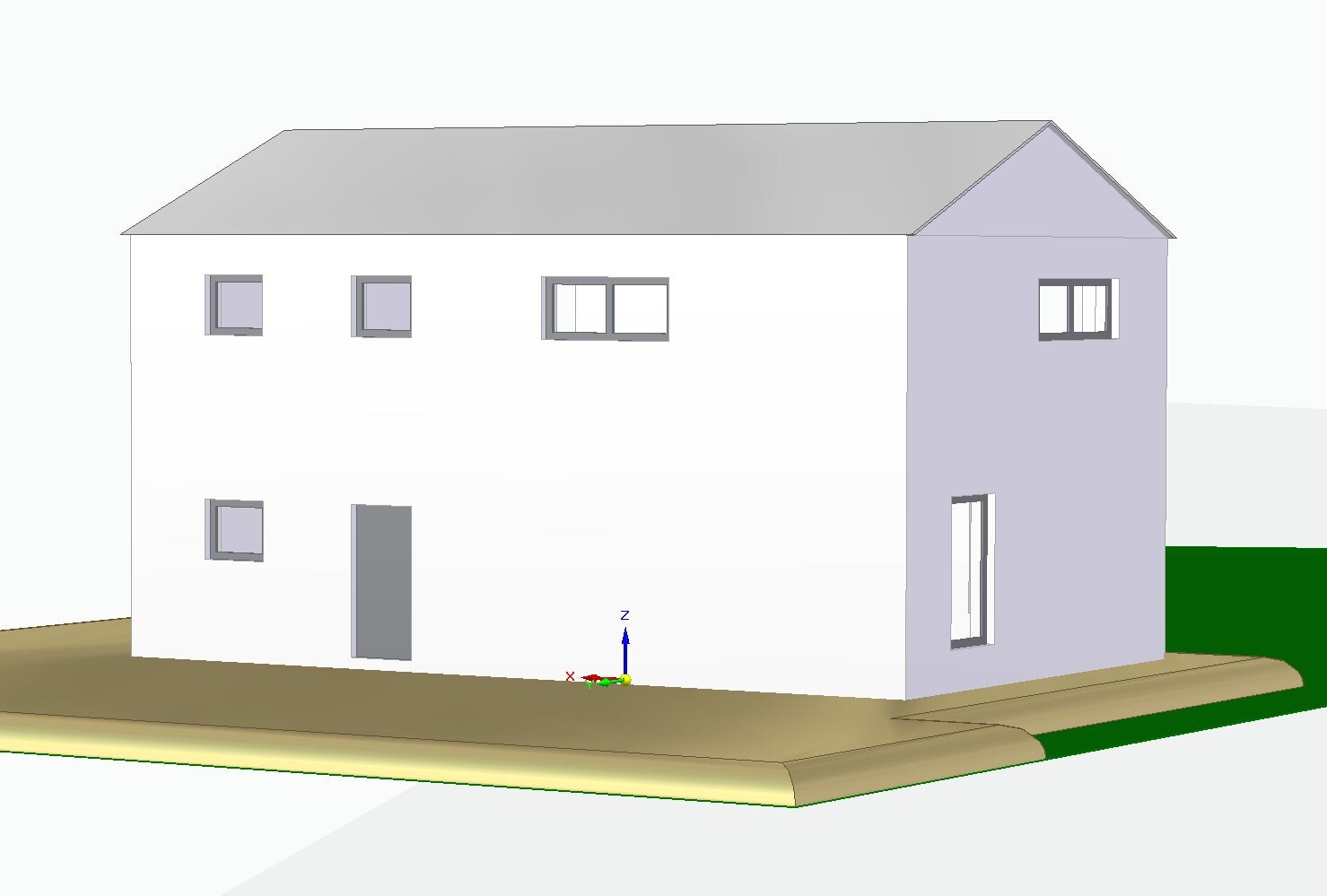
- What we don’t like 100% yet: the height of the house from the outside. It is currently planned as a two-story house with an eaves height of 6.2 m (20 ft), with the ground floor 2.84 m (9 ft 4 in) high and the upper floor 2.60 m (8 ft 6 in) high. The gable roof will be an uninsulated, unfinished cold roof, mainly because of the economical prefabricated truss construction method. This is a bit disappointing because I really like sloped ceilings and did not want the character of a townhouse. Lowering the roof with a knee wall of about 1.90 m (6 ft 3 in) and an insulated roof with open sloped ceilings would probably be more expensive due to the rafter/beam construction. We would also lose the garden view through the floor-to-ceiling bedroom windows.
- Simple: What do you think about the floor plan?
- Can you still imagine the relatively tall two-story house having a country house character? Maybe it depends on the facade design and choice of materials? Do you think it looks too “blocky,” especially from the front entrance side? Or would a lower eaves height with an attic conversion including a knee wall be preferable?
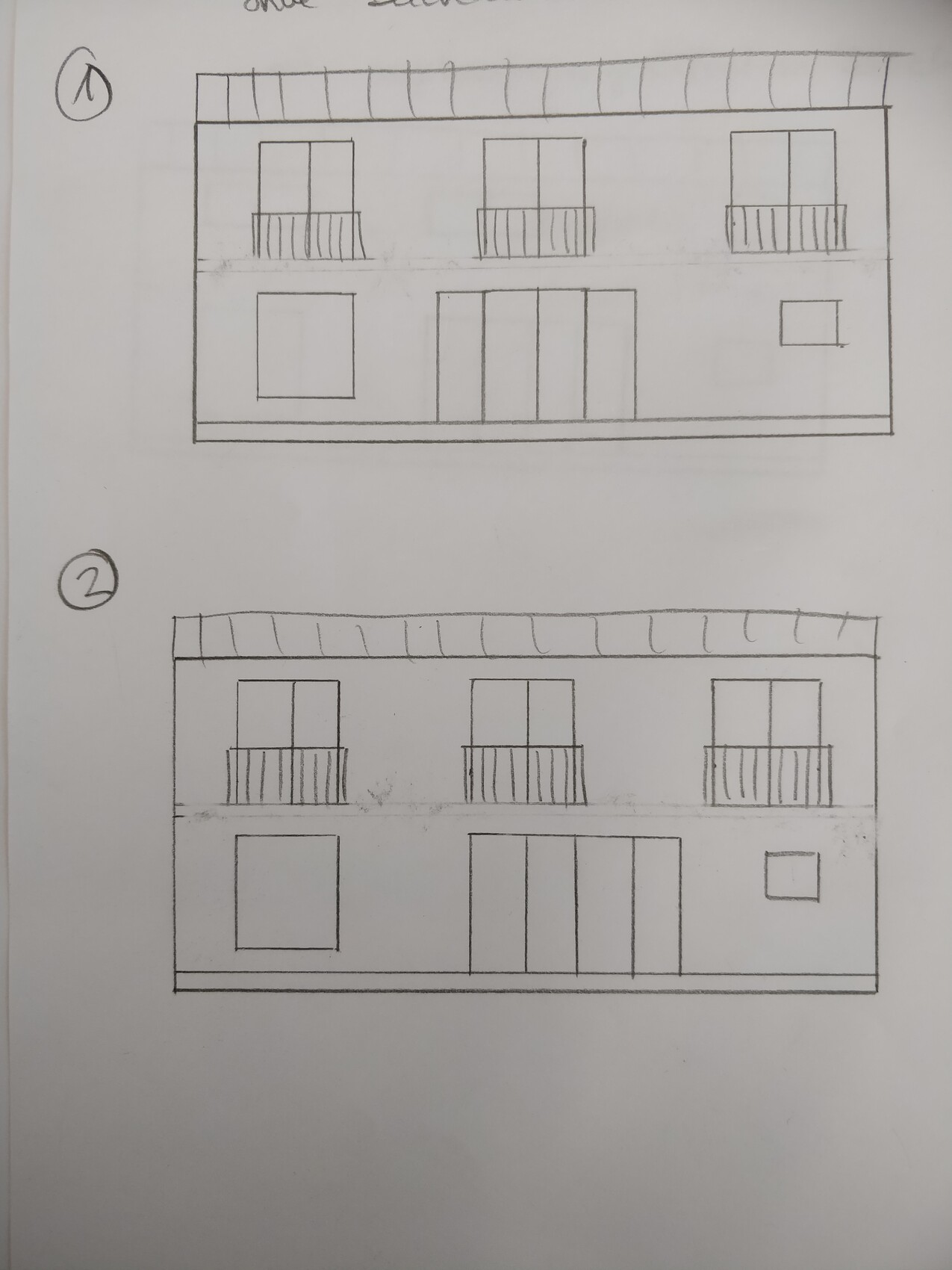
- We are still unsure how to arrange the windows on the garden side. The drawing with the elevations shows two possible versions. We actually prefer it when the upper floor window is centered over the lower window front. However, this does not align the interior line of sight from the entrance door to the garden/patio door (see ground floor plan). This represents version two; for version one, the window front would have to be shifted about one window width to the right, so that the patio door is behind the dining table. With the window front shifted left, the interior looks better to us, but from the outside it looks strange if it is offset from the upper floor window, right? What do you think?
Best regards
Painting and decorating a new build is very time-consuming if you want a neat result.
The steps are:
Fill all drywall surfaces, using anti-crack tape. Usually, three layers of filler with sanding in between are necessary.
Sand walls to remove dust residue. Fill again and sand finely.
Fill window sills and apply acrylic sealant on top towards the window reveal.
For drywall ceilings, it is recommended to glue a decorative molding at the corner where the ceiling meets the wall to cover cracks that will inevitably form there later.
Apply primer to all plaster surfaces. Apply acrylic sealant to door frames.
Roll the walls and ceilings twice. Make sure to carefully mask windows and other areas. Protect tiled floors well. Apply leveling compound to non-tiled floors after vacuuming thoroughly.
Sand the leveling compound and vacuum again. Install flooring. Fit baseboards. Seal joints at stairs or door thresholds with MS polymer or silicone.
Additionally, in our case, bathrooms and kitchen were covered with fiberglass instead of painting, and the fiber was painted with latex.
108 square meters (1,160 square feet) bungalow, 100 hours total. K.
The steps are:
Fill all drywall surfaces, using anti-crack tape. Usually, three layers of filler with sanding in between are necessary.
Sand walls to remove dust residue. Fill again and sand finely.
Fill window sills and apply acrylic sealant on top towards the window reveal.
For drywall ceilings, it is recommended to glue a decorative molding at the corner where the ceiling meets the wall to cover cracks that will inevitably form there later.
Apply primer to all plaster surfaces. Apply acrylic sealant to door frames.
Roll the walls and ceilings twice. Make sure to carefully mask windows and other areas. Protect tiled floors well. Apply leveling compound to non-tiled floors after vacuuming thoroughly.
Sand the leveling compound and vacuum again. Install flooring. Fit baseboards. Seal joints at stairs or door thresholds with MS polymer or silicone.
Additionally, in our case, bathrooms and kitchen were covered with fiberglass instead of painting, and the fiber was painted with latex.
108 square meters (1,160 square feet) bungalow, 100 hours total. K.
S
Sparfuchs779 Mar 2020 13:17Nordlys schrieb:
Painting and decorating a new build is very time-consuming if you want a proper result.
The steps are:
Fill all drywall surfaces with joint compound, using fiberglass tape. Usually, three applications with sanding in between are needed.
Sand the walls to remove dust residue. Fill any imperfections, then do a fine sanding.
Fill window sills, and apply acrylic sealant where they meet the window reveal.
For drywall ceilings, it’s recommended to attach a molding strip at the corner where the ceiling meets the wall to cover any cracks that will almost certainly appear later.
Apply primer on all plaster surfaces. Add an acrylic sealant around door frames.
Roll the walls and ceilings twice. Make sure to mask windows and other elements carefully and cleanly. Protect tiled floors well. For non-tiled floors, apply a leveling compound after thoroughly vacuuming.
Sand the leveling compound and vacuum again. Then install the flooring. Attach baseboards. Seal joints at stairs or door thresholds using MS polymer or silicone.
In our case, bathrooms and kitchen were covered with fiberglass mesh instead of painting, then the mesh was painted with latex paint.
108 sq m (1160 sq ft) bungalow, 100 hours for everything. K. If she considers all of that as just "painting," then depending on work speed, that might fit. That was the question after all.

Sparfuchs_ schrieb:
maybe you could break down where you spent most of the time?That definitely depends on the volume of work. We did all the electrical work ourselves—the electrician only connected the meter. I can't remember exactly, but I would say the electrical work took about 2.5 weeks and the painting about 1.5 weeks. A lot of time also goes into planning and organization. Since we lived 50m (0.03 miles) away from the construction site, travel time was a factor as well. You also have to consider that other trades (plasterers) need to finish their work before you can proceed. Moving things back and forth also takes up time.Sparfuchs_ schrieb:
If she considers all that as just "painting," then it might fit depending on the work pace. That was exactly the question. Yes, painting from Q2 level, although in drywall construction some filling and sanding was also done.Sparfuchs_ schrieb:
Annual leave homeowner 10h*30days*2= 600h
10 weekends helpers 10h*20days*6=1200hThat is really quite optimistic.
Do you really believe your helpers will always have 10 hours available for you on weekends?
And that you will actually spend 10 hours each day of your vacation there?
Similar topics