
Dear forum members,
We bought a plot of land last autumn and are currently deep into the floor plan design. We would like to share our current draft with you and welcome any comments and opinions.
[F]irst some preliminary information about the plot and its buildability:[/F]
Best regards
We bought a plot of land last autumn and are currently deep into the floor plan design. We would like to share our current draft with you and welcome any comments and opinions.
[F]irst some preliminary information about the plot and its buildability:[/F]
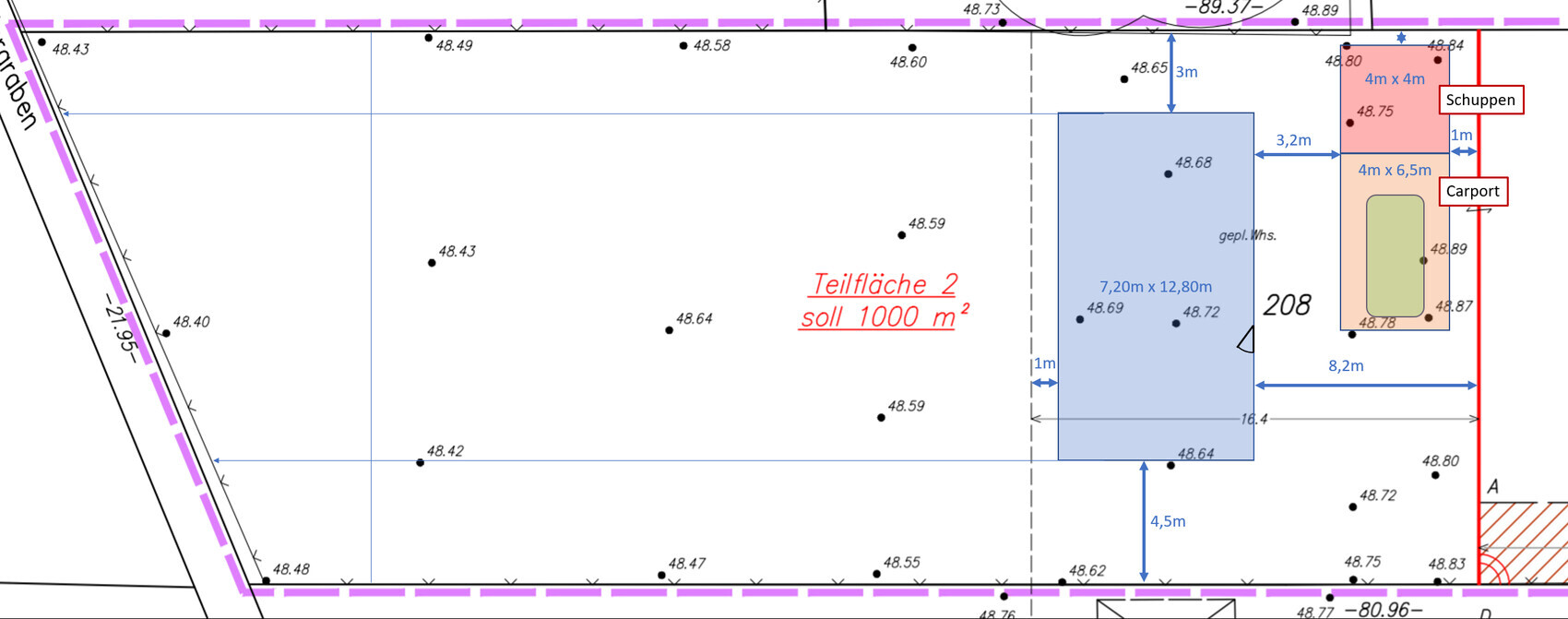
- 1000 m² (10,764 sq ft) rear plot, southwest facing (so southwest is on the left side of the site plan)
- Building boundary up to approx. 16 m (52 ft) behind the property line (up to the dashed line on the site plan)
- No zoning plan (construction according to § 34 of the Building Code)
- Groundwater at surface level and peaty soil (exact geotechnical report pending), so piled foundation required and no basement
- Affordable! (Our maximum budget for the house including foundation slab is €230,000)
- Country house style
- Bright, large windows facing south/garden
- Open living/dining/kitchen area
- Family of four, 1 bedroom and 2 children’s rooms
- Not oversized, max 150 m² (1,615 sq ft), preferably less
- Solid construction using Ytong blocks (for us the most cost-effective option, although we would have liked to build with wood as well).
- Developed ourselves after studying various floor plans (including from the book "Affordable Building with a Small Budget" by Achim Linhardt) with support from architect friends and our planner (an independent civil engineer).
- Dimensions 12.50 x 7.50 m (41 x 25 ft) (the measurements shown on the site plan are from an earlier draft).
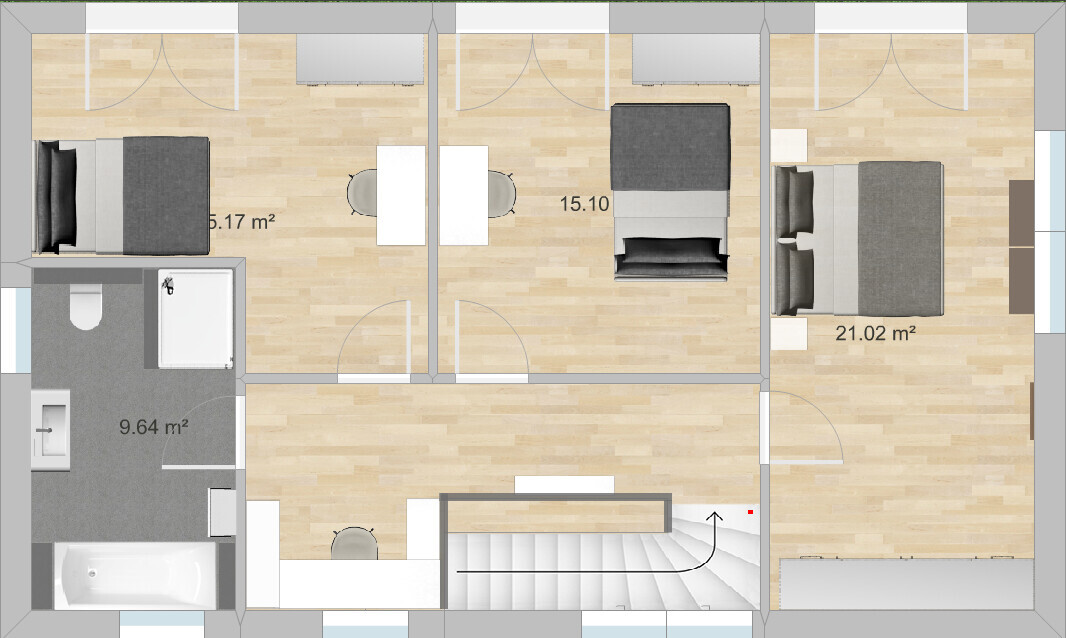
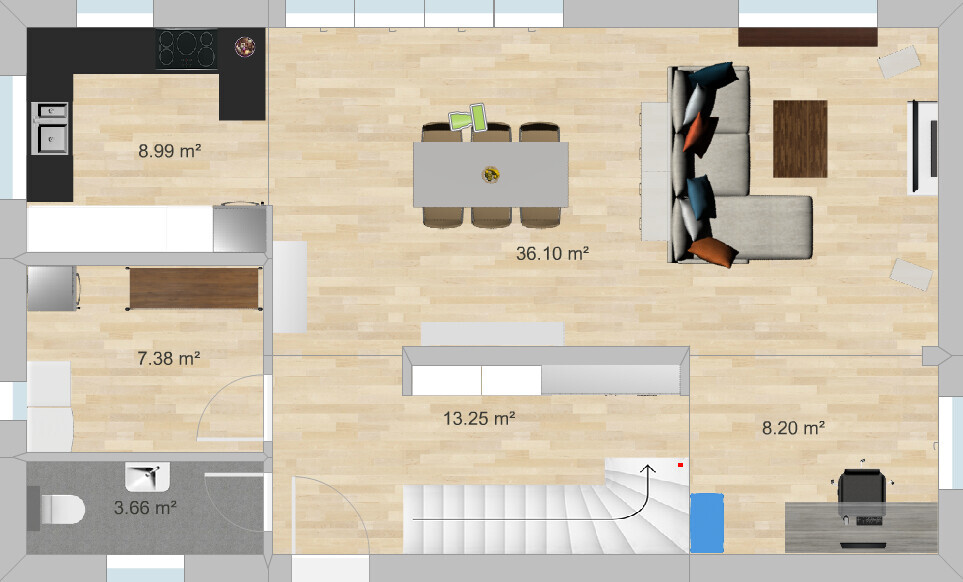
- What we like: open living area, all main rooms have large windows facing the garden, efficient size, although the children’s and bedroom could be smaller, sewing/work nook behind the stairs upstairs, plenty of wall space for large wardrobes in the upstairs bedroom and hallway on the ground floor, light shaft in the stairwell, staircase (we originally wanted a straight run staircase but it would have taken too much space; the one with three quarter turns is also fine with us).
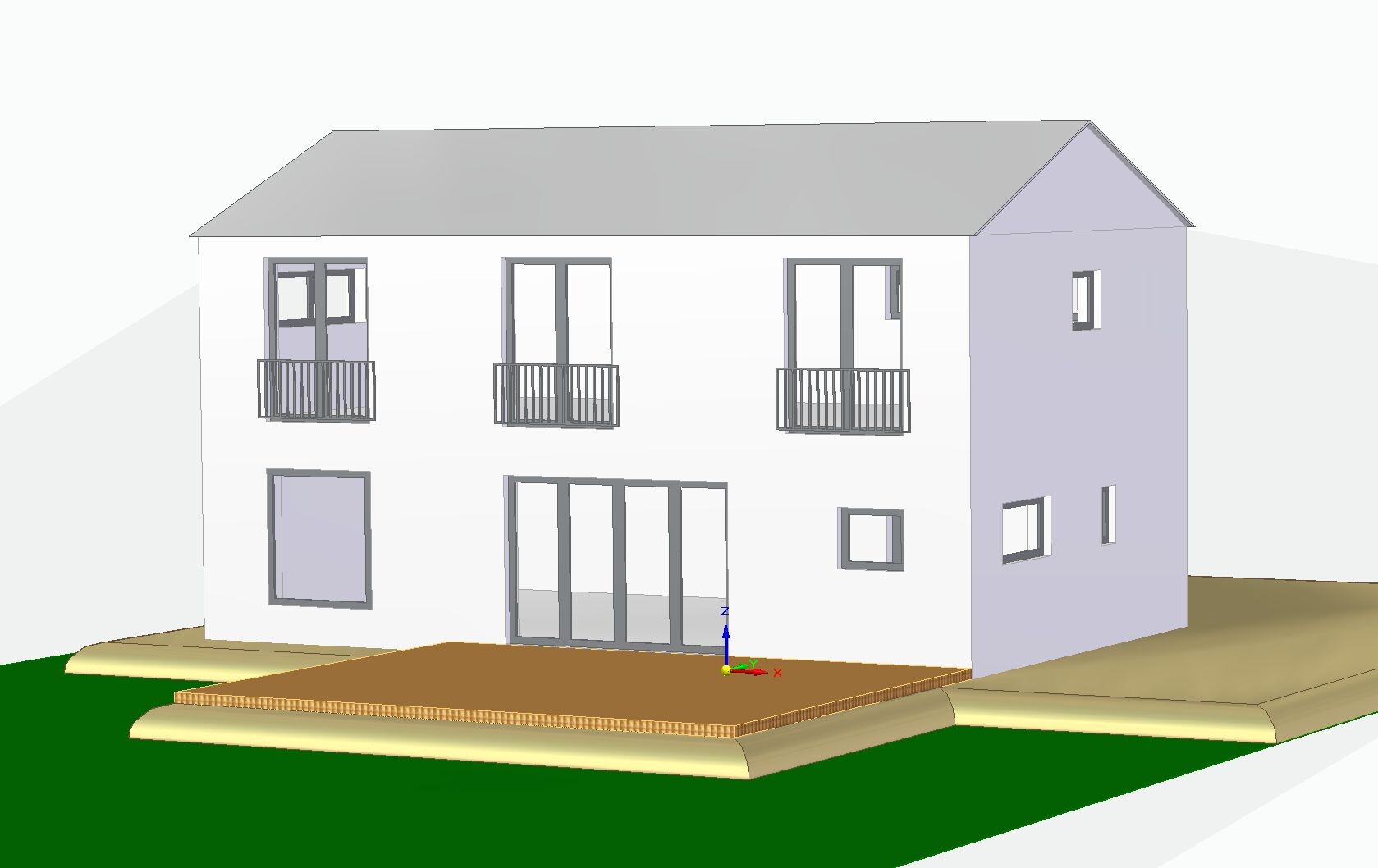
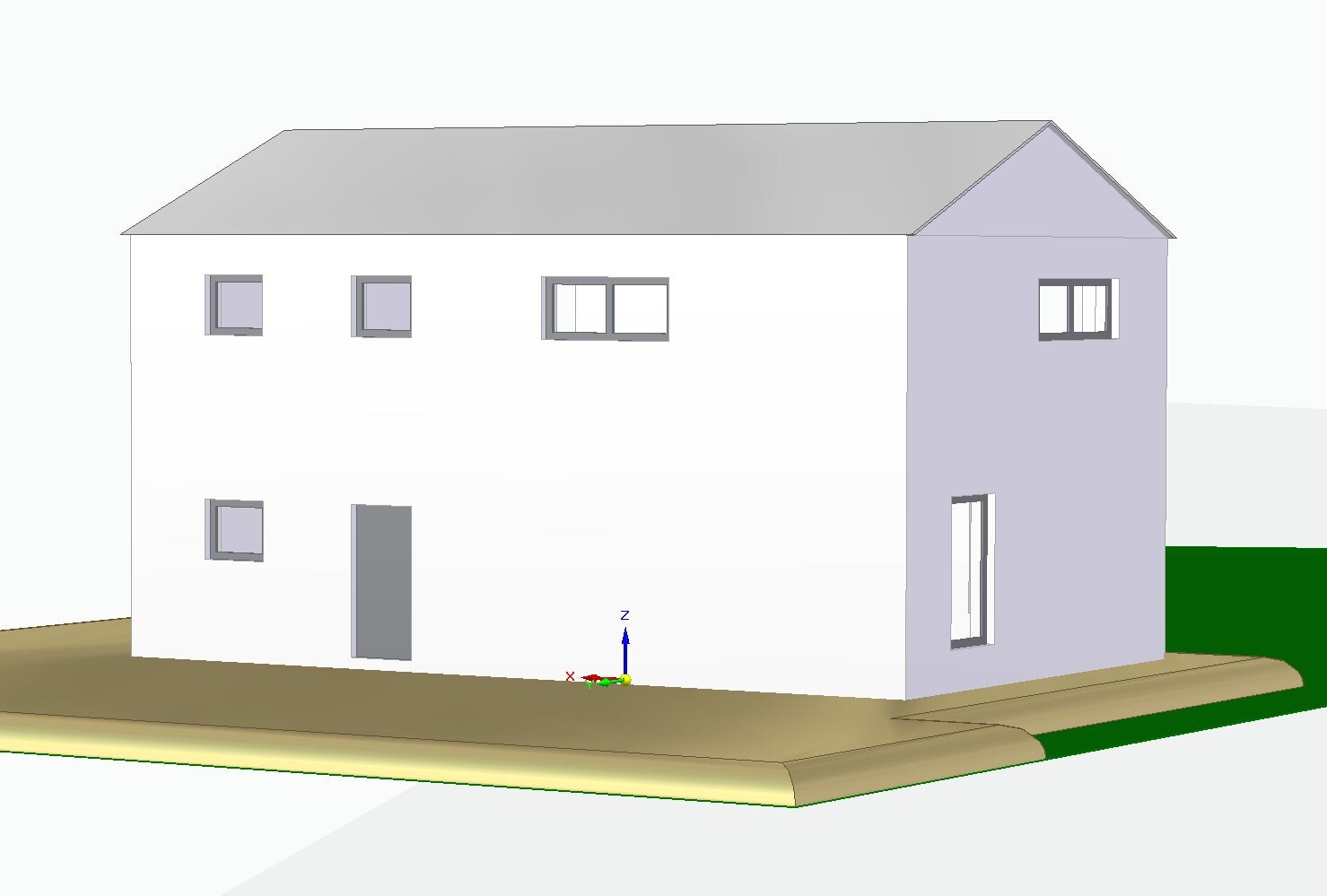
- What we don’t like 100% yet: the height of the house from the outside. It is currently planned as a two-story house with an eaves height of 6.2 m (20 ft), with the ground floor 2.84 m (9 ft 4 in) high and the upper floor 2.60 m (8 ft 6 in) high. The gable roof will be an uninsulated, unfinished cold roof, mainly because of the economical prefabricated truss construction method. This is a bit disappointing because I really like sloped ceilings and did not want the character of a townhouse. Lowering the roof with a knee wall of about 1.90 m (6 ft 3 in) and an insulated roof with open sloped ceilings would probably be more expensive due to the rafter/beam construction. We would also lose the garden view through the floor-to-ceiling bedroom windows.
- Simple: What do you think about the floor plan?
- Can you still imagine the relatively tall two-story house having a country house character? Maybe it depends on the facade design and choice of materials? Do you think it looks too “blocky,” especially from the front entrance side? Or would a lower eaves height with an attic conversion including a knee wall be preferable?
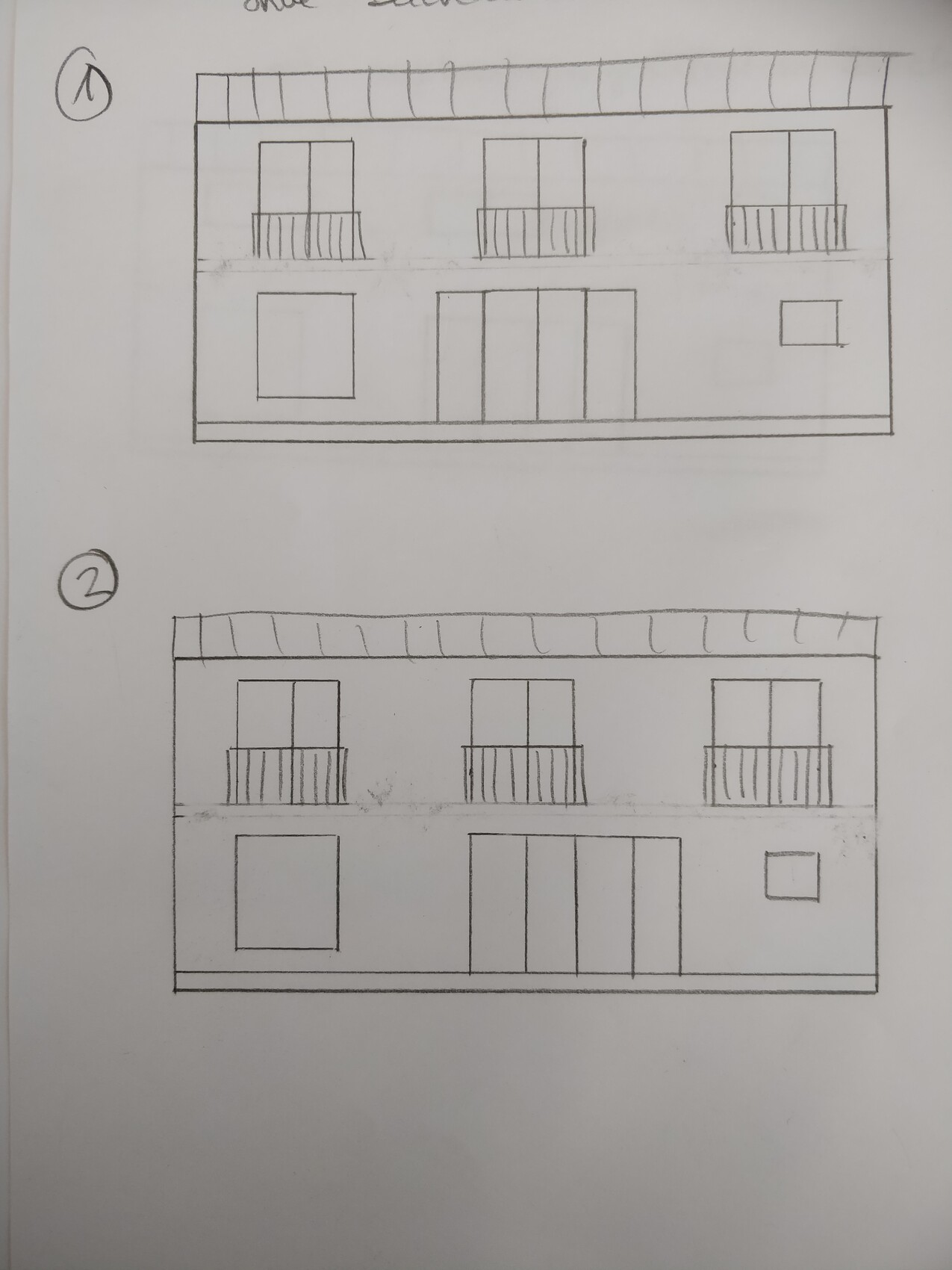
- We are still unsure how to arrange the windows on the garden side. The drawing with the elevations shows two possible versions. We actually prefer it when the upper floor window is centered over the lower window front. However, this does not align the interior line of sight from the entrance door to the garden/patio door (see ground floor plan). This represents version two; for version one, the window front would have to be shifted about one window width to the right, so that the patio door is behind the dining table. With the window front shifted left, the interior looks better to us, but from the outside it looks strange if it is offset from the upper floor window, right? What do you think?
Best regards
H
hampshire6 Mar 2020 22:36While Design 135 straight is not the most space-efficient layout, it impresses with its very consistent clarity. I really like the design a lot. It could create a positive atmosphere typical of a holiday home.
From a technical perspective, the design has some downsides:
You will need to furnish skillfully, some things won’t be “standard” or perfect, and you’ll have to search to find the right solutions at a good price.
From a technical perspective, the design has some downsides:
- The living room can feel cramped with many people. Solution: Spend time in the garden or at the dining table.
- The upstairs hallway is disproportionately large. So what. There’s still enough space for a storage cabinet.
- In the master bedroom, you can hear all bathroom activities. Teenagers just have to learn to use the downstairs bathroom at night...
- The kitchen is quite narrow. However, it can become a gem and is very socially connected.
- The walking distances are long and winding—whether for laundry, groceries, or from the desk to the front door. Ergonomics experts might be shocked. If you’re aware of this, it’s perfectly fine.
- You don’t just walk far, but also through narrow passages—especially when someone is sitting at the dining table or children habitually leave chairs in the way. Occasionally, this leads to frustration but
- The dressing room is a dead end and may disturb a sleeping person. You always have to accept some compromises.
You will need to furnish skillfully, some things won’t be “standard” or perfect, and you’ll have to search to find the right solutions at a good price.
hampshire schrieb:
Ergonomics-oriented people will throw their hands up in despair. If you’re aware of this, it’s completely okay. I actually think it’s the other way around: once I become aware of this, I’ll get annoyed every time.
There isn’t enough space for a straight staircase, nor for a staircase with a landing, nor for oversized hallways.
Storage space was already lacking in the initial design and is becoming even more limited. -> Cloakroom (coats, shoes)
I would like to remind you again that the freezer room is not a storage room. It might fit some trash bins and a shelf, but nothing more. Even the laundry area is questionable and uncomfortable.
H
hampshire6 Mar 2020 23:13ypg schrieb:
Whenever I realize this, I get annoyed every time.People simply think differently. la.schnute6 Mar 2020 23:19
ypg schrieb:
I would separate the sewing machine area from the hallway with a wall. I can imagine that the noise might eventually annoy roommates in the children's rooms and the living room. Alternatively, proper soundproof doors would need to be installed on the kids’ rooms. A spatial separation (e.g., a thin drywall partition) should actually be provided for work equipment that produces noise.Yes, we’ve already discussed that a bit. There’s a conflict between the possible need for quiet by my roommates and my wish not to sit in a small, dark little room. In most new floor plans, however, the sewing corner is just in the bedroom and separated by a sliding door. Hopefully that will be enough for my partner to sleep 😳.
ypg schrieb:
No, it was really just a thought directed at you
I was thinking about the initial sentence roughly like “we’re TV junkies, and the stereo system is sacred.”
Regarding the wardrobe: the initial designs apparently had only 30 cm (12 inches) cabinets instead of the useful 60 cm (24 inches) ones...Then that’s good, little reminders are always helpful, otherwise I wouldn’t be here . Noise level: yes to being TV and music enthusiasts, but not excessively. And who else would it bother except the kids? They just close their bedroom doors and probably drown it out with their own shows and songs … in about 8–10 years. But it’s true: for those rare occasions when one of us adults has friends over and the other wants to isolate and watch TV or something, doors might still be too much for me, but a light room separation in the form of a staircase might not be such a bad idea. That somewhat supports the variants with stairs in the living area.
The wardrobe cabinets are deliberately 40 cm (16 inches) deep. That’s enough for us, as we don’t hang clothes on hangers but only use hooks. And shoe cabinets usually aren’t very deep either... at the moment we’re using Besta and a hook rail, which works fine.
hampshire schrieb:
135 straight isn’t the most space-efficient layout, but it impresses with very consistent clarity. I really like the design. It could create the positive vibe of a holiday home.Oh, thanks, that’s really a nice comment! Not all walking distances bother me—for example, I’d probably manage the route from the stairs to the laundry/utility room (others have to go to the basement for that!)—but what really bothers me on the upstairs level is that one room is always so isolated behind the stairs, and you have to walk a long way to get there. Of course, it also offers more privacy right away.
And the missing wardrobe there is definitely a problem. Under the stairs? Next to the stairs? It’s definitely lacking somewhere there.
Regarding storage again: That’s correct, if the total living area is smaller, then storage space is also less. Still, I don’t find that particularly problematic. Not everyone needs the same amount of storage . A 3-meter (10 feet) closet, 2.3-meter (7.5 feet) wardrobe (for example, in the landing variant), and utility room for cleaning supplies and canned goods are sufficient for us. If you want, you can fill the gallery by the landing or straight staircase with lowboards or dressers.

la.schnute schrieb:
Why don’t you like the double-flight stairs?Not here, the house is too small for that. I would use a switchback staircase where you planned the landing.https://www.instagram.com/11antgmxde/
https://www.linkedin.com/company/bauen-jetzt/
Similar topics