
ᐅ Orientation of the house on the plot – fewer retaining walls?
Created on: 6 Apr 2019 16:19
M
Medlyna
Hello,
we already own a plot of land and are working with an architect.
Now we have a question about the orientation, and we would like to hear some independent opinions.
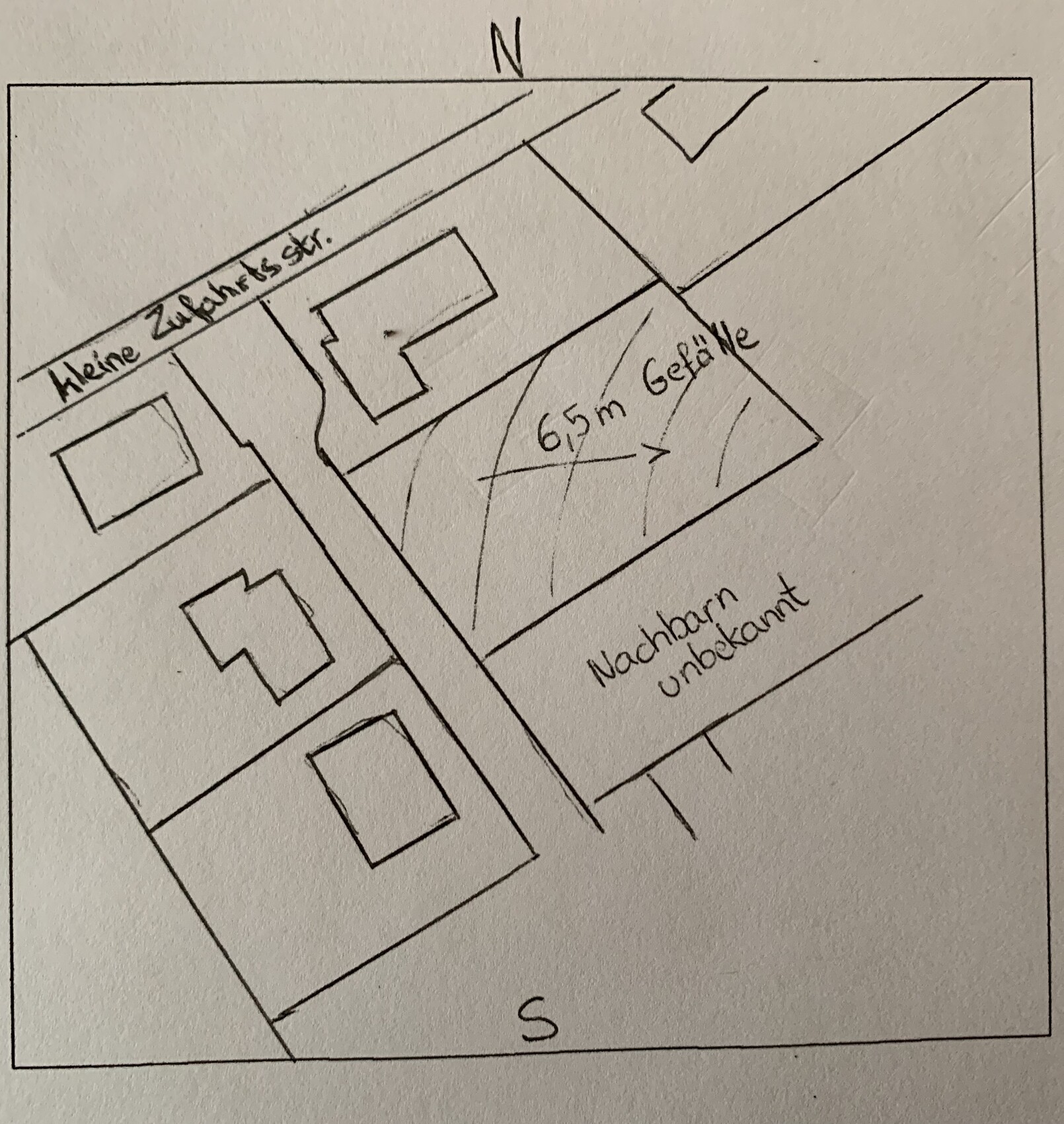
Plot size: 1100 sqm (± 26 x 40 m (85 x 131 ft))
Slope: yes – approx. 6.5 m (21 ft) drop over 40 m (131 ft)
Building envelope: 16 m (52 ft) deep, width does not matter; 3 m (10 ft) distance from boundary (including garage); knee wall height 6.5 m (21 ft)
Style, roof type, building type: preferably gable roof; modern/classic
Basement + ground floor + upper floor
Number of people: 2 adults (31, 33), 1 child (2 years), baby, 1-2 more children planned
I’ll spare you the further details about rooms until we get to the real floor plan discussion. Here’s what might be important for the orientation.
Basement: kitchen and living room (door leads directly to the garden – this cannot be changed)
Huge kitchen (at least 8.5 x 5.5 m (28 x 18 ft)) with dining table inside and children’s play area
Living room: about 20 sqm (215 sq ft) (includes piano)
Upper floor: children’s rooms, we want to use dormers
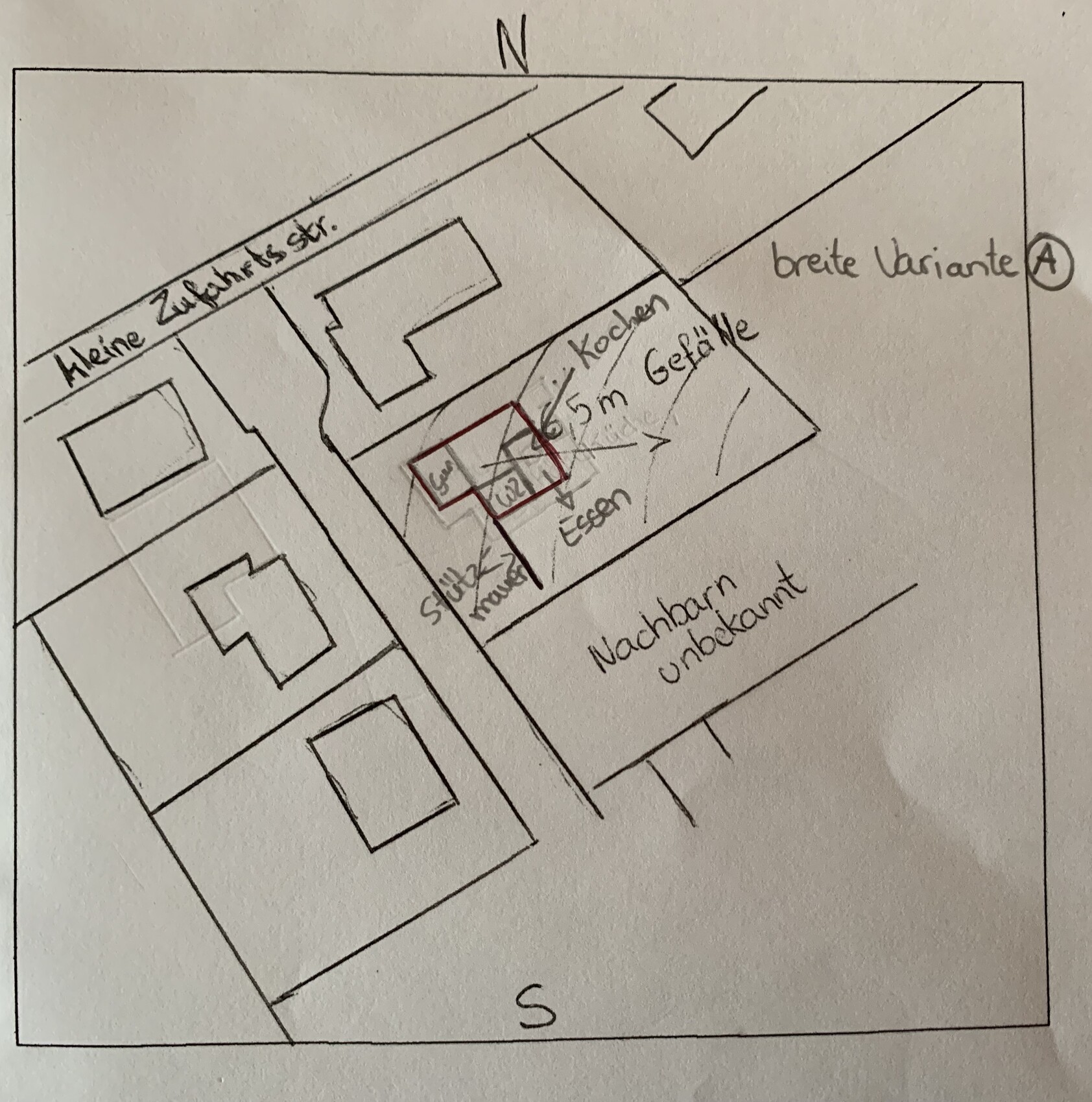
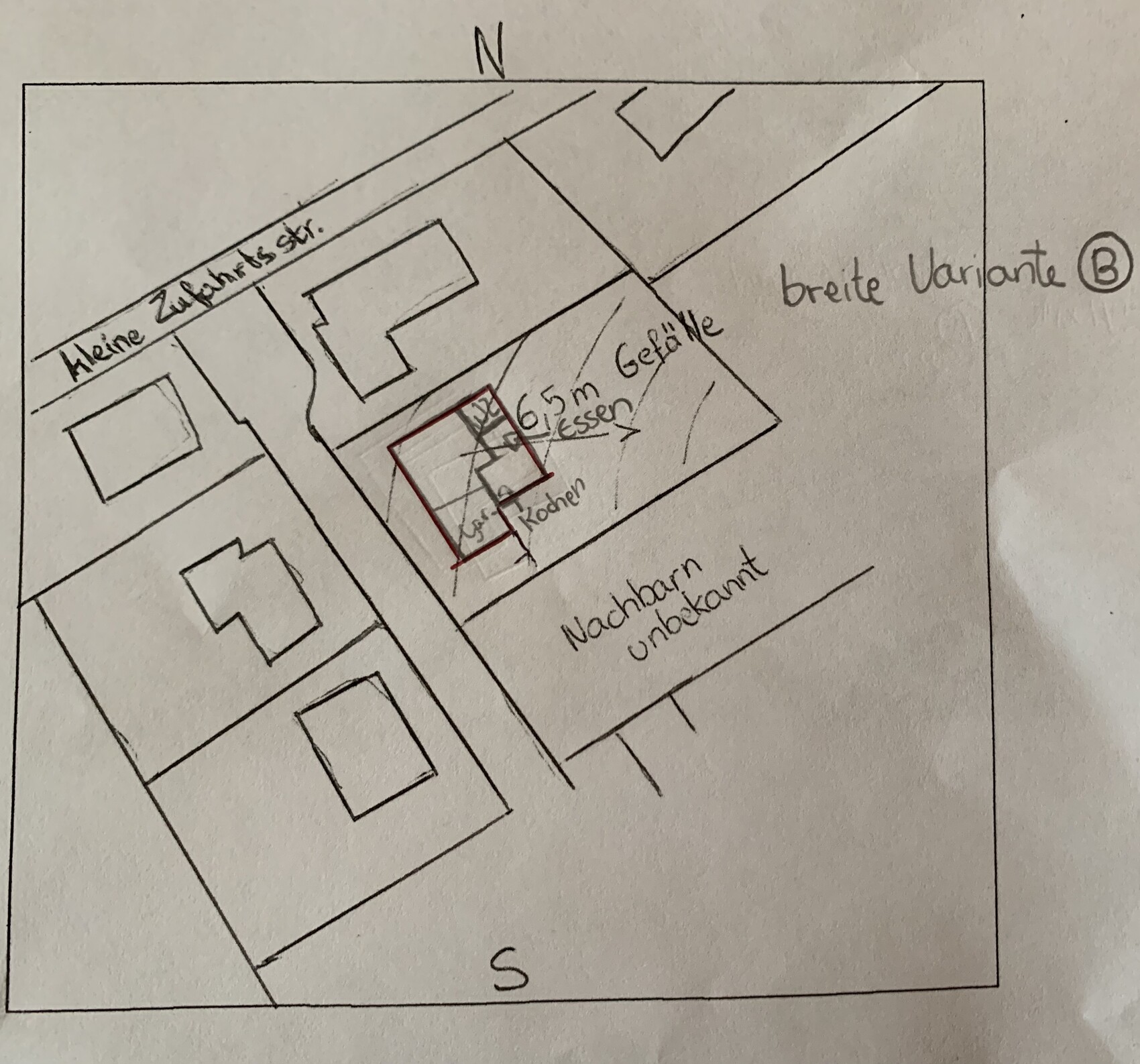
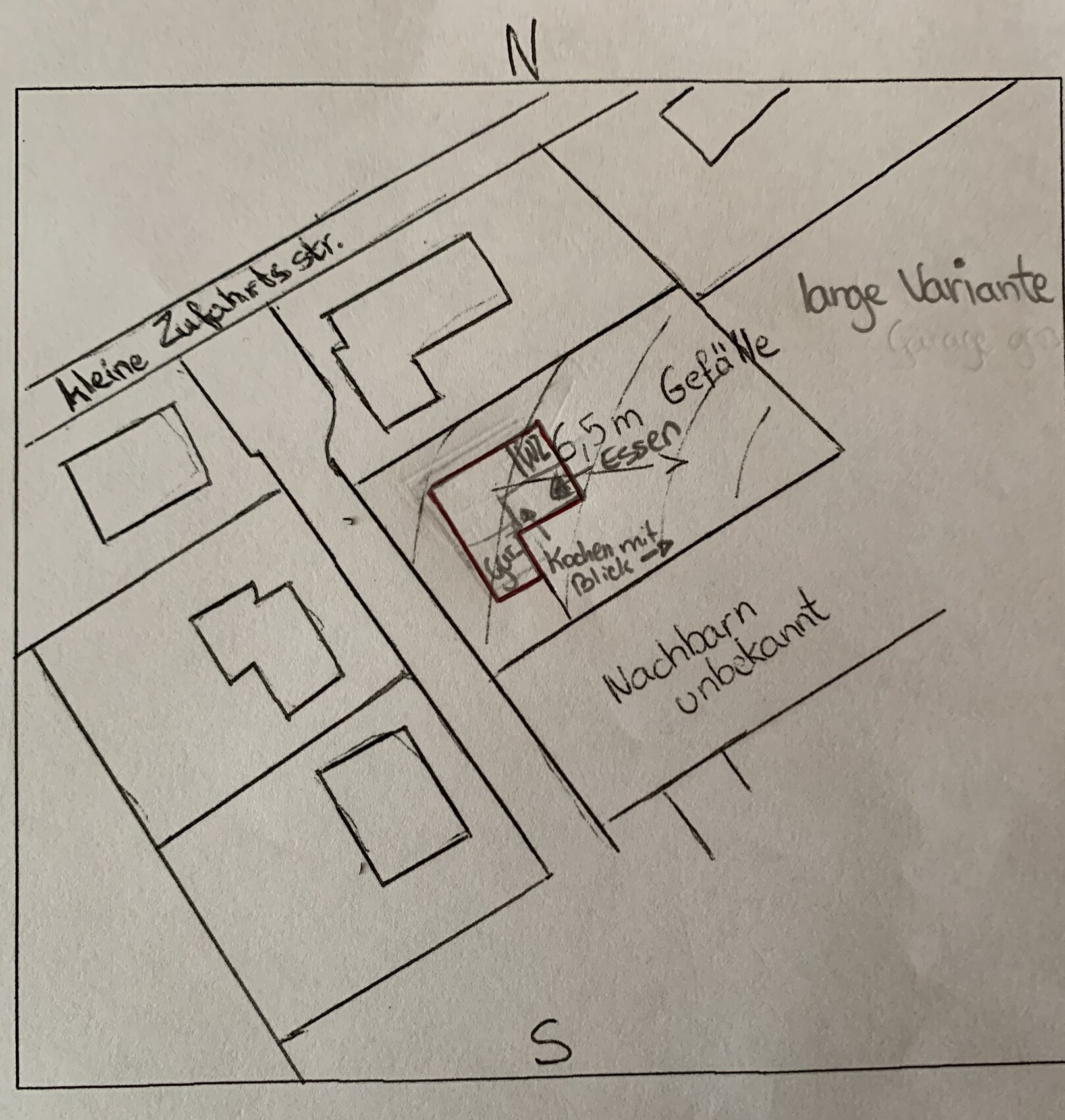
The sketched house proposals are not exact to scale. We were thinking about 11 x 14 m (36 x 46 ft). I have marked the garage even though it is on the ground floor and the living room and kitchen are in the basement.
Thank you in advance 🙂
we already own a plot of land and are working with an architect.
Now we have a question about the orientation, and we would like to hear some independent opinions.
Plot size: 1100 sqm (± 26 x 40 m (85 x 131 ft))
Slope: yes – approx. 6.5 m (21 ft) drop over 40 m (131 ft)
Building envelope: 16 m (52 ft) deep, width does not matter; 3 m (10 ft) distance from boundary (including garage); knee wall height 6.5 m (21 ft)
Style, roof type, building type: preferably gable roof; modern/classic
Basement + ground floor + upper floor
Number of people: 2 adults (31, 33), 1 child (2 years), baby, 1-2 more children planned
I’ll spare you the further details about rooms until we get to the real floor plan discussion. Here’s what might be important for the orientation.
Basement: kitchen and living room (door leads directly to the garden – this cannot be changed)
Huge kitchen (at least 8.5 x 5.5 m (28 x 18 ft)) with dining table inside and children’s play area
Living room: about 20 sqm (215 sq ft) (includes piano)
Upper floor: children’s rooms, we want to use dormers
- Which house orientation is more advantageous – wider or longer? Why would you decide that way? (If longer, the dormers on the upper floor will probably be lost.)
- Kitchen: is it better on the northeast side with a view over the large garden or better on the south side?
- Own assessment of kitchen northeast: disadvantage – kitchen quickly goes into shade, advantage – no need for constant shading and free view into the large garden. How would you assess the lighting?
- South side (possibly indirectly shaded by garage extension): advantage – short routes to garden supplies/kitchen/grill parking spot; disadvantage – side facing unknown neighbor, constant shading; will the large garden still be used or come into its own, or will everything happen mainly in the corner there?
- How much shading does the garage cause for myself? Is that problematic?
- Do I save money if I put the garage on the south side and thus do not need additional retaining walls?
- Would you position the garage rather on the north or south side in combination with the kitchen?
The sketched house proposals are not exact to scale. We were thinking about 11 x 14 m (36 x 46 ft). I have marked the garage even though it is on the ground floor and the living room and kitchen are in the basement.
Thank you in advance 🙂
H
hampshire6 Apr 2019 22:5911ant schrieb:
I don't really believe in the construction as shownIt's just a sketch.
Here's the process:
Excavate the ground, build reinforced concrete walls on level -1 with foundation, frost protection, and drainage for the house, insulate the slope side, and backfill. The garden-side wall, which is thermally decoupled, does not need to be insulated and doesn't have to be concrete. Structural engineering calculations are absolutely necessary. Costs are similar to basement construction.
Our wall is also divided into three parts
Old sandstone wall 3m (without foundation)
House wall made of waterproof concrete, insulated on both sides
Garage wall up to 5 meters (16 feet) high (concrete, foundation unknown), now the garage is attached
Everything new as Hampshire described.
I prefer the wider option A.
If you plan to slope it, include a ramp and an access path to the garden.
Old sandstone wall 3m (without foundation)
House wall made of waterproof concrete, insulated on both sides
Garage wall up to 5 meters (16 feet) high (concrete, foundation unknown), now the garage is attached
Everything new as Hampshire described.
I prefer the wider option A.
If you plan to slope it, include a ramp and an access path to the garden.
Thank you very much for your suggestions. It is still undecided how and with which material we will support the structure.
I forgot to mention that we are building to a high energy efficiency standard, in case that is important.
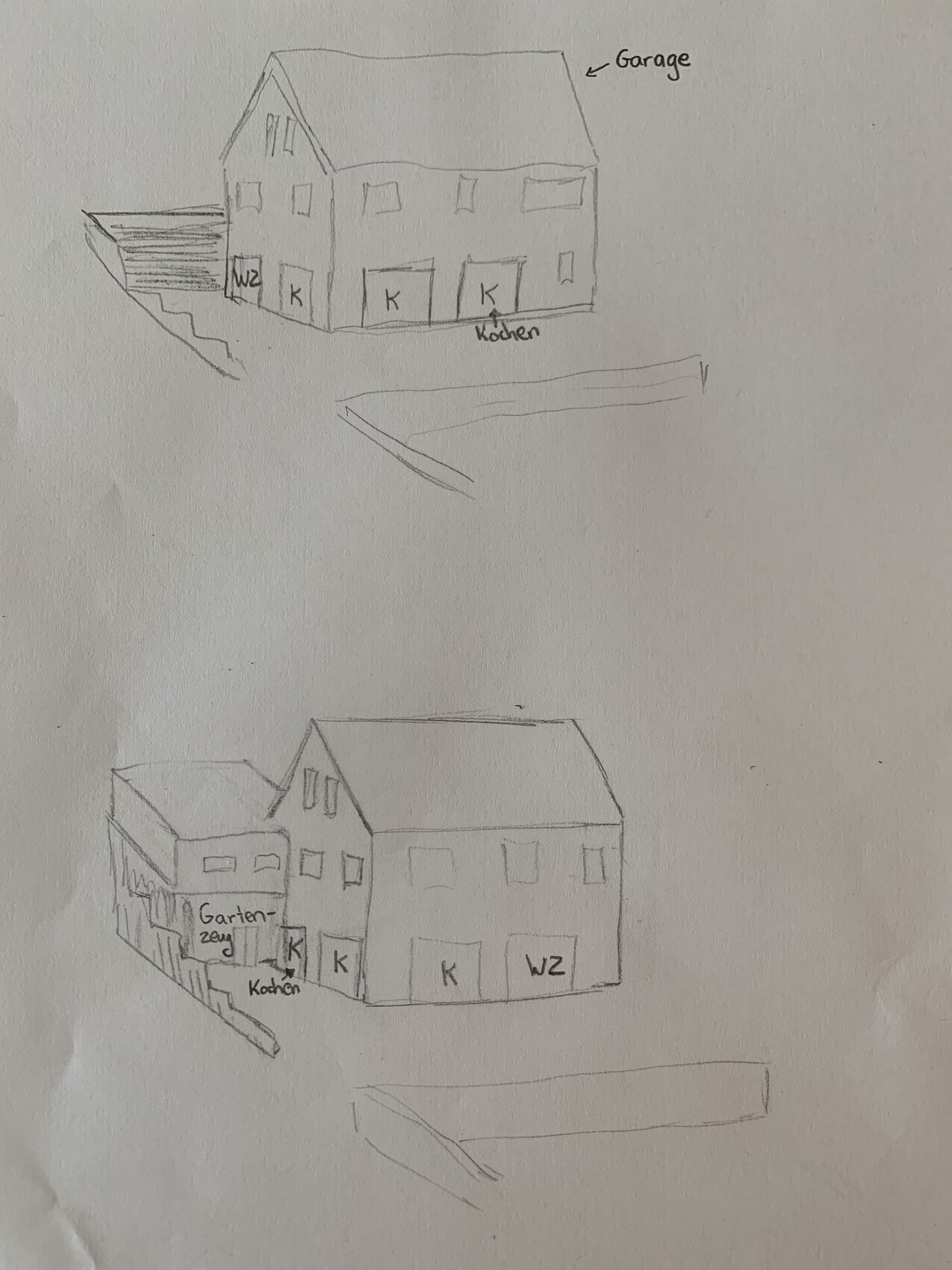
I have sketched two more pictures showing the options "from the back." (No scale, just quick hand drawings.) This might make it easier to visualize what it could look like. Access to the garden will always be from the right side; there is also enough space on the left. The plan is to partially integrate the garage regardless of its position.
If we only build a retaining wall on the left, there won’t be enough space for garden tools, etc. (or we would have to extend the basement partially behind the retaining wall—basically continuing the basement behind the house). A garden shed would be fine, but it would be better if it could be integrated.
I also think we would need to install some kind of railing or flower boxes on top to secure the area.
If we partially integrate the garage on the left, there would be a basement underneath right away. But how much shade would we be creating for ourselves? Would we then have to build a longer version?
The question that remains unclear and is very important to us—and on which the layout of the upper floor depends—is the location of the kitchen. What do you think would be better in terms of sunlight? Which position is more favorable? How would you decide? Would you do it as drawn or differently?
Which option do you like better and why?
I forgot to mention that we are building to a high energy efficiency standard, in case that is important.
I have sketched two more pictures showing the options "from the back." (No scale, just quick hand drawings.) This might make it easier to visualize what it could look like. Access to the garden will always be from the right side; there is also enough space on the left. The plan is to partially integrate the garage regardless of its position.
If we only build a retaining wall on the left, there won’t be enough space for garden tools, etc. (or we would have to extend the basement partially behind the retaining wall—basically continuing the basement behind the house). A garden shed would be fine, but it would be better if it could be integrated.
I also think we would need to install some kind of railing or flower boxes on top to secure the area.
If we partially integrate the garage on the left, there would be a basement underneath right away. But how much shade would we be creating for ourselves? Would we then have to build a longer version?
The question that remains unclear and is very important to us—and on which the layout of the upper floor depends—is the location of the kitchen. What do you think would be better in terms of sunlight? Which position is more favorable? How would you decide? Would you do it as drawn or differently?
Which option do you like better and why?
H
hampshire7 Apr 2019 13:00Your drawings are wonderful and have a very appealing style! I prefer the upper version because it doesn’t place such a massive wall next to the patio. The garden tool shed can also be located at the other end of the garden (run an electrical line there) or as a "cabinet"—meaning the 3m (10 feet) distance would no longer apply to the north wall.
The idea behind this was that the terrace wouldn’t be as visible from the street. It would provide a more private setting. We could still have a 7m (23 feet) distance between the house wall and the retaining wall.
Is it okay for the kitchen to be on the northeast side instead of the south? You could also go with the upper option and still place the kitchen facing south. Although facing the large garden isn’t a bad option either... Decisions, decisions 😉
Is it okay for the kitchen to be on the northeast side instead of the south? You could also go with the upper option and still place the kitchen facing south. Although facing the large garden isn’t a bad option either... Decisions, decisions 😉
Similar topics