
ᐅ Optimizing the Floor Plan for a New Single-Family Home Build
Created on: 22 Aug 2020 20:42
H
hausvoraus
Hello everyone,
I would appreciate feedback on the following floor plan. I’m completely new to the forum but have read comments on various other designs here. Before receiving feedback suggesting a complete redesign, I prefer to put this unfinished draft up for discussion.
What is still unfinished: window positions and sizes, furniture arrangement in the living room, separation between the utility room and the adjacent pantry, acoustic optimization of the home office.
Development plan/restrictions: driveway on the left, not allowed on the same side as the house
Plot size: 650 sqm (about 7,000 sq ft)
Slope: no
Site coverage ratio: 0.35
Floor space ratio: unknown
Building envelope, setback line and boundary: 3 m (10 ft)
Edge development:
Number of parking spaces: 1
Number of stories: 2–3
Roof type: no hip roofs allowed
Architectural style: no preference
Orientation: fixed due to road location
Maximum height/limits: 11 m (36 ft) for 3 floors
Other requirements: open building style
Homeowners’ requirements
Style, roof, building type: Bauhaus, flat roof
Basement, floors: no basement, 2 stories
Number of occupants, ages: 5 people, including 3 children aged 2 to 8 years
Room requirements on ground and upper floors: not defined, based on required rooms
Office: separate room needed for a home office
Overnight guests per year: at least 2, sometimes several weeks at a time
Open or closed architecture: closed, for acoustic reasons
Traditional or modern construction: modern, minimalist, efficient
Open kitchen, island: island desired, open kitchen preferred
Number of dining seats: usually 5, more when hosting guests
Fireplace: no
Music/sound system wall: no, but a good idea
Balcony, roof terrace: no
Garage, carport: carport directly adjacent
Utility garden, greenhouse: small garden accessible from the terrace, which should be accessible from the living room
Other wishes/considerations/daily routine, including reasons why some things should or shouldn’t be:
- Ground floor should be as age-appropriate as possible (older guests, so guest room and shower on ground floor)
- Morning sun should shine into the bedroom for natural waking
- Terrace not southwest-facing to avoid overheating
- Home office should be located to minimize disturbances to others when starting early or working late
- The home office needs good acoustic separation from the rest of the house for calls (children should not be overheard; the “worker” ideally not heard outside the room)
- Children’s rooms can be relatively small, as bunk beds with space underneath are planned
- There should be enough space in front of the TV in the living room for children to join in activities (dancing, etc.)
- Quietness is important due to current noisy and stressful living conditions (loud street, poor door seals, noisy children)
- The layout should be efficient and functional: short distances, easy to clean, robot vacuum should be able to reach most areas
- Smart home requirements and space needs for equipment are still unclear
- The house should be bright but able to be quickly darkened in the evening (blinds or similar)
- An electric piano must fit somewhere (probably upstairs, in a gallery above the front door)
House design
Origin of the design: based on a standard plan with many DIY modifications
What you like: it seems quite efficient already
What you dislike: possibly too little storage (no basement, so likely need a shed somewhere)
Price estimate from architect/planner: not yet known
Personal budget including equipment: approx. 450,000
Preferred heating system: district heating, as this is standard there
If you had to give up certain details/features:
- Can be omitted: kitchen island, kitchen does not have to be open, one of the children’s rooms if necessary (another would have to be larger)
- Cannot give up: separation of guest and home office, must be two separate rooms
Why is the design the way it is now?
We reviewed many standard plans and then used one as a base for various modifications through many iterations.
What do you think is especially good or bad about it? /
What is the most important/basic question about the floor plan in 130 characters or less?
What can be improved and why? Unfiltered feedback is very welcome.
Thank you very much
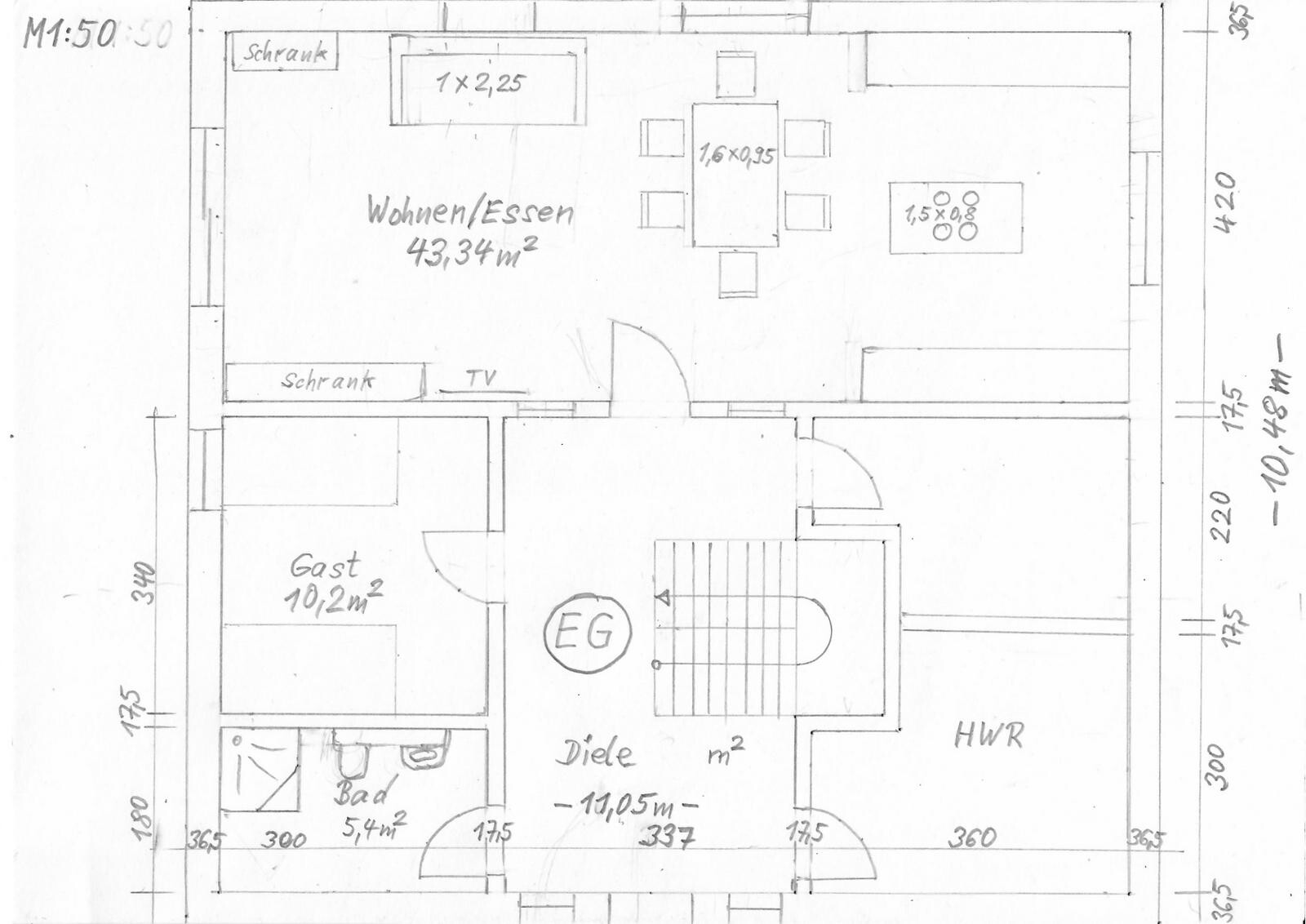
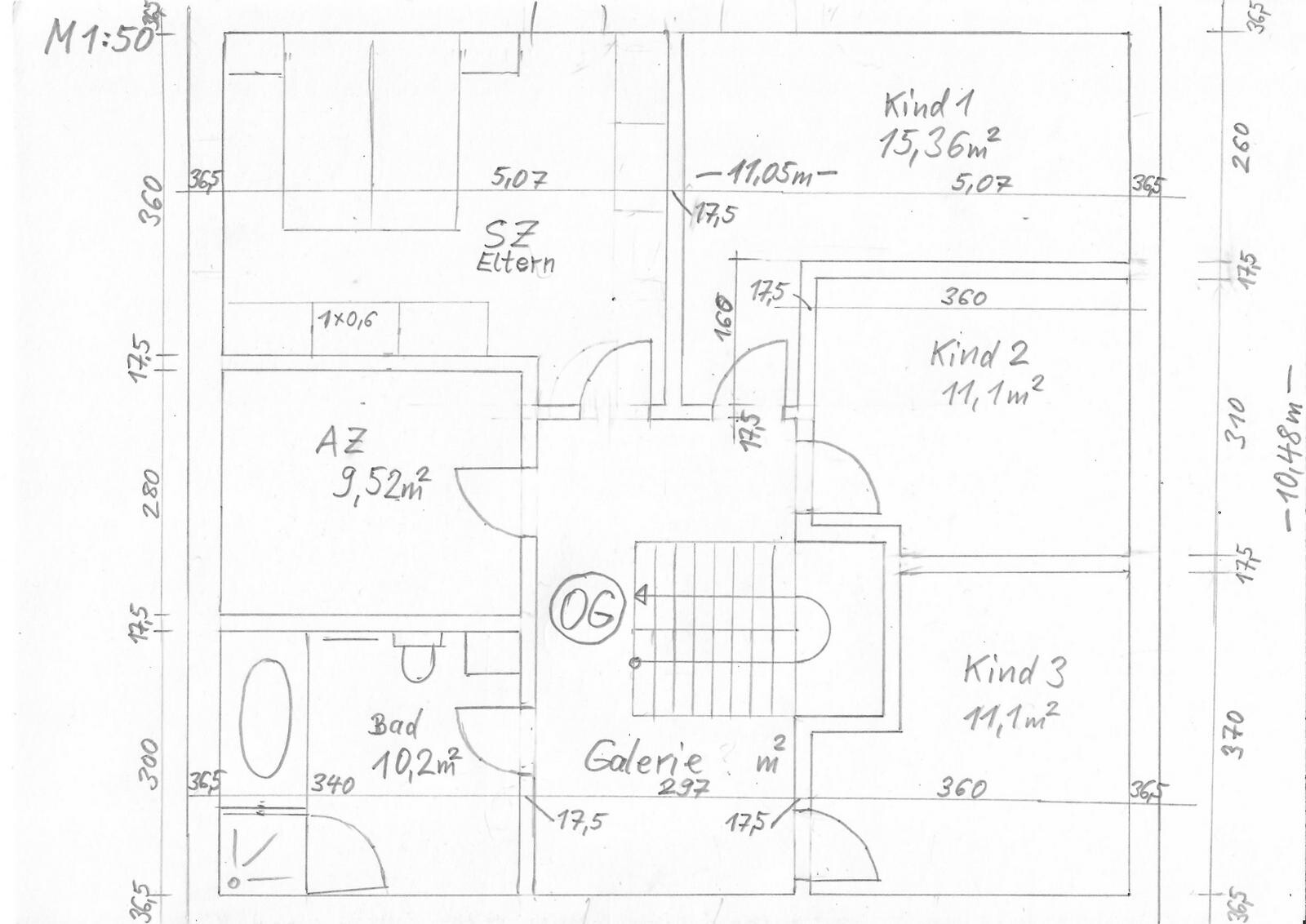
I would appreciate feedback on the following floor plan. I’m completely new to the forum but have read comments on various other designs here. Before receiving feedback suggesting a complete redesign, I prefer to put this unfinished draft up for discussion.
What is still unfinished: window positions and sizes, furniture arrangement in the living room, separation between the utility room and the adjacent pantry, acoustic optimization of the home office.
Development plan/restrictions: driveway on the left, not allowed on the same side as the house
Plot size: 650 sqm (about 7,000 sq ft)
Slope: no
Site coverage ratio: 0.35
Floor space ratio: unknown
Building envelope, setback line and boundary: 3 m (10 ft)
Edge development:
Number of parking spaces: 1
Number of stories: 2–3
Roof type: no hip roofs allowed
Architectural style: no preference
Orientation: fixed due to road location
Maximum height/limits: 11 m (36 ft) for 3 floors
Other requirements: open building style
Homeowners’ requirements
Style, roof, building type: Bauhaus, flat roof
Basement, floors: no basement, 2 stories
Number of occupants, ages: 5 people, including 3 children aged 2 to 8 years
Room requirements on ground and upper floors: not defined, based on required rooms
Office: separate room needed for a home office
Overnight guests per year: at least 2, sometimes several weeks at a time
Open or closed architecture: closed, for acoustic reasons
Traditional or modern construction: modern, minimalist, efficient
Open kitchen, island: island desired, open kitchen preferred
Number of dining seats: usually 5, more when hosting guests
Fireplace: no
Music/sound system wall: no, but a good idea
Balcony, roof terrace: no
Garage, carport: carport directly adjacent
Utility garden, greenhouse: small garden accessible from the terrace, which should be accessible from the living room
Other wishes/considerations/daily routine, including reasons why some things should or shouldn’t be:
- Ground floor should be as age-appropriate as possible (older guests, so guest room and shower on ground floor)
- Morning sun should shine into the bedroom for natural waking
- Terrace not southwest-facing to avoid overheating
- Home office should be located to minimize disturbances to others when starting early or working late
- The home office needs good acoustic separation from the rest of the house for calls (children should not be overheard; the “worker” ideally not heard outside the room)
- Children’s rooms can be relatively small, as bunk beds with space underneath are planned
- There should be enough space in front of the TV in the living room for children to join in activities (dancing, etc.)
- Quietness is important due to current noisy and stressful living conditions (loud street, poor door seals, noisy children)
- The layout should be efficient and functional: short distances, easy to clean, robot vacuum should be able to reach most areas
- Smart home requirements and space needs for equipment are still unclear
- The house should be bright but able to be quickly darkened in the evening (blinds or similar)
- An electric piano must fit somewhere (probably upstairs, in a gallery above the front door)
House design
Origin of the design: based on a standard plan with many DIY modifications
What you like: it seems quite efficient already
What you dislike: possibly too little storage (no basement, so likely need a shed somewhere)
Price estimate from architect/planner: not yet known
Personal budget including equipment: approx. 450,000
Preferred heating system: district heating, as this is standard there
If you had to give up certain details/features:
- Can be omitted: kitchen island, kitchen does not have to be open, one of the children’s rooms if necessary (another would have to be larger)
- Cannot give up: separation of guest and home office, must be two separate rooms
Why is the design the way it is now?
We reviewed many standard plans and then used one as a base for various modifications through many iterations.
What do you think is especially good or bad about it? /
What is the most important/basic question about the floor plan in 130 characters or less?
What can be improved and why? Unfiltered feedback is very welcome.
Thank you very much

Yes, the drawing does not include any dimensions, but the floor plan (?) is specified as 11.05 m x 10.48 m (36.3 ft x 34.4 ft) for the design. Including the finished attic (stylish studio), the total area amounts to 257 m² (2,767 sq ft). As for the price, I haven’t found any information—though I also haven’t specifically looked for it. Is this Arge Haus Berlin on the expensive side? Or were you referring to the shown interior features in the original?

In particular, I was unable to find any dimension details in this so-called "similar only in the shell area" design that would clearly explain how the drawn staircase is supposed to work dimensionally in the original. And yes, in my opinion, Arge is building with a focus on clients who pay according to B, C/W, or R standards – it is difficult to translate this to A or BAT (unless, of course, one cuts off the side wings of the villa).
https://www.instagram.com/11antgmxde/
https://www.linkedin.com/company/bauen-jetzt/
https://www.instagram.com/11antgmxde/
https://www.linkedin.com/company/bauen-jetzt/
H
hausvoraus24 Aug 2020 16:4011ant schrieb:
In my impression, Arge builds mainly for clients paid under categories B, C/W, or R – translating this to category A or BAT is difficult (unless, for example, you alter the villa by removing the side wings).What do these letters/abbreviations of the pay grades mean?H
hausvoraus24 Aug 2020 17:18Oh, I see. Found it. I don’t have any information on who Arge typically builds for.
This townhouse is included in their reference catalog, meaning it serves as a “We also build something like this” example, but it is not their standard model.
This townhouse is included in their reference catalog, meaning it serves as a “We also build something like this” example, but it is not their standard model.
It was probably less about the joint venture building exclusively for civil servants and more about the fact that, due to the higher entry price, their offer primarily targets higher income groups. You definitely do not have to be a civil servant to become a customer there.
Similar topics