
ᐅ Optimizing the Floor Plan with Numerous Detailed Considerations
Created on: 12 Jan 2026 21:12
N
NMarieKH
Hello everyone,
We are currently planning the construction of our house in Lower Austria, and I would really appreciate your feedback on our floor plan. I’m 22, my partner is 26 – he is financing the house. Because of that, it’s particularly important to me that the floor plan fits perfectly and that we don’t build in any costly “mistakes.” I’m in the process of optimizing it, but the longer you look at it, the more you get blind to it.
I welcome any comments, criticism, and suggestions for improvements – whether it’s about circulation paths, storage, lighting, furnishing possibilities, or just “this feels impractical” – these are exactly the things I’m trying to fix right now.
In addition, I have a few specific questions where I’m particularly unsure (list follows):
If anyone could answer or comment on even 1 or 2 of these points, I would be extremely grateful. Many thanks in advance!
Development Plan / Restrictions
Plot size: 625 m2 (30% of this may be built on)
Site coverage ratio: 1
Floor area ratio: 2
Number of parking spaces: 2
Roof type: hipped roof
Style: modern, cozy
Orientation: terrace faces north
Client Requirements
Style, roof type, building type: modern but not too cubic, hipped roof
Levels: basement, ground floor, first floor
Number of people, age: currently W22 and M26
Space requirements ground floor, upper floor: office on ground floor possibly as a future bedroom
Office use: family use or home office? home office
Open or closed architecture: rather open
Conservative or modern construction: modern
Open kitchen, kitchen island: yes
Number of dining seats: 2, at least 6-8 guests
Fireplace: maybe for the future
Music/sound system wall: sound system at TV wall
Balcony, roof terrace: small balcony at bedroom
Garage, carport: 37 m2 (400 ft2) garage, which will be built later as an extension
Currently, we do not have children but plan to have them in the future
House Design
Who designed it: do-it-yourself
What do we like? The size of the floor plan, the distribution of living and utility areas over different floors
What don’t we like? Sizes of certain rooms, door swings, orientation of living room windows to the northeast, furnishing options in the large living room on the ground floor, integration of the pantry in the room, 2 rooms in the basement which are through-rooms to other rooms
Preferred heating system: underfloor heating
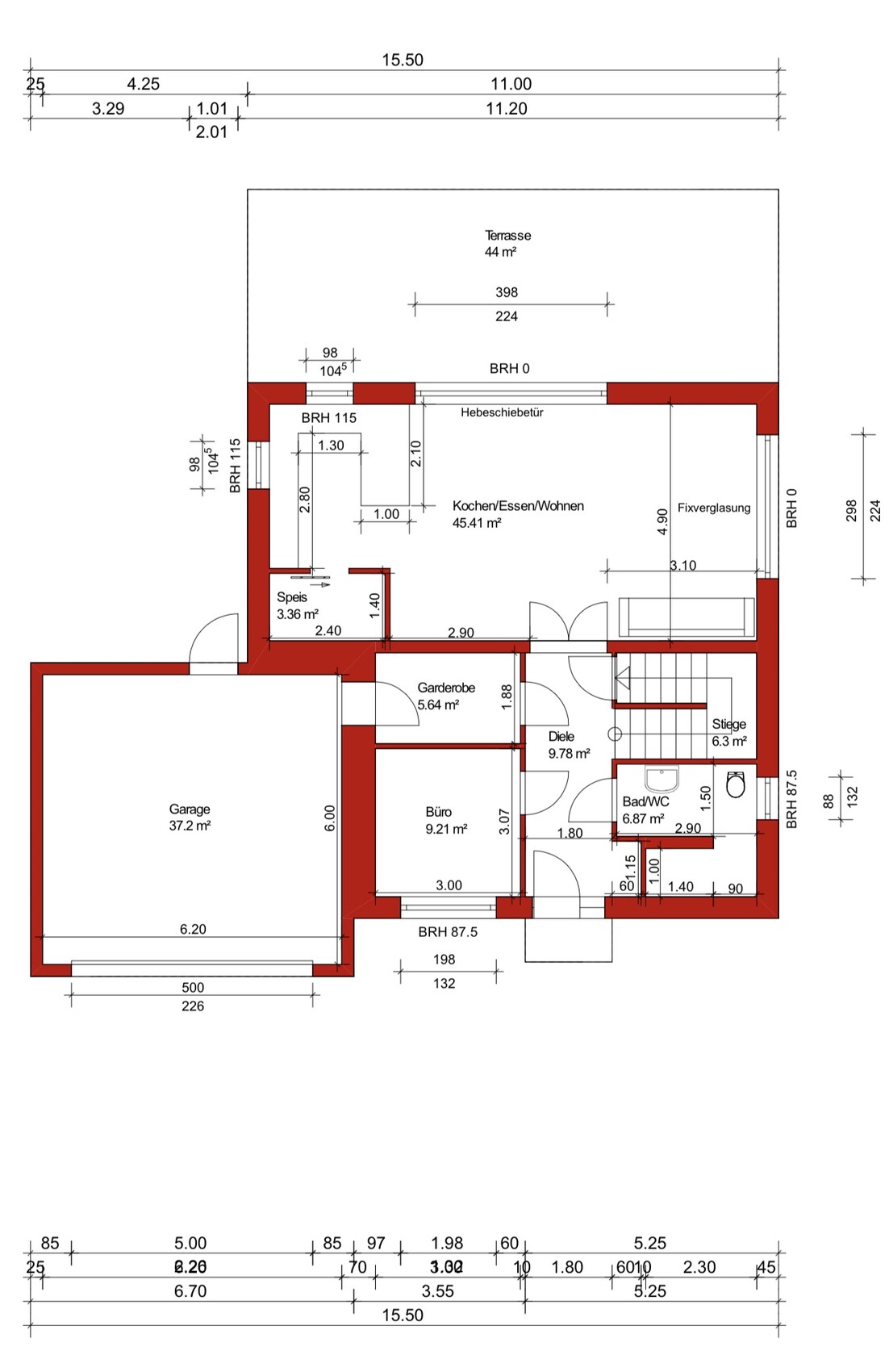
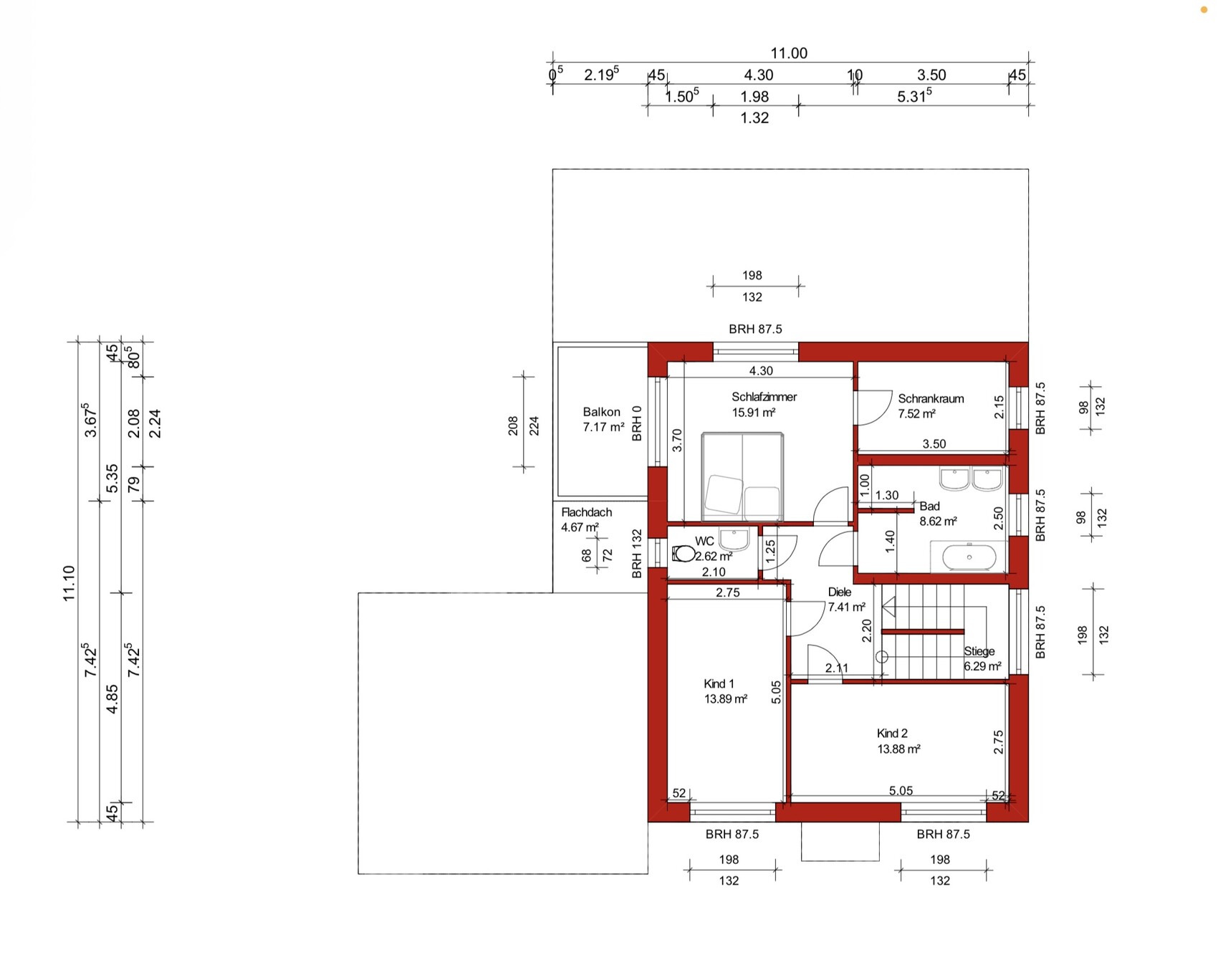
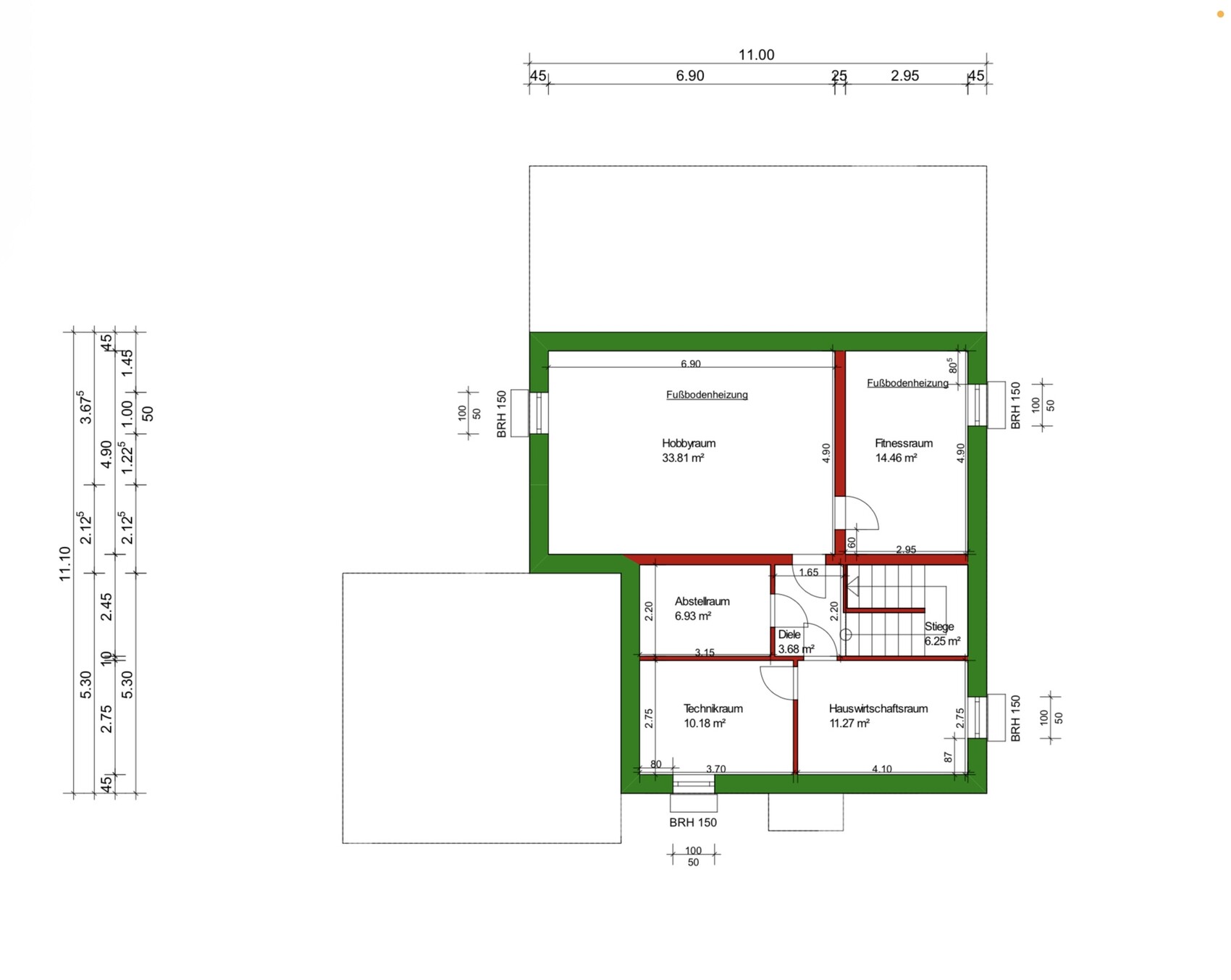
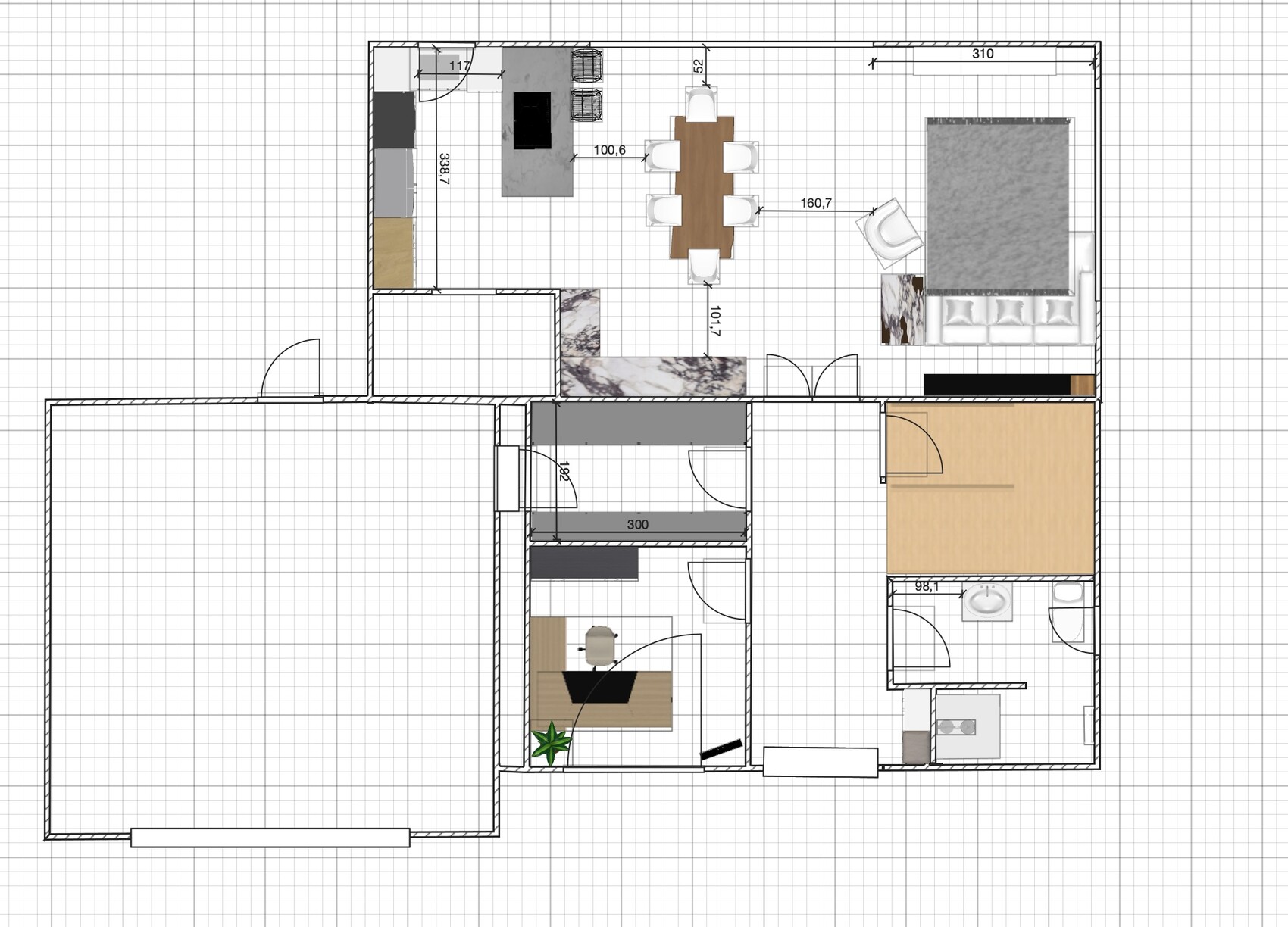
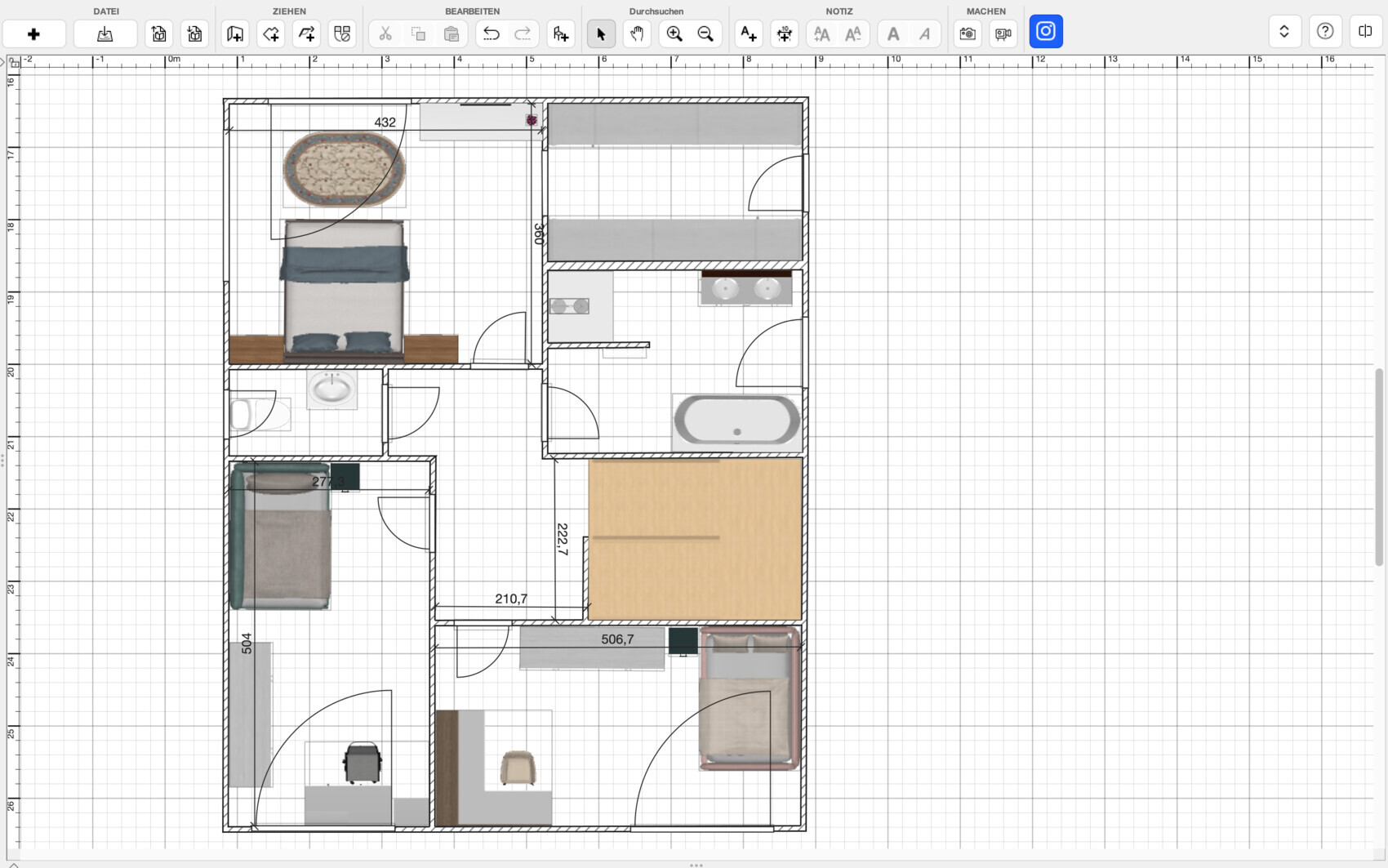
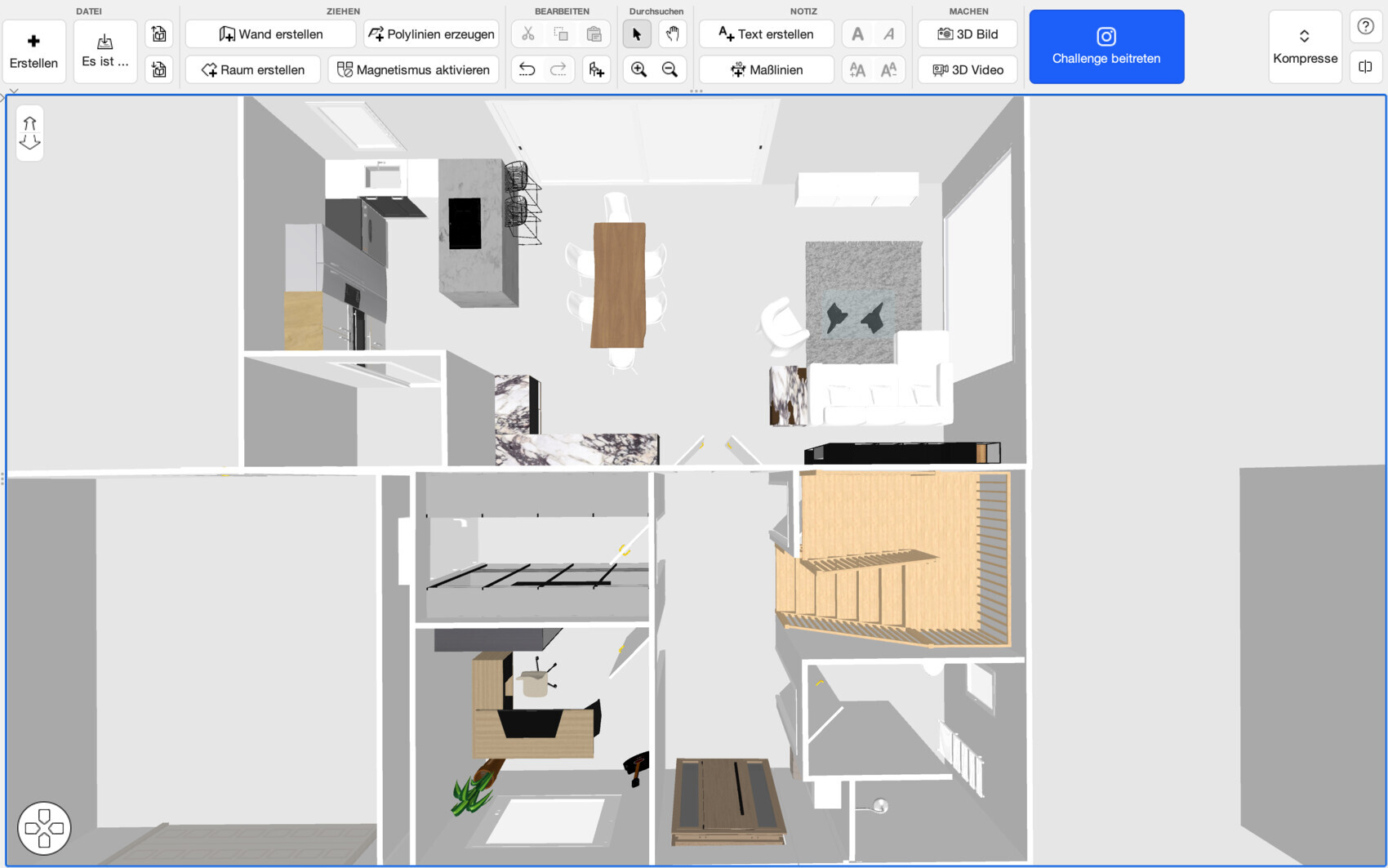
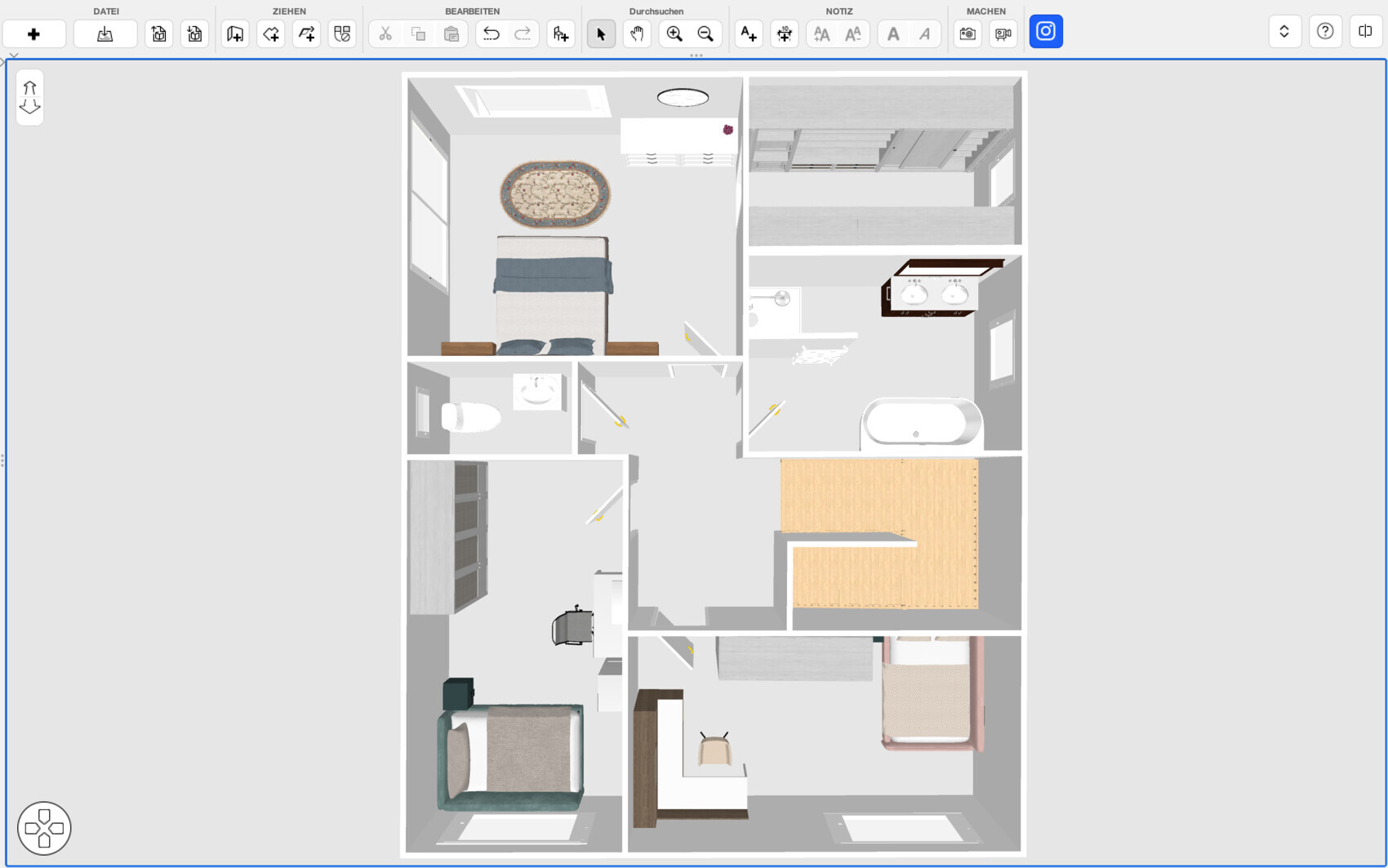
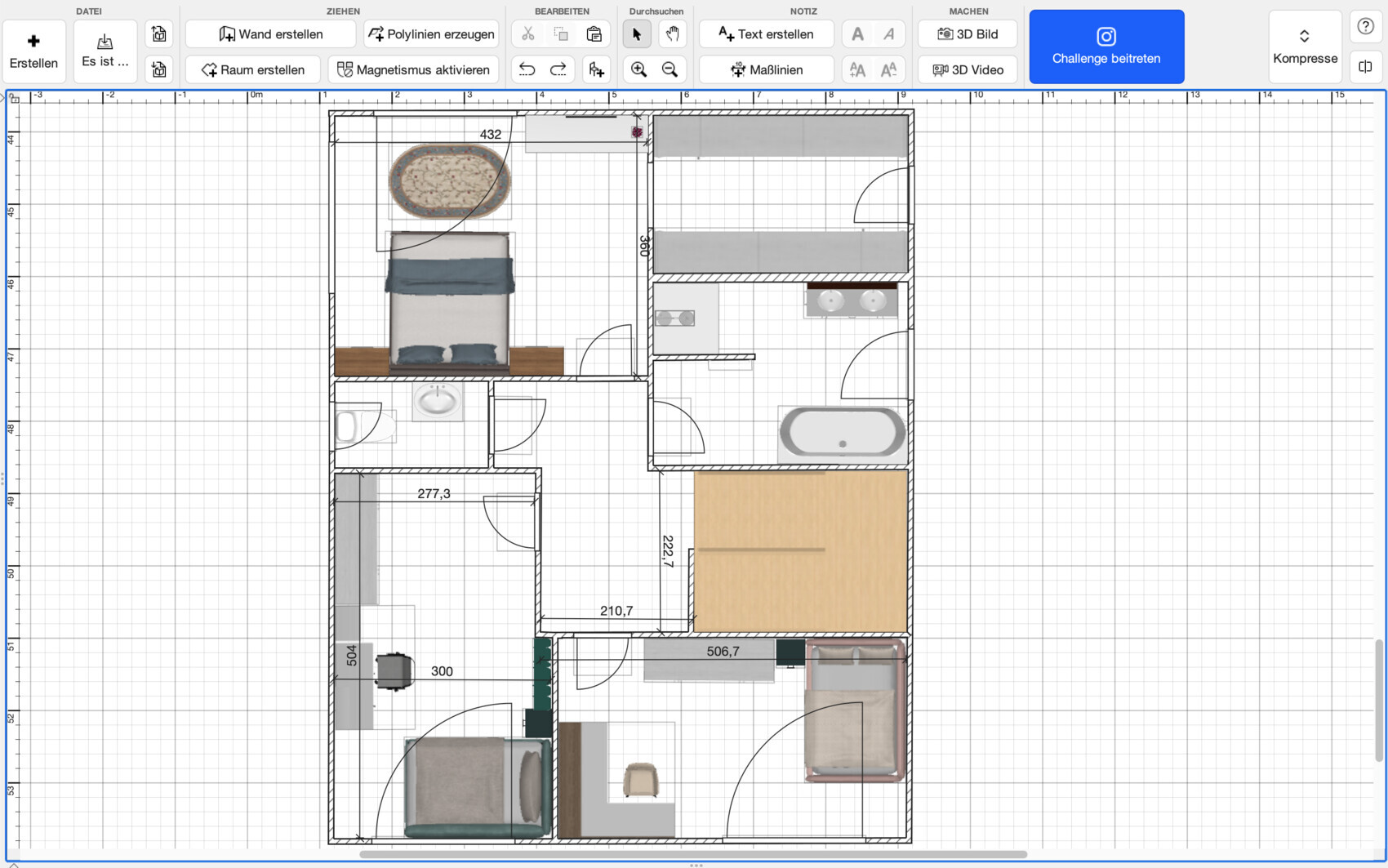
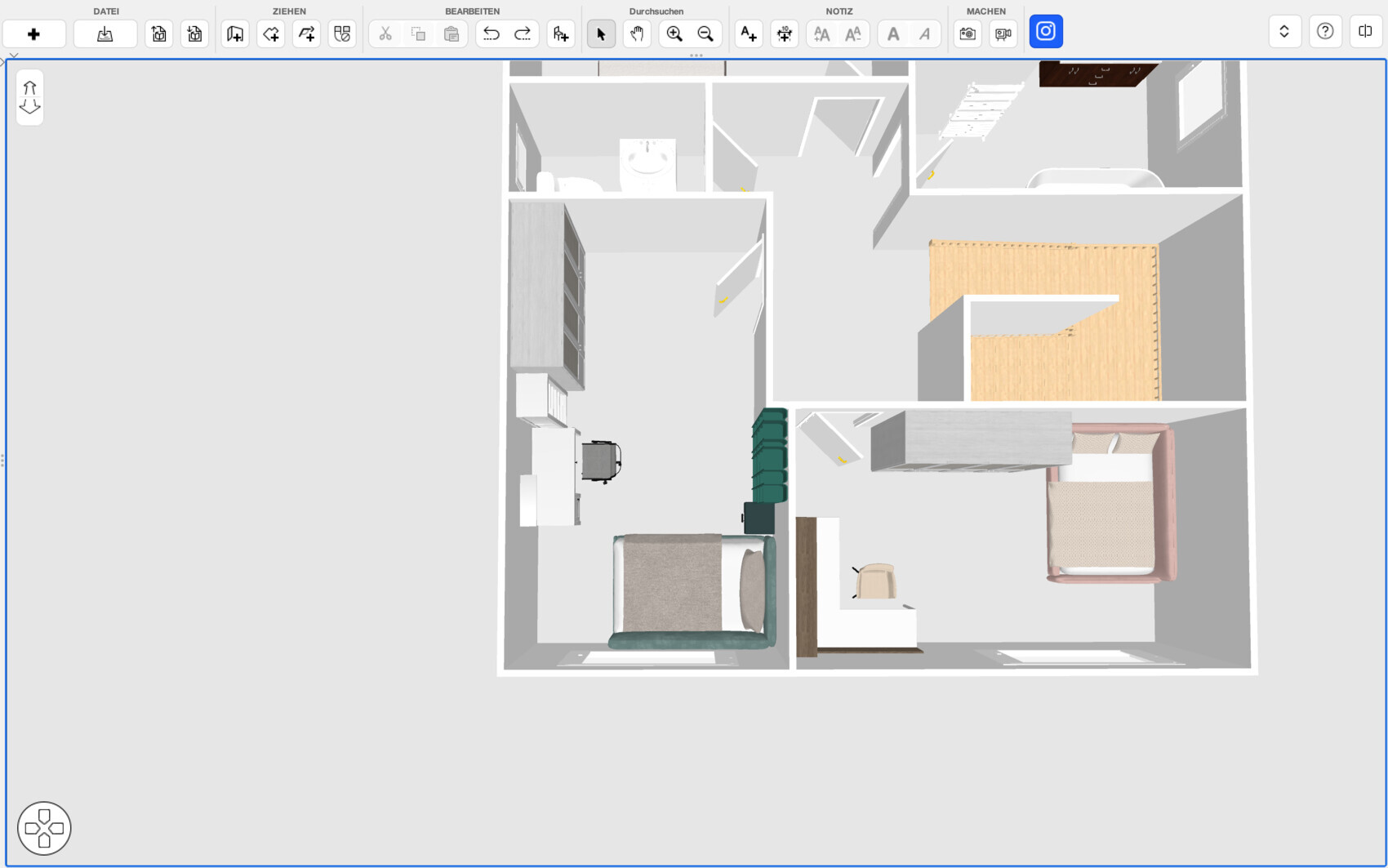
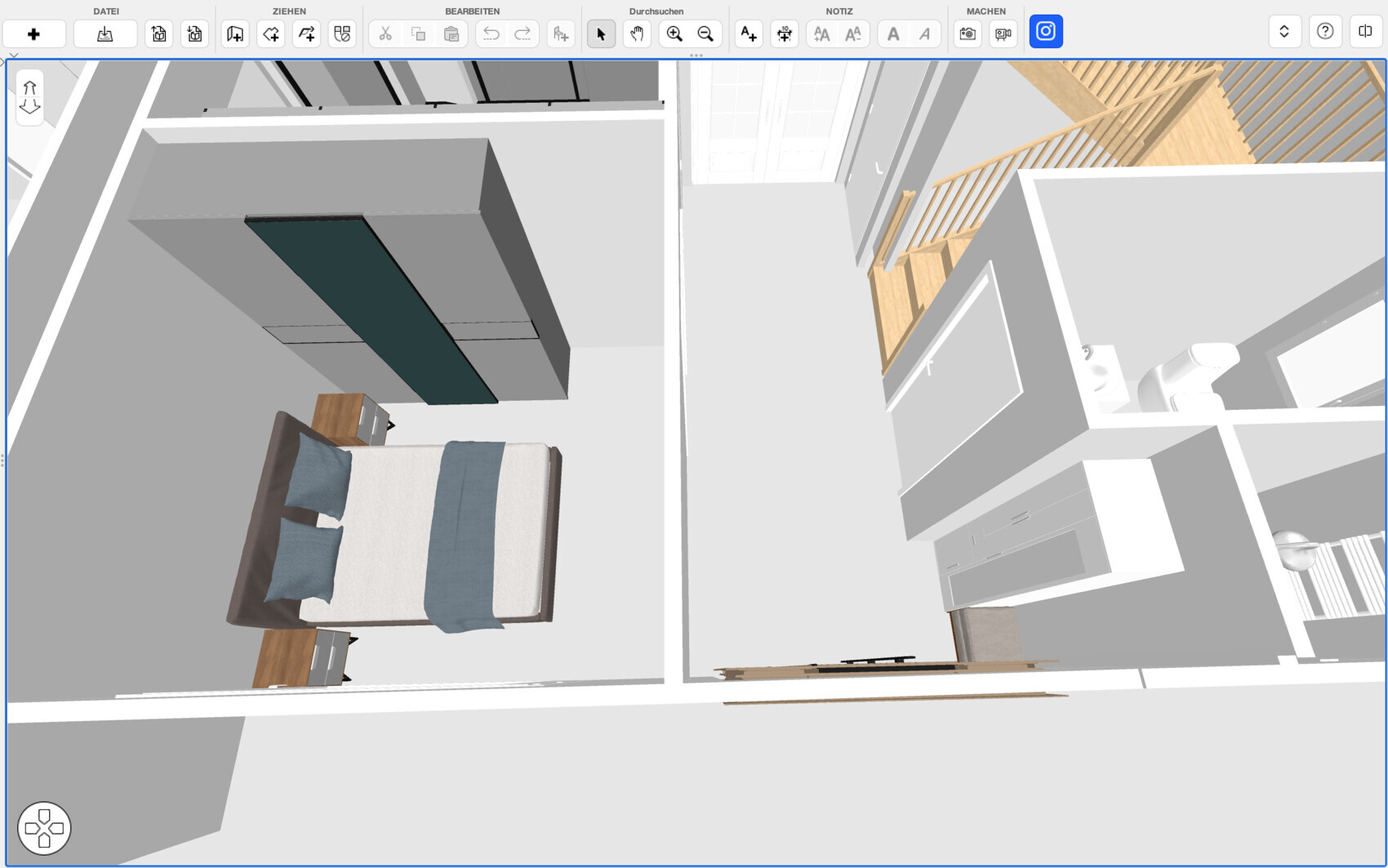
We are currently planning the construction of our house in Lower Austria, and I would really appreciate your feedback on our floor plan. I’m 22, my partner is 26 – he is financing the house. Because of that, it’s particularly important to me that the floor plan fits perfectly and that we don’t build in any costly “mistakes.” I’m in the process of optimizing it, but the longer you look at it, the more you get blind to it.
I welcome any comments, criticism, and suggestions for improvements – whether it’s about circulation paths, storage, lighting, furnishing possibilities, or just “this feels impractical” – these are exactly the things I’m trying to fix right now.
In addition, I have a few specific questions where I’m particularly unsure (list follows):
- Door swings – my partner would prefer all doors to open outward, which I don’t like at all… For which rooms would you solve this problem differently? If the doors open inward in different rooms (e.g., office, both children’s rooms), how far from the wall would you position them?
- I’m also not completely satisfied with the kitchen layout. Due to a lack of storage space on the ground floor, we’d likely keep the pantry but we’re currently unsure how. Ideally, if money were no object, I’d want a concealed pantry and as much cupboard space as possible, but that is expensive. If you have any suggestions about the kitchen layout, please share them (the furniture is only placed provisionally, but the location of the stove, sink, and dishwasher should work similarly) – would you put the window above the sink at a sill height of 1.15m (45 inches) (with a 95cm (37 inch) countertop height) or have it flush directly with the countertop?
- How would you place the door in the cloakroom? Currently, we have 60cm (24 inches) space on one side and 38cm (15 inches) on the other. I’m considering whether it would be smarter to leave at least 66cm (26 inches) at the top side for deeper cabinets and some clearance from the door (and possibly only a narrow shoe cabinet or a bench at the bottom side) – or to move both doors down to the bottom of the room and keep the rest as a more open passage (perhaps for a stroller or similar).
- The office might later be converted into a bedroom (see picture). However, both the 3m (10 ft) wide office and the 2.75m (9 ft) wide children’s bedroom 1 above currently have a window measuring 1.98m (6 ft 6 inch) wide and 1.32m (52 inches) high – would it be better to make these windows a bit narrower, since a bed might be placed underneath, and also raise the sill height of about 87.5cm (34 inches)? For more natural light, the window could maybe just be made a bit longer vertically, right?
- Upstairs, there is the option to expand children’s bedroom 1, which has a less practical layout, with a 25cm (10 inch) deep niche (making it approximately 14.6 m2 (157 ft2) instead of 12.6 m2 (136 ft2), which I think is easier to furnish). The bed could then be placed in the niche, with the headboard away from the window and the view of the door, and the width would be the same as the office below (windows could be aligned vertically).
- How would you position the windows in children’s bedroom 2? Would you prefer one wide window or two narrower ones on the left and right?
- Do you have any ideas on how the rooms in the basement could be arranged differently?
If anyone could answer or comment on even 1 or 2 of these points, I would be extremely grateful. Many thanks in advance!
Development Plan / Restrictions
Plot size: 625 m2 (30% of this may be built on)
Site coverage ratio: 1
Floor area ratio: 2
Number of parking spaces: 2
Roof type: hipped roof
Style: modern, cozy
Orientation: terrace faces north
Client Requirements
Style, roof type, building type: modern but not too cubic, hipped roof
Levels: basement, ground floor, first floor
Number of people, age: currently W22 and M26
Space requirements ground floor, upper floor: office on ground floor possibly as a future bedroom
Office use: family use or home office? home office
Open or closed architecture: rather open
Conservative or modern construction: modern
Open kitchen, kitchen island: yes
Number of dining seats: 2, at least 6-8 guests
Fireplace: maybe for the future
Music/sound system wall: sound system at TV wall
Balcony, roof terrace: small balcony at bedroom
Garage, carport: 37 m2 (400 ft2) garage, which will be built later as an extension
Currently, we do not have children but plan to have them in the future
House Design
Who designed it: do-it-yourself
What do we like? The size of the floor plan, the distribution of living and utility areas over different floors
What don’t we like? Sizes of certain rooms, door swings, orientation of living room windows to the northeast, furnishing options in the large living room on the ground floor, integration of the pantry in the room, 2 rooms in the basement which are through-rooms to other rooms
Preferred heating system: underfloor heating
Papierturm schrieb:
I wonder how many options there are to compensate for planning challenges here, especially since social factors also play a significant role (the somewhat complex family situation that others have already addressed).
Leaving those aside,
I’m quoting myself from the old thread here:
A quick review:
- The cloakroom area is still divided.
- Space for strollers and similar is only possible by filling the remaining cloakroom near the front door completely.
- Doors remain a constant safety hazard.
- The toilet is located practically right next to the headboard of the master bed (a soundproof wall is highly recommended...).
- Window planning is still difficult.
- Basement is still included.
Returning to my original question: How much can actually be changed here?
As mentioned, I would start from scratch. If that’s not possible, I would redesign within the existing building volume. Since this is Austria, I can’t really assess whether the basement (especially the finished basement rooms) is included in the budget.
If starting from scratch is not an option, I would consider the following:
Ground Floor:
If no basement is possible:
- Move the entrance slightly to the left by about 50cm (20 inches).
- Remove the garage entrance and the second entrance door. Place a guest toilet there instead. (Strong recommendation: plan the garage elsewhere.)
- Convert the office into a utility/laundry room.
- Expand the cloakroom area. Convert the current guest bathroom into a small office (to make everything fit, the front door must be moved).
- Remove the pantry. Include a mini-pantry under the stairs.
If the basement is possible:
- Remove closet; place pantry there instead. Access ideally not through the kitchen (too much circulation space); alternatively, access only through the kitchen (not recommended). Also remove the mini-pantry inside the kitchen (which is more like a hidden cabinet with limited accessibility).
- Make the office smaller to create a larger cloakroom area near the entrance.
Upper Floor:
- Convert the toilet into a storage room.
- Redesign the bathroom to integrate the toilet. This will be tight. However, I would prefer a clever solution that saves wardrobe space rather than leaving the toilet in its current position. The trick would be to place the shower to the top right (as a recess into the current wardrobe area).
- Completely revise window planning.
Upper and Ground Floors:
- Most doors to open inward into rooms rather than into circulation areas.
In general: Living areas facing northeast mean they are located in the darkest corner of the house. Therefore, my recommendation remains: instead of trying to improve the existing layout, redesign entirely with the following principle: Unless there are clear site-specific constraints, plan utility rooms in darker areas. Design the circulation accordingly (letting “the tail wag the dog” in planning), so that living spaces are located in the brighter areas. The difference between living areas facing northwest versus northeast is huge in the afternoon and evening. And northeast still includes north. Southwest, for example, would be even brighter. You might not need that much light in the living area, but it would be good for a dining or kitchen area.
I mean this absolutely without offense. I just imagine how much money could be invested here in a design that will cause major disadvantages in everyday life in the medium and long term. (Especially the safety risk caused by the door layout should not be underestimated. It is really, REALLY bad!) Maybe it’s interesting for everyone to know: The basement is included in the offer, but the ground floor and upper floor will be built ready for occupancy (turnkey), while the basement will be delivered in shell condition (no tiles, etc.).
ypg schrieb:
That’s very kind of him.
So in the basement, you have to walk around the door leaves in the narrow hallway.
I don’t want to discourage you from trying to turn something difficult into gold by wanting to “locate” or “center” windows, but have you ever considered that your friend is building HIS house?
Your influence on decisions in a shared house doesn’t seem to be very significant, at least that’s what I’m reading here. That’s really nicely put... but no, for example, following my advice, we also enlarged the living room by almost 5 square meters (54 square feet), which gives us a little more freedom in design... he is also happy about my comments and adopts almost all of them...
Regarding the basement stairs... you would need a landing directly behind the door and in front of the stairs, wouldn’t that require a complete redesign of the stairs?
M
MachsSelbst13 Jan 2026 20:34So far, I could imagine living in every rental apartment I had. However, your options are limited there, and you can move out if it becomes too annoying.
When planning your own house, you intend to live there for life, so it should fit your needs as well as possible. I actually think the biggest issue is the walk-in closet. It is unsuitable for wardrobes. The reality is that you typically use a series of wardrobes that are 65cm (25.6 inches) deep for clothes rails, often paired with ones that are 35cm (13.8 inches) deep on the opposite side.
Well... and the children’s rooms are somewhat small, but still manageable...
When planning your own house, you intend to live there for life, so it should fit your needs as well as possible. I actually think the biggest issue is the walk-in closet. It is unsuitable for wardrobes. The reality is that you typically use a series of wardrobes that are 65cm (25.6 inches) deep for clothes rails, often paired with ones that are 35cm (13.8 inches) deep on the opposite side.
Well... and the children’s rooms are somewhat small, but still manageable...
MachsSelbst schrieb:
What I’m really wondering… what do you want to use 35cm (14 inches) deep cabinets for in the walk-in closet? That’s fine for T-shirts, bed linen, etc.
But not for clothes, dresses, suits… for that you need a cabinet 65cm (26 inches) deep. In the wardrobe, we would probably place a shallower shoe cabinet along the shorter wall and possibly a bench.
MachsSelbst schrieb:
So far, I could imagine living in every rental apartment I’ve had. But there, your options are limited and you can move out if it gets too frustrating.
When planning your own house, which you intend to live in for life, it really needs to fit as best as possible.
I actually think the biggest drawback is the walk-in closet. It’s unsuitable for wardrobes. That’s just how it is; you typically have rows of wardrobes around 65cm (26 inches) deep for hanging clothes, often with about 35cm (14 inches) deep units opposite.
Well... and the kids’ bedrooms are a bit small, but still manageable... In the walk-in closet upstairs, there’s 66cm (26 inches) on each side for wardrobes, isn’t there, or am I mistaken?
It’s just difficult—after being together for 9 months, he’s planning for the entire future, and I’m not sure if I should even have a say (not because of him, but I convince myself of that—I’m not financing anything, so I shouldn’t have a voice).
Regarding the kids’ rooms, I had asked what you think about the idea of a niche for the long room, but I don’t think I’ve read any feedback on that yet.
Similar topics