
ᐅ Optimizing the Floor Plan of a 180 sqm Single-Family House with a Gable Roof and No Basement
Created on: 18 Oct 2020 11:54
R
RicoNeuber
Hello everyone,
we are currently in the middle of planning our single-family house described here. We would be very grateful if you could share your suggestions and feedback. We truly appreciate every tip and comment.
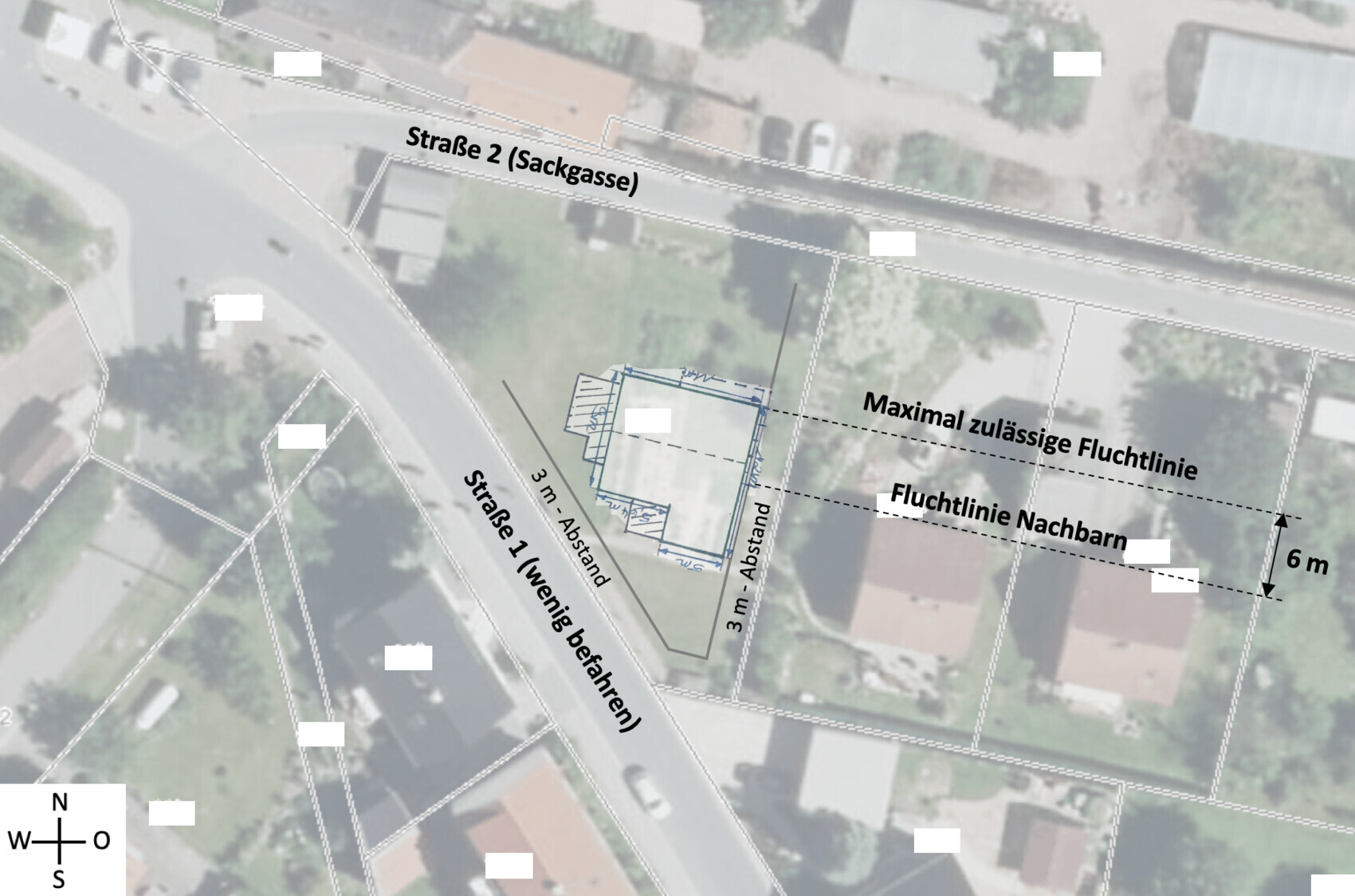
Development Plan / Restrictions
Plot size: 967 sqm (10,404 sq ft)
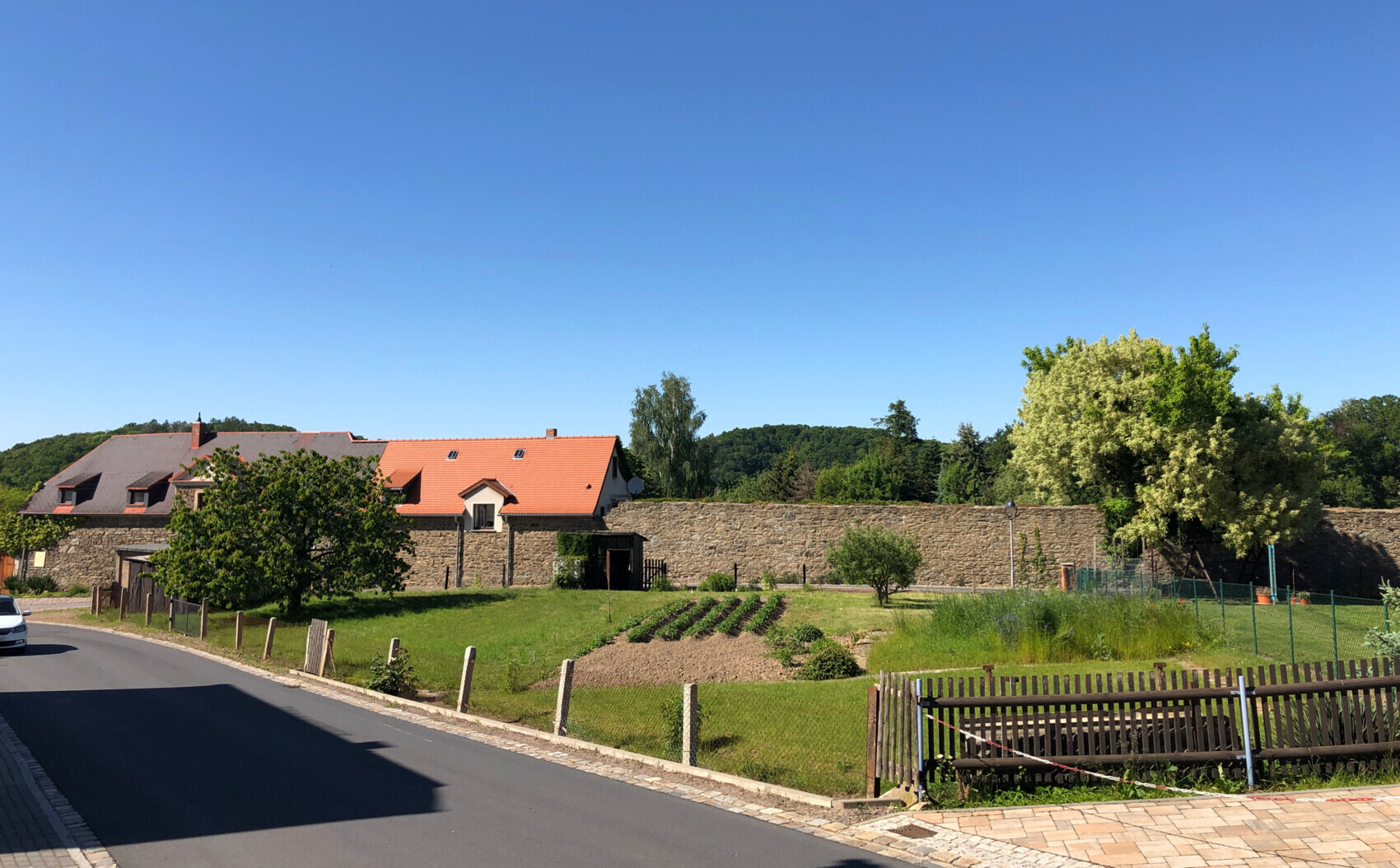
Slope: rises evenly by 1 m (3.3 ft) from north to south, with a gradual decline of about 1 m (3.3 ft) from east to west
Site coverage ratio: None
Floor area ratio: None
Building envelope, building line, and boundary: Northernmost exterior wall may deviate up to 6 m (20 ft) from the alignment line of the neighboring development to the east.
Boundary development: Yes, boundary wall/shared wall with neighbor allowed
Number of parking spaces: At least 2
Number of storeys: No restrictions
Roof shape: Gable roof with pitch over 35°
Orientation: Driveway from Street 2 (north)
Maximum heights/limits: Ridge height 11 m (36 ft)
Other requirements:
- No floor-to-ceiling windows on the facade facing the street on the upper floor.
Owners’ Requirements
Architectural style, roof shape, building type: Gable roof with 42° pitch (north/south orientation), knee wall 1.25 m (4 ft)
Basement, number of floors: No basement, 1.5 storeys
Number of occupants, ages: 4 persons (2 adults, 2 children)
Room requirements ground floor, upper floor:
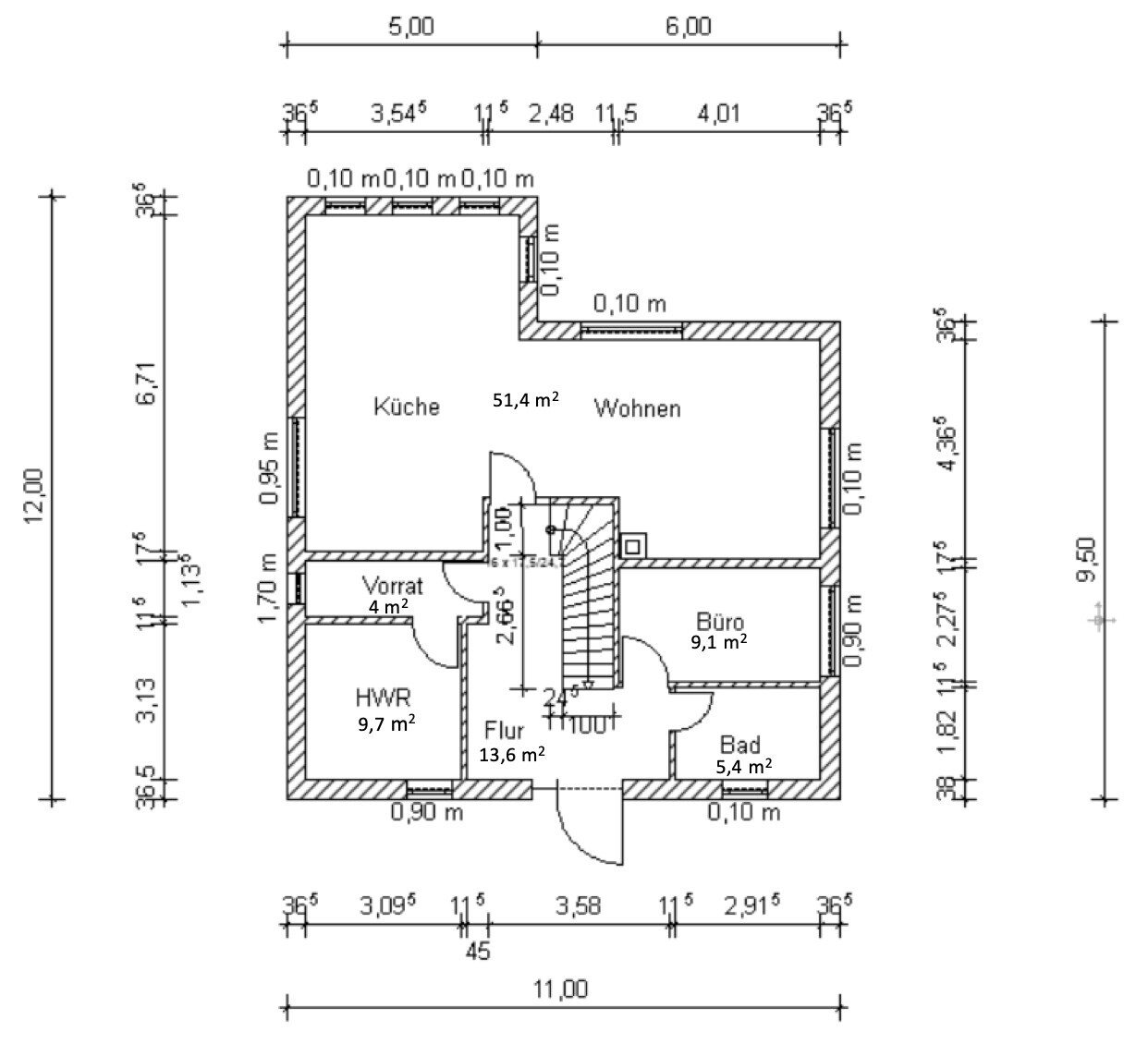
- Ground floor: Kitchen, dining room, living room, office, pantry, utility room, WC with shower
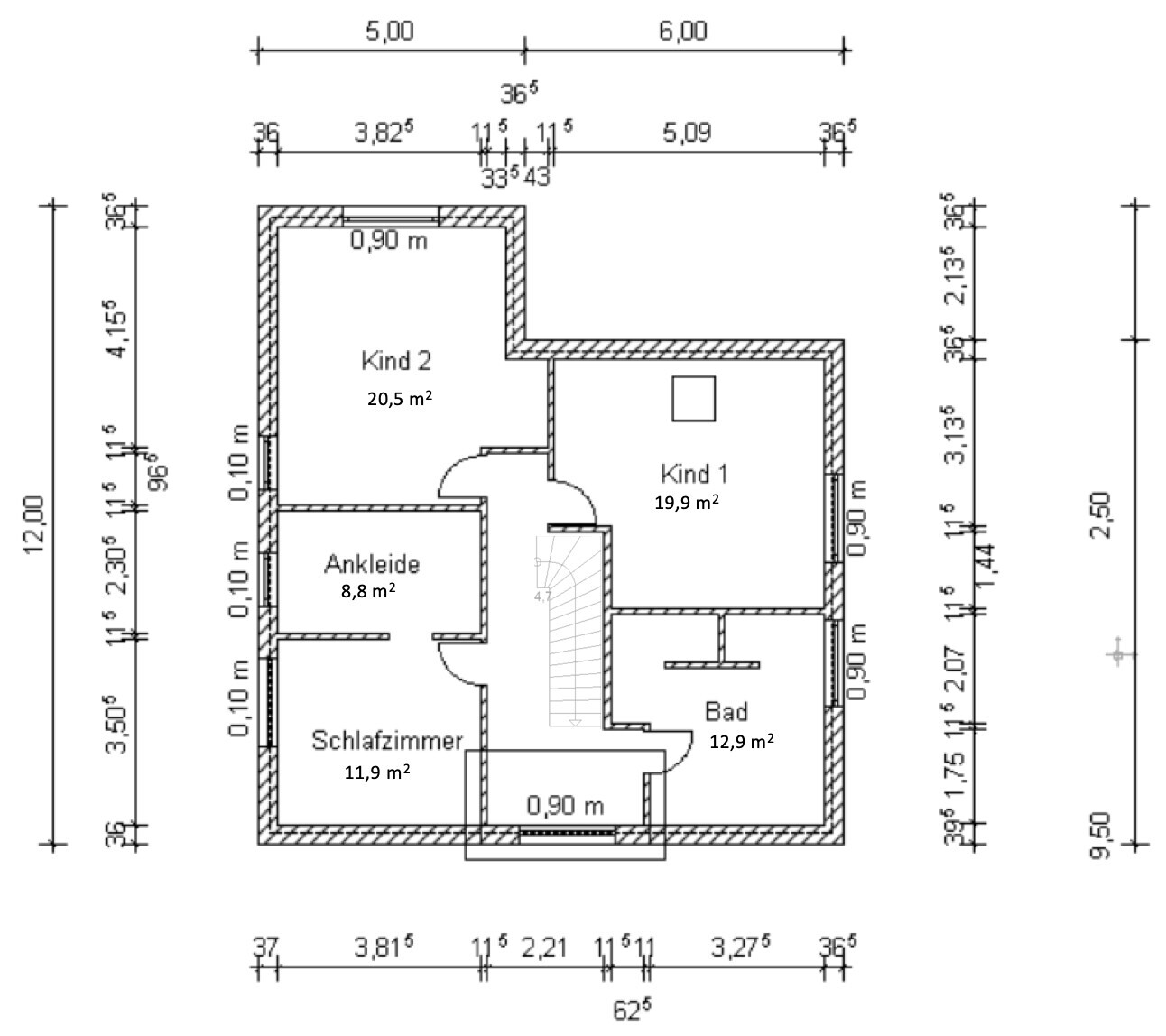
- Upper floor: 2 children’s rooms, master bedroom with walk-in closet, bathroom, (office from ground floor could be moved to upper floor)
Office use: family use or home office? Home office
Open kitchen, kitchen island: Open-plan living and dining area; no kitchen island
Number of dining seats: 6
Fireplace: Masonry heater
Music/sound wall: No
Balcony, roof terrace: Ground floor terrace facing southwest, no upper floor balcony
Garage, carport: 1 garage attached to the house; 2 additional garages already at the edge of the plot (northwest boundary)
House Design
Who did the planning:
- Do-it-Yourself
What do you particularly like? Why?
- Ground floor: layout and room sizes; orientation of rooms
- Upper floor: orientation of the master bedroom facing north
- Bathrooms stacked (lower cost?!)
What do you dislike? Why?
- Space utilization on the upper floor; children’s rooms might be too large?!
- Layout of pantry / utility room – concern that pantry may be warmed through the utility room
Preferred heating technology: Air-to-water heat pump + masonry heater / ground-source heat pump with horizontal collector + masonry heater
If you had to give up, which details/extensions could you do without: Third gable on the upper floor facing south
Which cannot be omitted: Master bedroom in the northeast, utility room and pantry in the northeast
Why did the design turn out as it is now?
- Consideration of experiences from two home builders
- A mixture of many examples from various magazines...
What is the most important/fundamental question about the floor plan, summarized in 130 characters?
- How can we optimize the upper floor layout while keeping the ground floor room arrangement the same?
- Do you have further ideas regarding the type and position of the staircase?
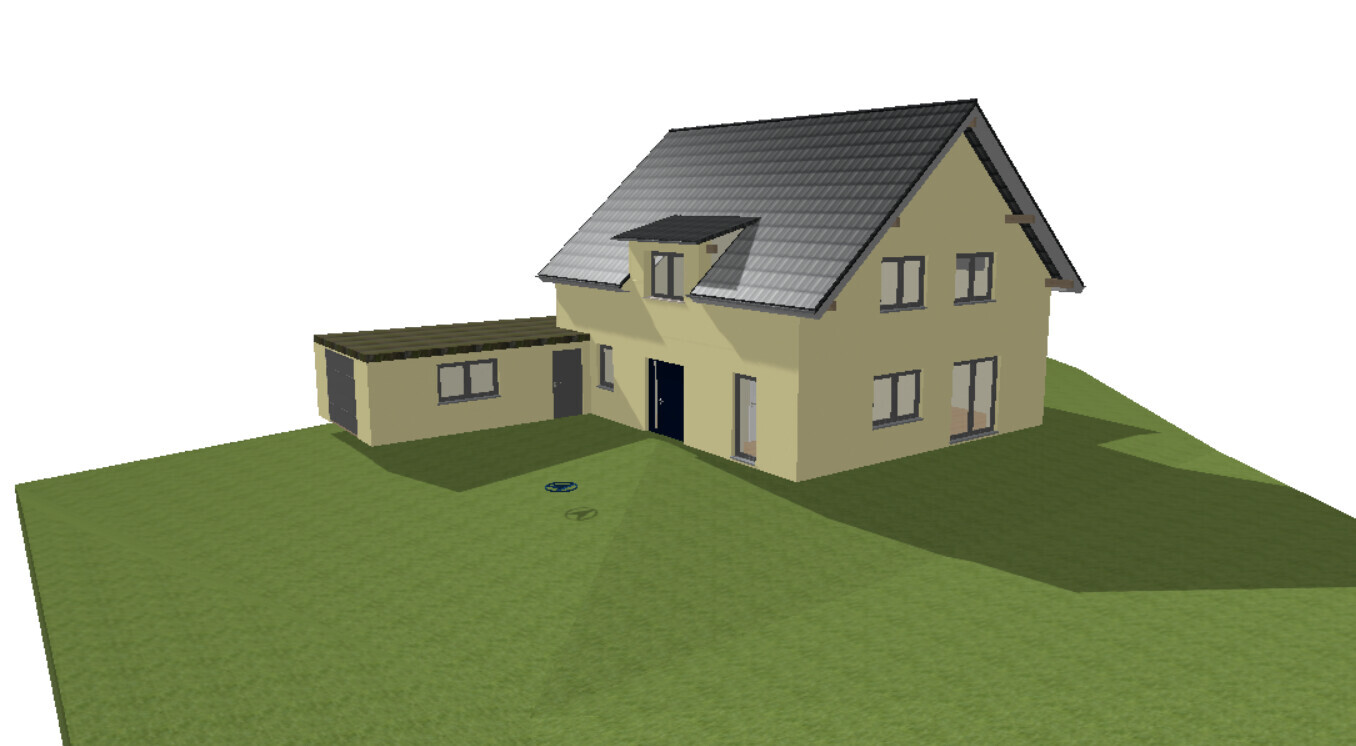
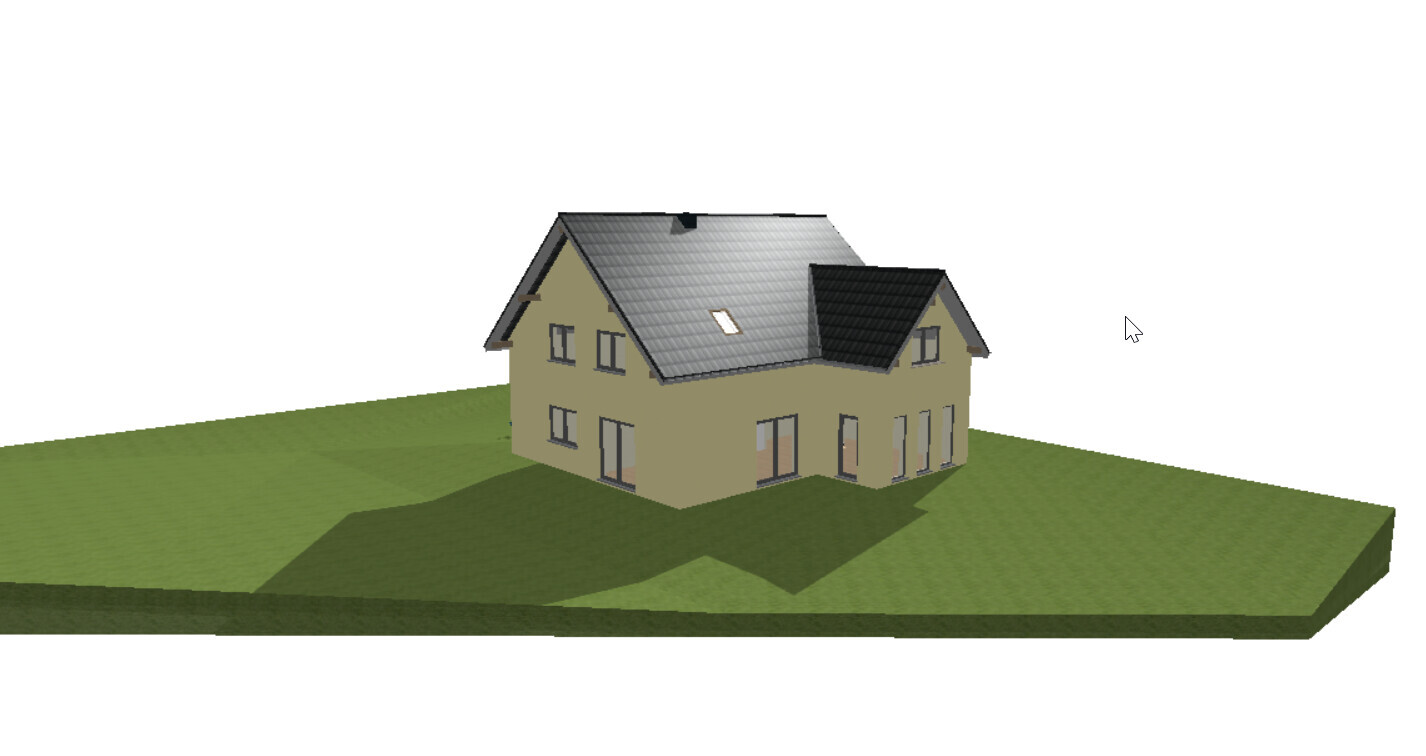
we are currently in the middle of planning our single-family house described here. We would be very grateful if you could share your suggestions and feedback. We truly appreciate every tip and comment.
Development Plan / Restrictions
Plot size: 967 sqm (10,404 sq ft)
Slope: rises evenly by 1 m (3.3 ft) from north to south, with a gradual decline of about 1 m (3.3 ft) from east to west
Site coverage ratio: None
Floor area ratio: None
Building envelope, building line, and boundary: Northernmost exterior wall may deviate up to 6 m (20 ft) from the alignment line of the neighboring development to the east.
Boundary development: Yes, boundary wall/shared wall with neighbor allowed
Number of parking spaces: At least 2
Number of storeys: No restrictions
Roof shape: Gable roof with pitch over 35°
Orientation: Driveway from Street 2 (north)
Maximum heights/limits: Ridge height 11 m (36 ft)
Other requirements:
- No floor-to-ceiling windows on the facade facing the street on the upper floor.
Owners’ Requirements
Architectural style, roof shape, building type: Gable roof with 42° pitch (north/south orientation), knee wall 1.25 m (4 ft)
Basement, number of floors: No basement, 1.5 storeys
Number of occupants, ages: 4 persons (2 adults, 2 children)
Room requirements ground floor, upper floor:
- Ground floor: Kitchen, dining room, living room, office, pantry, utility room, WC with shower
- Upper floor: 2 children’s rooms, master bedroom with walk-in closet, bathroom, (office from ground floor could be moved to upper floor)
Office use: family use or home office? Home office
Open kitchen, kitchen island: Open-plan living and dining area; no kitchen island
Number of dining seats: 6
Fireplace: Masonry heater
Music/sound wall: No
Balcony, roof terrace: Ground floor terrace facing southwest, no upper floor balcony
Garage, carport: 1 garage attached to the house; 2 additional garages already at the edge of the plot (northwest boundary)
House Design
Who did the planning:
- Do-it-Yourself
What do you particularly like? Why?
- Ground floor: layout and room sizes; orientation of rooms
- Upper floor: orientation of the master bedroom facing north
- Bathrooms stacked (lower cost?!)
What do you dislike? Why?
- Space utilization on the upper floor; children’s rooms might be too large?!
- Layout of pantry / utility room – concern that pantry may be warmed through the utility room
Preferred heating technology: Air-to-water heat pump + masonry heater / ground-source heat pump with horizontal collector + masonry heater
If you had to give up, which details/extensions could you do without: Third gable on the upper floor facing south
Which cannot be omitted: Master bedroom in the northeast, utility room and pantry in the northeast
Why did the design turn out as it is now?
- Consideration of experiences from two home builders
- A mixture of many examples from various magazines...
What is the most important/fundamental question about the floor plan, summarized in 130 characters?
- How can we optimize the upper floor layout while keeping the ground floor room arrangement the same?
- Do you have further ideas regarding the type and position of the staircase?
What bothers me fundamentally: the hallway is large at the front and narrows where a living area or open-plan space is supposed to be. Unfortunately, the staircase is in the way here, so only a small room door fits. The spiral staircase means you need the (expensive) dormer. It also means there's no discreet way to access the attic with a fixed staircase. One major advantage of a gable roof is the extra space in the attic, which, if not converted, could serve well as storage—but not here, because you run into the sloping roof.
1. The first approach would be to align the staircase with the roof.
Secondly, I find the bay window on the south side too long and narrow. I would roughly widen it by about 1 meter (3 feet) and shorten it by around 70 cm (28 inches).
However... while the idea of not placing the bedroom on the south side is understandable, I think putting the bathroom on the west side is like casting pearls before swine. The same applies to the shower toilet. Since the bay window somewhat dominates the south garden, I would rearrange the rooms and consider an extension on the ground floor to the west.
From the entrance and moving clockwise, my suggested room arrangement would be: utility room in the northeast, then the toilet, then an office (southeast). The entire west to southwest side would belong to the open living area.
I would equip the west extension with larger windows, which would probably become the airy highlight of the house.
I would skip the third gable and, if allowed, opt for a 140 mm (5.5 inch) sand-lime brick wall with a 35-degree roof pitch, which looks more dynamic than the drawn gable roof. However, one would need to check if this creates a comfortable room under the roof based on the dimensions.
Upper floor: bathroom in the northeast, bedroom in the southeast, with the window facing east; both children’s rooms facing west, each with a double casement window on the south and north sides.
It would need to be drawn out to see for sure.
1. The first approach would be to align the staircase with the roof.
Secondly, I find the bay window on the south side too long and narrow. I would roughly widen it by about 1 meter (3 feet) and shorten it by around 70 cm (28 inches).
However... while the idea of not placing the bedroom on the south side is understandable, I think putting the bathroom on the west side is like casting pearls before swine. The same applies to the shower toilet. Since the bay window somewhat dominates the south garden, I would rearrange the rooms and consider an extension on the ground floor to the west.
From the entrance and moving clockwise, my suggested room arrangement would be: utility room in the northeast, then the toilet, then an office (southeast). The entire west to southwest side would belong to the open living area.
I would equip the west extension with larger windows, which would probably become the airy highlight of the house.
I would skip the third gable and, if allowed, opt for a 140 mm (5.5 inch) sand-lime brick wall with a 35-degree roof pitch, which looks more dynamic than the drawn gable roof. However, one would need to check if this creates a comfortable room under the roof based on the dimensions.
Upper floor: bathroom in the northeast, bedroom in the southeast, with the window facing east; both children’s rooms facing west, each with a double casement window on the south and north sides.
It would need to be drawn out to see for sure.

Watch yourselves while cooking and notice how much time you actually spend at the cooktop. Usually, it’s much less than you think. Also, you don’t need the cooktop for every meal. A lot happens around the sink, so you can place it on the island as well. In any case, I would plan your kitchen differently. Corners are always disadvantageous/unpractical. However, I won’t make any suggestions yet as long as the floor plan isn’t finalized.

I completely agree with Pinky.
Access to the bedroom should be through the walk-in closet, not the other way around. This way, the person who can sleep longer can remain undisturbed; if necessary, swap the bedroom and walk-in closet.
Who has to give up their garden for your house?
Access to the bedroom should be through the walk-in closet, not the other way around. This way, the person who can sleep longer can remain undisturbed; if necessary, swap the bedroom and walk-in closet.
Who has to give up their garden for your house?
If the door to the living/kitchen/dining area really opens like that, there is a problem. You won’t be able to exit the kitchen.
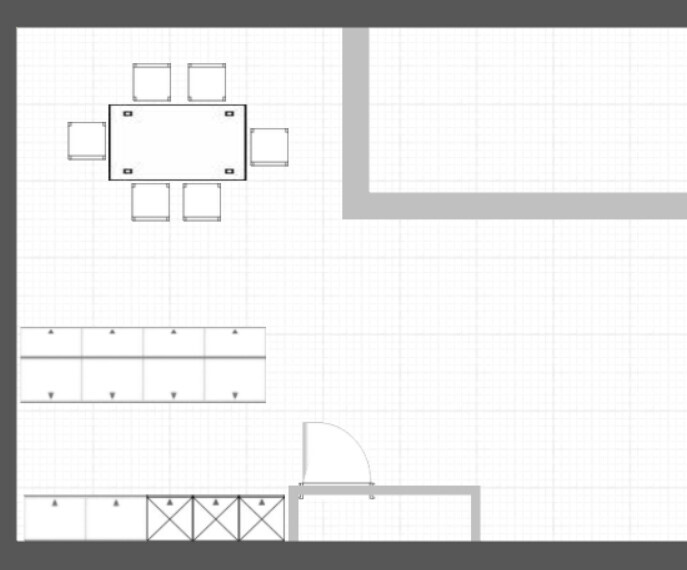
And if the couch is placed as shown in the plan, you’ll constantly be looking at the kitchen mess.
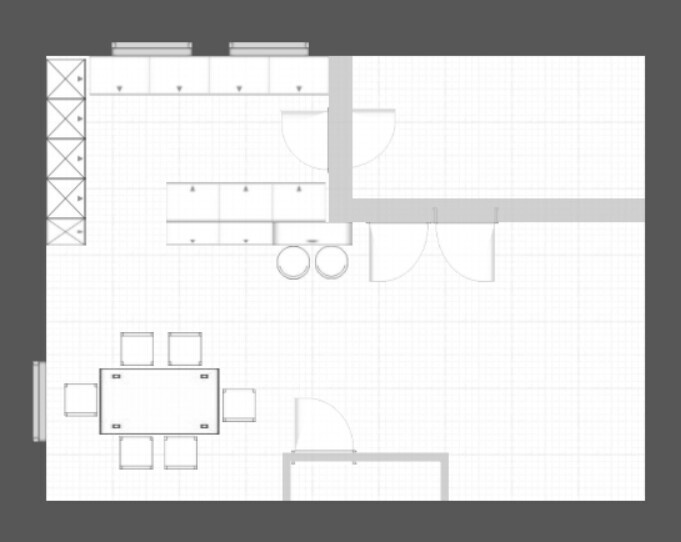
It would be much better like this, you can go directly from the kitchen to the terrace, and the kitchen is not visible from the couch. Here you can also make the window line deeper (I think Climbee has this too). This is not possible in the first plan because the passage by the terrace corner becomes too narrow.
A cooktop on an island is the "German standard"; apparently, nowadays only hobby cooks who want spectators do that. But most strangely still use a warming drawer ...
And if the couch is placed as shown in the plan, you’ll constantly be looking at the kitchen mess.
It would be much better like this, you can go directly from the kitchen to the terrace, and the kitchen is not visible from the couch. Here you can also make the window line deeper (I think Climbee has this too). This is not possible in the first plan because the passage by the terrace corner becomes too narrow.
A cooktop on an island is the "German standard"; apparently, nowadays only hobby cooks who want spectators do that. But most strangely still use a warming drawer ...
Similar topics