
Hello to all interested readers,
For about half a year now, my wife and I have been planning our new home. We have found a nice plot of land and have also decided on the building style (Ytong kit house). Initial contact with the company has been made.
Now the first draft from their architect has arrived, and we find it far from satisfactory.
Our goal is a KfW 40+ house on a slope, with a slight incline of about 3m (10 feet) over the first 5m (16 feet) in depth, then another 2m (7 feet) incline over the remaining 30m (98 feet) of depth.
- Front side facing southwest
- Lower floor planned as a full story, possibly to be converted into an apartment later. At the moment, it will be used as a guest room and office
- Roof of the office = terrace
Garage as an attached structure with a flat roof.
I’ve attached some pictures. The draft itself was created with MeinHeim3D V3. Unfortunately, I can’t upload that here. I also have plans in PDF if that helps.
The architect says that our draft is unfavorable because of the protruding office and the garage. This would be bad from an energy perspective.
Now I am under the impression that with good insulation, a lot can be achieved and that with KfW 40+ the final energy value counts, so I can compensate for some losses in the building envelope by the technology used.
Am I seeing this wrong?
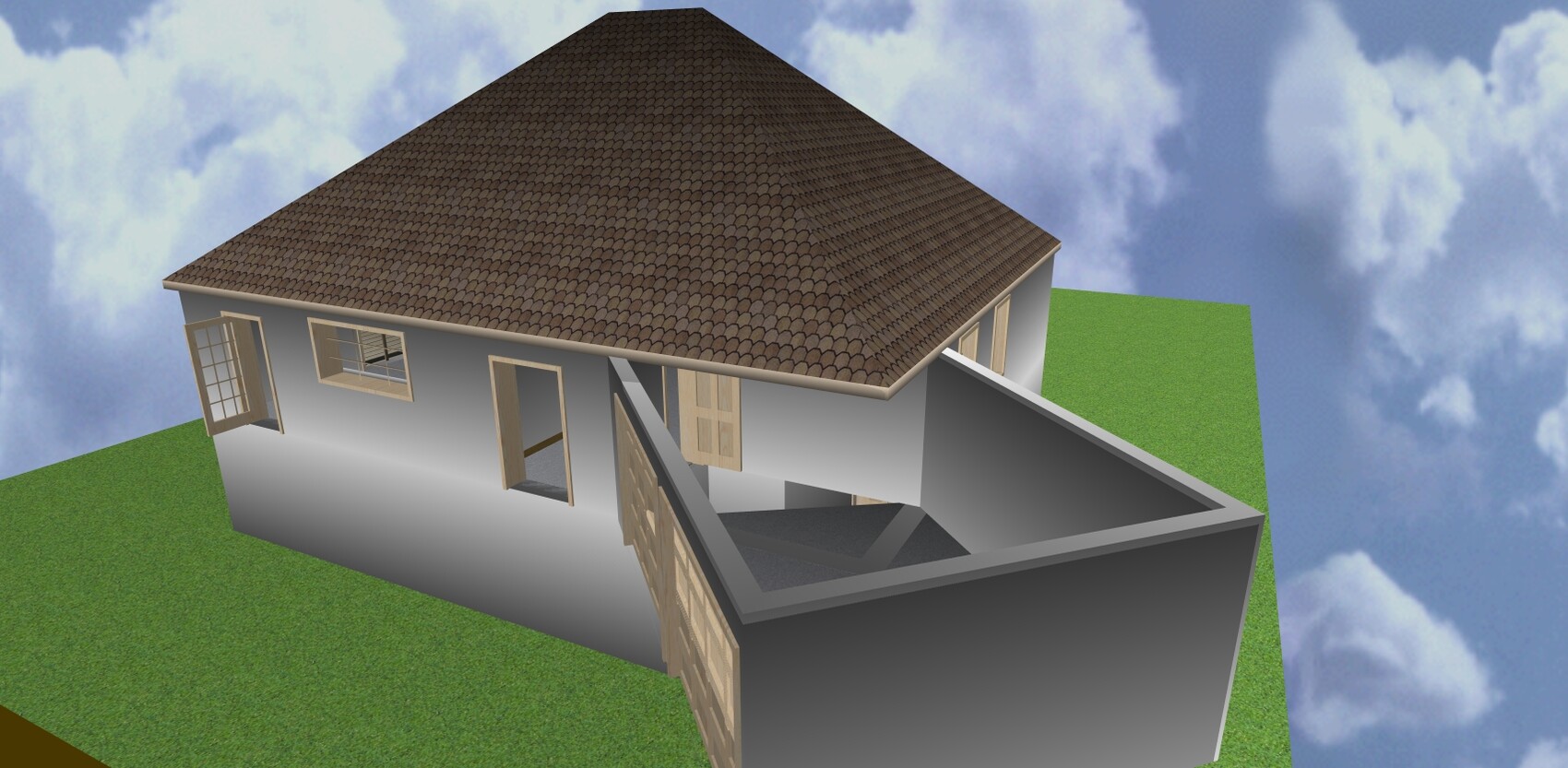
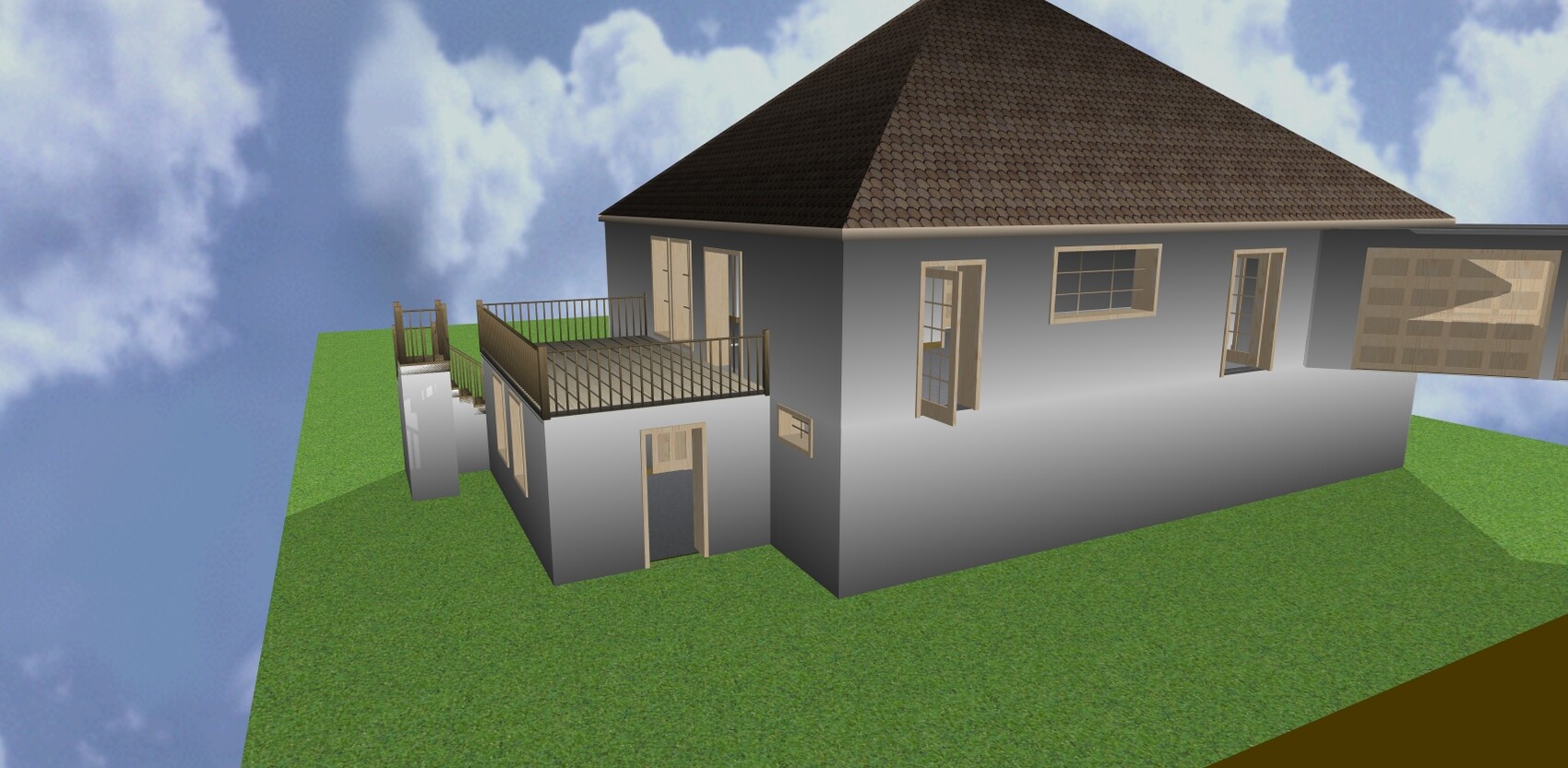
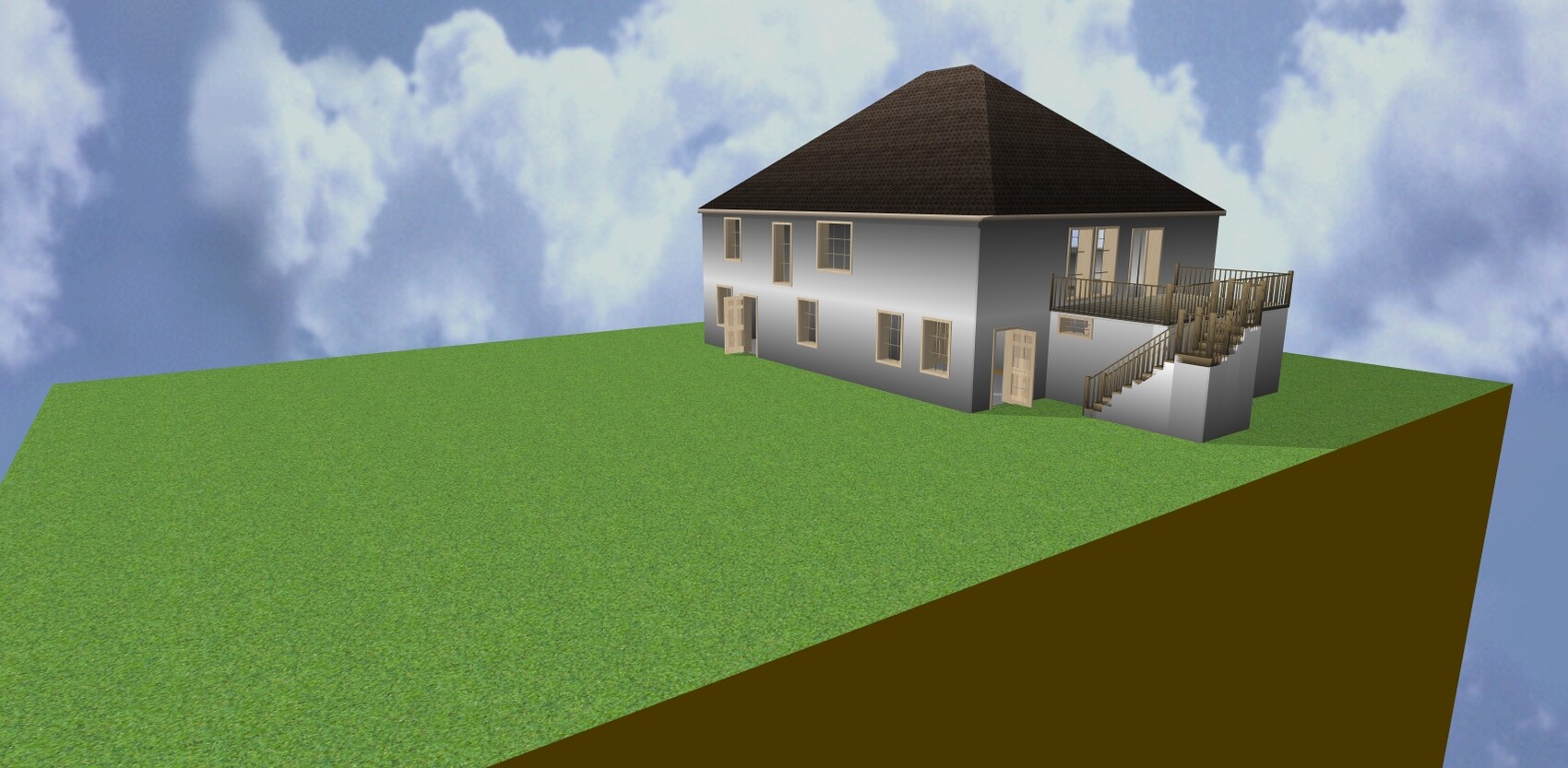
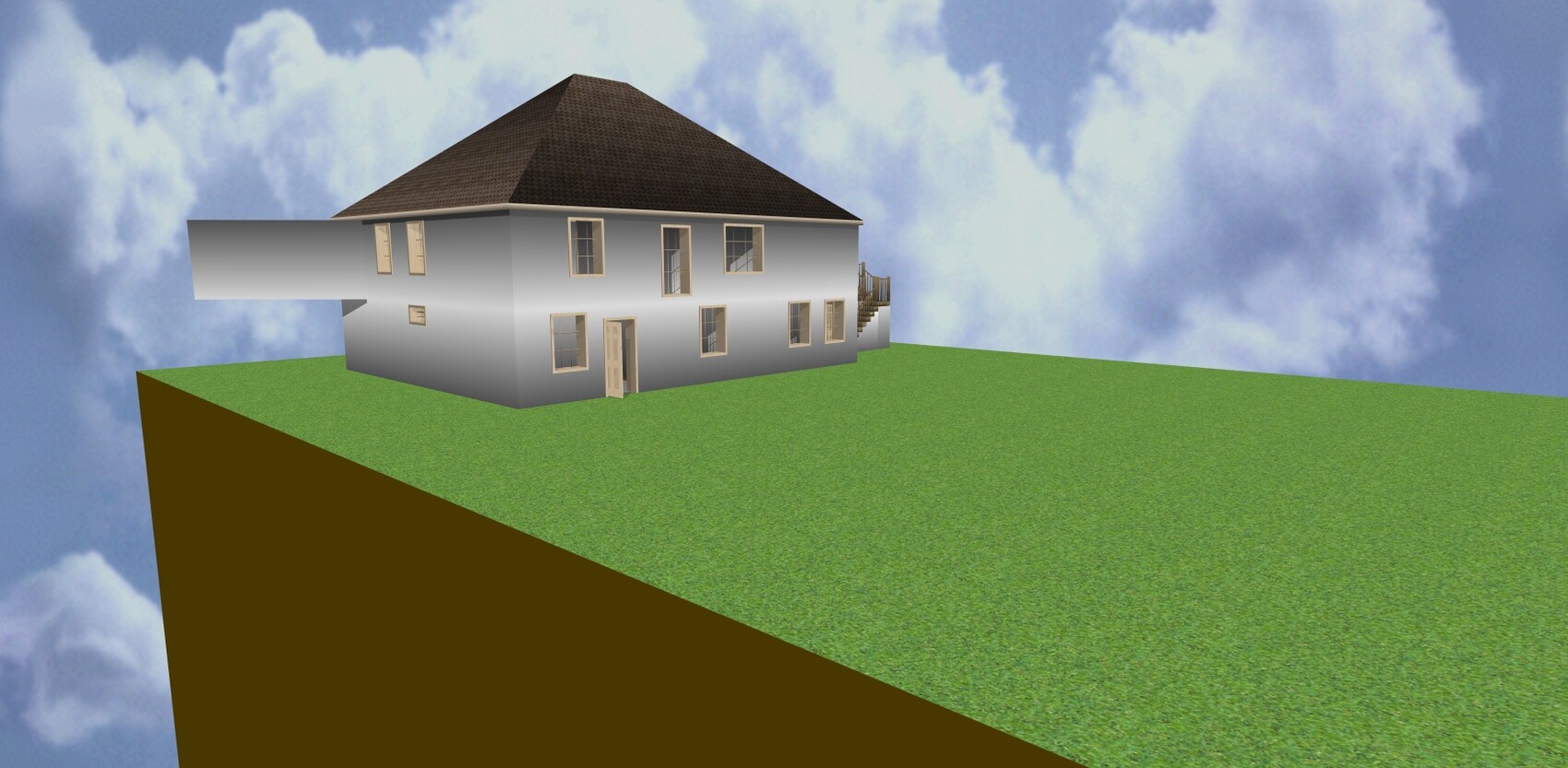
For about half a year now, my wife and I have been planning our new home. We have found a nice plot of land and have also decided on the building style (Ytong kit house). Initial contact with the company has been made.
Now the first draft from their architect has arrived, and we find it far from satisfactory.
Our goal is a KfW 40+ house on a slope, with a slight incline of about 3m (10 feet) over the first 5m (16 feet) in depth, then another 2m (7 feet) incline over the remaining 30m (98 feet) of depth.
- Front side facing southwest
- Lower floor planned as a full story, possibly to be converted into an apartment later. At the moment, it will be used as a guest room and office
- Roof of the office = terrace
Garage as an attached structure with a flat roof.
I’ve attached some pictures. The draft itself was created with MeinHeim3D V3. Unfortunately, I can’t upload that here. I also have plans in PDF if that helps.
The architect says that our draft is unfavorable because of the protruding office and the garage. This would be bad from an energy perspective.
Now I am under the impression that with good insulation, a lot can be achieved and that with KfW 40+ the final energy value counts, so I can compensate for some losses in the building envelope by the technology used.
Am I seeing this wrong?
@kbt09 You understood it correctly. The plan was to position the house about 5-6m (16-20 feet) away from the property boundary, to build up the area in front of the house and under the garage (possibly using that space for a rainwater tank buried there), and to create access to the office on the left side of the house with a winding staircase or a curved path (to avoid steepness). The garage should visually separate the property from the adjacent field, which is why it is set at an angle to the house. Approximately 2m (6.5 feet) from the property boundary, measured from the lower corner.
The children's room and bedroom would receive morning sun and wouldn’t overheat too much during the day, but still get some sun in winter. The kitchen and living room would face southwest, with floor-to-ceiling fixed windows, a flush-to-the-ground sliding terrace door, and a door from the kitchen to the front where a greenhouse would be placed in winter and otherwise dismantled.
Above the sink, there is a wide 2m (6.5 feet) fixed window.
This way, there would still be space on the left side of the house for a path to the garden at the back, which would be about half the size of the property.
The total roof area is currently about 235m² (2,530 square feet), with half of it facing southeast and southwest, which yields approximately 1142 kWh/m² per year at this location. The system would pay off after 15 years without subsidies, or about 8 years with subsidies.
The children's room and bedroom would receive morning sun and wouldn’t overheat too much during the day, but still get some sun in winter. The kitchen and living room would face southwest, with floor-to-ceiling fixed windows, a flush-to-the-ground sliding terrace door, and a door from the kitchen to the front where a greenhouse would be placed in winter and otherwise dismantled.
Above the sink, there is a wide 2m (6.5 feet) fixed window.
This way, there would still be space on the left side of the house for a path to the garden at the back, which would be about half the size of the property.
The total roof area is currently about 235m² (2,530 square feet), with half of it facing southeast and southwest, which yields approximately 1142 kWh/m² per year at this location. The system would pay off after 15 years without subsidies, or about 8 years with subsidies.
@reeneex ... but the morning sun would hardly reach the rooms. Also, children’s bedrooms usually get very little morning sun. And the rooms you planned are basically not suitable for furnishing. The garage is not usable.
I have moved things around a bit to show how I could imagine it. I could also picture a staggered shed roof. However, I’m not very good with roofs, so this should be seen more as a rough sketch for illustration.
I think the floor plans should speak for themselves. The doors marked in red can simply be closed if a granny flat is built. This would then create a storage niche in the hallway on the right for a vacuum cleaner and similar items.
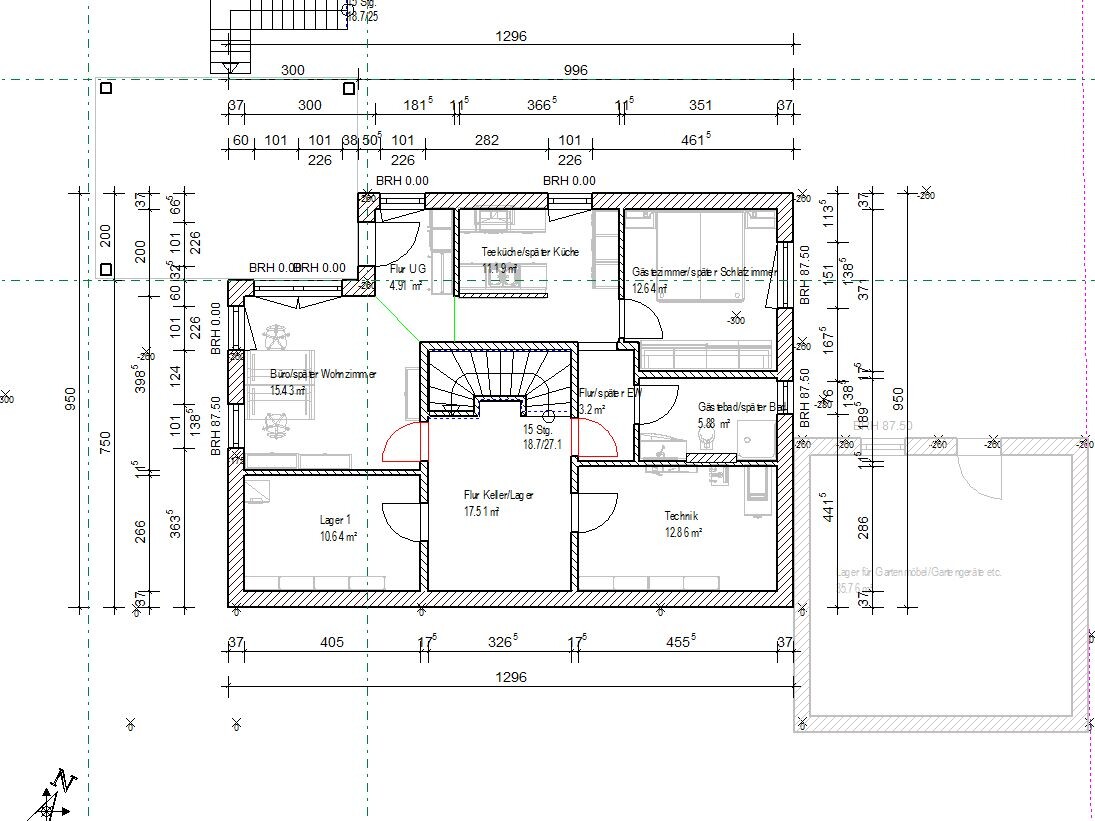
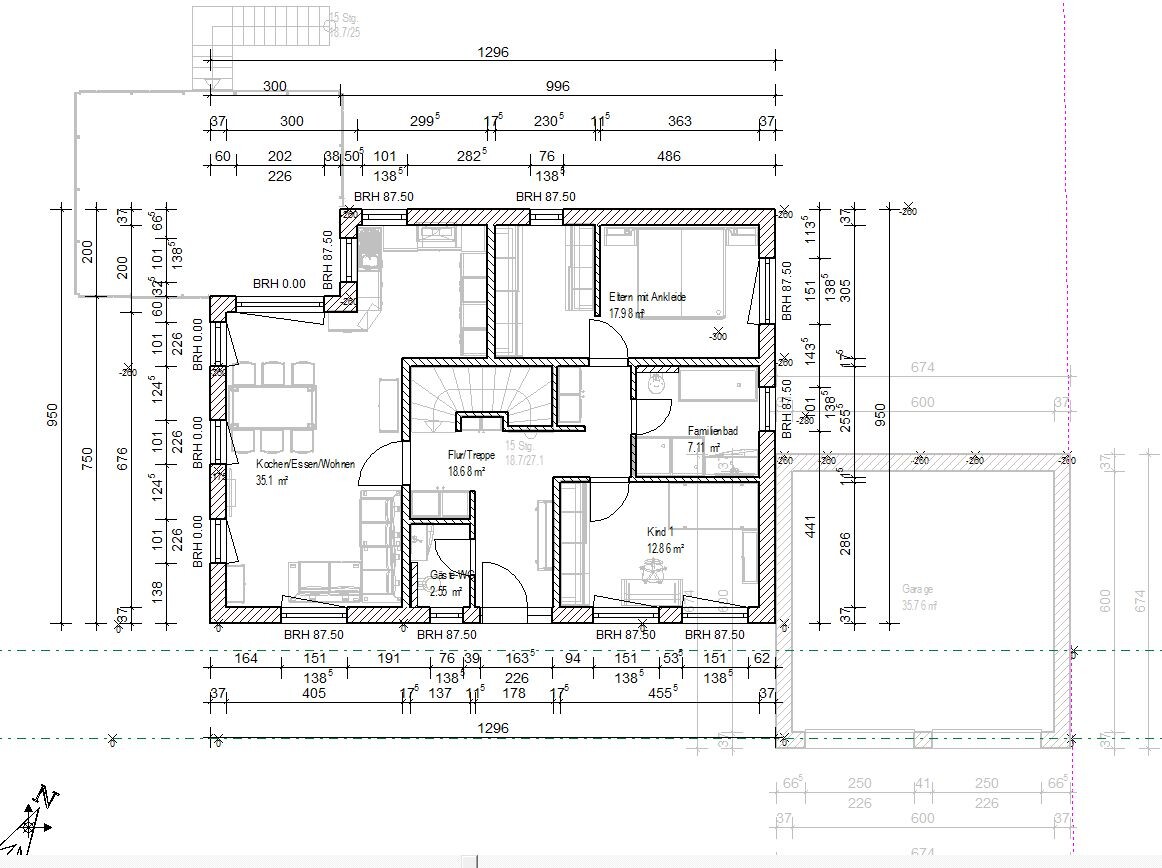
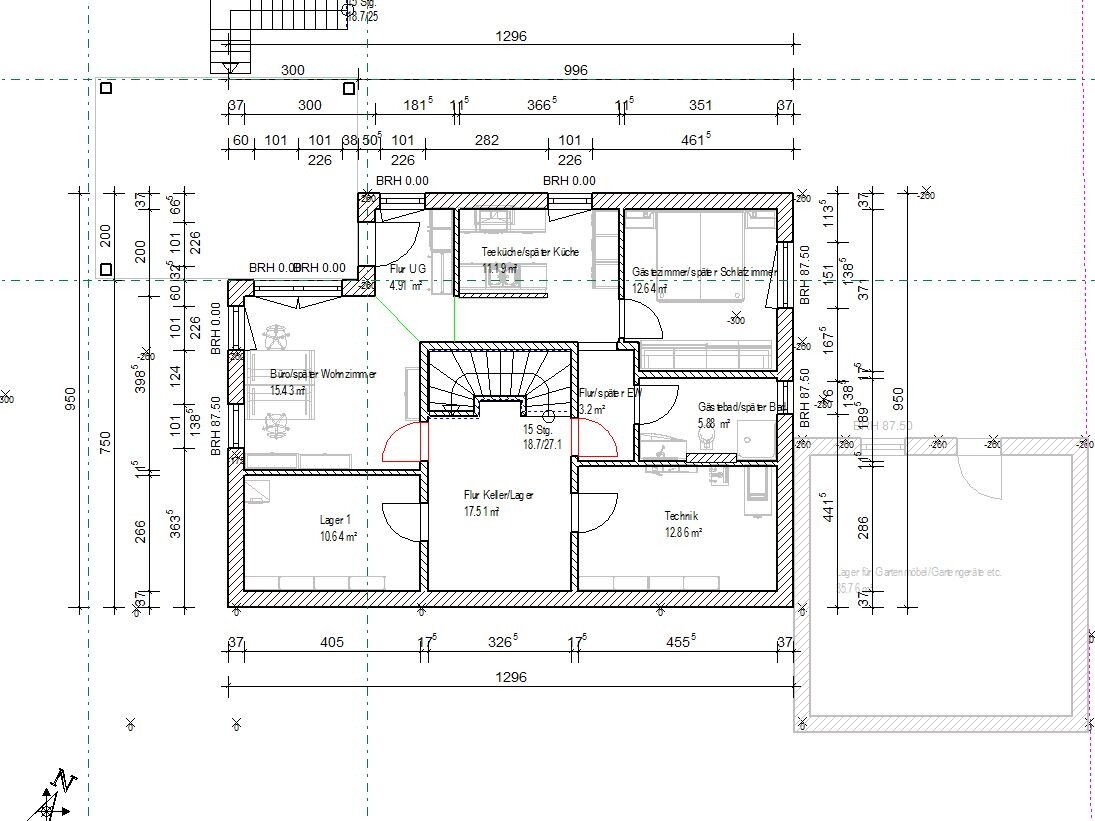
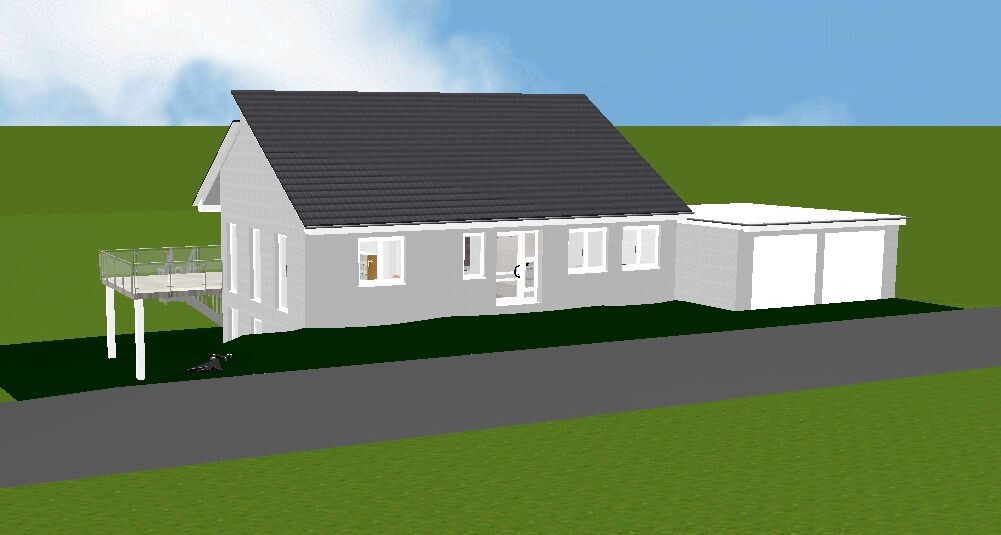

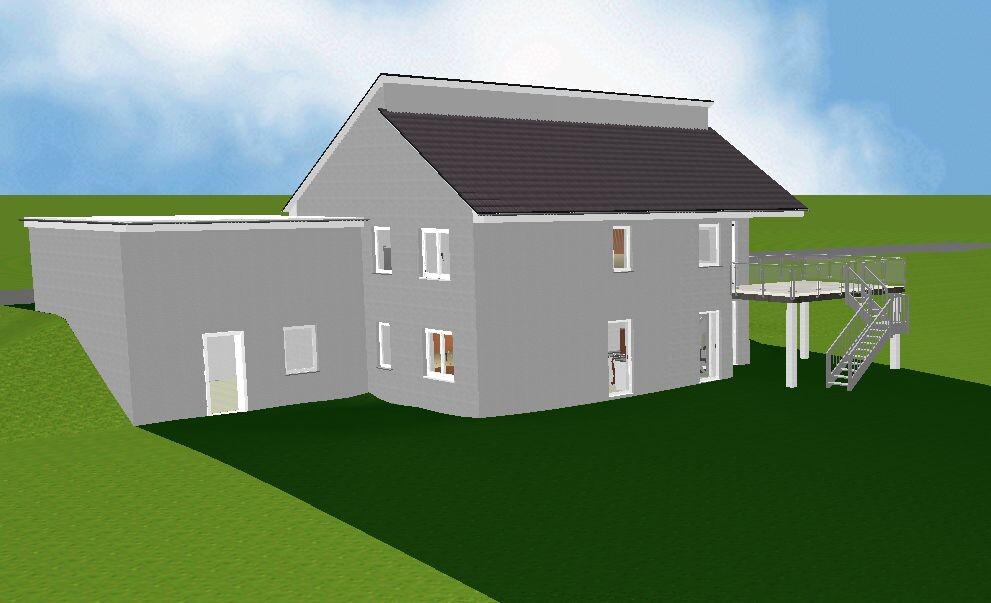
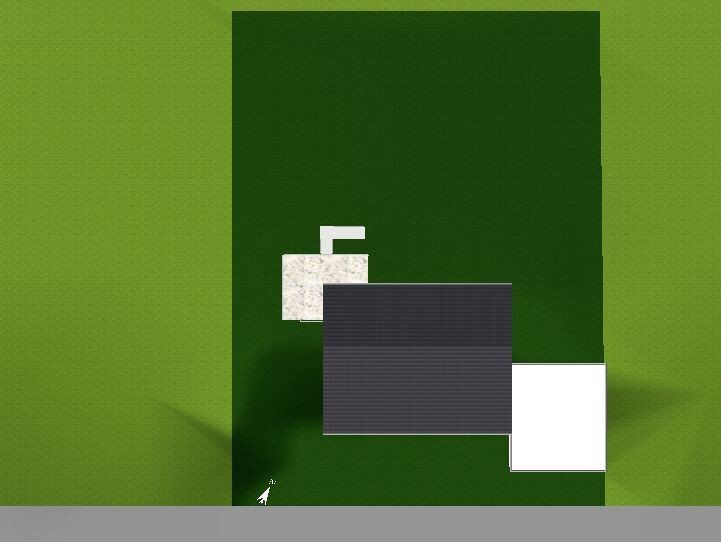
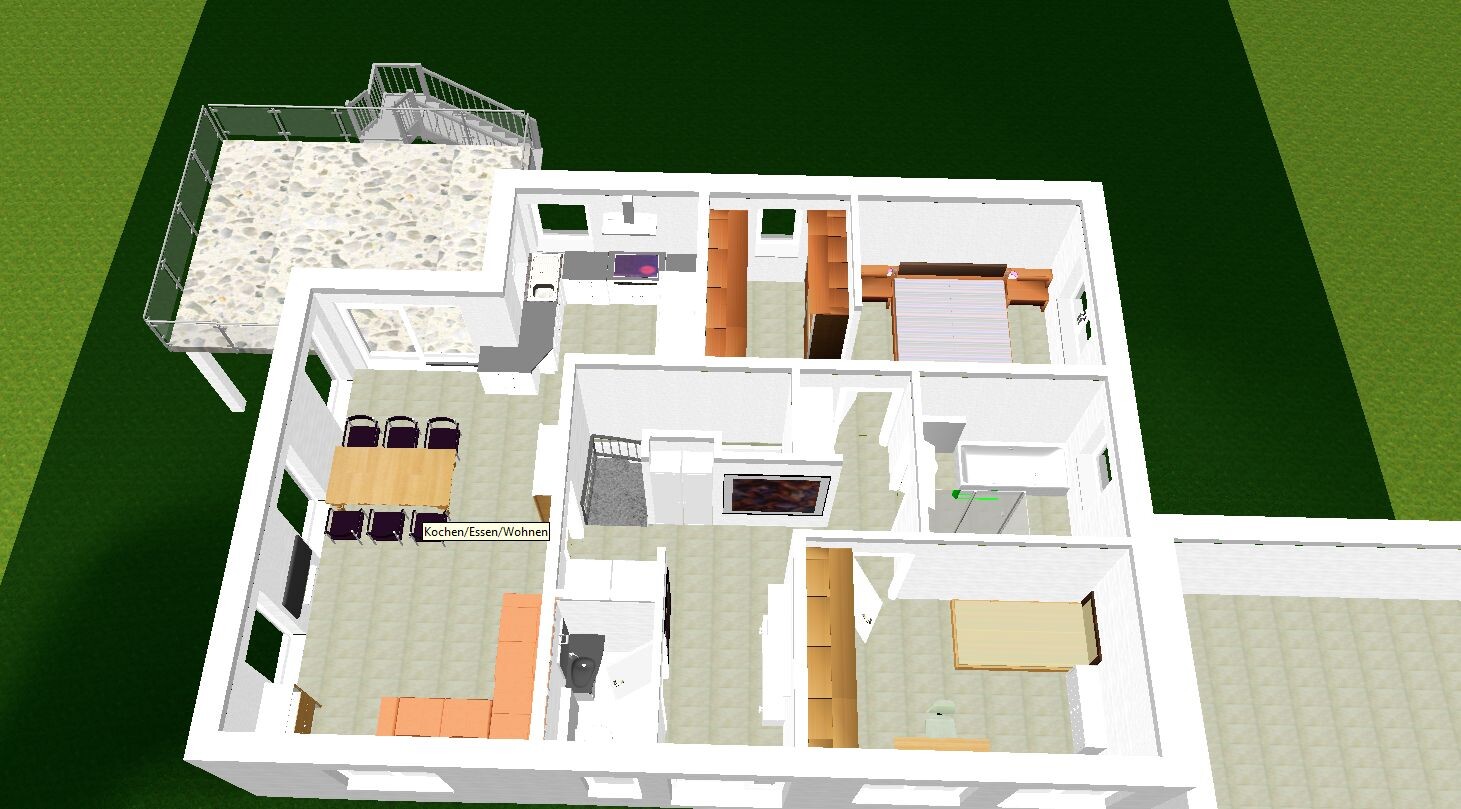
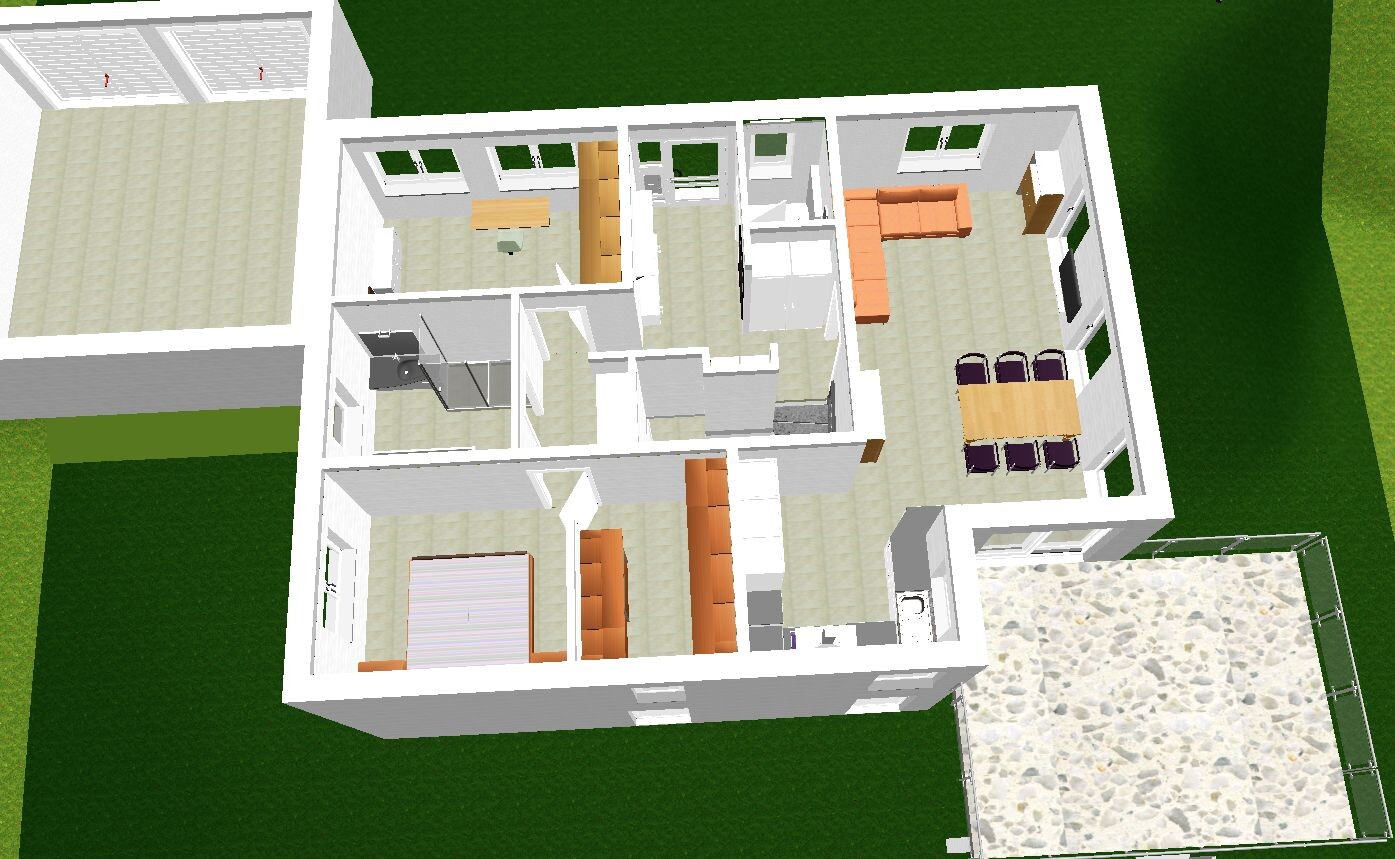
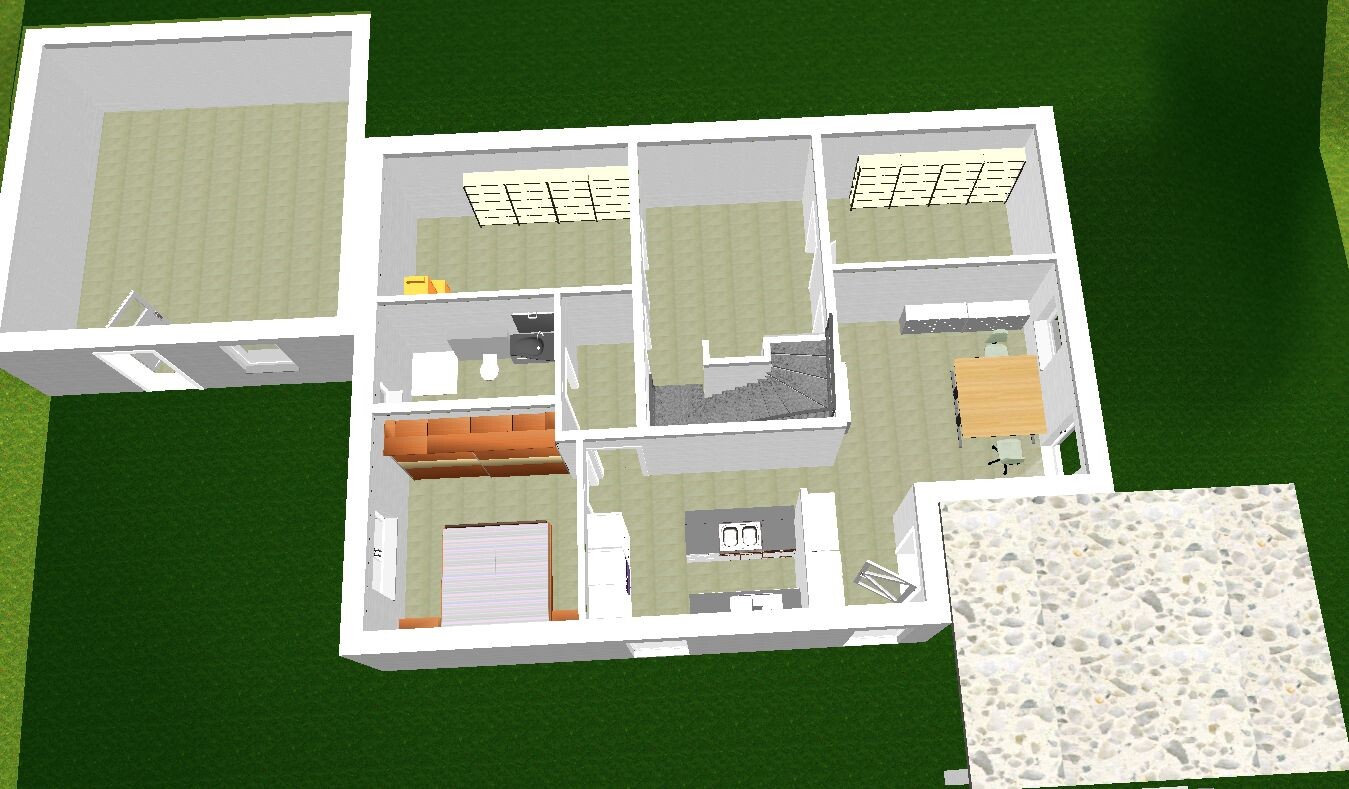
I have moved things around a bit to show how I could imagine it. I could also picture a staggered shed roof. However, I’m not very good with roofs, so this should be seen more as a rough sketch for illustration.
I think the floor plans should speak for themselves. The doors marked in red can simply be closed if a granny flat is built. This would then create a storage niche in the hallway on the right for a vacuum cleaner and similar items.
Hello kbt09 and good morning,
First of all, thank you very much for all your work. Your designs have given us a lot to discuss. The list of questions for the architect is growing. He will be here tomorrow for consultations.
What I'm really curious about is, which software do you use for your designs? With mine, I can't get such a clear view inside the rooms. Also, I’m having trouble accurately representing the slope of the property.
We will continue to discuss things here and prepare for the architect tomorrow. I will get back to you with the results.
I wish you a nice holiday and thanks again for your effort.
Matthias
First of all, thank you very much for all your work. Your designs have given us a lot to discuss. The list of questions for the architect is growing. He will be here tomorrow for consultations.
What I'm really curious about is, which software do you use for your designs? With mine, I can't get such a clear view inside the rooms. Also, I’m having trouble accurately representing the slope of the property.
We will continue to discuss things here and prepare for the architect tomorrow. I will get back to you with the results.
I wish you a nice holiday and thanks again for your effort.
Matthias
Good morning everyone,
Yesterday we had a detailed meeting with the architect. We will basically continue working with his design, which will be adjusted according to our requirements. There are some regulations that were not considered in our design. Well. He will send the revised design by email shortly but wants to have the site surveyed first, including elevation measurements.
I have a question regarding this. The surveyor he recommended provided a fixed-price offer for the staking out and later verification. The cost, including tax, is 2000€ (approx. $… USD). Is this reasonable? According to the architect, this is a special price, so it is considered inexpensive.
The offered services include:
1. Preparation of a cadastral plan according to building permit/planning permission requirements (single copy) including elevations
2. Fine staking out + issuing a staking certificate according to § 65 HBO
3. Building survey after structural completion, according to § 21 HVGG
Thanks for your opinions and information.
Matthias
Yesterday we had a detailed meeting with the architect. We will basically continue working with his design, which will be adjusted according to our requirements. There are some regulations that were not considered in our design. Well. He will send the revised design by email shortly but wants to have the site surveyed first, including elevation measurements.
I have a question regarding this. The surveyor he recommended provided a fixed-price offer for the staking out and later verification. The cost, including tax, is 2000€ (approx. $… USD). Is this reasonable? According to the architect, this is a special price, so it is considered inexpensive.
The offered services include:
1. Preparation of a cadastral plan according to building permit/planning permission requirements (single copy) including elevations
2. Fine staking out + issuing a staking certificate according to § 65 HBO
3. Building survey after structural completion, according to § 21 HVGG
Thanks for your opinions and information.
Matthias
reeneex schrieb:
The offered services are:
1. Preparation of a cadastral plan according to building submission regulations (single copy) including elevations
2. Detailed staking out and issuance of a staking certificate in accordance with § 65 HBO
3. Building survey after structural shell completion, according to § 21 HVGGIn my opinion, the price is completely reasonable.
Similar topics