
B
Beginner881 Dec 2024 19:39Hello everyone,
We are currently renovating a house from 1968 and are working on the kitchen. Almost everything has been replaced (electrical wiring, windows, ceiling, water pipes soon), but the floor is still missing. However, we have the problem that the current floor consists of many layers (parquet, PVC, coconut fibers glued to PVC, screed/concrete (or something else?), a coconut fiber mat, and then the actual “floor” of the kitchen). The issue is time – the new kitchen will be installed at the end of January.
Our plan:
The plan is to only remove the parquet and possibly the PVC and leave the concrete (or whatever this first layer is) as it is, then install impact sound insulation, a vapor barrier, and laminate flooring so that it is reasonably level with the living room (open passage).
The fibers are coconut fibers (we had them tested for asbestos).
If we remove everything completely and then have the floor refilled, it would take a very long time (kitchen arrives end of January). In our opinion, the only problem would be unevenness – do you see any other long-term issues?
Thank you!
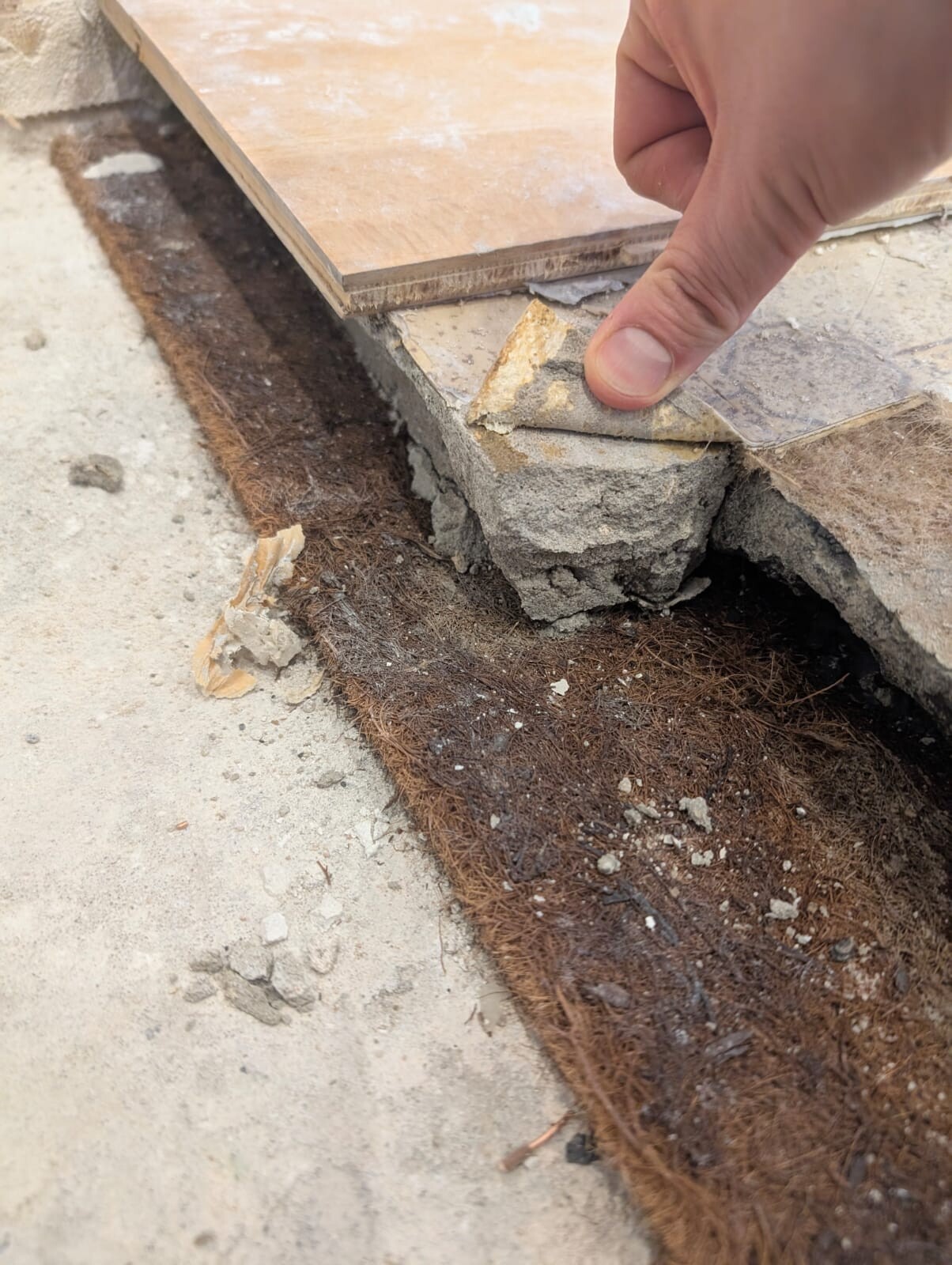
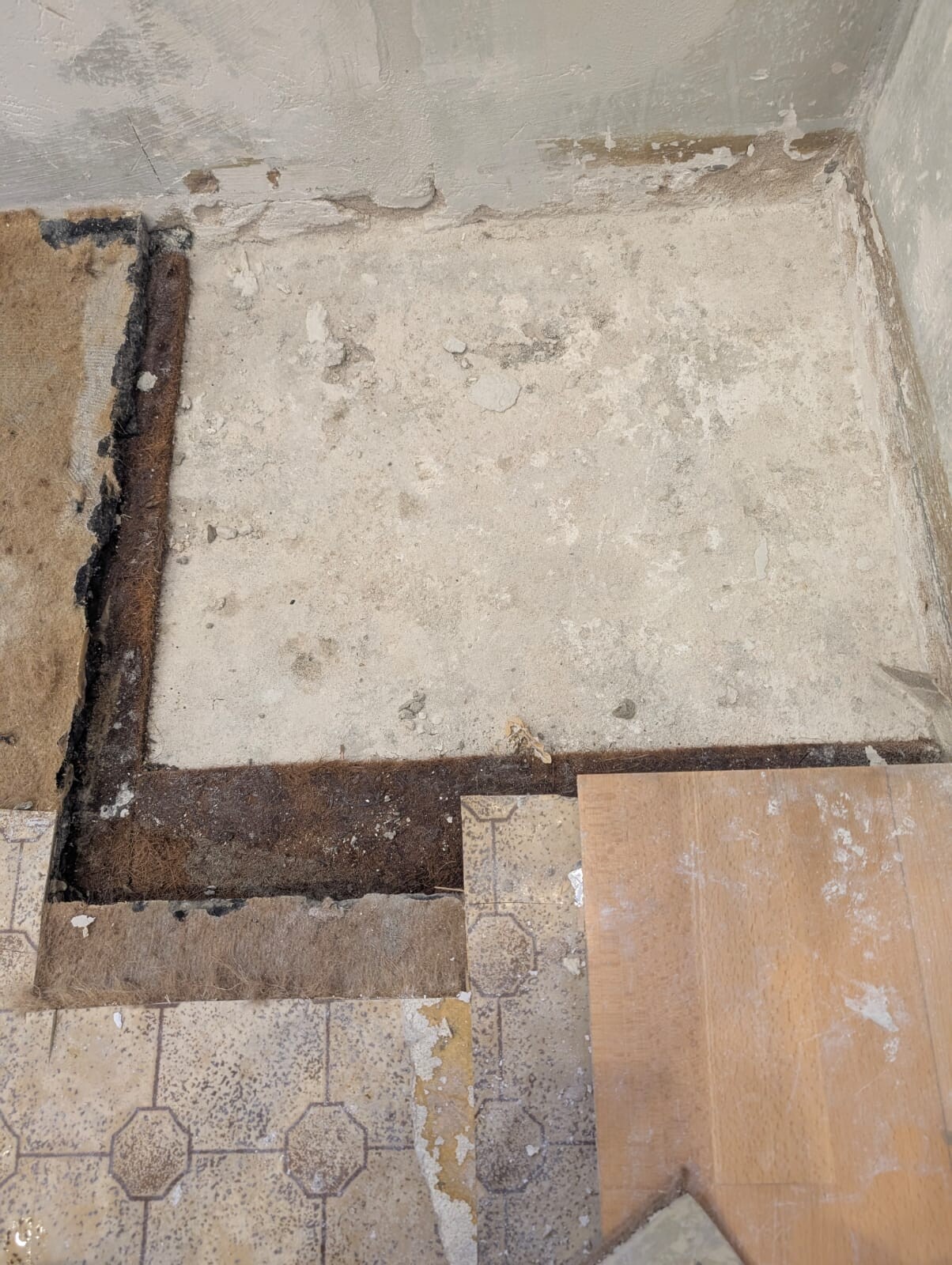
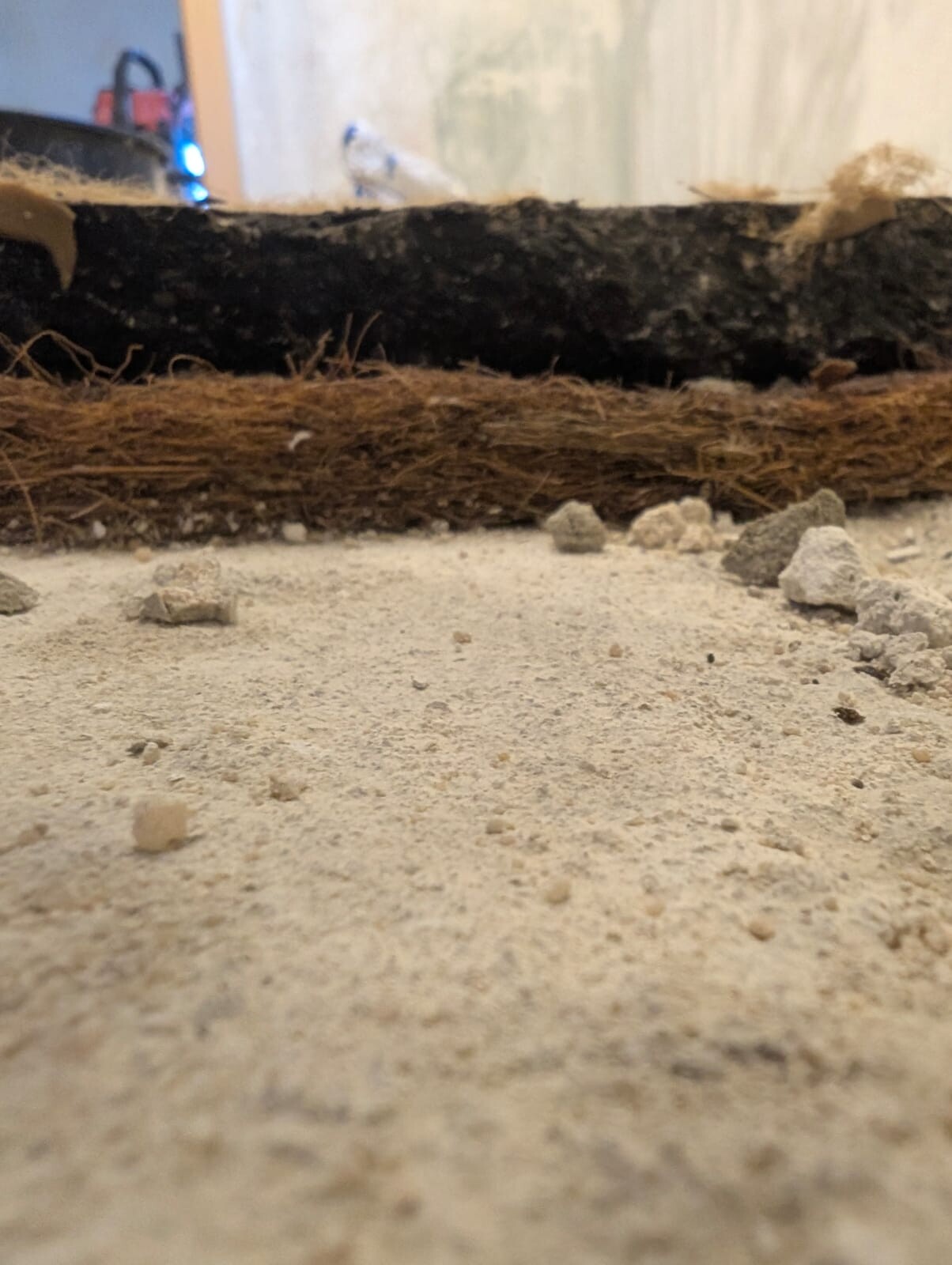
We are currently renovating a house from 1968 and are working on the kitchen. Almost everything has been replaced (electrical wiring, windows, ceiling, water pipes soon), but the floor is still missing. However, we have the problem that the current floor consists of many layers (parquet, PVC, coconut fibers glued to PVC, screed/concrete (or something else?), a coconut fiber mat, and then the actual “floor” of the kitchen). The issue is time – the new kitchen will be installed at the end of January.
Our plan:
The plan is to only remove the parquet and possibly the PVC and leave the concrete (or whatever this first layer is) as it is, then install impact sound insulation, a vapor barrier, and laminate flooring so that it is reasonably level with the living room (open passage).
The fibers are coconut fibers (we had them tested for asbestos).
If we remove everything completely and then have the floor refilled, it would take a very long time (kitchen arrives end of January). In our opinion, the only problem would be unevenness – do you see any other long-term issues?
Thank you!

The coconut mat was an earlier type of insulation layer, usually used as impact sound insulation.
Is the area beneath the kitchen located over a basement or directly on the ground?
I assume (or rather guess without knowing) that this is a single-family house and that there is no separate residential unit below your kitchen.
Further details are needed here to provide a recommendation for the construction setup.
----------------------
Regards, KlaRa
Is the area beneath the kitchen located over a basement or directly on the ground?
I assume (or rather guess without knowing) that this is a single-family house and that there is no separate residential unit below your kitchen.
Further details are needed here to provide a recommendation for the construction setup.
----------------------
Regards, KlaRa
B
Beginner883 Dec 2024 21:03Hello KlaRa,
yes, there is a basement (below it is the boiler room). Our plan is to fill the hole with wet screed and create a joint between the old and new screed, possibly connecting them with something made of "metal" (sorry, I’m not familiar with this – my father suggested it), and then apply resin (similar to epoxy resin) afterwards (of course wearing gloves and an FFP3 mask, and ensuring ventilation).
yes, there is a basement (below it is the boiler room). Our plan is to fill the hole with wet screed and create a joint between the old and new screed, possibly connecting them with something made of "metal" (sorry, I’m not familiar with this – my father suggested it), and then apply resin (similar to epoxy resin) afterwards (of course wearing gloves and an FFP3 mask, and ensuring ventilation).
B
Beginner884 Dec 2024 19:37I have now removed the coconut fibers by hand (and also knocked out the small square tiles), and it turns out that unfortunately, there is no continuous screed slab.
We will then cut joints (for the large hole, screed will be poured), connect them with metal rods (sorry, I don’t remember the exact term, possibly the mentioned "cross connectors [corrugated stainless steel anchors]"), and then pour a layer of resin (epoxy resin/pourable resin) over it (of course, the uneven spots around the edges will be leveled beforehand).
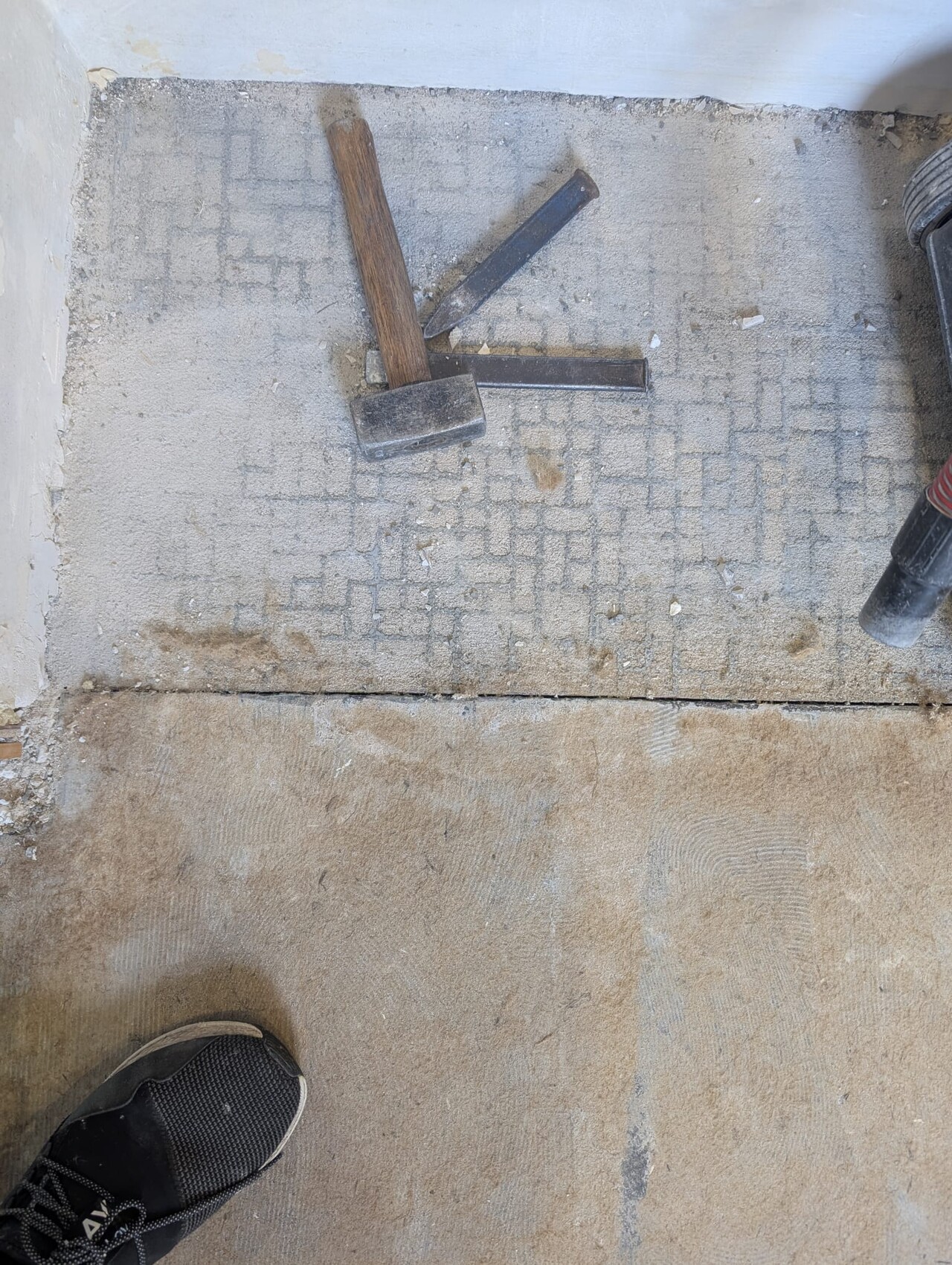
We will then cut joints (for the large hole, screed will be poured), connect them with metal rods (sorry, I don’t remember the exact term, possibly the mentioned "cross connectors [corrugated stainless steel anchors]"), and then pour a layer of resin (epoxy resin/pourable resin) over it (of course, the uneven spots around the edges will be leveled beforehand).
Similar topics