
ᐅ Old Electrical Installation – Is It Possible to Determine Its Age?
Created on: 15 Nov 2021 17:00
R
ruediger42 ruediger4215 Nov 2021 17:00
Hello everyone,
I have a (admittedly poor) photo of the fuse box in an older house that we might renovate (for my parents).
My question:
Is it possible to tell at a glance whether the electrical installation is relatively up to date or if nothing has been done here for the last 50 years?
Thank you very much and best regards
rueiger42
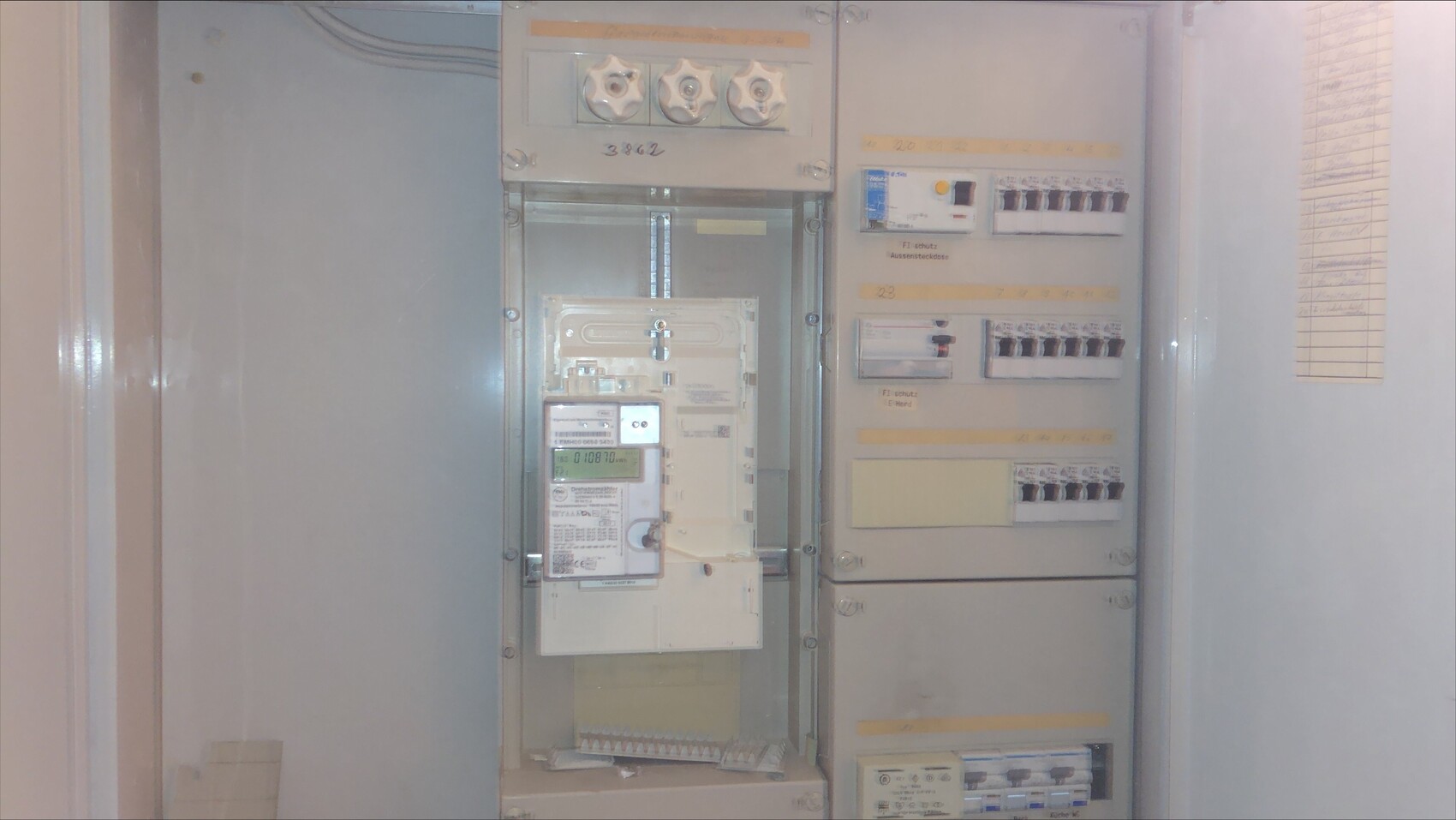
I have a (admittedly poor) photo of the fuse box in an older house that we might renovate (for my parents).
My question:
Is it possible to tell at a glance whether the electrical installation is relatively up to date or if nothing has been done here for the last 50 years?
Thank you very much and best regards
rueiger42

Mycraft schrieb:
The box itself doesn’t really tell you anything about the rest. You can easily replace it separately if something is wrong. However, the wiring inside the walls could still be 50 years old. It definitely does indicate something.
The requirement for a residual current device (RCD) in new construction (!) started sometime in the 1980s. So it’s quite certain that behind the box the wiring is at least three-core.
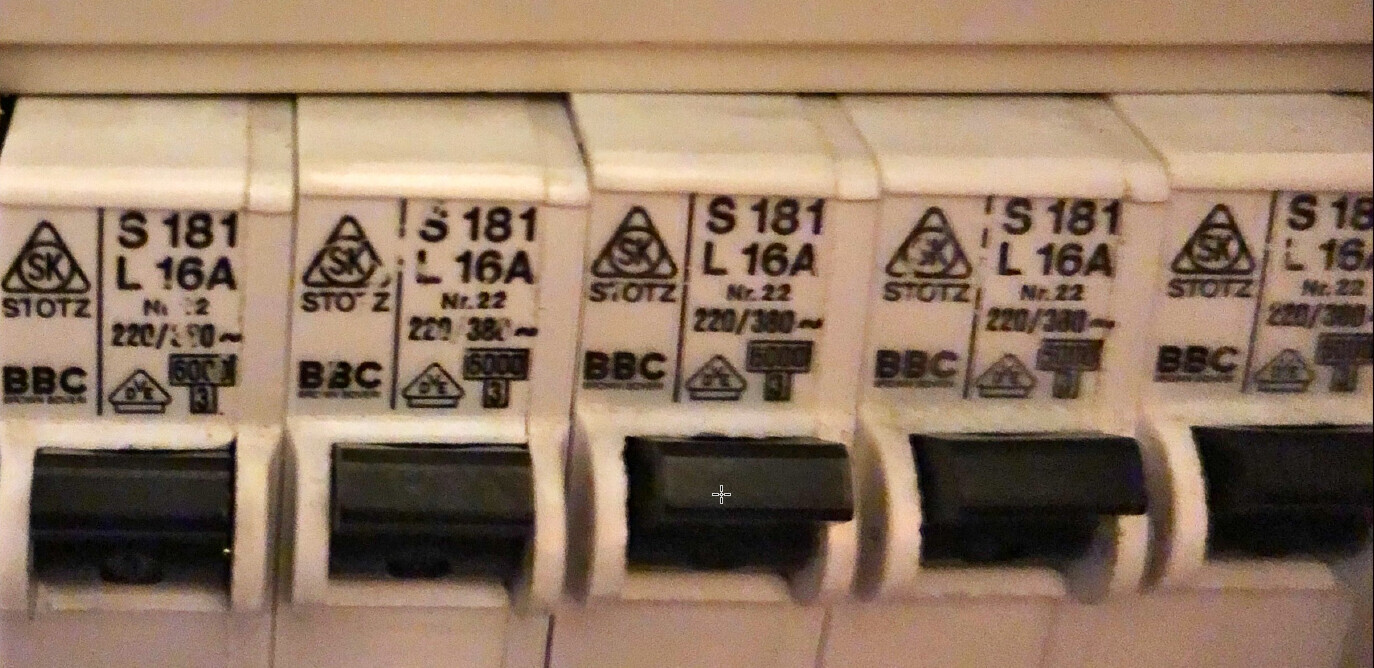
You wouldn’t install a 16A circuit breaker on just any old wiring either. The number of breakers also suggests that significantly more cabling was installed than would have been typical 50 years ago...
H
hampshire15 Nov 2021 17:59Then my father’s house was avant-garde, built in 1970, with an electrical panel similar to the one in the photo – featuring three large fuse links, a residual-current device (RCD), and 16A circuit breakers, one for each room as well as the garden, and three each for the stove/oven, sauna, and (!) washing machine.
The RCDs just indicate that the electrical panel was updated at some point, as the requirement applies in that case. Or they were necessary from the start.
So they don’t really tell you much. However, it is very likely that three phases are present.
Not 16A circuit breakers? Then you must be unfamiliar with the electricians’ standards. 16A is what is commonly used and installed by default. Even though in most installations (yes, even in new builds) 13A would be the logical, safer, and calculated limit (for some circuits). And the number of breakers really doesn’t tell you anything. It could also partly reflect an extension of the system in year XY.
So here, too, it’s just guesswork.
Without additional photos and information, nothing definitive can be concluded.
So they don’t really tell you much. However, it is very likely that three phases are present.
Not 16A circuit breakers? Then you must be unfamiliar with the electricians’ standards. 16A is what is commonly used and installed by default. Even though in most installations (yes, even in new builds) 13A would be the logical, safer, and calculated limit (for some circuits). And the number of breakers really doesn’t tell you anything. It could also partly reflect an extension of the system in year XY.
So here, too, it’s just guesswork.
Without additional photos and information, nothing definitive can be concluded.
Similar topics