
ᐅ Older Homes: Solutions for Baseboards with Uneven Floorboards and Walls
Created on: 16 Jan 2026 23:53
M
mehrtuererM
mehrtuerer16 Jan 2026 23:53Hello everyone,
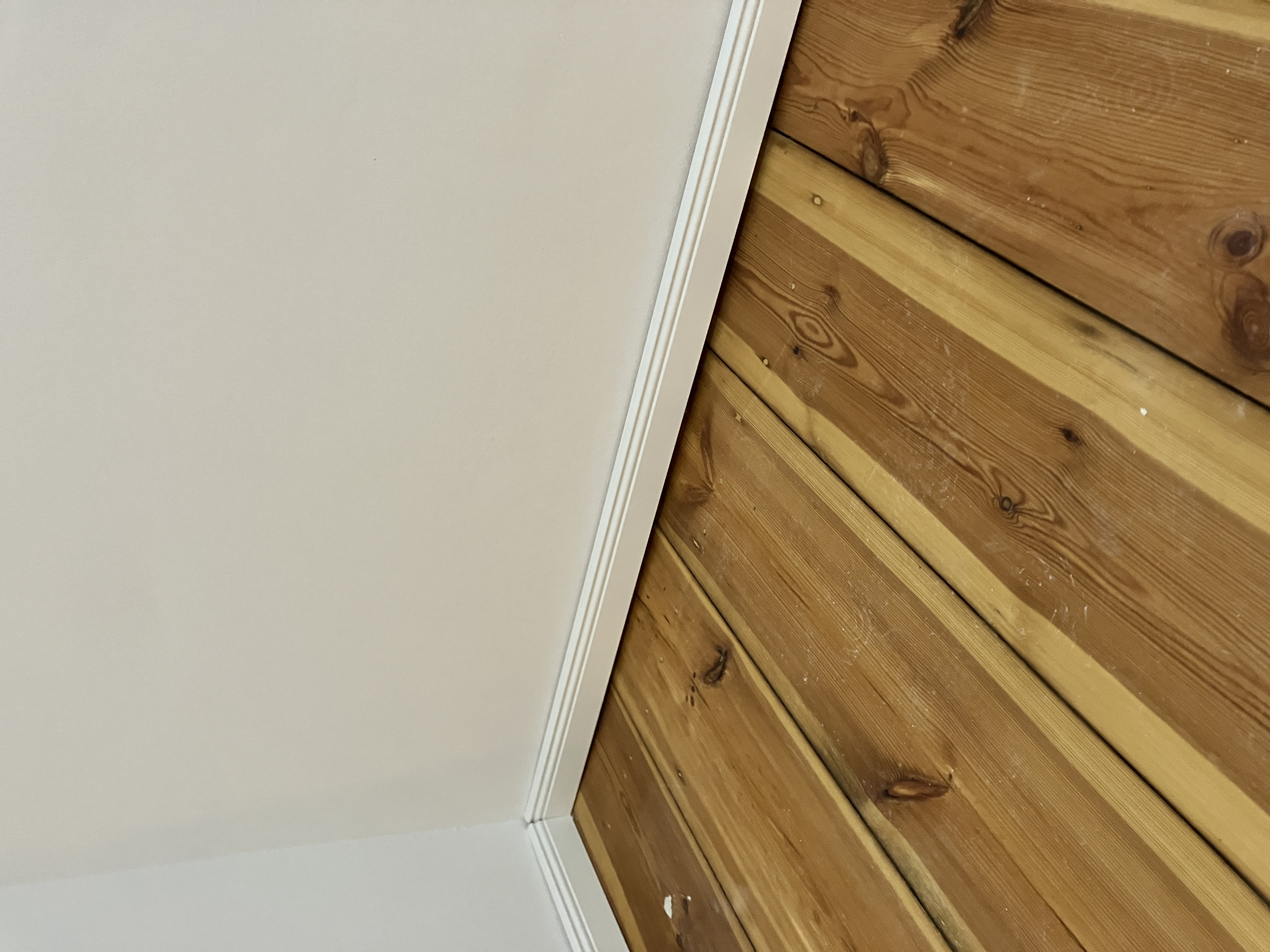
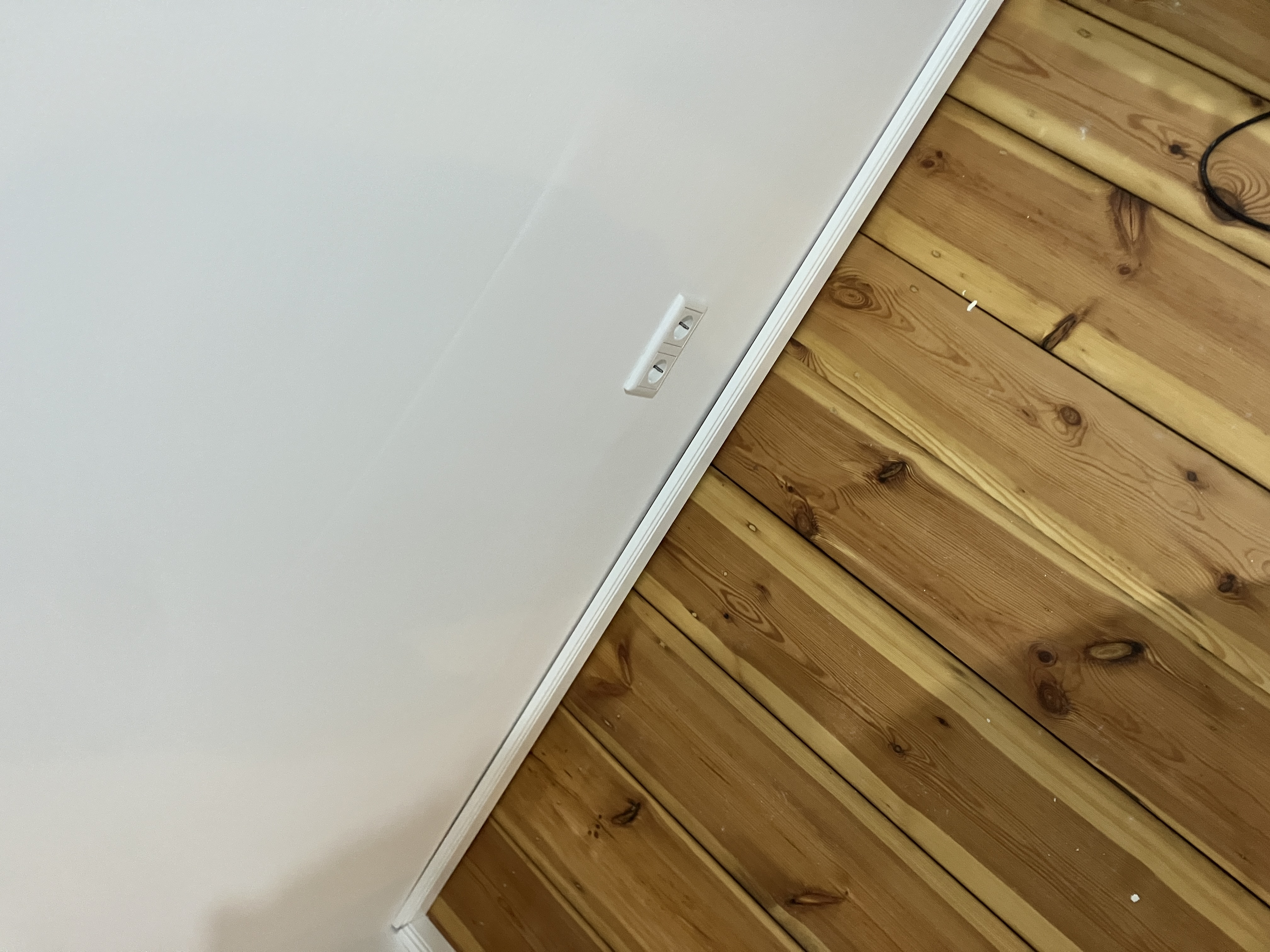
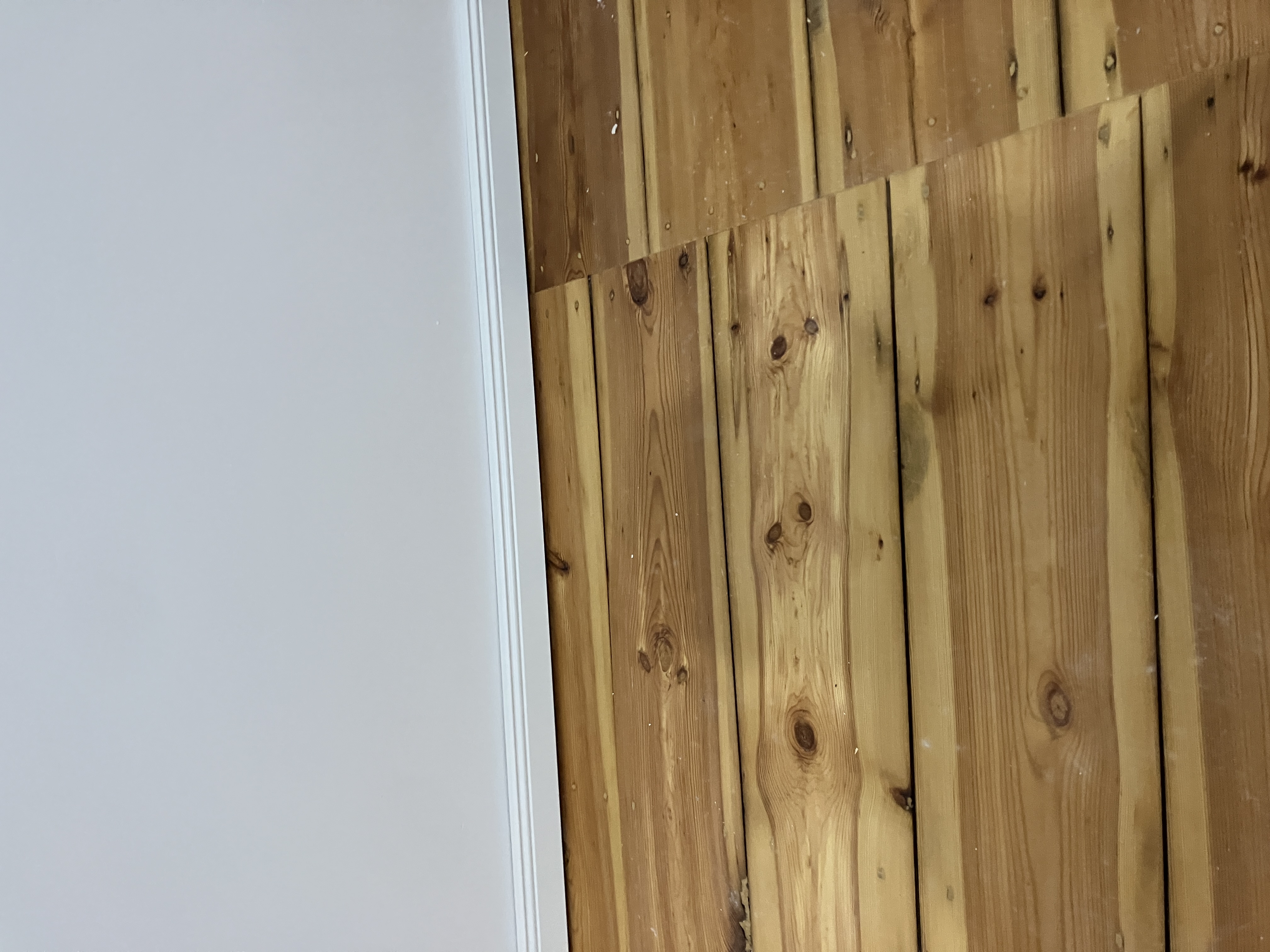
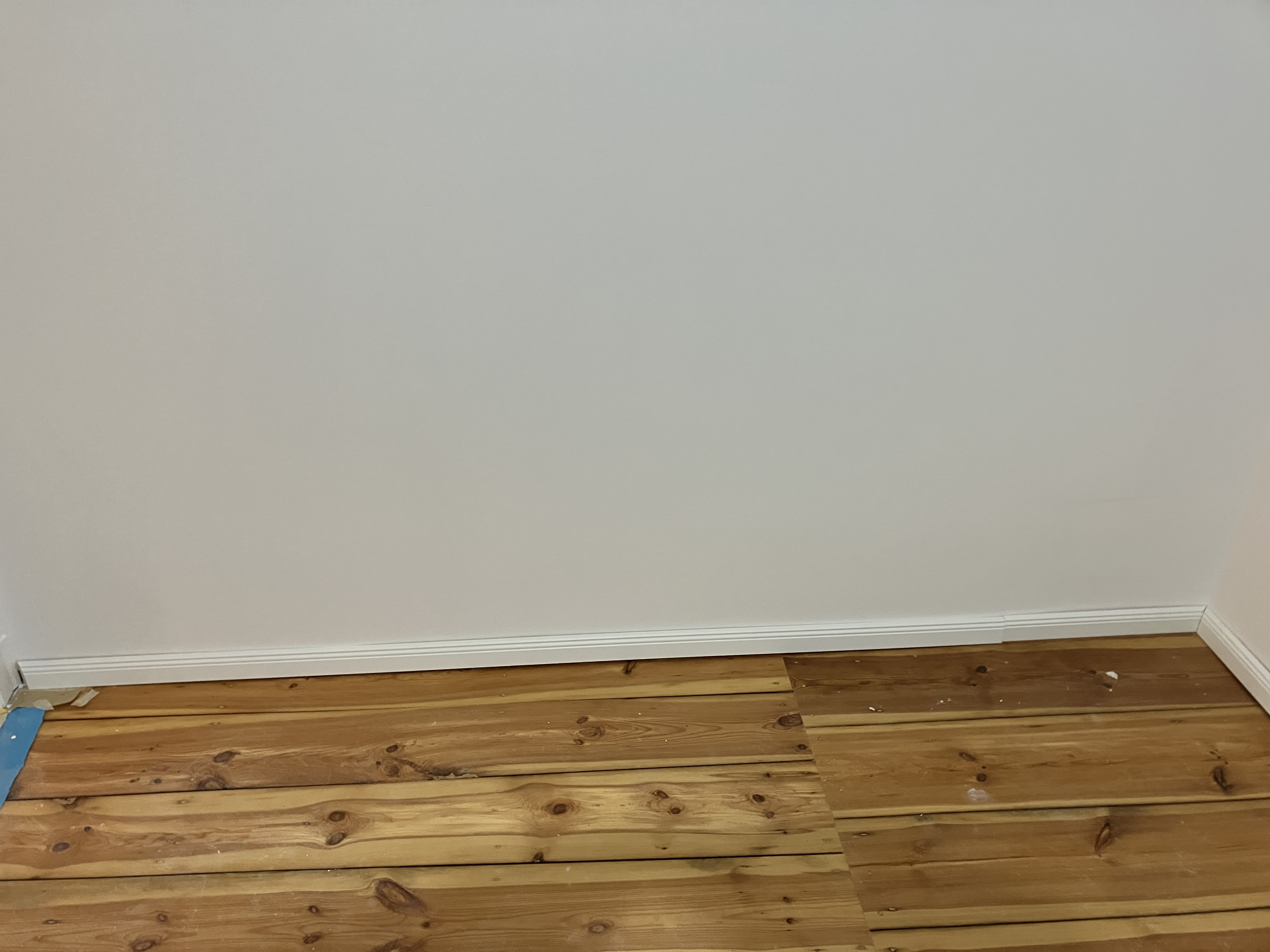
I’d like to tap into the combined experience here. Today, we started cutting the baseboards to finally install them as part of my old building renovation. As expected, the walls and floor are so uneven (charmingly typical for my older building) that the baseboards stand up to 1cm (0.4 inches) away from the floor or walls.
To bridge the gap at the wall, I plan to press the baseboards lightly against the wall using construction adhesive during installation, reducing the gap from 1cm (0.4 inches) to 0.5cm (0.2 inches). The rest would be filled with acrylic sealant. I don’t want to press them fully flush because that would transfer the unevenness of the wall directly onto the baseboards, which I think would look worse. How do you assess this approach? The maximum curvature is about 1cm (0.4 inches) per meter (3.3 feet).
Regarding the gap at the floor, I’m still uncertain. Here too, the maximum gap is about 1cm (0.4 inches) at the steepest curve. How should I close this gap? What would be a high-quality solution? The use of quarter round molding is of course known, but I don’t find it the most aesthetically pleasing option, partly because it replicates the curvature completely.
I’m looking forward to your advice and experiences.
Here are the pictures:
Best regards from Berlin
Julius
I’d like to tap into the combined experience here. Today, we started cutting the baseboards to finally install them as part of my old building renovation. As expected, the walls and floor are so uneven (charmingly typical for my older building) that the baseboards stand up to 1cm (0.4 inches) away from the floor or walls.
To bridge the gap at the wall, I plan to press the baseboards lightly against the wall using construction adhesive during installation, reducing the gap from 1cm (0.4 inches) to 0.5cm (0.2 inches). The rest would be filled with acrylic sealant. I don’t want to press them fully flush because that would transfer the unevenness of the wall directly onto the baseboards, which I think would look worse. How do you assess this approach? The maximum curvature is about 1cm (0.4 inches) per meter (3.3 feet).
Regarding the gap at the floor, I’m still uncertain. Here too, the maximum gap is about 1cm (0.4 inches) at the steepest curve. How should I close this gap? What would be a high-quality solution? The use of quarter round molding is of course known, but I don’t find it the most aesthetically pleasing option, partly because it replicates the curvature completely.
I’m looking forward to your advice and experiences.
Here are the pictures:
Best regards from Berlin
Julius

Hello questioner.
The gap at the back below the baseboards logically results from the flatness of the subfloor.
And the subfloor always follows the substrate.
This means that before installing the top floor (here solid wood planks), you must check whether it meets the flatness tolerance limits (DIN 18202 Table 2 Row 3), or if appropriate leveling work needs to be done beforehand.
At this (late) stage, when the planks are already installed, it is no longer possible to hope for a visually pleasing solution at the transition between baseboards and floor level.
At least keep in mind at this point—no matter how you proceed—that the baseboards are firmly fixed to the wall at the back and that the connection between the bottom edge of the baseboard and the floor surface is NOT also rigidly fixed!!
That would cause problems.
-------------------
Therefore, there is no visually appealing solution.
For the wide gaps, I would insert a suitably narrow round cord near the wall to fill the space. This will prevent "pumping effects" when walking on the floor, which could carry fine dust particles from the construction into the indoor air.
Good luck: KlaRa
The gap at the back below the baseboards logically results from the flatness of the subfloor.
And the subfloor always follows the substrate.
This means that before installing the top floor (here solid wood planks), you must check whether it meets the flatness tolerance limits (DIN 18202 Table 2 Row 3), or if appropriate leveling work needs to be done beforehand.
At this (late) stage, when the planks are already installed, it is no longer possible to hope for a visually pleasing solution at the transition between baseboards and floor level.
At least keep in mind at this point—no matter how you proceed—that the baseboards are firmly fixed to the wall at the back and that the connection between the bottom edge of the baseboard and the floor surface is NOT also rigidly fixed!!
That would cause problems.
-------------------
Therefore, there is no visually appealing solution.
For the wide gaps, I would insert a suitably narrow round cord near the wall to fill the space. This will prevent "pumping effects" when walking on the floor, which could carry fine dust particles from the construction into the indoor air.
Good luck: KlaRa
Our gaps weren’t that large. At first, I was very particular about them and they bothered me a lot. Now, after 8 years, I can confirm that the gap to the wooden floor "blends in" over time. The gap to the wall still bothers me a bit more. I filled it with acrylic sealant. It looked great at first… but that’s not the best idea. Acrylic joints attract dust magnetically and hold onto it very tightly! So, be very careful and precise when working/taping to avoid any acrylic remaining on the upper edge. Best regards
Similar topics