
ᐅ Older Building from 1956 – What Type of Floor Screed? Any Contaminants?
Created on: 9 Jan 2016 13:01
P
pascal910P
pascal9109 Jan 2016 13:01Hello,
maybe someone can help me. We are renovating an old building from 1956 and still need to decide how to deal with the existing screed. Since a chimney was removed and about 1m² (11 sq ft) is now missing on two floors (there is only a concrete floor there), we need to consider whether and how we can reuse the existing screed in some way.
We would actually like to do so, but first we need to understand what kind of floor structure it is.
Description of the structure from top to bottom:
- approx. 1mm (0.04 inches) reddish thin layer, looks like epoxy resin (not visible in the photos — it is under the PVC)
- 10mm (0.4 inches) hard black layer
- 10mm (0.4 inches) black layer that is somewhat flexible — kind of softer. It crumbles even with light touch (see first photo)
- sand layer
From my research, it might be mastic asphalt, but I am wondering what this crumbly softer layer could be? Also, does anyone know about the PAH (polycyclic aromatic hydrocarbons) content of such floors? Does it have anything to do with tar content? Could this be “sealed” and reused?
There is no tar smell at all, and when combined with a solvent (denatured alcohol), no “brown slurry” forms (this tip for testing was given to me by the local waste management service).
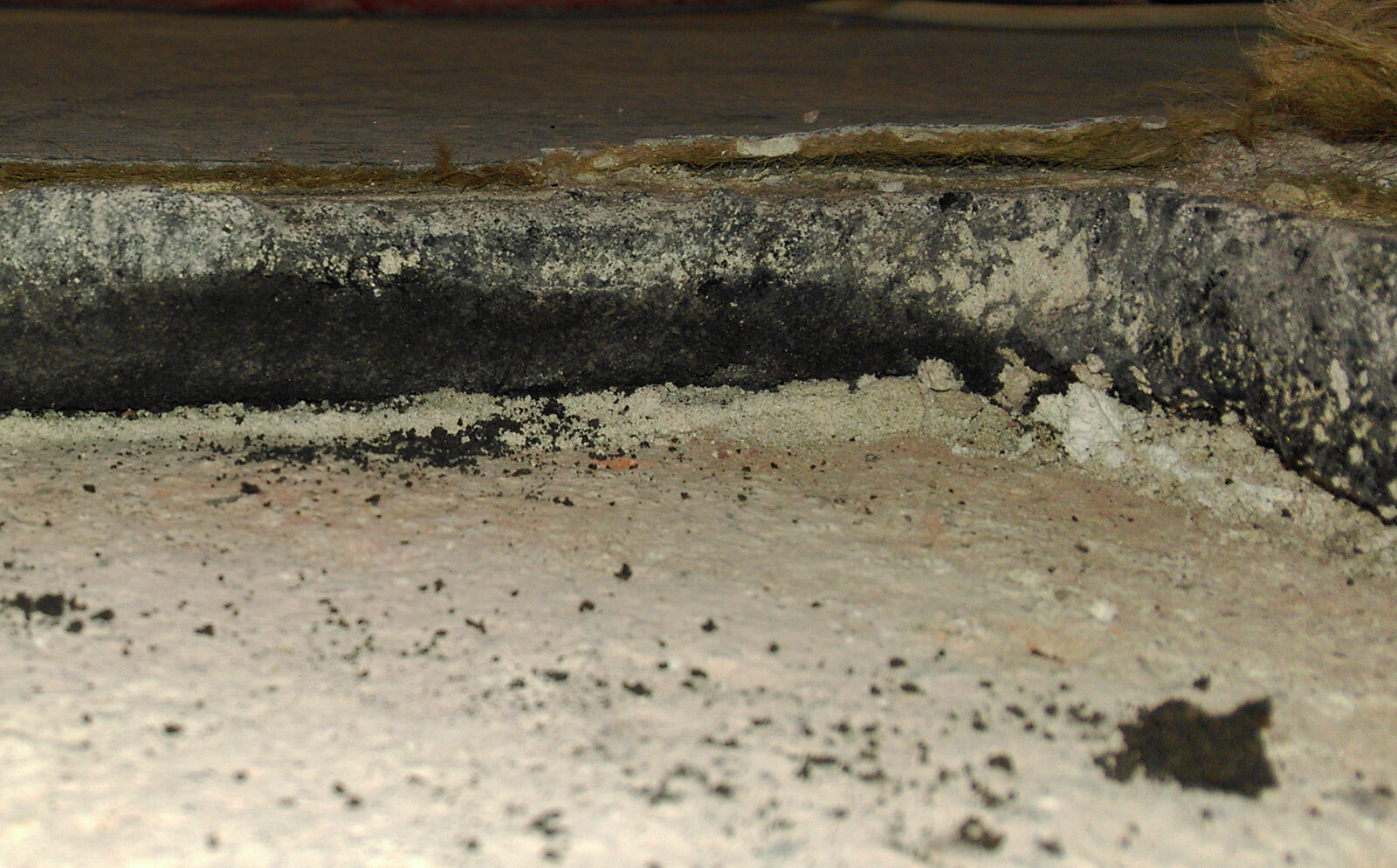
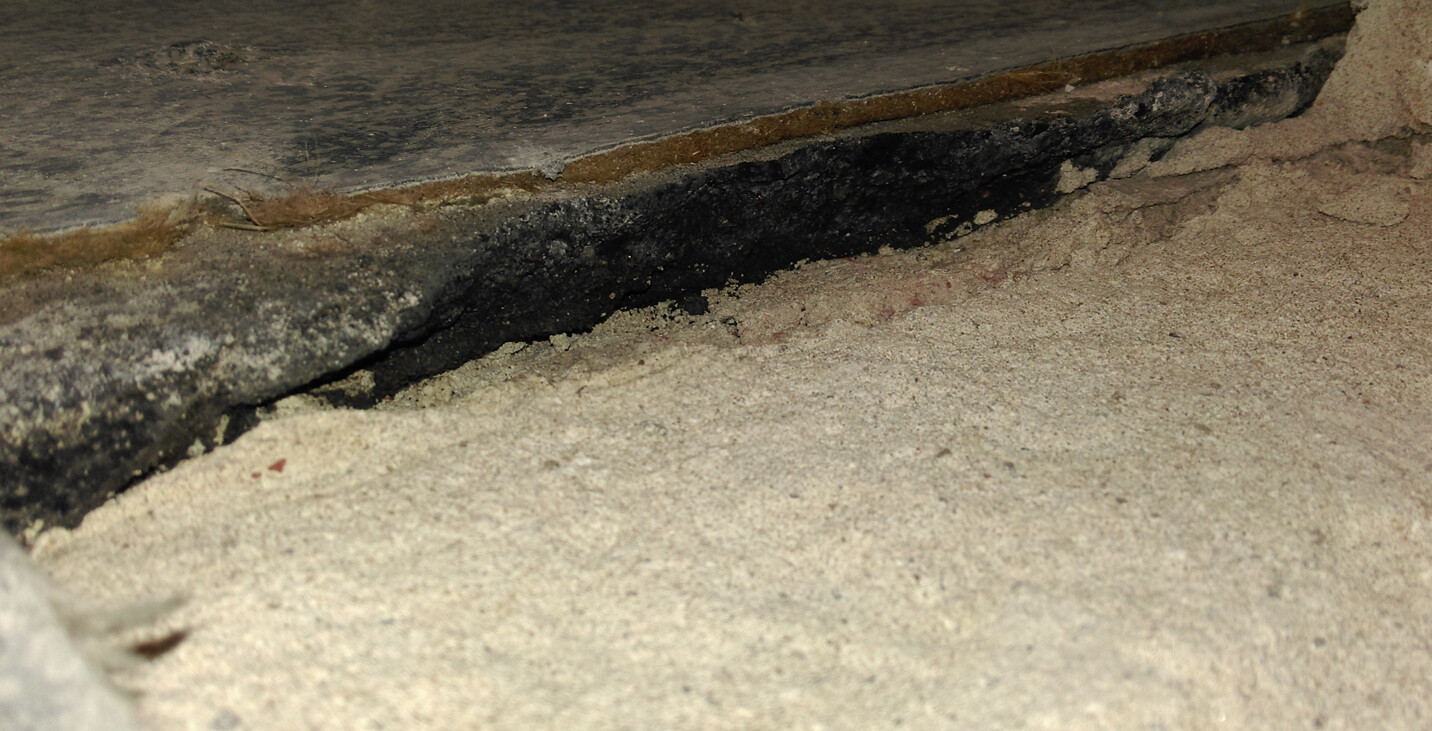
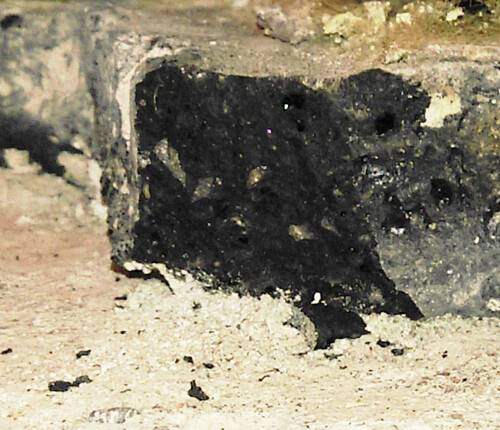
I would be very grateful for any ideas or answers.
maybe someone can help me. We are renovating an old building from 1956 and still need to decide how to deal with the existing screed. Since a chimney was removed and about 1m² (11 sq ft) is now missing on two floors (there is only a concrete floor there), we need to consider whether and how we can reuse the existing screed in some way.
We would actually like to do so, but first we need to understand what kind of floor structure it is.
Description of the structure from top to bottom:
- approx. 1mm (0.04 inches) reddish thin layer, looks like epoxy resin (not visible in the photos — it is under the PVC)
- 10mm (0.4 inches) hard black layer
- 10mm (0.4 inches) black layer that is somewhat flexible — kind of softer. It crumbles even with light touch (see first photo)
- sand layer
From my research, it might be mastic asphalt, but I am wondering what this crumbly softer layer could be? Also, does anyone know about the PAH (polycyclic aromatic hydrocarbons) content of such floors? Does it have anything to do with tar content? Could this be “sealed” and reused?
There is no tar smell at all, and when combined with a solvent (denatured alcohol), no “brown slurry” forms (this tip for testing was given to me by the local waste management service).
I would be very grateful for any ideas or answers.

The structure and layer thickness suggest that this is more likely a magnesia or magnesia-wood screed. Up until the 1950s, screeds were usually installed in two layers as wearing screeds. They consisted of a lower filler layer – made of magnesia ("Sorel cement") with organic fillers (sawdust, wood shavings, cork powder) – and a bonded wearing layer, typically about 1 cm (0.4 inches) thick, made of magnesia with inorganic (e.g., sand) or only small amounts of organic components. The wearing layer was usually colored and then treated, for example with floor wax. This basic structure is similar to what your photos show.
Magnesia-wood screed is essentially a good system: it is very lightweight, warm underfoot, and has a low build-up height. However, the main drawback is that due to its chemical composition combined with moisture, it is highly corrosive and attacks many metals. Because of the high proportion of organic additives, it swells significantly when exposed to moisture.
For renovation, the ingress of moisture – including through coatings – must be prevented by a protective coating, for example, an epoxy resin. This is very likely the case in your situation.
If it is a magnesia-wood screed, has a good bond with the substrate, and is mostly level, it could remain in place. If it is to be renovated and covered with another floor finish, a preliminary examination is necessary first to determine suitable materials and an appropriate approach. Specialist companies that can assess and work with these types of screeds are quite rare. I strongly advise against beginning any form of DIY renovation based on a spontaneous plan and using retail materials before such investigations. Otherwise, see potential consequential damages.
Magnesia-wood screed is essentially a good system: it is very lightweight, warm underfoot, and has a low build-up height. However, the main drawback is that due to its chemical composition combined with moisture, it is highly corrosive and attacks many metals. Because of the high proportion of organic additives, it swells significantly when exposed to moisture.
For renovation, the ingress of moisture – including through coatings – must be prevented by a protective coating, for example, an epoxy resin. This is very likely the case in your situation.
If it is a magnesia-wood screed, has a good bond with the substrate, and is mostly level, it could remain in place. If it is to be renovated and covered with another floor finish, a preliminary examination is necessary first to determine suitable materials and an appropriate approach. Specialist companies that can assess and work with these types of screeds are quite rare. I strongly advise against beginning any form of DIY renovation based on a spontaneous plan and using retail materials before such investigations. Otherwise, see potential consequential damages.
Similar topics