
ᐅ Number of required recessed lights (halogen) and which types?
Created on: 18 Mar 2020 14:31
M
ms-t-89
Hello everyone,
we need some help planning the recessed downlights for our ground floor.
We’re not quite sure how many are necessary and how they should be arranged to achieve "proper" lighting conditions—not too bright, not too dark. The entire ground floor is to be fitted with recessed downlights, no pendant lights or similar fixtures, so no additional lamps.
We can only install the Halox housings into the ceiling; we have to purchase the bulbs and other components ourselves. So far, we don’t have any suggestions on this. Any tips would be much appreciated.
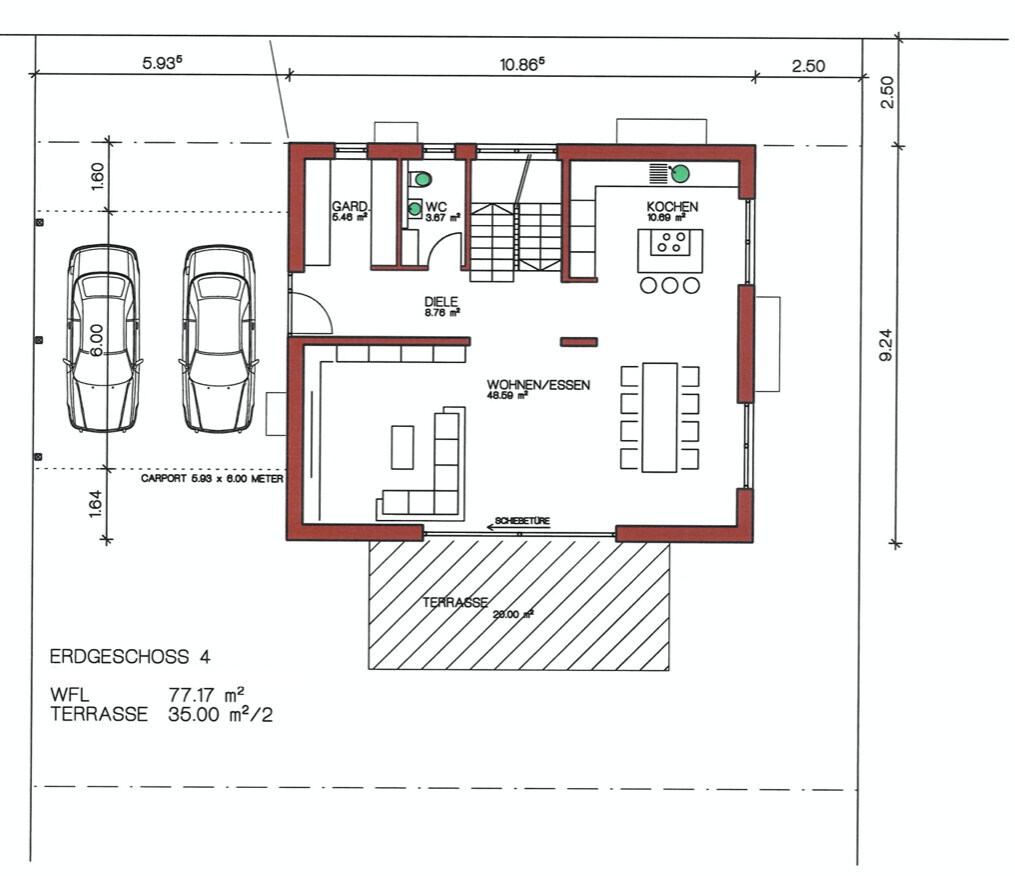
we need some help planning the recessed downlights for our ground floor.
We’re not quite sure how many are necessary and how they should be arranged to achieve "proper" lighting conditions—not too bright, not too dark. The entire ground floor is to be fitted with recessed downlights, no pendant lights or similar fixtures, so no additional lamps.
We can only install the Halox housings into the ceiling; we have to purchase the bulbs and other components ourselves. So far, we don’t have any suggestions on this. Any tips would be much appreciated.

You need fewer than you think – you’ll hardly ever turn them on in the living room in the evening because it feels too uncomfortable. It’s better to have plenty of power outlets in every corner, and some of them connected to a light switch. That will be the lighting you use when sitting in the living room in the evening, not the spotlights.
Do you really want spotlights over the dining table? That usually gives more of the feel of a train station restaurant. I would reconsider that.
In the entrance area: a central row of spotlights and two in the wardrobe. You might also consider a lit mirror (also controllable by a regular light switch); this creates nicer lighting.
You really only use the spotlights when you want the room fully illuminated, even with a dimmer. We also have spotlights (not recessed, but low-voltage spots that are very flat on the ceiling) and we use them hardly at all, even though the light itself is quite nice. Looking back, we could have done without a few of the spots. In future, I would be very sparing with them.
Do you really want spotlights over the dining table? That usually gives more of the feel of a train station restaurant. I would reconsider that.
In the entrance area: a central row of spotlights and two in the wardrobe. You might also consider a lit mirror (also controllable by a regular light switch); this creates nicer lighting.
You really only use the spotlights when you want the room fully illuminated, even with a dimmer. We also have spotlights (not recessed, but low-voltage spots that are very flat on the ceiling) and we use them hardly at all, even though the light itself is quite nice. Looking back, we could have done without a few of the spots. In future, I would be very sparing with them.

Climbee schrieb:
Do you really want recessed lights above the dining table? That tends to give more of a cafeteria vibe. I would reconsider. My wife also wanted that during the planning phase, arguing that it would allow more flexibility in positioning the table, and when hosting a birthday party, there would be nothing obstructing the space.
But I managed to convince her, and now we have a pendant light instead. It feels more harmonious and cozy. (My opinion)
We also have recessed lights in the living room, but only around the edges. In the hallway, centered; in the kitchen and bathroom, a few more for brightness. All are dimmable.
Whether the lighting ends up perfect, too bright, or too dim, I’ll see once the lights are on.
But I still have some flexibility thanks to the GU10 socket.
J
Johanneslisa20 Mar 2020 19:35cyberfabi schrieb:
Do recessed panels really offer so much more aesthetic value compared to the ultra-thin standard LED panels? For recessed panels, you need expensive HaloX junction boxes in the ceiling (at least 60 € per piece) plus the LED panels themselves, which also protrude by a few millimeters. The surface-mounted options are only up to 20 mm (0.8 inches) thick with almost the same appearance, but overall much more affordable. Or am I missing another advantage of the recessed version? No idea. We just like the look better; that was the most important thing for us.
We can’t find any lights we like otherwise, so for us this is the best solution.
A
Alessandro24 Mar 2020 09:08Less is more, as Climbee already mentioned. Nobody needs full illumination.

Hello,
as Climbee already mentioned, I wouldn’t just install recessed lights everywhere.
I did my own lighting planning and spent quite a bit of time on it.
You shouldn’t underestimate the electrical planning and its associated costs.
In our home, the recessed lights are installed in the hallways, bathroom, and kitchen.
However, these are divided into several lighting groups.
Some rough key points for lighting planning:
-Furniture layout needs to be finalized exactly before starting electrical planning.
In my opinion, this is the essential basis for electrical planning.
Just marking on site during the shell construction phase is not sufficient.
-Divide lighting into several groups.
General lighting, task lighting, and decorative lighting.
Interior
-For general lighting, note that the fixture doesn’t necessarily have to hang in the center of the room, but rather depending on the furniture arrangement. For example, if there are tall cabinets on one wall, the room’s center shifts. So don’t measure the center from wall to wall, but from the cabinet to the opposite wall.
-In the living room, instead of placing one fixture in the center of the room, consider placing it above the coffee table.
-In the dining room, pendant lights over the dining table should hang about 60-70cm (24-28 inches) above the table. Choose a beam angle to avoid glare.
-In the office and children’s rooms, plan for additional diffuse, glare-free task lighting. A glossy desk surface with a light directly above is not a good idea.
-Additional lighting by the beds (also in children’s rooms).
-When positioning fixtures, consider curtains. They take up about 20cm (8 inches) of space. Measure from the curtain edge, not from the wall.
-Stair lighting can be wall-mounted recessed lights, wall sconces, or LED strips under the stairs.
-In the garage, it’s better to distribute lighting sources in the aisles between cars rather than directly above the cars.
Don’t forget:
-Mirror lighting from the front (like theater mirror lighting), otherwise you get unattractive shadows on your face.
-Niche lighting (decorative)
-Picture lighting
-Lighting for shower shelves
-Christmas lighting
-Kitchen island lighting
Exterior
-Driveway lighting
-House lighting with motion detectors
-Patio lighting (including lighting integrated into the patio floor, for example)
-Garden shed lighting
Other
-Pay attention to the beam angle of the fixtures.
-Different color temperatures for different rooms (e.g., living room with warm evening light of 2700-3000 Kelvin (2700-3000 K), office and mirror lighting with cooler temperatures).
-CRI value of the light sources, which indicates the quality (accuracy) of color rendering. The higher, the better.
-Depending on the purpose, some rooms/areas should be brighter and others not. There are guidelines and tables for this.
I don’t want 400 lux in the bedroom, but I do want it on the kitchen work surface.
In the end, you do the lighting planning for yourselves.
You have to feel comfortable.
If you think you need recessed lights everywhere, then so be it.
The most important thing is that you like it!
Best regards, AMNE3IA
as Climbee already mentioned, I wouldn’t just install recessed lights everywhere.
I did my own lighting planning and spent quite a bit of time on it.
You shouldn’t underestimate the electrical planning and its associated costs.
In our home, the recessed lights are installed in the hallways, bathroom, and kitchen.
However, these are divided into several lighting groups.
Some rough key points for lighting planning:
-Furniture layout needs to be finalized exactly before starting electrical planning.
In my opinion, this is the essential basis for electrical planning.
Just marking on site during the shell construction phase is not sufficient.
-Divide lighting into several groups.
General lighting, task lighting, and decorative lighting.
Interior
-For general lighting, note that the fixture doesn’t necessarily have to hang in the center of the room, but rather depending on the furniture arrangement. For example, if there are tall cabinets on one wall, the room’s center shifts. So don’t measure the center from wall to wall, but from the cabinet to the opposite wall.
-In the living room, instead of placing one fixture in the center of the room, consider placing it above the coffee table.
-In the dining room, pendant lights over the dining table should hang about 60-70cm (24-28 inches) above the table. Choose a beam angle to avoid glare.
-In the office and children’s rooms, plan for additional diffuse, glare-free task lighting. A glossy desk surface with a light directly above is not a good idea.
-Additional lighting by the beds (also in children’s rooms).
-When positioning fixtures, consider curtains. They take up about 20cm (8 inches) of space. Measure from the curtain edge, not from the wall.
-Stair lighting can be wall-mounted recessed lights, wall sconces, or LED strips under the stairs.
-In the garage, it’s better to distribute lighting sources in the aisles between cars rather than directly above the cars.
Don’t forget:
-Mirror lighting from the front (like theater mirror lighting), otherwise you get unattractive shadows on your face.
-Niche lighting (decorative)
-Picture lighting
-Lighting for shower shelves
-Christmas lighting
-Kitchen island lighting
Exterior
-Driveway lighting
-House lighting with motion detectors
-Patio lighting (including lighting integrated into the patio floor, for example)
-Garden shed lighting
Other
-Pay attention to the beam angle of the fixtures.
-Different color temperatures for different rooms (e.g., living room with warm evening light of 2700-3000 Kelvin (2700-3000 K), office and mirror lighting with cooler temperatures).
-CRI value of the light sources, which indicates the quality (accuracy) of color rendering. The higher, the better.
-Depending on the purpose, some rooms/areas should be brighter and others not. There are guidelines and tables for this.
I don’t want 400 lux in the bedroom, but I do want it on the kitchen work surface.
In the end, you do the lighting planning for yourselves.
You have to feel comfortable.
If you think you need recessed lights everywhere, then so be it.
The most important thing is that you like it!
Best regards, AMNE3IA
A
Alessandro24 Mar 2020 11:43However, it is often difficult to choose different light temperatures.
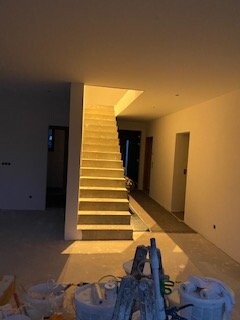
We have a very open layout, and you can see from the living/dining area into the hallway. In the hallway, I have 4000K (neutral white), and in the living/dining area, 3000K (warm white).
You can definitely see the difference, and it takes some getting used to.
Here is the difference:
2700K (warm white)
4000K (neutral white)
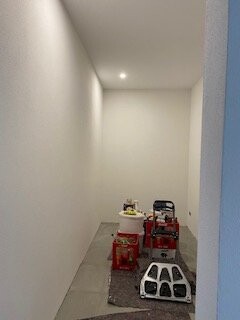
We have a very open layout, and you can see from the living/dining area into the hallway. In the hallway, I have 4000K (neutral white), and in the living/dining area, 3000K (warm white).
You can definitely see the difference, and it takes some getting used to.
Here is the difference:
2700K (warm white)
4000K (neutral white)
Similar topics