
Hello everyone,
I have a few questions regarding sound insulation in a semi-detached house. I have already read a lot about noise issues in semi-detached homes.
The reason I need to deal with this is that after moving, we are now facing similar problems ourselves.
For the past two years, we lived in a semi-detached house (built in 2015) with neighbors who are a family with one child (2 years old). We did not have any noise problems there. Of course, you could hear the child crying loudly sometimes, but it was never really disturbing.
Now we have moved again, into another semi-detached house (built in 2020), and are plagued by many noise issues.
The house is very noisy. We hear a lot from the neighbors; here is what we hear from them:
- Normal conversations are sometimes audible (especially in the evening when everything is quiet, these can be heard very clearly)
- Loud conversations are clearly audible (disturbing even when the radio or TV is on)
- Very loud impact noise from footsteps (clearly audible, especially from the upper floor)
- Bed creaking noises
- Closing of doors (I can hear exactly which room the neighbors enter and where the door is being closed)
- Water sounds
- Setting down items on the floor or furniture
At first, we suspected the neighbors were very loud, but they have now even taken precautions (closing windows once we go to bed, closing room doors, they even bought a soundproofing panel). Unfortunately, these measures had little effect. Now both the neighbors and we suspect the issue lies with the building itself.
Together with the neighbors, we have already tried to locate the source of the noise transmission but without success. What stands out is that impact noise from the upper floor is the most noticeable; the staircase seems to cause fewer issues.
A few key facts about the building:
- New semi-detached house built in 2020, designed in an urban villa style
- Party wall is double-layered with a separating gap (on the outside you can see something in the gap)
- We suspect the roof beams run continuously through both units
- The entire house is tiled throughout
I also tried measuring decibel levels with an app but without much success. After talking to the neighbors, I was even allowed to try recording the noise, but that also did not help. Although the sound levels on the recordings showed peaks and changes, it does not sound like it does in reality.
We have now scheduled an appointment with the landlord for the upcoming weekend.
As preparation for this appointment, I am reaching out to you all to possibly get some tips on what exactly to pay attention to or what questions/points to raise.
Both parties in the house are interested in solving the problem (if it’s even possible) because we cannot live or sleep properly like this, and the other party of course also wants to live normally and not have me contacting them about noise every day.
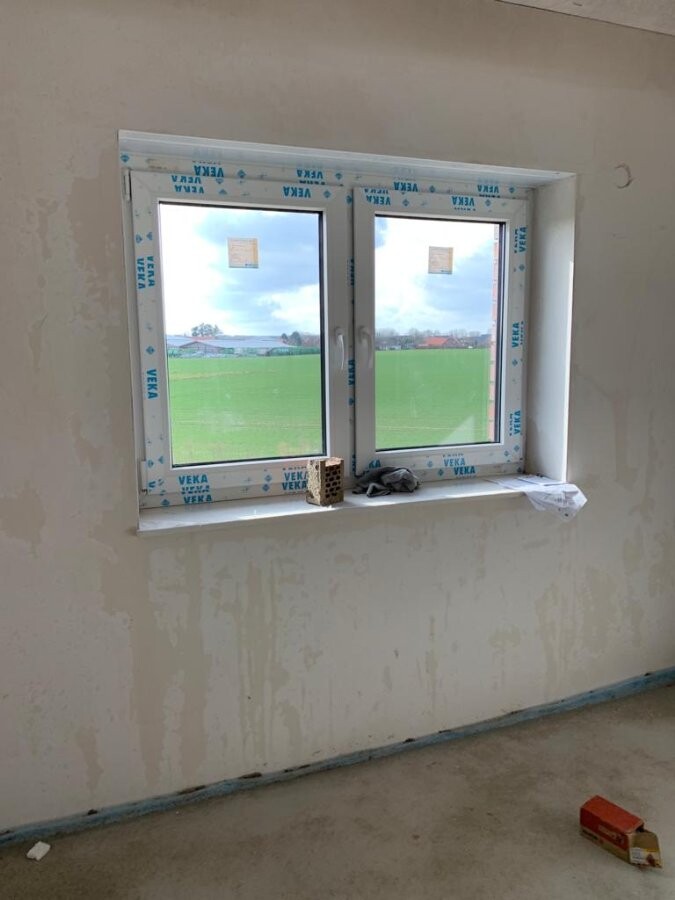
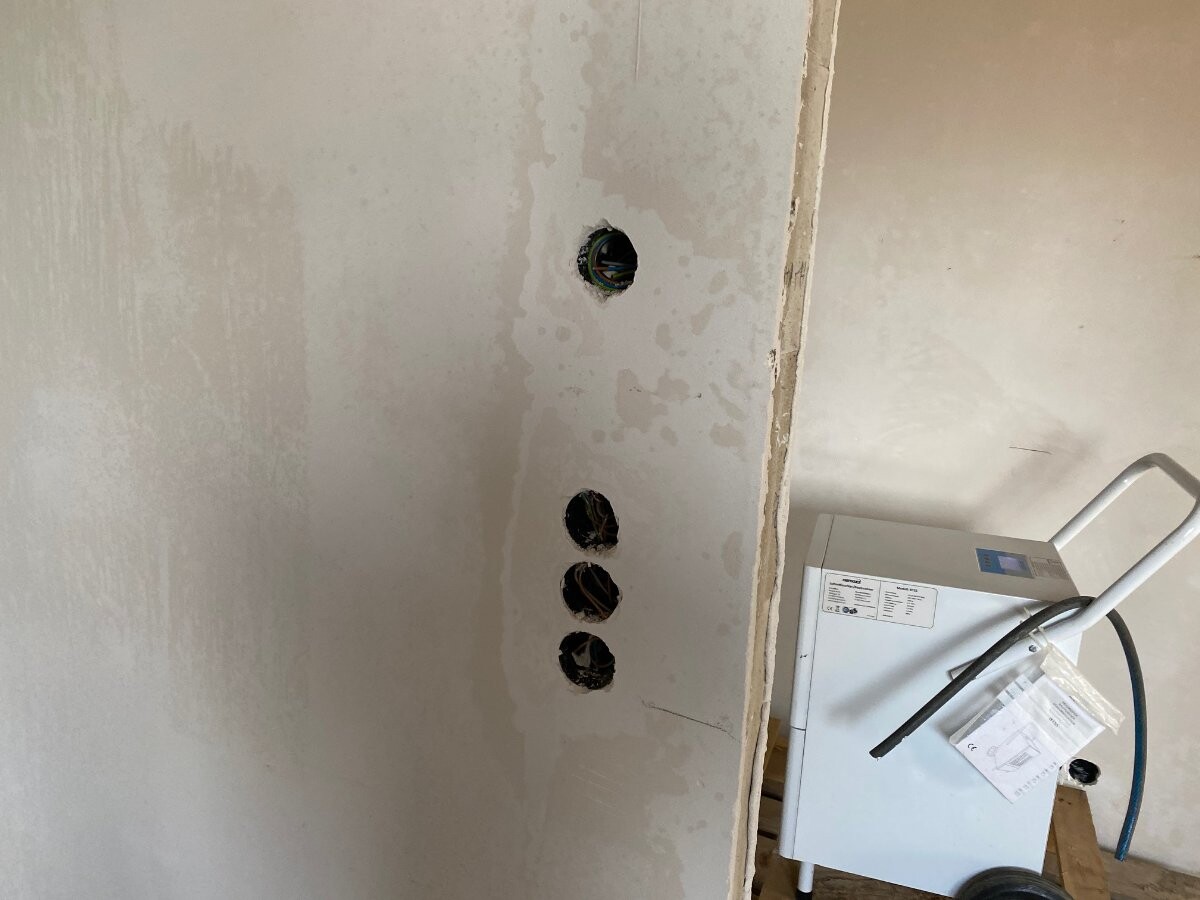
I am attaching a few pictures I have available.
Thank you in advance for your answers.
Regards,
Dennis
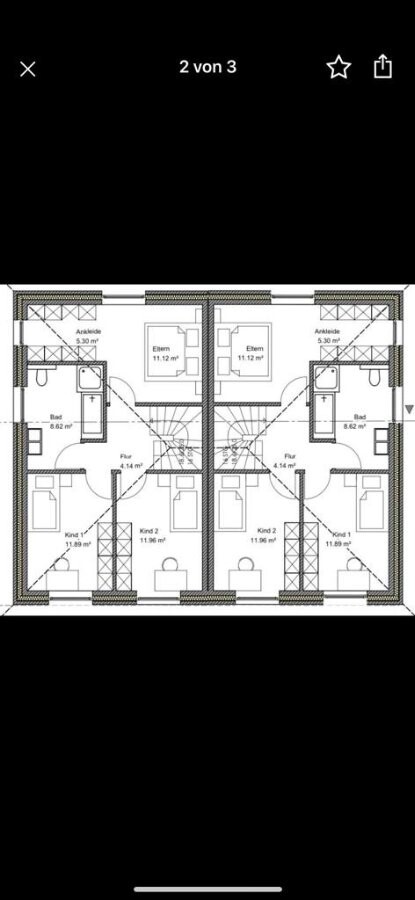
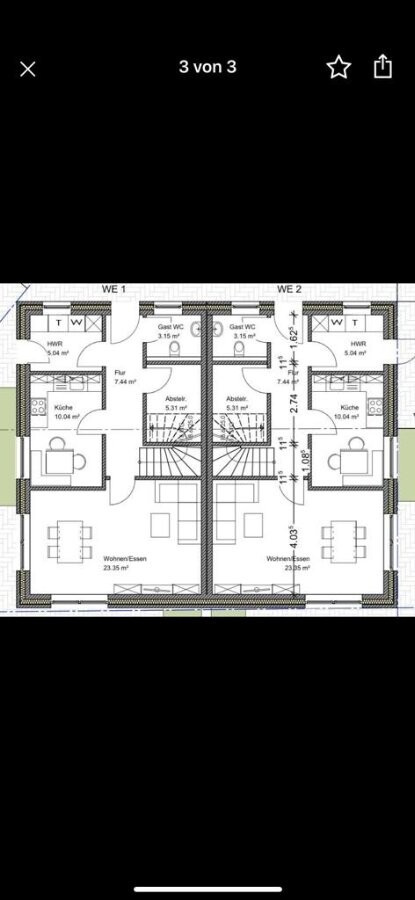
I have a few questions regarding sound insulation in a semi-detached house. I have already read a lot about noise issues in semi-detached homes.
The reason I need to deal with this is that after moving, we are now facing similar problems ourselves.
For the past two years, we lived in a semi-detached house (built in 2015) with neighbors who are a family with one child (2 years old). We did not have any noise problems there. Of course, you could hear the child crying loudly sometimes, but it was never really disturbing.
Now we have moved again, into another semi-detached house (built in 2020), and are plagued by many noise issues.
The house is very noisy. We hear a lot from the neighbors; here is what we hear from them:
- Normal conversations are sometimes audible (especially in the evening when everything is quiet, these can be heard very clearly)
- Loud conversations are clearly audible (disturbing even when the radio or TV is on)
- Very loud impact noise from footsteps (clearly audible, especially from the upper floor)
- Bed creaking noises
- Closing of doors (I can hear exactly which room the neighbors enter and where the door is being closed)
- Water sounds
- Setting down items on the floor or furniture
At first, we suspected the neighbors were very loud, but they have now even taken precautions (closing windows once we go to bed, closing room doors, they even bought a soundproofing panel). Unfortunately, these measures had little effect. Now both the neighbors and we suspect the issue lies with the building itself.
Together with the neighbors, we have already tried to locate the source of the noise transmission but without success. What stands out is that impact noise from the upper floor is the most noticeable; the staircase seems to cause fewer issues.
A few key facts about the building:
- New semi-detached house built in 2020, designed in an urban villa style
- Party wall is double-layered with a separating gap (on the outside you can see something in the gap)
- We suspect the roof beams run continuously through both units
- The entire house is tiled throughout
I also tried measuring decibel levels with an app but without much success. After talking to the neighbors, I was even allowed to try recording the noise, but that also did not help. Although the sound levels on the recordings showed peaks and changes, it does not sound like it does in reality.
We have now scheduled an appointment with the landlord for the upcoming weekend.
As preparation for this appointment, I am reaching out to you all to possibly get some tips on what exactly to pay attention to or what questions/points to raise.
Both parties in the house are interested in solving the problem (if it’s even possible) because we cannot live or sleep properly like this, and the other party of course also wants to live normally and not have me contacting them about noise every day.
I am attaching a few pictures I have available.
Thank you in advance for your answers.
Regards,
Dennis
A
Alessandro6 Jul 2020 11:13Sure, that’s why I wrote that it only "looks like" that. For me as a layperson...
P
Pinkiponk6 Jul 2020 11:20Denex07 schrieb:
We have now scheduled an appointment with the landlord for the upcoming weekend.I’m relieved for you that you are "only" tenants. I also think your only option is to move out.
I would also assume that only an expert can determine whether the sound insulation meets the ARdT standards. For example, as far as I know, the separating joint in semi-detached houses is usually constructed with mineral wool installed between the two halves of the common wall, which prevents acoustic bridging (due to mortar residues). However, without special measures, it is probably impossible to completely avoid hearing some noise from the neighbor.

I could well imagine that this is not a semi-detached house made of two halves, but rather a two-family house designed in a semi-detached style on one plot. Most likely, there would be a continuous concrete slab and a continuous roof structure, with the joint in the double-layered party wall having practically no function.
In principle, even the smallest sound bridge is effective, and for example, pipes are often underestimated. But even tiny mortar blobs "work wonders." The joint between the party walls should simply contain NOTHING (between the party walls themselves) or an elastic sealant at the facade edges of this joint. Based on the drawing, I suspect that this joint is limited to the facing layer, and the external thermal insulation composite system (ETICS, also known as EIFS) behind it is continuous – which would also be an excellent conductor. A foil between the two halves would, in my opinion, not be the culprit. Conversely, if nothing from your half can be heard in the "neighboring unit," it’s possible that the screed floating layer may only be poorly executed in the other half. As an owner, I would consult an expert (who could verify any of my speculations, though not by remote diagnosis), but as a tenant, moving out would seem the simplest solution. However, this would not be your fault, meaning the landlord will have the same problem with every new tenant and therefore an interest in fixing the defects.
https://www.instagram.com/11antgmxde/
https://www.linkedin.com/company/bauen-jetzt/
In principle, even the smallest sound bridge is effective, and for example, pipes are often underestimated. But even tiny mortar blobs "work wonders." The joint between the party walls should simply contain NOTHING (between the party walls themselves) or an elastic sealant at the facade edges of this joint. Based on the drawing, I suspect that this joint is limited to the facing layer, and the external thermal insulation composite system (ETICS, also known as EIFS) behind it is continuous – which would also be an excellent conductor. A foil between the two halves would, in my opinion, not be the culprit. Conversely, if nothing from your half can be heard in the "neighboring unit," it’s possible that the screed floating layer may only be poorly executed in the other half. As an owner, I would consult an expert (who could verify any of my speculations, though not by remote diagnosis), but as a tenant, moving out would seem the simplest solution. However, this would not be your fault, meaning the landlord will have the same problem with every new tenant and therefore an interest in fixing the defects.
https://www.instagram.com/11antgmxde/
https://www.linkedin.com/company/bauen-jetzt/