
ᐅ New construction of a single-family house approximately 1,600 sq ft with a basement garage
Created on: 25 Dec 2020 02:20
C
ChL1234
Hello dear forum community,
I am new to the forum and currently planning the construction of a single-family house with about 150 m² (1,615 sq ft) of living space. Many of my ideas have been incorporated into the design by the general contractor.
I would be very grateful for your comments and suggestions regarding the information below and look forward to your feedback. I would also appreciate your thoughts on whether the budget seems realistic for a rural area in northern Bavaria.
The construction will take place on my parents’ property, so I do not have any costs for land purchase.
Development plan/restrictions
Plot size: approx. 1000 m² (11,000 sq ft)
Slope: gradient of 10.4° / 18.4% in the construction area
Floor area ratio: no development plan
Site coverage ratio: no development plan
Building envelope, building line and boundary: see site plan
Adjacent buildings: none
Number of parking spaces: 2
Number of storeys: 1.5–2
Roof type: gable roof
Style: classic-modern
Orientation: according to slope + parallel to existing buildings
Maximum height restrictions: none
Other specifications: none
Client requirements
Style, roof type, building type: classic single-family house with gable roof
Basement, floors: basement used as garage + ground floor + upper floor with kneewall 1 m (3 ft) and 40° gable roof + 4 m (13 ft) wide shed dormer; additionally, a front balcony (1.5 m / 5 ft deep) and rear terrace (4 m / 13 ft deep)
Number of people, age: currently 2 adults (+ possibly 2 children)
Space requirement on ground floor and upper floor: approx. 70 m² (750 sq ft) each
Office: permanently for home office use
Guest bedrooms per year: max. 10
Open or closed layout: open on ground floor, closed on upper floor
Conservative or modern construction: modern
Open kitchen, kitchen island: open kitchen, but separated from living room
Number of dining seats: 4–6
Fireplace: no
Music/stereo wall: no
Balcony, roof terrace: balcony facing south, terrace facing north
Garage, carport: garage integrated into basement
Utility garden, greenhouse: no
House design
Designer: architect of the general contractor
What do you particularly like? Why?
What don’t you like? Why? Several revisions have already been made, and so far everything matches my ideas
Price estimate according to architect/planner: turnkey including basement and earthworks approx. 430,000€ (no additional work like paving etc.)
Personal price limit for the house, including equipment: max. 500,000€
Preferred heating technology: air heat pump
Why did the design turn out this way? e.g.
Standard design by planner? The design is based on my initial requirements
Which wishes were implemented by the architect? All wishes have been taken into account so far
Now I am curious about your feedback. Also happy to receive comments on the costs. Thank you very much.
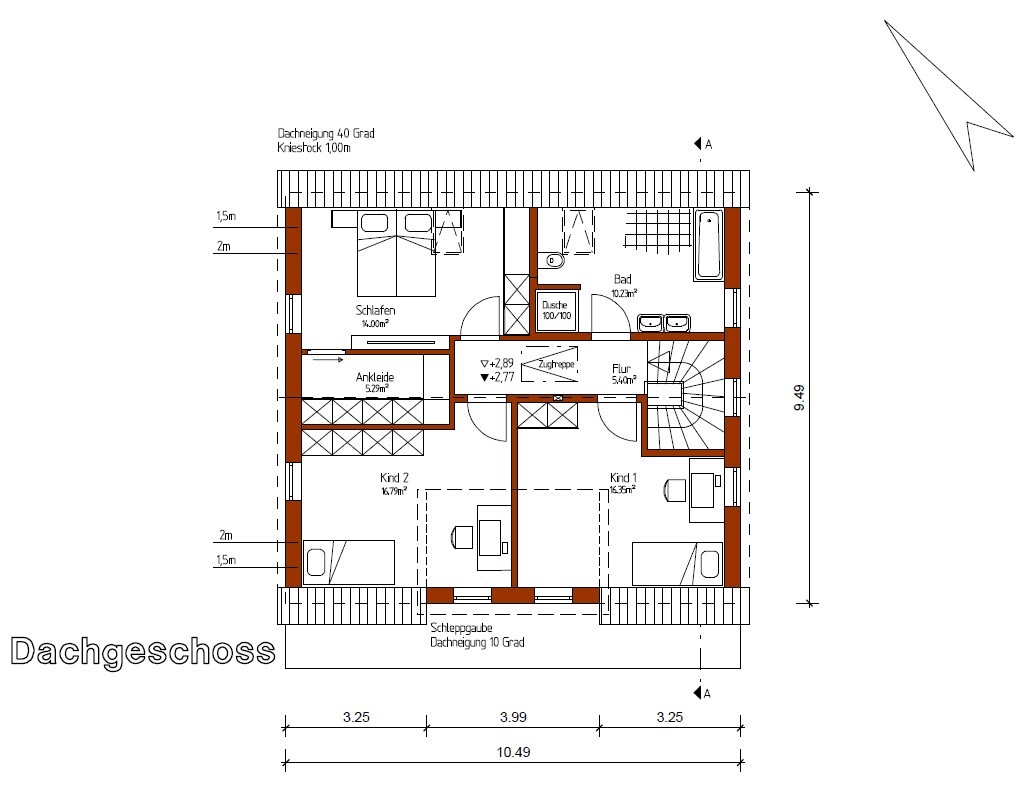
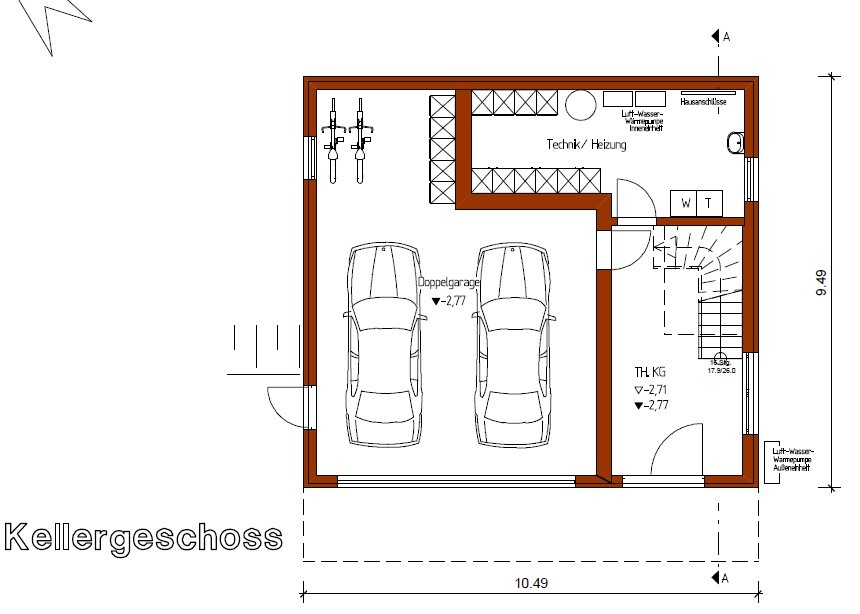
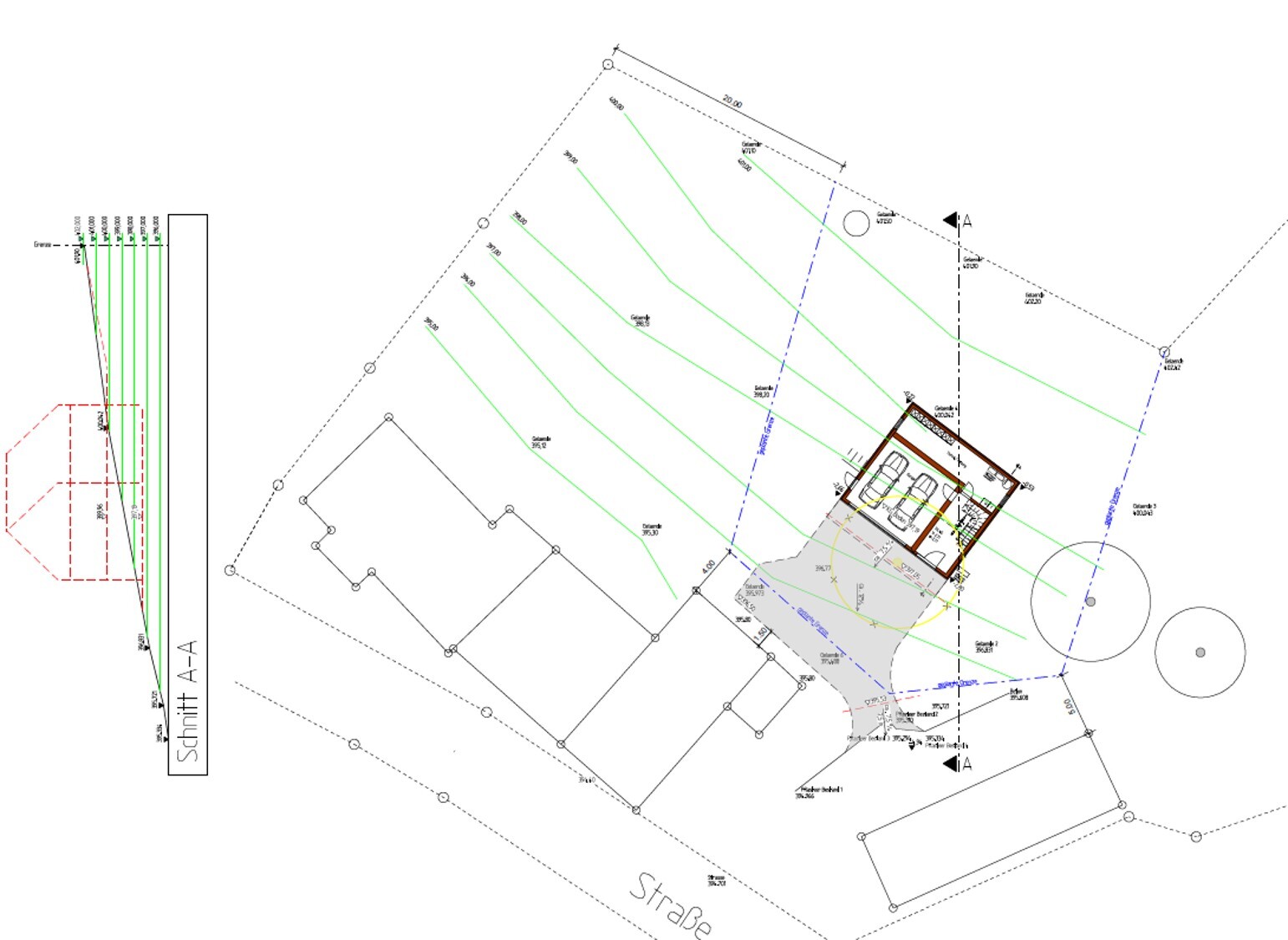
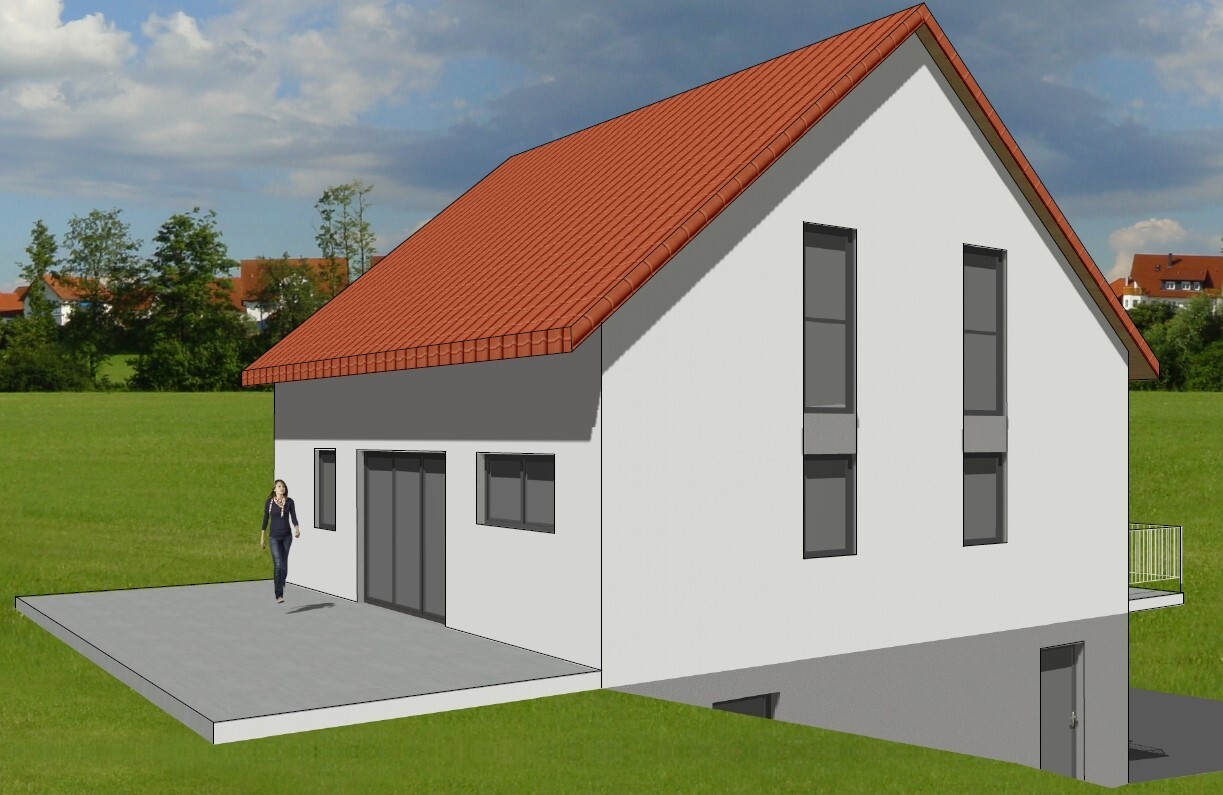

I am new to the forum and currently planning the construction of a single-family house with about 150 m² (1,615 sq ft) of living space. Many of my ideas have been incorporated into the design by the general contractor.
I would be very grateful for your comments and suggestions regarding the information below and look forward to your feedback. I would also appreciate your thoughts on whether the budget seems realistic for a rural area in northern Bavaria.
The construction will take place on my parents’ property, so I do not have any costs for land purchase.
Development plan/restrictions
Plot size: approx. 1000 m² (11,000 sq ft)
Slope: gradient of 10.4° / 18.4% in the construction area
Floor area ratio: no development plan
Site coverage ratio: no development plan
Building envelope, building line and boundary: see site plan
Adjacent buildings: none
Number of parking spaces: 2
Number of storeys: 1.5–2
Roof type: gable roof
Style: classic-modern
Orientation: according to slope + parallel to existing buildings
Maximum height restrictions: none
Other specifications: none
Client requirements
Style, roof type, building type: classic single-family house with gable roof
Basement, floors: basement used as garage + ground floor + upper floor with kneewall 1 m (3 ft) and 40° gable roof + 4 m (13 ft) wide shed dormer; additionally, a front balcony (1.5 m / 5 ft deep) and rear terrace (4 m / 13 ft deep)
Number of people, age: currently 2 adults (+ possibly 2 children)
Space requirement on ground floor and upper floor: approx. 70 m² (750 sq ft) each
Office: permanently for home office use
Guest bedrooms per year: max. 10
Open or closed layout: open on ground floor, closed on upper floor
Conservative or modern construction: modern
Open kitchen, kitchen island: open kitchen, but separated from living room
Number of dining seats: 4–6
Fireplace: no
Music/stereo wall: no
Balcony, roof terrace: balcony facing south, terrace facing north
Garage, carport: garage integrated into basement
Utility garden, greenhouse: no
House design
Designer: architect of the general contractor
What do you particularly like? Why?
What don’t you like? Why? Several revisions have already been made, and so far everything matches my ideas
Price estimate according to architect/planner: turnkey including basement and earthworks approx. 430,000€ (no additional work like paving etc.)
Personal price limit for the house, including equipment: max. 500,000€
Preferred heating technology: air heat pump
Why did the design turn out this way? e.g.
Standard design by planner? The design is based on my initial requirements
Which wishes were implemented by the architect? All wishes have been taken into account so far
Now I am curious about your feedback. Also happy to receive comments on the costs. Thank you very much.

hampshire schrieb:
The slope is overcome rather than used.*framing* !!!https://www.instagram.com/11antgmxde/
https://www.linkedin.com/company/bauen-jetzt/
ChL1234 schrieb:
The design is based on my initial specifications The original poster @ChL1234 is shocked, lost for words, and no longer participates here.
The issue, I believe, is that a layperson invests a lot of thought into a construction project but only has limited options.
If they had consulted an architect from the more hilly region from the start, the design would have better reflected the shape of the plot.
Unfortunately, the general contractor was merely used as a draftsman to add a basement to an existing single-family home so that it would appear level.
ChL1234 schrieb:
Now I am looking forward to your feedback. We are looking forward to yours too!
ypg schrieb:
Unfortunately, the general contractor was only used as a draftsman who added a basement to an existing single-family house just to make it level.Objection! – as I already suggested with the words11ant schrieb:
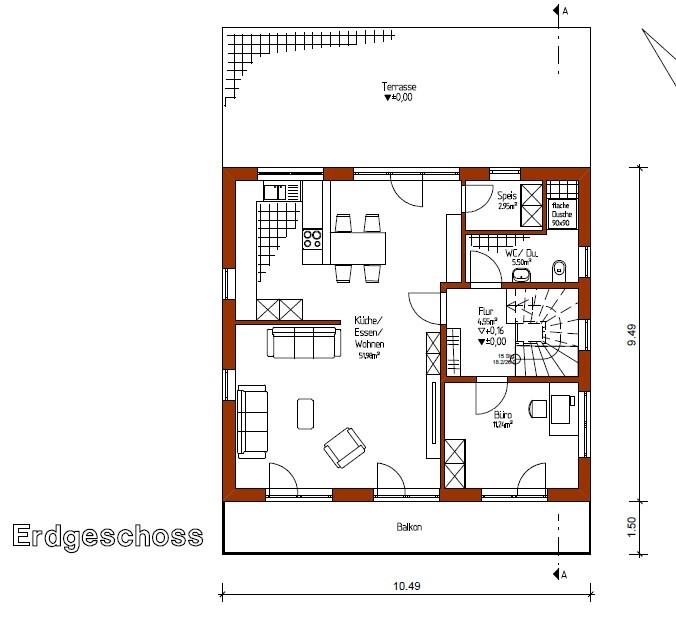
I have seen clearly lazier slope-adapted standard designs.I do not see it that way (as a cookie-cutter design with a basement propped underneath including a garage door). But unfortunately, it was planned against an unfavorable slope instead of embracing the gift of the topography. On the ground floor, I don’t see a run-of-the-mill design with the entrance simply moved to the basement level, which is often the case with houses on ignored sloping sites. What seems flawed to me in this design is rather the delusion of the lazy Columbus egg, trying to connect the two side elevations through an open-plan room serving as a passage, just because it is apparently seen as the logical consequence of having two opposite “prime” sides (namely a half substitute south-facing side in the northeast and a half substitute south-facing side in the southwest) that “must” be connected. This property demands— and this is by no means a bitter pill to swallow— a free-thinking architect. The critical point here is not the absence of a slab-on-grade foundation, but the (everyday-conditioned) limited perspective of the draftsman.https://www.instagram.com/11antgmxde/
https://www.linkedin.com/company/bauen-jetzt/
Thank you very much for your honest and constructive feedback.
To be honest, I was quite shocked at first, as I believed I was presenting a very suitable and reasonable stage of the design.
Regarding the building design, I actually thought it fit well into the hillside location. Especially the perspective views immediately appealed to me. The terrace was deliberately placed at the back, as this is the only side not visible from outside. To still benefit from the sun during the winter months, a balcony was added at the front accordingly.
I also really liked the ground floor, especially the open living/dining area with kitchen, which I still find very harmonious with its connection between the two eaves sides and in line with my ideas. I don’t fully understand the mentioned minimal size of the kitchen and dining area or where it might feel too tight. Maybe you could provide some specific suggestions here.
On the upper floor, I am still a bit bothered by the layout of the bathroom, especially the shower that is hidden behind the door, which is probably not ideal. Otherwise, I am quite satisfied here as well. The dressing area (more like a walk-in closet) seems sufficiently sized to me and shouldn’t be unnecessarily enlarged at the expense of another room.
Now the question for me is how to proceed. I am torn between continuing with the general contractor and the current design (of course costs have already been incurred) or hiring an independent architect who might be able to get much more out of the project—something I don’t yet see clearly, as I am still very focused on the current design, which is largely based on my ideas.
How much would you estimate the additional costs and time required for architectural planning for this building project?
Should I just let the architect start from scratch or should I present them with the existing ideas and designs first?
To be honest, I was quite shocked at first, as I believed I was presenting a very suitable and reasonable stage of the design.
Regarding the building design, I actually thought it fit well into the hillside location. Especially the perspective views immediately appealed to me. The terrace was deliberately placed at the back, as this is the only side not visible from outside. To still benefit from the sun during the winter months, a balcony was added at the front accordingly.
I also really liked the ground floor, especially the open living/dining area with kitchen, which I still find very harmonious with its connection between the two eaves sides and in line with my ideas. I don’t fully understand the mentioned minimal size of the kitchen and dining area or where it might feel too tight. Maybe you could provide some specific suggestions here.
On the upper floor, I am still a bit bothered by the layout of the bathroom, especially the shower that is hidden behind the door, which is probably not ideal. Otherwise, I am quite satisfied here as well. The dressing area (more like a walk-in closet) seems sufficiently sized to me and shouldn’t be unnecessarily enlarged at the expense of another room.
Now the question for me is how to proceed. I am torn between continuing with the general contractor and the current design (of course costs have already been incurred) or hiring an independent architect who might be able to get much more out of the project—something I don’t yet see clearly, as I am still very focused on the current design, which is largely based on my ideas.
How much would you estimate the additional costs and time required for architectural planning for this building project?
Should I just let the architect start from scratch or should I present them with the existing ideas and designs first?
H
hampshire27 Dec 2020 18:09Everything is fine because the house itself offers quite good livability inside. Now, if you work with the architect from the builder to consider the site—how you want to use it, which views you want from the house, how to make the most of privacy and light in the garden (there’s room for more than just one terrace)—you can either conclude that the design suits you as it is or decide to make adjustments, or realize that while the design is good, it may not be the right fit. You now have a number of questions and can continue the dialogue. The planning phase is important, and it’s good to take sufficient time for it.
ChL1234 schrieb:
Maybe some of you have a few more suggestions. At least not from me—critiquing a design based, in my opinion, on flawed assumptions seems illogical. I’m happy to wait for an alternative.
ChL1234 schrieb:
Whether I should continue with the general contractor and the current design (of course some costs have already been incurred) or hire an independent architect, The general contractor may not be bad as such, but clearly isn’t suitable as a planner or coach to bring out the full potential of the site.
ChL1234 schrieb:
who might be able to achieve much more, which I just don’t see right now because I’m so focused on the current design (which is largely based on my own ideas).
How much do you estimate the additional costs and time required for architectural planning for this project?
Should I just let the architect start from scratch or present them with the existing ideas/designs first? If you feed the architect the same input, you’ll limit their creativity and risk that the extra time and money spent won’t pay off.
Basically, your post #16 reads like a confession that my diagnosis hit the mark—but that alone won’t get you any further. Give an independent architect nothing more than a vision of the future residents. They need to interpret the site contours themselves. Be open to unexpected results.
https://www.instagram.com/11antgmxde/
https://www.linkedin.com/company/bauen-jetzt/
Similar topics