
Hello everyone,
Short version: We moved into our newly built house in 2022 and experienced regular sewage odors inside the house just a few months later. Our building partner has not been able to resolve this issue to date. The odors are mainly noticeable during humid weather and when there is slight negative pressure inside the house.
Key facts related to the issue:
- KFW55 energy-efficient house
- Two-family house with two separate controlled mechanical ventilation systems (reco boxx 310)
- Wastewater lifting station (greywater) in the utility room, recently cleaned (no improvement)
- All traps checked, none are dry, and all are regularly used
Detailed history
2022/2023 – Shortly after moving in 2022, we quickly noticed sewage odors throughout the entire house. I personally observed that the roof vent stacks were only about 1 meter (3 feet) away from the fresh air intake of the ventilation system, and suspected this was the cause of the odor issue. The plumber then changed the fresh air intake and exhaust arrangement, with fresh air now coming from the side of the house at 2 meters (6.5 feet) height and exhaust going through the roof. This significantly reduced the odors in the entire house but did not completely eliminate them.
During warm summer weather, the odor was still present, especially in the utility room (basement) and in the guest bathroom (directly above the utility room, where the vertical soil pipes, vents, etc., run through a boxed-in section).
Since we have a room-sealed fireplace with a pressure monitor, I can detect the pressure difference between inside and outside the house. The odors appear mainly when there is negative pressure inside the house. This happens, for example, when I operate a monoblock air conditioner without using the two-duct mode, or when I set the controlled mechanical ventilation system to exhaust-only mode. I often do the latter in the summer evenings, opening only the bedroom windows, so that all the air being drawn out enters the house through the bedroom window. This quickly creates a comfortable temperature when it has been too warm during the day. However, this also increases the odors. We are talking about pressure differences of between 1 - 4 Pascal.
2023/2024 – After the first attempt failed to solve the problem, the ventilation curves of the mechanical ventilation systems were adjusted (exhaust slightly reduced, fresh air increased) to prevent negative pressure. Unfortunately, this attempt also did not produce any results.
2024/2025 – Since the smell persisted, a camera inspection was performed behind the toilets, revealing a “displaced seal” in a wastewater pipe. Tiles were removed, the seal replaced, and tiles reinstalled. This work was done in February 2025, and we were initially optimistic since the technician said, “I immediately smelled a musty odor, that was definitely it.” Unfortunately, that was not the case. The smell of rotten eggs or old sewage water is currently present again in this hot weather.
I have now submitted another formal complaint to our construction company, but I feel stuck and wanted to ask here if anyone has ideas what might be causing this.
Important details: What I noticed early on and informed our plumber about is that when I pour something strongly smelling into the toilet on the upper floor (chlorine cleaner during cleaning), I immediately smell it in the utility room in the basement. I have little experience in plumbing, but this should not be normal, right? To me, this clearly indicates a leak in the wastewater pipe when odors from the upper floor wastewater can be smelled in the basement utility room, and only here and in the ground floor bathroom. Not in the living room or hallway – so no distribution via the mechanical ventilation system.
Other odors from the toilet can also be smelled in the utility room when someone is using the toilet upstairs.
I would really appreciate any input on where to start because I am truly getting desperate. The house regularly smells so bad that we do not want to receive guests.
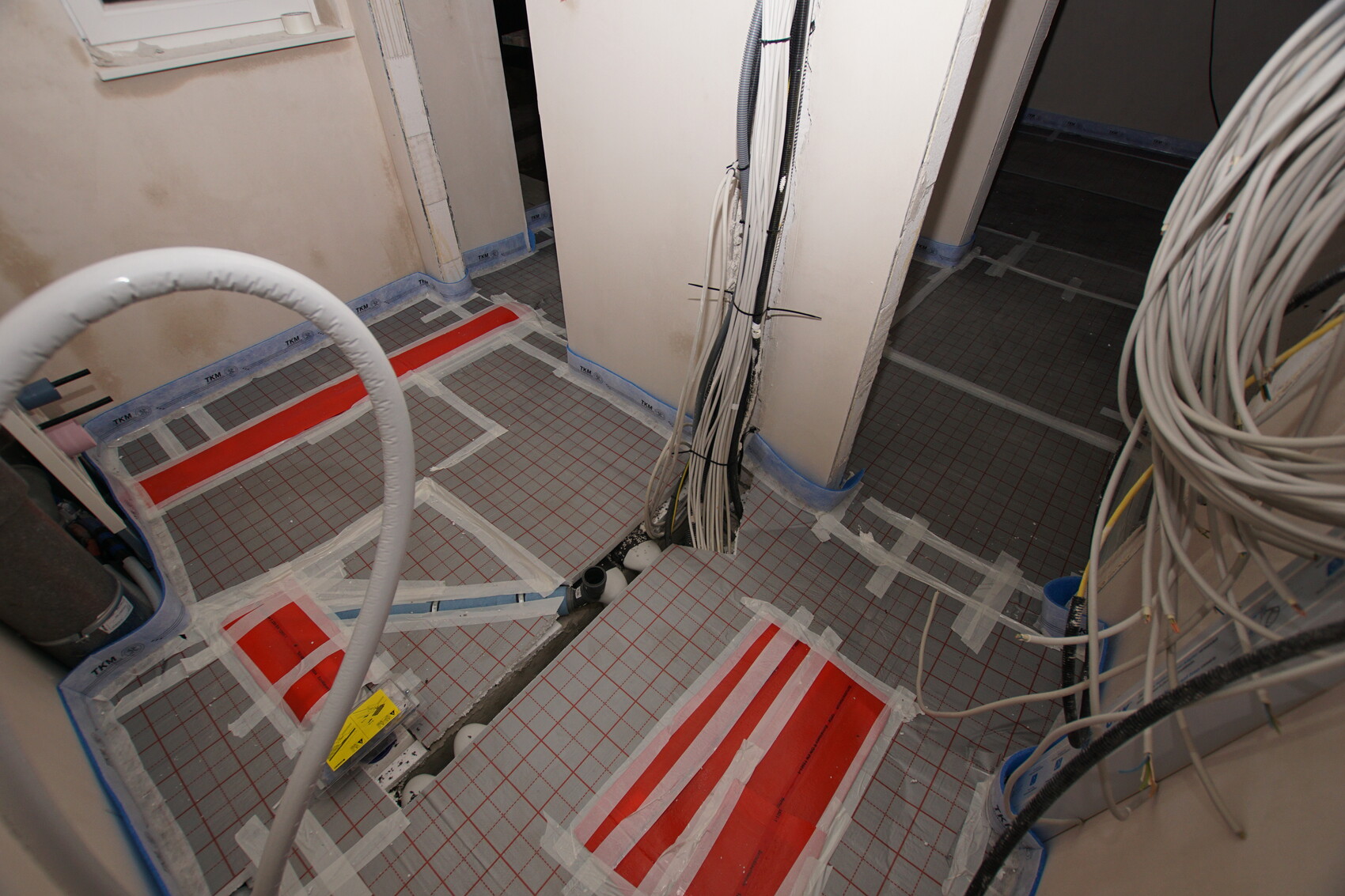
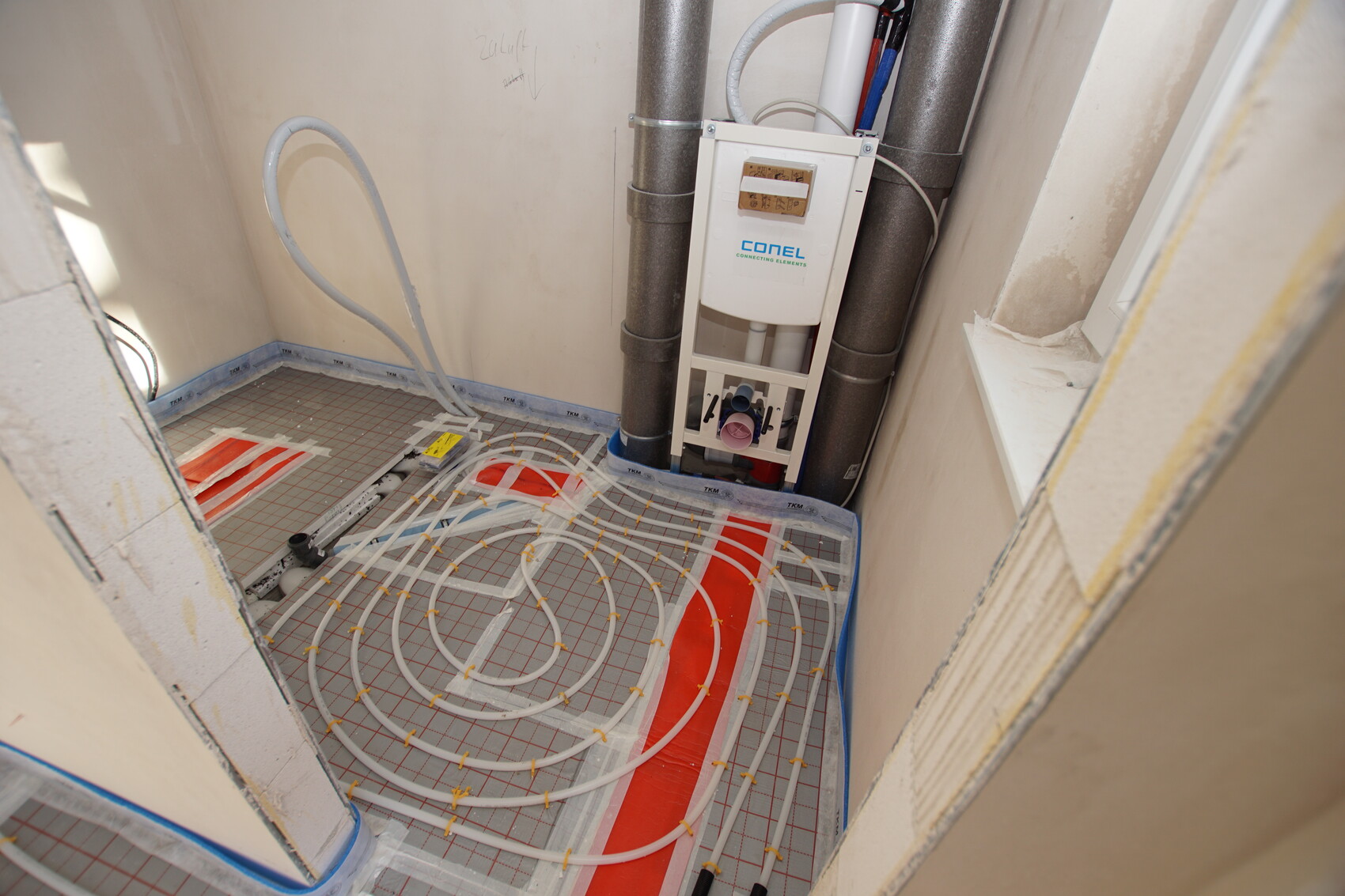
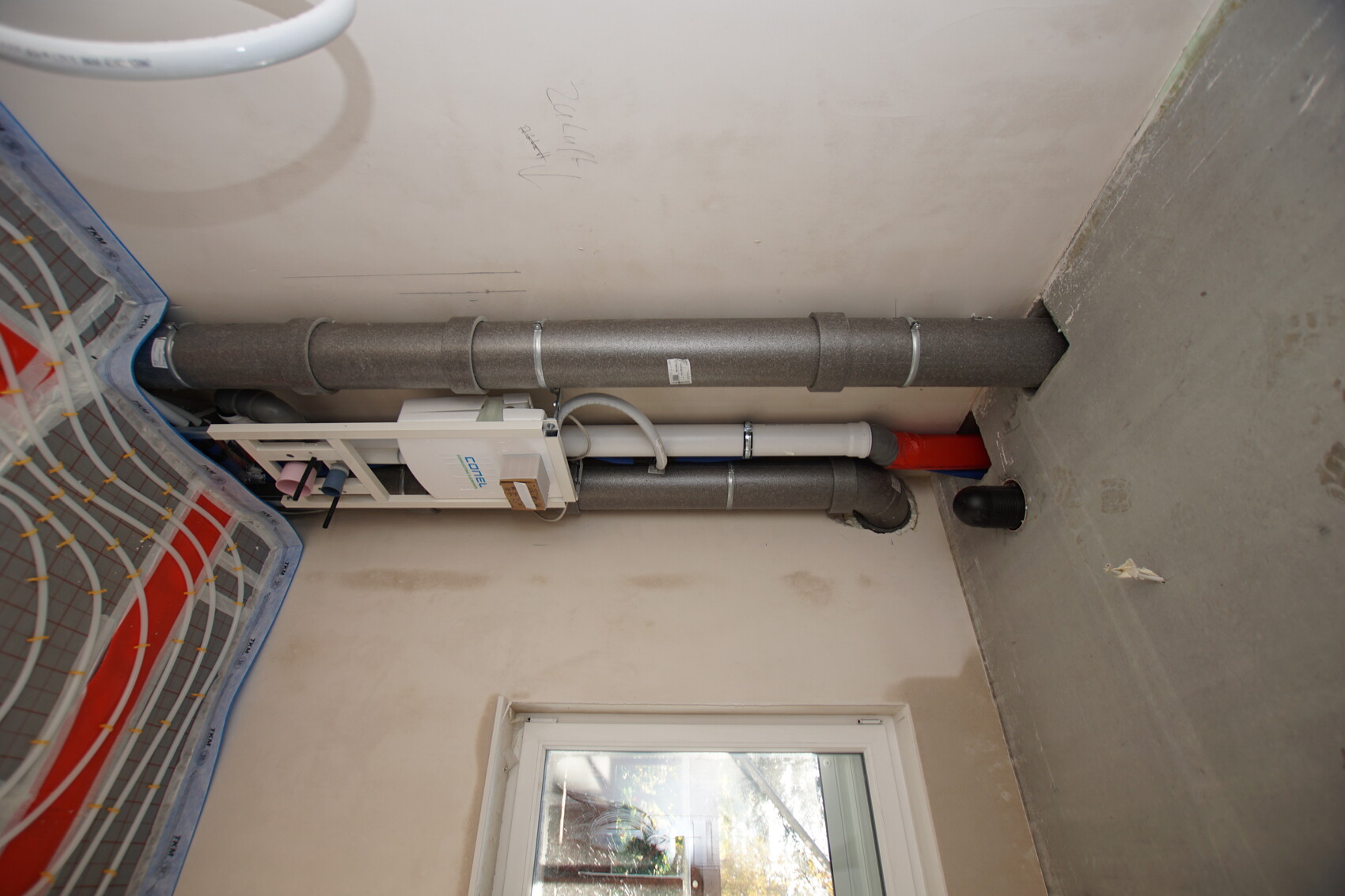
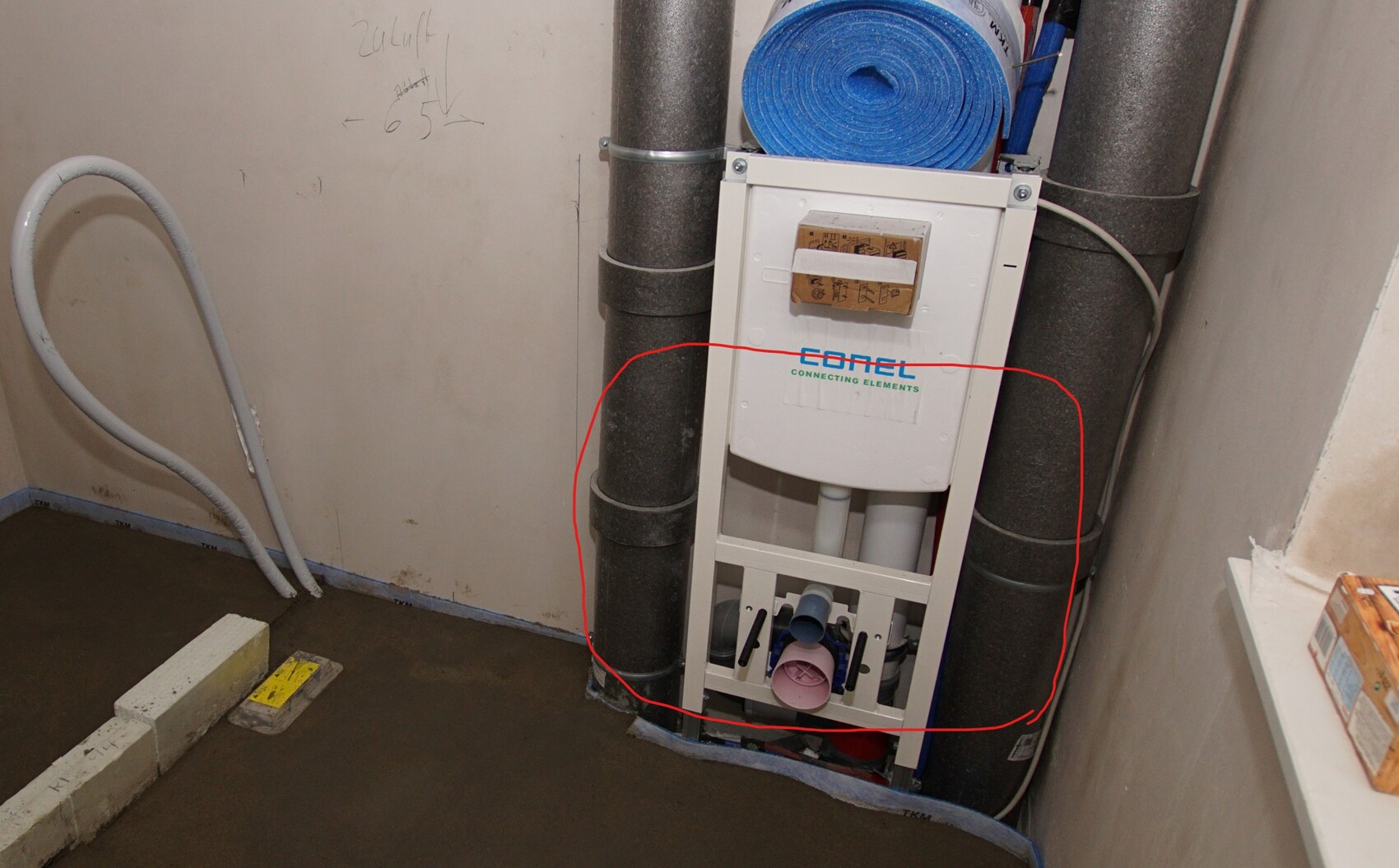
Attached are some pictures of the area that was opened and the faulty seal in a pipe joint that was replaced.
Thank you!
Best regards,
Markus
Short version: We moved into our newly built house in 2022 and experienced regular sewage odors inside the house just a few months later. Our building partner has not been able to resolve this issue to date. The odors are mainly noticeable during humid weather and when there is slight negative pressure inside the house.
Key facts related to the issue:
- KFW55 energy-efficient house
- Two-family house with two separate controlled mechanical ventilation systems (reco boxx 310)
- Wastewater lifting station (greywater) in the utility room, recently cleaned (no improvement)
- All traps checked, none are dry, and all are regularly used
Detailed history
2022/2023 – Shortly after moving in 2022, we quickly noticed sewage odors throughout the entire house. I personally observed that the roof vent stacks were only about 1 meter (3 feet) away from the fresh air intake of the ventilation system, and suspected this was the cause of the odor issue. The plumber then changed the fresh air intake and exhaust arrangement, with fresh air now coming from the side of the house at 2 meters (6.5 feet) height and exhaust going through the roof. This significantly reduced the odors in the entire house but did not completely eliminate them.
During warm summer weather, the odor was still present, especially in the utility room (basement) and in the guest bathroom (directly above the utility room, where the vertical soil pipes, vents, etc., run through a boxed-in section).
Since we have a room-sealed fireplace with a pressure monitor, I can detect the pressure difference between inside and outside the house. The odors appear mainly when there is negative pressure inside the house. This happens, for example, when I operate a monoblock air conditioner without using the two-duct mode, or when I set the controlled mechanical ventilation system to exhaust-only mode. I often do the latter in the summer evenings, opening only the bedroom windows, so that all the air being drawn out enters the house through the bedroom window. This quickly creates a comfortable temperature when it has been too warm during the day. However, this also increases the odors. We are talking about pressure differences of between 1 - 4 Pascal.
2023/2024 – After the first attempt failed to solve the problem, the ventilation curves of the mechanical ventilation systems were adjusted (exhaust slightly reduced, fresh air increased) to prevent negative pressure. Unfortunately, this attempt also did not produce any results.
2024/2025 – Since the smell persisted, a camera inspection was performed behind the toilets, revealing a “displaced seal” in a wastewater pipe. Tiles were removed, the seal replaced, and tiles reinstalled. This work was done in February 2025, and we were initially optimistic since the technician said, “I immediately smelled a musty odor, that was definitely it.” Unfortunately, that was not the case. The smell of rotten eggs or old sewage water is currently present again in this hot weather.
I have now submitted another formal complaint to our construction company, but I feel stuck and wanted to ask here if anyone has ideas what might be causing this.
Important details: What I noticed early on and informed our plumber about is that when I pour something strongly smelling into the toilet on the upper floor (chlorine cleaner during cleaning), I immediately smell it in the utility room in the basement. I have little experience in plumbing, but this should not be normal, right? To me, this clearly indicates a leak in the wastewater pipe when odors from the upper floor wastewater can be smelled in the basement utility room, and only here and in the ground floor bathroom. Not in the living room or hallway – so no distribution via the mechanical ventilation system.
Other odors from the toilet can also be smelled in the utility room when someone is using the toilet upstairs.
I would really appreciate any input on where to start because I am truly getting desperate. The house regularly smells so bad that we do not want to receive guests.
Attached are some pictures of the area that was opened and the faulty seal in a pipe joint that was replaced.
Thank you!
Best regards,
Markus
Hi Markus,
What you describe clearly sounds like a leak or some form of leakage somewhere in the wastewater pipe system.
This can no longer be explained by ventilation errors or the details of mechanical ventilation with heat recovery. There really must be a connection with the indoor air—excluding traps and vents. What exactly was the “displaced seal,” and at which point was it repaired? Drain seals, especially in slip joint connections and in boxed-in sections, are often installed in such a way that minor leaks only become noticeable under negative pressure. A pressure test with smoke or colored test gas by a plumber would indeed be a clear next step, if it hasn’t been done already?!
This at least confirms the connection of the system. Has the complete stack ventilation in the roof area been pressure tested or inspected yet? Especially in modern, airtight houses with mechanical ventilation with heat recovery, any carelessness in the wastewater system will show up sooner or later.
Can you rule out that there are additional inspection openings or poorly sealed maintenance hatches in the boxed-in sections?
Good luck!
What you describe clearly sounds like a leak or some form of leakage somewhere in the wastewater pipe system.
Eliatuer schrieb:
When I pour something with a strong smell into the toilet upstairs (chlorine cleaner during cleaning), I immediately smell it in the utility room in the basement. Unfortunately, I have little experience with plumbing, but that shouldn’t happen, right? To me, this clearly indicates a leak in the wastewater pipe if odors from the upstairs wastewater are noticeable in the basement utility room.
This can no longer be explained by ventilation errors or the details of mechanical ventilation with heat recovery. There really must be a connection with the indoor air—excluding traps and vents. What exactly was the “displaced seal,” and at which point was it repaired? Drain seals, especially in slip joint connections and in boxed-in sections, are often installed in such a way that minor leaks only become noticeable under negative pressure. A pressure test with smoke or colored test gas by a plumber would indeed be a clear next step, if it hasn’t been done already?!
Eliatuer schrieb:
Other odors from the toilet can also be smelled in the utility room (when someone is using the toilet upstairs).
This at least confirms the connection of the system. Has the complete stack ventilation in the roof area been pressure tested or inspected yet? Especially in modern, airtight houses with mechanical ventilation with heat recovery, any carelessness in the wastewater system will show up sooner or later.
Can you rule out that there are additional inspection openings or poorly sealed maintenance hatches in the boxed-in sections?
Good luck!

That sounds familiar.
Was there any branch added to the wastewater system for a sink or floor drain in the utility room that was never connected? It was something similar in our utility room behind a boxed-in section. Maybe also check if any vent valves were installed somewhere and take a closer look there. Those were my first suspicion in our case.
Was there any branch added to the wastewater system for a sink or floor drain in the utility room that was never connected? It was something similar in our utility room behind a boxed-in section. Maybe also check if any vent valves were installed somewhere and take a closer look there. Those were my first suspicion in our case.

I have already discussed similar topics several times over in the Green section and there recommended listening to the story of the Moppermanns in episode 07 of Kittybob’s podcast titled "The Incense Stick Affair."
https://www.instagram.com/11antgmxde/
https://www.linkedin.com/company/bauen-jetzt/
https://www.instagram.com/11antgmxde/
https://www.linkedin.com/company/bauen-jetzt/
The responses from others already indicate that the issue lies somewhere in the system where a simple visual inspection is not sufficient. In my opinion, the question of possible dead-end pipes is actually crucial here.
Even a single open coupling, forgotten or poorly sealed, acts like a constant entry point for odors—especially in combination with ventilation or negative pressure situations, as you often describe with controlled residential ventilation systems.
What I would be interested to know: Have you had anyone come out specifically using a fog machine or smoke test cartridge to check the vent pipes and wastewater lines for leaks? This often resolves all open questions faster than just guessing in the dark.
And when you mention that the musty smell can be traced upward throughout the whole stack, during the last opening, was the seal around the soil stack actually checked for tightness, or did the installer only fix a visible defect?
Musketier schrieb:
Was any branch from the wastewater system installed for a sink or floor drain in the utility room that was never connected? Something similar happened in our technical room behind a boxed-in area.
Even a single open coupling, forgotten or poorly sealed, acts like a constant entry point for odors—especially in combination with ventilation or negative pressure situations, as you often describe with controlled residential ventilation systems.
What I would be interested to know: Have you had anyone come out specifically using a fog machine or smoke test cartridge to check the vent pipes and wastewater lines for leaks? This often resolves all open questions faster than just guessing in the dark.
And when you mention that the musty smell can be traced upward throughout the whole stack, during the last opening, was the seal around the soil stack actually checked for tightness, or did the installer only fix a visible defect?
Thank you for the many helpful answers! I really appreciate that you all took the time to help with my problem.
Displaced seal: What the fitter told us was that the seal at a coupling in the transition to the wastewater stack pipe was leaking because it had “slipped out of place.” Since this was behind the toilet on the ground floor (EG), it can only be the toilet, ground floor washbasin, or ground floor shower. He only did a visual inspection, and only one tile was removed—so not much was really seen, especially since the wall element of the toilet was still in the way. The stack ventilation in the roof was also not checked. However, there is no smell in the upstairs bathroom, and if it came from the roof, I would expect an obvious odor first. Therefore, I believe the issue is somewhere around the level of the ground floor bathroom, possibly between the basement and ground floor.
Fog machine/smoke test: This has not been tried yet, but I will insist on it next. Since everything is still under warranty/guarantee, I will not do anything myself (which would probably be counterproductive legally), but I have the impression that the installation company’s willingness to really identify the problem has been very limited so far.
Washbasin/floor drain installed later: Yes, something was changed afterwards. The position of the shower on the ground floor was changed. After the screed had already been poured, it suddenly became clear that the recess for the pipes needed to be much wider than planned, which would have left the shower only 60cm (24 inches) wide. Since I didn’t want that, half of a storage room was reduced by drywall construction and the shower was moved there. So they did a core drill through the screed afterwards and installed a new drain. I don’t know whether they connected the new drain to the old one. We also have two empty conduits for fresh water running from the basement to the upper floor (preparation for a cistern flush). But those “should” be empty and not connected. Still, that’s a good point, and I will bring it up.
I just listened to the episode “Incense Stick Affair.” Definitely amusing :-) The older couple lives next door, which I know very well—that’s my in-laws, and our halves of the house are connected through the utility room (with a connecting door). The smell only appears in our half. So I can rule out their side.
Displaced seal: What the fitter told us was that the seal at a coupling in the transition to the wastewater stack pipe was leaking because it had “slipped out of place.” Since this was behind the toilet on the ground floor (EG), it can only be the toilet, ground floor washbasin, or ground floor shower. He only did a visual inspection, and only one tile was removed—so not much was really seen, especially since the wall element of the toilet was still in the way. The stack ventilation in the roof was also not checked. However, there is no smell in the upstairs bathroom, and if it came from the roof, I would expect an obvious odor first. Therefore, I believe the issue is somewhere around the level of the ground floor bathroom, possibly between the basement and ground floor.
Fog machine/smoke test: This has not been tried yet, but I will insist on it next. Since everything is still under warranty/guarantee, I will not do anything myself (which would probably be counterproductive legally), but I have the impression that the installation company’s willingness to really identify the problem has been very limited so far.
Washbasin/floor drain installed later: Yes, something was changed afterwards. The position of the shower on the ground floor was changed. After the screed had already been poured, it suddenly became clear that the recess for the pipes needed to be much wider than planned, which would have left the shower only 60cm (24 inches) wide. Since I didn’t want that, half of a storage room was reduced by drywall construction and the shower was moved there. So they did a core drill through the screed afterwards and installed a new drain. I don’t know whether they connected the new drain to the old one. We also have two empty conduits for fresh water running from the basement to the upper floor (preparation for a cistern flush). But those “should” be empty and not connected. Still, that’s a good point, and I will bring it up.
I just listened to the episode “Incense Stick Affair.” Definitely amusing :-) The older couple lives next door, which I know very well—that’s my in-laws, and our halves of the house are connected through the utility room (with a connecting door). The smell only appears in our half. So I can rule out their side.
Similar topics