
ᐅ New Construction Planning – Single-Family Home, 160 sqm without Basement – Floor Plan, Costs, and More
Created on: 29 Sep 2014 17:33
C
ChrisBr
Hello forum members!
We are a family of four (parents and two young children) who have been planning to build a new single-family home for some time now. We are building in NRW, postal code area 34439, which is close to Paderborn.
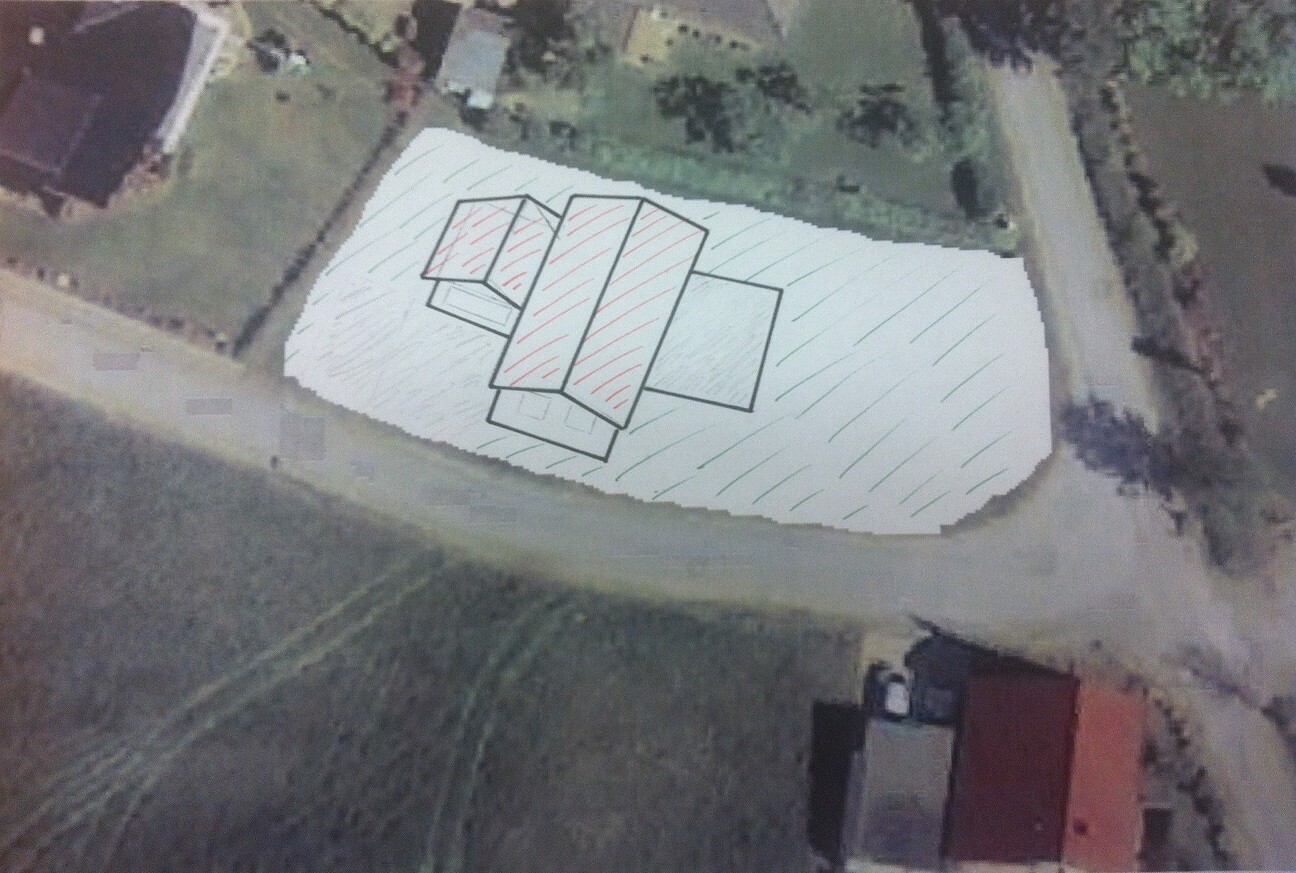
Our reserved plot measures 880 square meters (9,470 square feet) and is flat, not on a slope. We created our own design adapted to the plot and brought it to the architect, who adopted the drawing almost unchanged. Originally, we planned to include a basement level - but after receiving the cost estimate and weighing the pros and cons, we decided to omit the basement and widen the above-ground footprint instead.
The house now has a footprint of 9.11 by 10.31 meters (30 by 34 feet), plus an extension including an entrance area, utility room, and double garage.
It was important for us to have an extra room on the ground floor (intended as a guest bedroom). Since we no longer have a basement, we had to find space for the utility room inside. At the same time, I wanted direct access from the garage to the house, so we added an entrance vestibule.
The total living area including the extensions is now 165 square meters (1,776 square feet) (605 cubic meters [21,368 cubic feet] of enclosed volume in the main house, about 218 cubic meters [7,698 cubic feet] in the extension). Construction will be according to the latest standards using solid construction with 24 cm (9.5 inches) Unipor T14 bricks and 16 cm (6.3 inches) external wall insulation (EPS20, thermal conductivity 0.035 W/mK). The exterior will have plaster with paint; no facing bricks.
We have a clear favorite for the construction work but are gathering competitive bids as well. As a rough estimate, the turnkey house costs about 230,000, while the extension (entrance area, utility room, garage) is around 50,000. Additional costs include finishing works for the kitchen, flooring, stove, interior fittings and attic conversion (35,000), the plot (35,000 – yes, land prices are still reasonable in this rural area), landscaping (10,000), and additional construction-related expenses (5,000). Altogether, the budget stands at about 365,000, which we still plan to optimize with some sweat equity.
This is the first offer; over the next few days, we expect two more quotes from solid construction companies and two from prefabricated house builders. After that, we will continue to evaluate our options.
For the technical equipment: we will install a gas condensing boiler, underfloor heating, and a wood stove in the living room. My architect insists on adding two solar panels for hot water, as at least 5% of the energy demand must come from solar.
That’s it for now... I’m attaching the floor plans and elevations. Feedback and suggestions are very welcome.
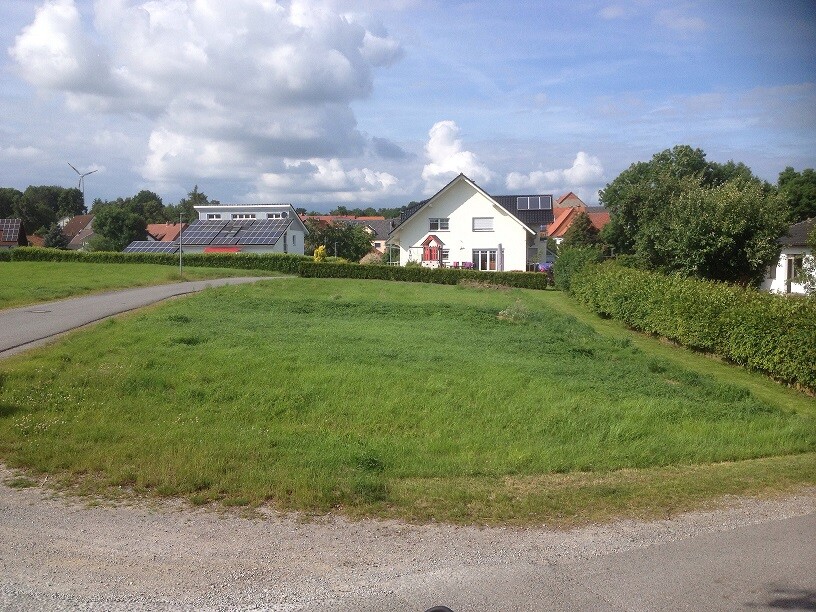
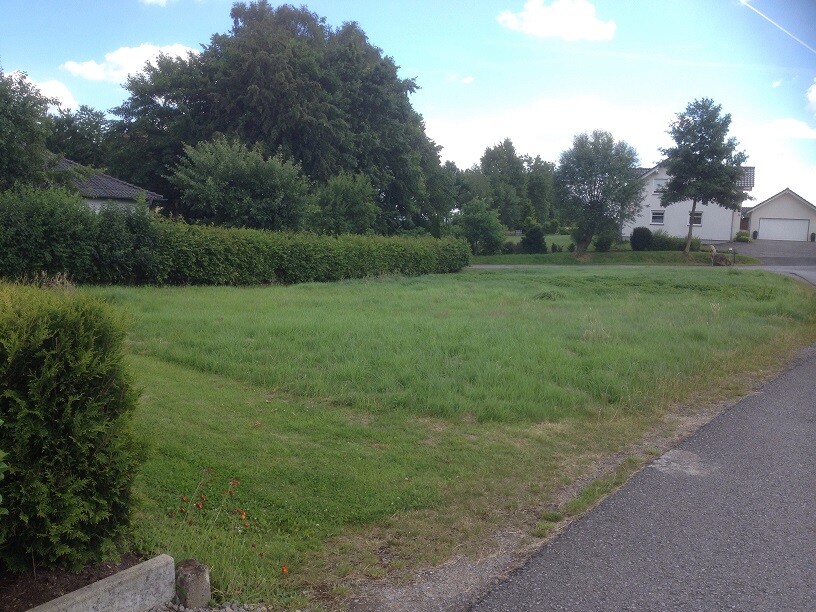
Edit: I have also added photos of the plot afterwards, which I will repost later.
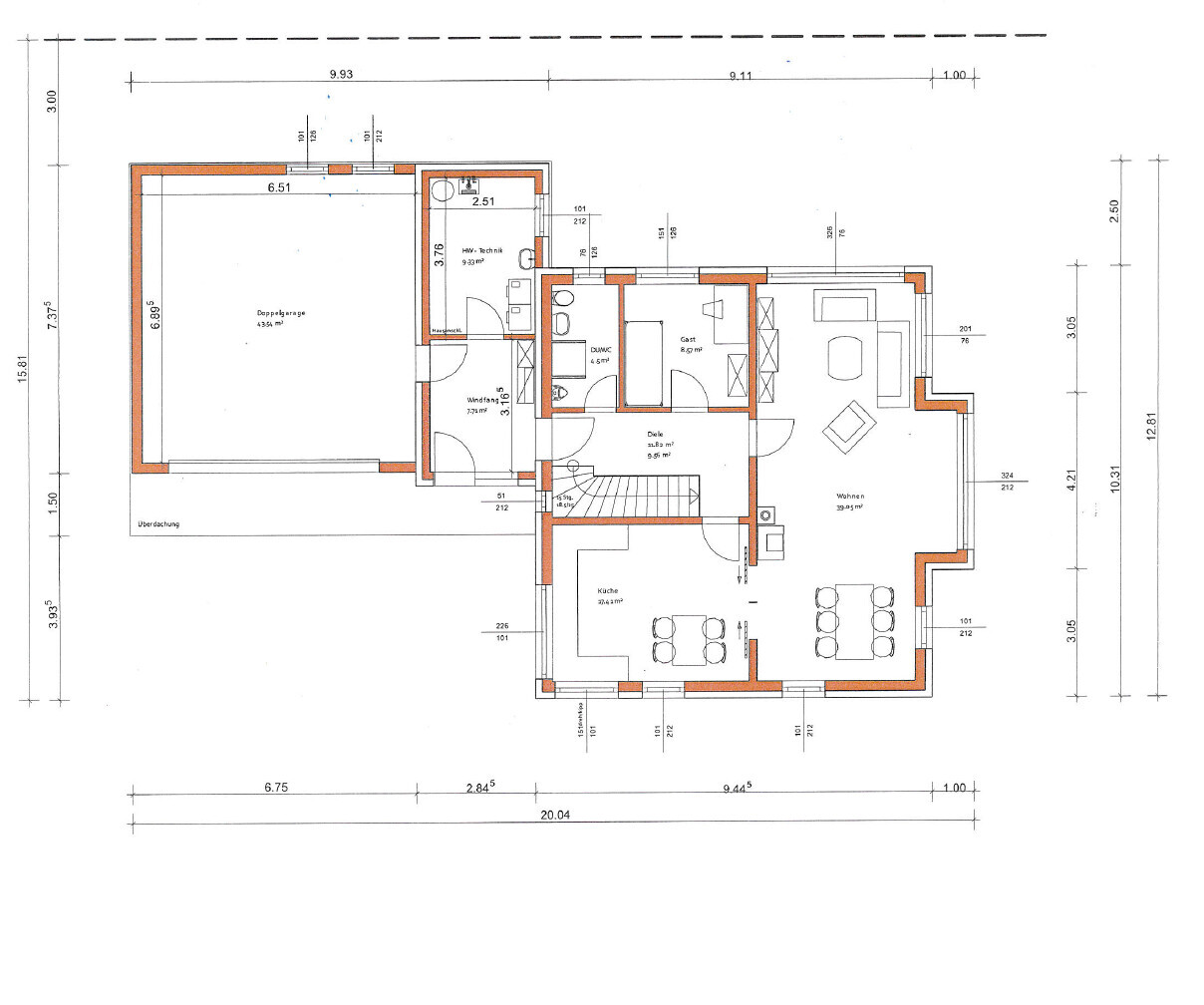
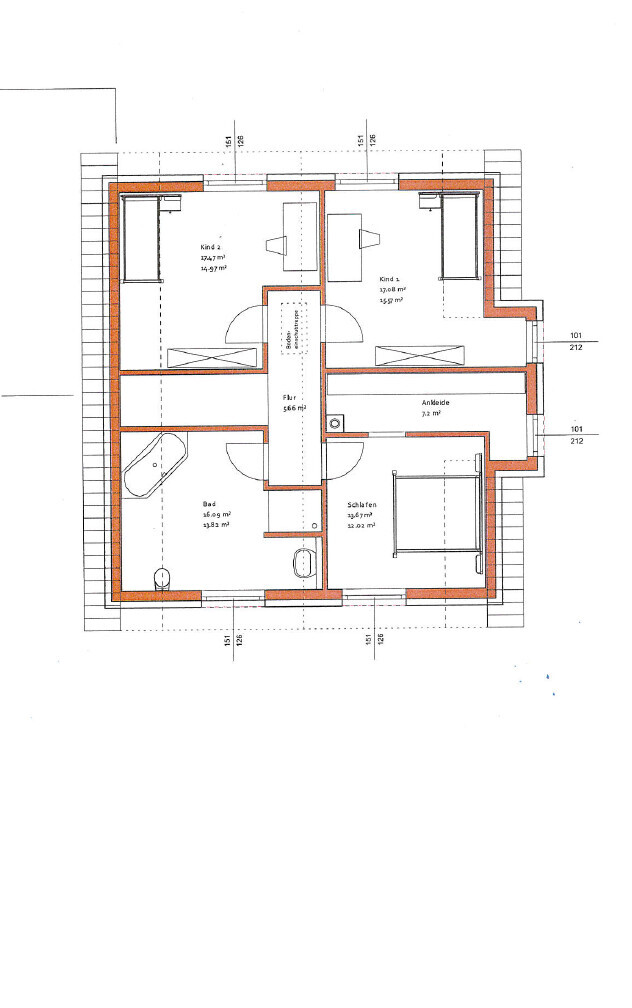
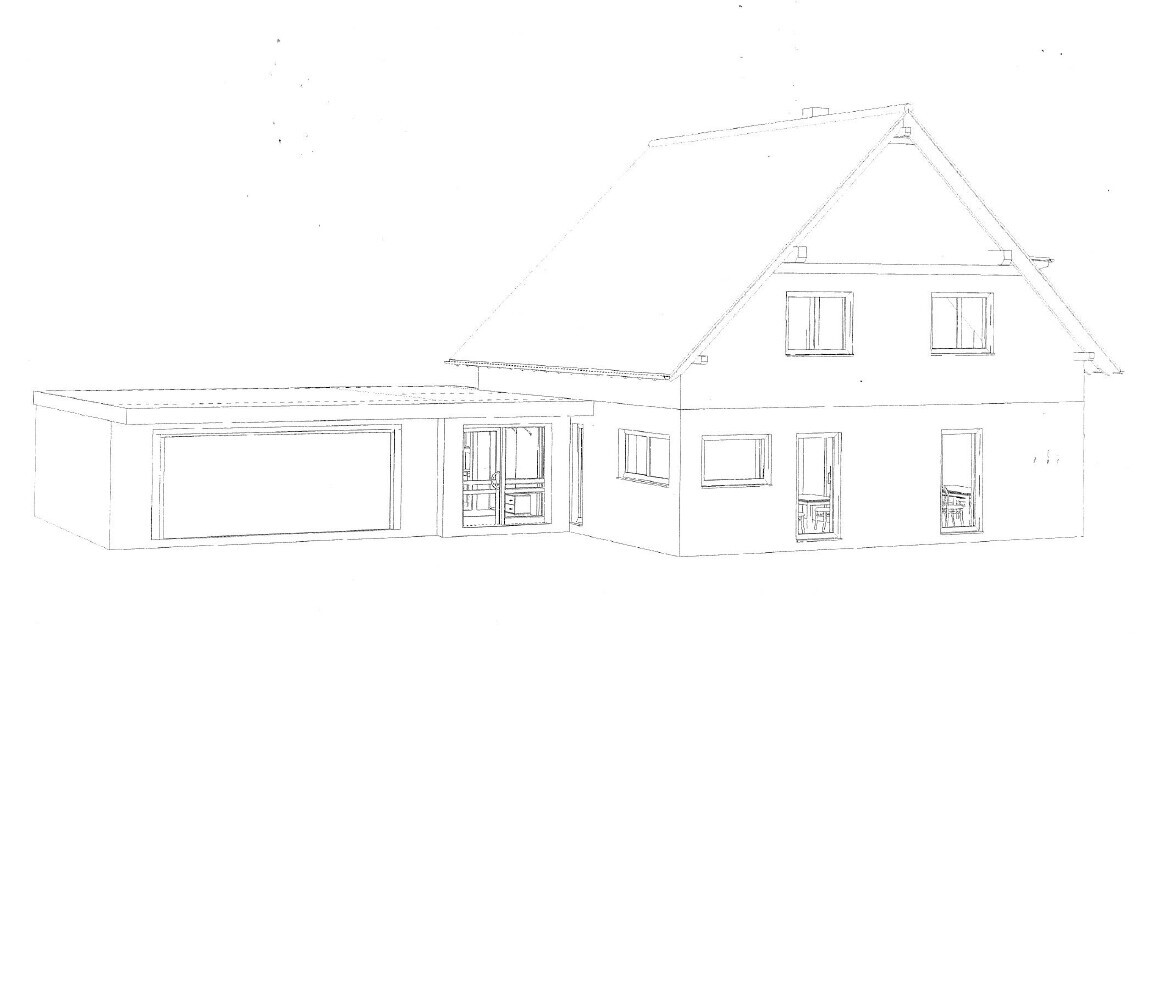
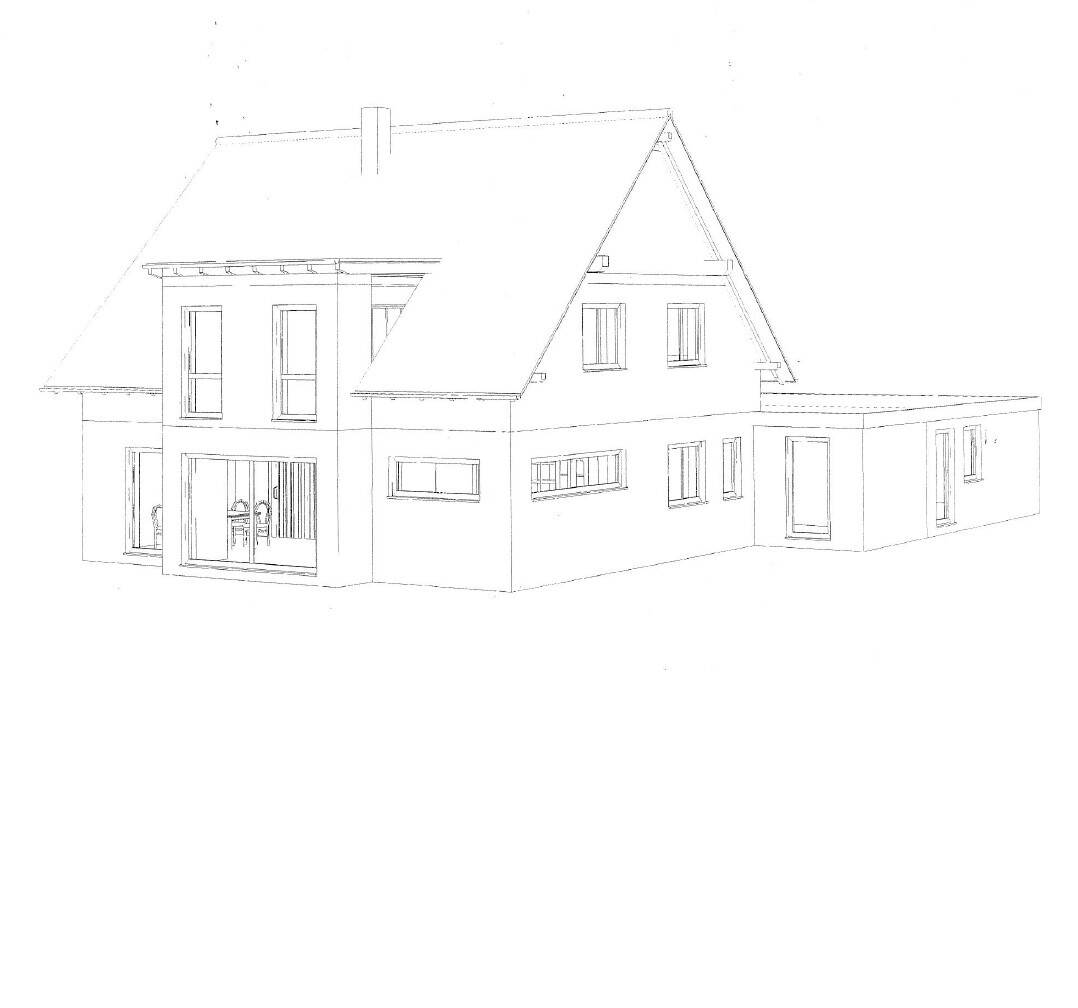

We are a family of four (parents and two young children) who have been planning to build a new single-family home for some time now. We are building in NRW, postal code area 34439, which is close to Paderborn.
Our reserved plot measures 880 square meters (9,470 square feet) and is flat, not on a slope. We created our own design adapted to the plot and brought it to the architect, who adopted the drawing almost unchanged. Originally, we planned to include a basement level - but after receiving the cost estimate and weighing the pros and cons, we decided to omit the basement and widen the above-ground footprint instead.
The house now has a footprint of 9.11 by 10.31 meters (30 by 34 feet), plus an extension including an entrance area, utility room, and double garage.
It was important for us to have an extra room on the ground floor (intended as a guest bedroom). Since we no longer have a basement, we had to find space for the utility room inside. At the same time, I wanted direct access from the garage to the house, so we added an entrance vestibule.
The total living area including the extensions is now 165 square meters (1,776 square feet) (605 cubic meters [21,368 cubic feet] of enclosed volume in the main house, about 218 cubic meters [7,698 cubic feet] in the extension). Construction will be according to the latest standards using solid construction with 24 cm (9.5 inches) Unipor T14 bricks and 16 cm (6.3 inches) external wall insulation (EPS20, thermal conductivity 0.035 W/mK). The exterior will have plaster with paint; no facing bricks.
We have a clear favorite for the construction work but are gathering competitive bids as well. As a rough estimate, the turnkey house costs about 230,000, while the extension (entrance area, utility room, garage) is around 50,000. Additional costs include finishing works for the kitchen, flooring, stove, interior fittings and attic conversion (35,000), the plot (35,000 – yes, land prices are still reasonable in this rural area), landscaping (10,000), and additional construction-related expenses (5,000). Altogether, the budget stands at about 365,000, which we still plan to optimize with some sweat equity.
This is the first offer; over the next few days, we expect two more quotes from solid construction companies and two from prefabricated house builders. After that, we will continue to evaluate our options.
For the technical equipment: we will install a gas condensing boiler, underfloor heating, and a wood stove in the living room. My architect insists on adding two solar panels for hot water, as at least 5% of the energy demand must come from solar.
That’s it for now... I’m attaching the floor plans and elevations. Feedback and suggestions are very welcome.
Edit: I have also added photos of the plot afterwards, which I will repost later.

Oh, a quick note about the costs of the bay window / cross gable: For the large standard cross gable that our prefab house builder offered, the additional cost for the house was about €16,000 (around $17,000). And that was not even as big as yours. Prices are from 2012, prefab house provider. But the extra cost for you won’t be less than €15,000 (about $16,000) either.
We also wanted a cross gable, but in the end, we decided against it due to the costs. With that money, you can make the house a bit longer or wider.
We also wanted a cross gable, but in the end, we decided against it due to the costs. With that money, you can make the house a bit longer or wider.
B
Bauexperte30 Sep 2014 12:39Hello,
Best regards, Bauexperte
ChrisBr schrieb:I totally believe you. From my subjective point of view, it is not exactly a recommendation to adopt a design almost 1:1 that even laypersons (here, the users) can clearly see is not really practical for everyday living. That’s why I made my comment on this topic further above; as you’ve probably noticed, I mostly hold back when it comes to floor plan questions – since those are very individual.
.... and so far, it has only resulted in positive experiences with many acquaintances who have built with the same company.
ChrisBr schrieb:That’s understandable to me as well. However, if the company’s own architect shows little creativity, the extra costs for an external design architect are often well invested. The contract for building the single-family house can still be awarded elsewhere afterwards.
I didn’t want the hassle of first going to an independent architect, then the mason, then the carpenter and roofer, and to each separate trade, to then have to coordinate having everyone just in time on site – and if something goes wrong, dealing again with each individual blaming the others.
ChrisBr schrieb:That’s certainly not a bad idea.
I’m going over my list for the assignments again…
Best regards, Bauexperte
ChrisBr schrieb:
The construction company is a developer. The architect himself is the senior principal and planner, while the junior principal (whom I know personally) is responsible for execution. The company employs the workers for the entire shell construction—the trades are also coordinated by the developer. Everything is under one roof with a single point of contact. That was exactly the appeal for me, and many acquaintances who built with the same company have had only positive experiences so far.
I didn’t want to run around, first going to an independent architect, then to the mason, then the carpenter and roofer, and to every individual trade, trying to coordinate all of them just in time on-site—and if something went wrong, having to deal with each one individually as they blame each other.
...Well, then everything is clear. You are building with a developer and not with an architect. Even if the head is an architect, he will likely not invest much of his productivity in individual planning, but rather in managing the company. He is basically the rubber stamp. Since you want this plot, which is tied to the developer, you are dependent on their planning unless you also hire an independent architect to produce plans that the developer can build. By the way, every general contractor (GC) or construction manager takes care of managing the build (usually without being tied to a specific plot).
Basically, this is not the worst situation if you yourself realize that patchwork solutions are not optimal and then abandon the design to start fresh. However, this is very difficult for a layperson. You are clearly giving the matter serious thought! — but instead of explaining how one mistake or another occurred, you should be able to fix the problem rather than creating new issues on top of the original mistake.
ypg schrieb:
Since you want this plot, and it's tied to the developer, you are dependent on them for the planning unless you also consult an independent architect and have them create a design that the developer can build.
By the way: every general contractor / main contractor takes care of the construction management (usually without being tied to a specific plot).
Hi,
the plot is not tied to the developer. It will be purchased from the city. We alone decide who carries out the construction.
The ironic thing is that my design was based on a model from the architect because, from our perspective, it fits the plot well.
Earlier it was mentioned, "A standard cookie-cutter house was forced onto the plot" – there's some truth to that! – although I have added some extensions myself.
At the moment, nothing is set in stone yet. The first design falls short; the second (third, fourth) has to follow. Meanwhile, I've already started sketching new designs again and had to hold myself back... in the end, the floor plan resembled the first draft too closely, and the “problems” remained the same:
Situation 1: Since I want the kitchen placed looking towards the street and garage entrance, and the living room facing the garden to the south, there is no other place for the other rooms (guest, office/utility room, laundry room). Consequently, these have to be located on the eastern side of the floor plan... and suddenly I end up with the dreaded dark hallway (which becomes even darker since we are planning a staircase with stringers underneath and open risers).
Situation 2: With a 10m x 10m (or at least 10m x 12m) footprint, it’s naturally impossible to fit all the rooms on the ground floor without at least one becoming so small it’s basically a “closet.” So, the extension came into the picture... somewhere the coat closet has to go, after all...
Well, I should probably pass these thoughts on to someone who really knows the subject. Problem acknowledged!
 Masipulami30 Sep 2014 13:24
ChrisBr schrieb:
The plot of land is not tied to the developer. It is being purchased from the city. We alone decide who carries out the construction. In this case, you don’t have a developer but a general contractor. A developer always offers the land and house as a package.
Masipulami schrieb:
In this case, you do not have a developer but a general contractor. A developer always offers land and house together as a package.ok. noted
Similar topics