
ᐅ New Construction Planning – Single-Family Home, 160 sqm without Basement – Floor Plan, Costs, and More
Created on: 29 Sep 2014 17:33
C
ChrisBr
Hello forum members!
We are a family of four (parents and two young children) who have been planning to build a new single-family home for some time now. We are building in NRW, postal code area 34439, which is close to Paderborn.
Our reserved plot measures 880 square meters (9,470 square feet) and is flat, not on a slope. We created our own design adapted to the plot and brought it to the architect, who adopted the drawing almost unchanged. Originally, we planned to include a basement level - but after receiving the cost estimate and weighing the pros and cons, we decided to omit the basement and widen the above-ground footprint instead.
The house now has a footprint of 9.11 by 10.31 meters (30 by 34 feet), plus an extension including an entrance area, utility room, and double garage.
It was important for us to have an extra room on the ground floor (intended as a guest bedroom). Since we no longer have a basement, we had to find space for the utility room inside. At the same time, I wanted direct access from the garage to the house, so we added an entrance vestibule.
The total living area including the extensions is now 165 square meters (1,776 square feet) (605 cubic meters [21,368 cubic feet] of enclosed volume in the main house, about 218 cubic meters [7,698 cubic feet] in the extension). Construction will be according to the latest standards using solid construction with 24 cm (9.5 inches) Unipor T14 bricks and 16 cm (6.3 inches) external wall insulation (EPS20, thermal conductivity 0.035 W/mK). The exterior will have plaster with paint; no facing bricks.
We have a clear favorite for the construction work but are gathering competitive bids as well. As a rough estimate, the turnkey house costs about 230,000, while the extension (entrance area, utility room, garage) is around 50,000. Additional costs include finishing works for the kitchen, flooring, stove, interior fittings and attic conversion (35,000), the plot (35,000 – yes, land prices are still reasonable in this rural area), landscaping (10,000), and additional construction-related expenses (5,000). Altogether, the budget stands at about 365,000, which we still plan to optimize with some sweat equity.
This is the first offer; over the next few days, we expect two more quotes from solid construction companies and two from prefabricated house builders. After that, we will continue to evaluate our options.
For the technical equipment: we will install a gas condensing boiler, underfloor heating, and a wood stove in the living room. My architect insists on adding two solar panels for hot water, as at least 5% of the energy demand must come from solar.
That’s it for now... I’m attaching the floor plans and elevations. Feedback and suggestions are very welcome.
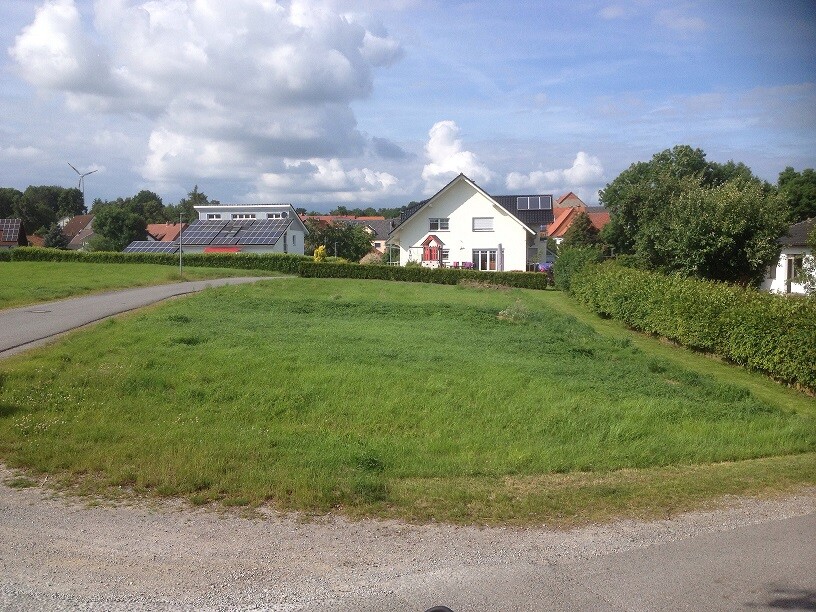
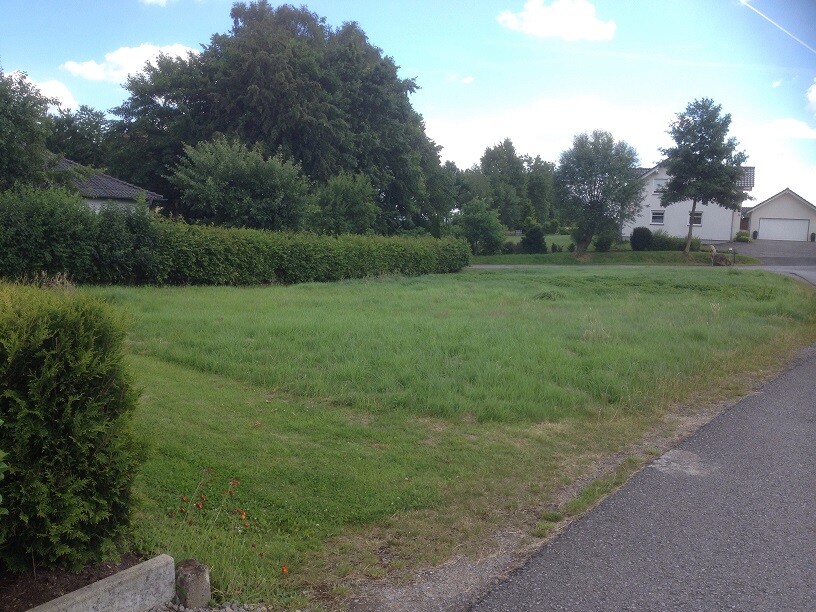
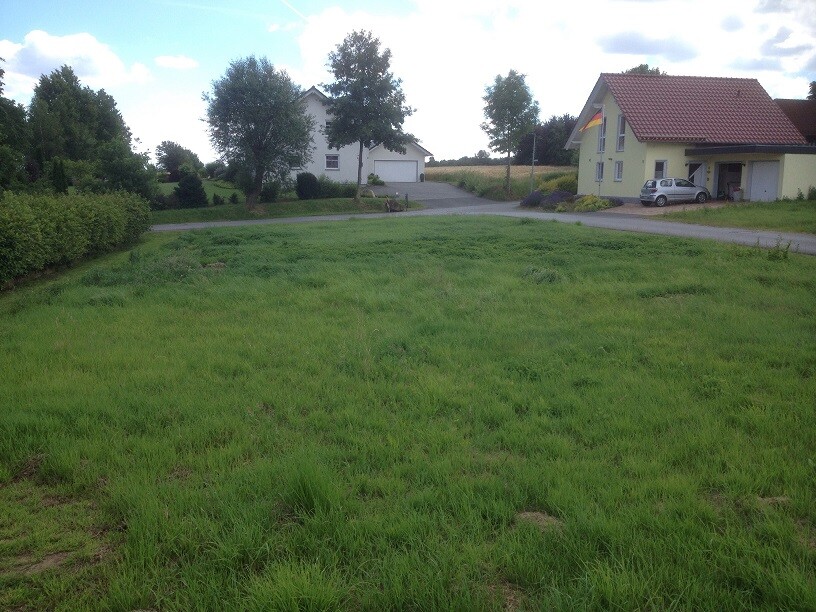
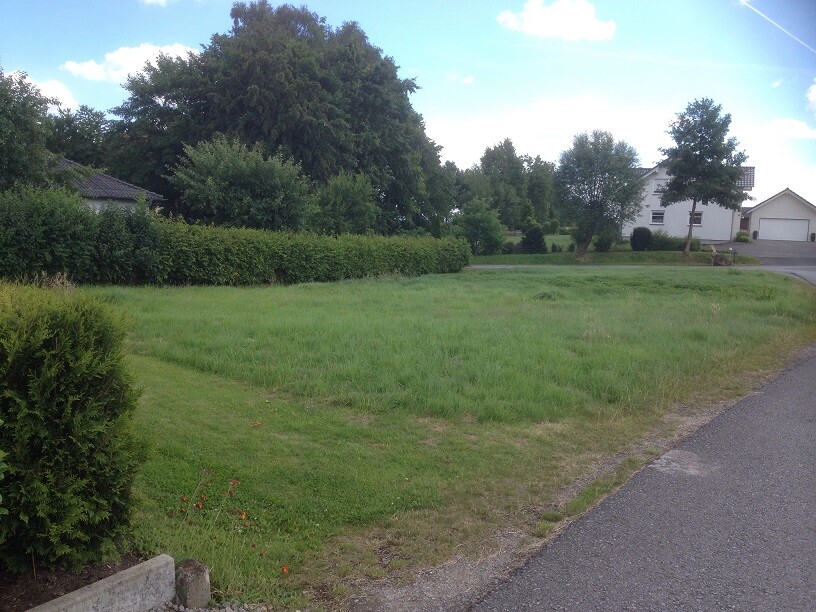
Edit: I have also added photos of the plot afterwards, which I will repost later.
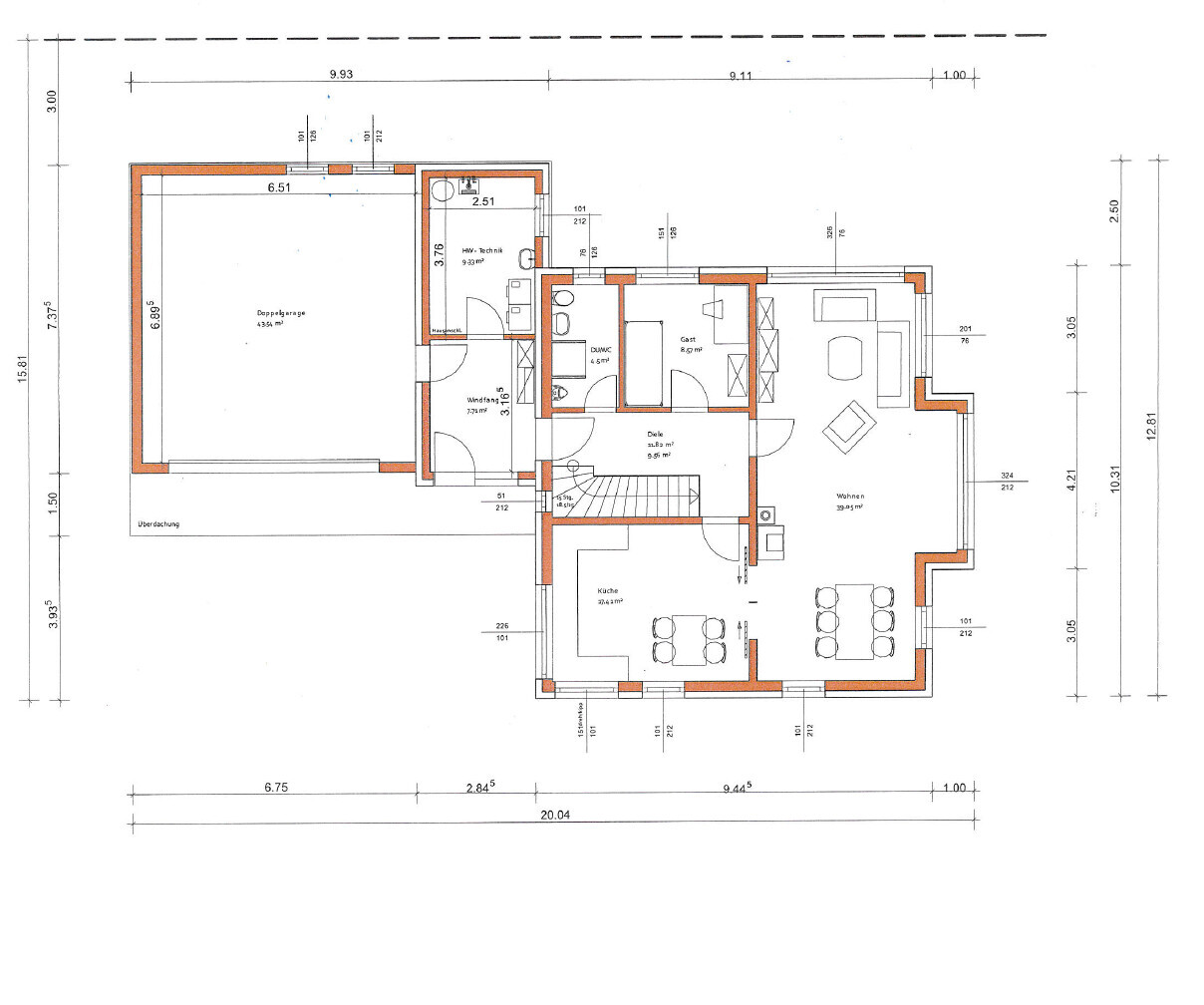
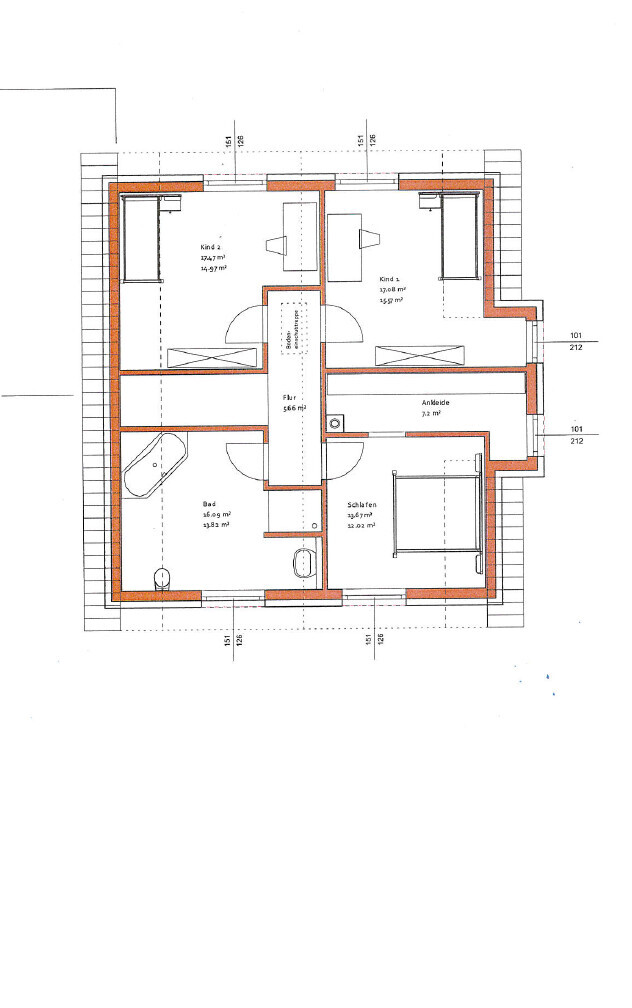
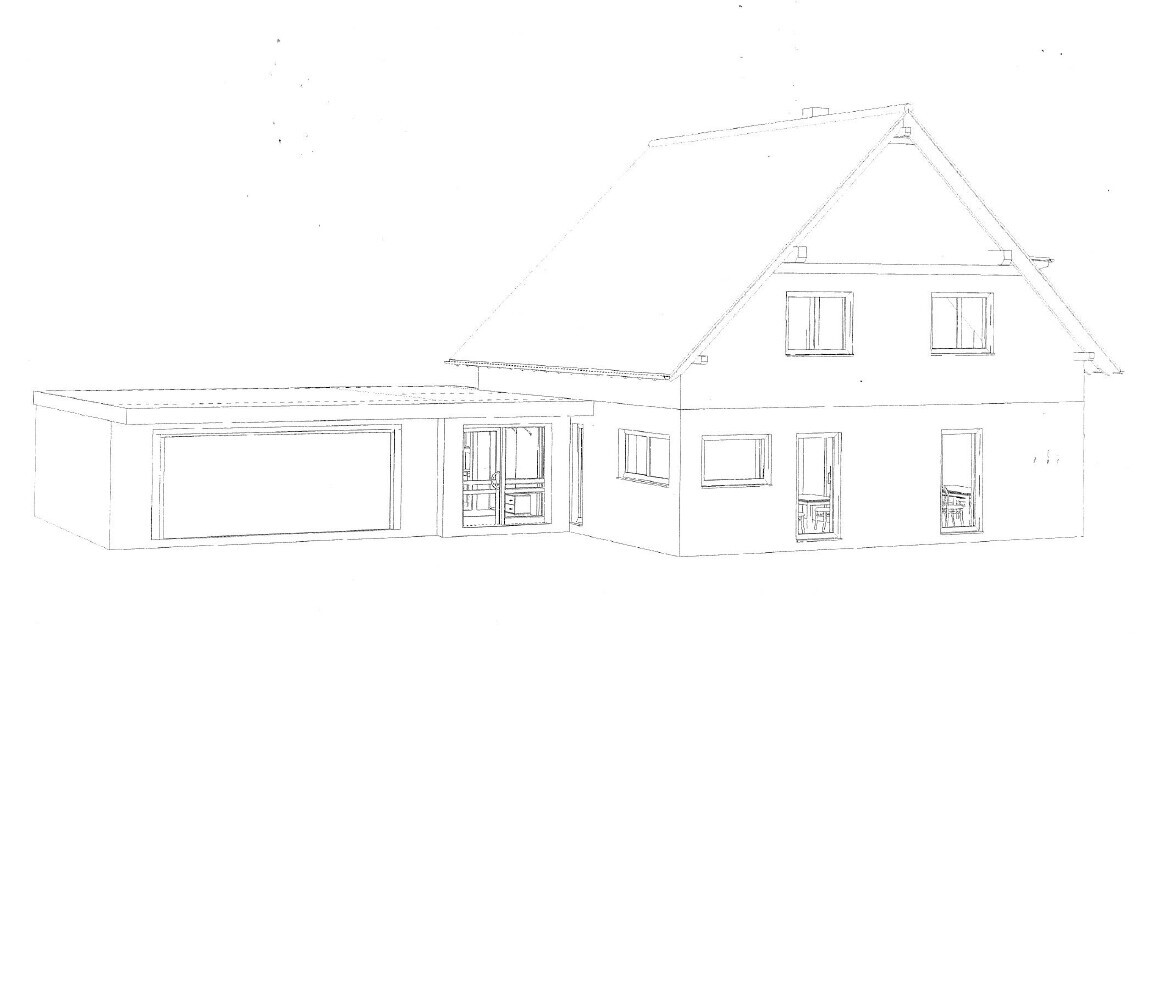
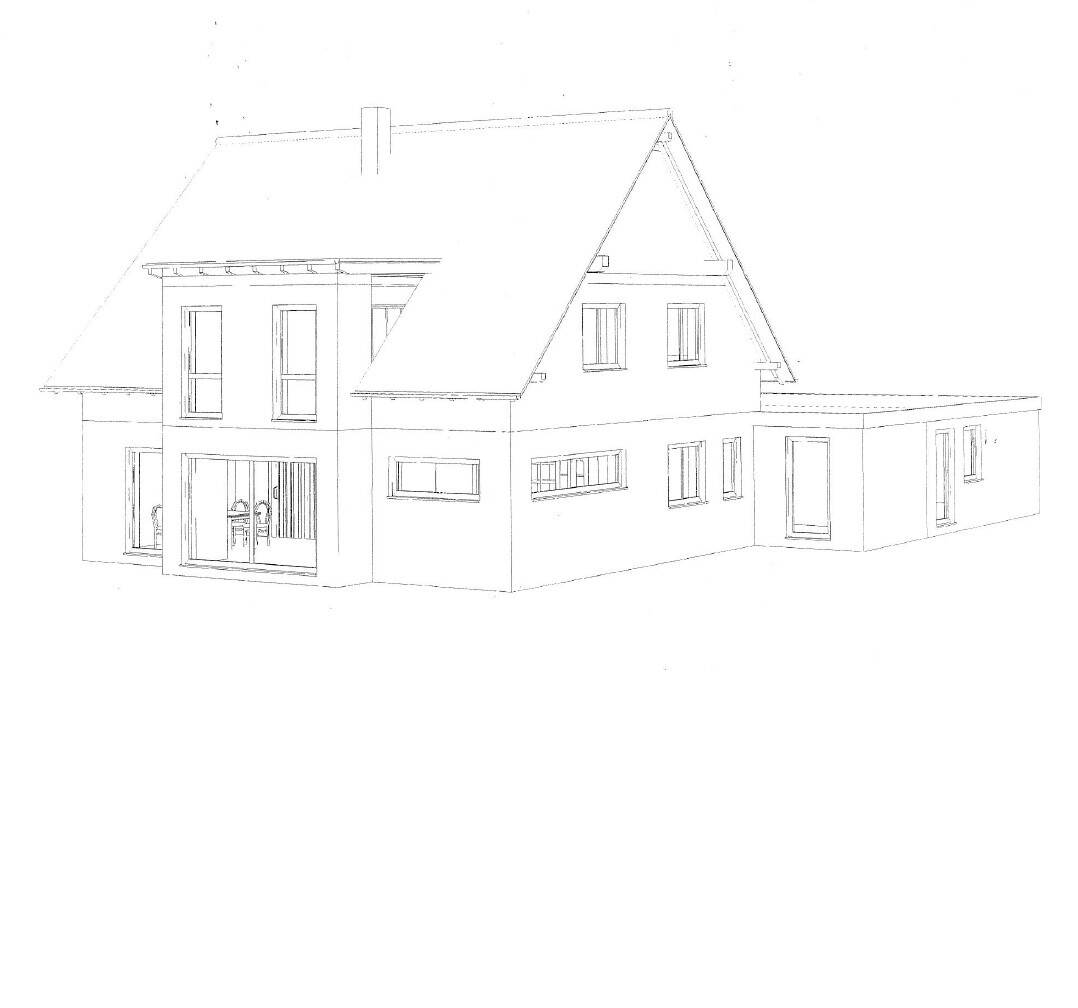

We are a family of four (parents and two young children) who have been planning to build a new single-family home for some time now. We are building in NRW, postal code area 34439, which is close to Paderborn.
Our reserved plot measures 880 square meters (9,470 square feet) and is flat, not on a slope. We created our own design adapted to the plot and brought it to the architect, who adopted the drawing almost unchanged. Originally, we planned to include a basement level - but after receiving the cost estimate and weighing the pros and cons, we decided to omit the basement and widen the above-ground footprint instead.
The house now has a footprint of 9.11 by 10.31 meters (30 by 34 feet), plus an extension including an entrance area, utility room, and double garage.
It was important for us to have an extra room on the ground floor (intended as a guest bedroom). Since we no longer have a basement, we had to find space for the utility room inside. At the same time, I wanted direct access from the garage to the house, so we added an entrance vestibule.
The total living area including the extensions is now 165 square meters (1,776 square feet) (605 cubic meters [21,368 cubic feet] of enclosed volume in the main house, about 218 cubic meters [7,698 cubic feet] in the extension). Construction will be according to the latest standards using solid construction with 24 cm (9.5 inches) Unipor T14 bricks and 16 cm (6.3 inches) external wall insulation (EPS20, thermal conductivity 0.035 W/mK). The exterior will have plaster with paint; no facing bricks.
We have a clear favorite for the construction work but are gathering competitive bids as well. As a rough estimate, the turnkey house costs about 230,000, while the extension (entrance area, utility room, garage) is around 50,000. Additional costs include finishing works for the kitchen, flooring, stove, interior fittings and attic conversion (35,000), the plot (35,000 – yes, land prices are still reasonable in this rural area), landscaping (10,000), and additional construction-related expenses (5,000). Altogether, the budget stands at about 365,000, which we still plan to optimize with some sweat equity.
This is the first offer; over the next few days, we expect two more quotes from solid construction companies and two from prefabricated house builders. After that, we will continue to evaluate our options.
For the technical equipment: we will install a gas condensing boiler, underfloor heating, and a wood stove in the living room. My architect insists on adding two solar panels for hot water, as at least 5% of the energy demand must come from solar.
That’s it for now... I’m attaching the floor plans and elevations. Feedback and suggestions are very welcome.
Edit: I have also added photos of the plot afterwards, which I will repost later.
W
Wanderdüne29 Sep 2014 23:54You should write down your requirements and then expect a draft from a contractor that takes these requirements into account. It seems you do not want a fully custom architectural design, which is fine. However, blindly copying the client’s sketches is always a warning sign.
There are aspects in your statements that simply do not match. On one hand, you want easy access to the garden from the living room. But from the living room, this access is hardly visible. So there is a lighting issue. You want it to be bright, which is great, but the design does not support this at all. And a glass door more than 3 meters (10 feet) away from a window does not bring light into the room behind it.
Using a bathroom as a placeholder is as problematic as using a kitchen as a placeholder—it can work if you are lucky. Then there is the inefficiency of the design. A bay window just to make the dressing room in the upper floor usable is a very expensive solution.
As said, write down your requirements and don’t overdo it when it comes to willingness to compromise.
WD
There are aspects in your statements that simply do not match. On one hand, you want easy access to the garden from the living room. But from the living room, this access is hardly visible. So there is a lighting issue. You want it to be bright, which is great, but the design does not support this at all. And a glass door more than 3 meters (10 feet) away from a window does not bring light into the room behind it.
Using a bathroom as a placeholder is as problematic as using a kitchen as a placeholder—it can work if you are lucky. Then there is the inefficiency of the design. A bay window just to make the dressing room in the upper floor usable is a very expensive solution.
As said, write down your requirements and don’t overdo it when it comes to willingness to compromise.
WD
ChrisBr schrieb:
... I can still completely scrap the design...Yes, but why? You defend the planning mistakes, might reconsider some points, but you had certain ideas behind this and that, so nothing really needs to be changed?
ChrisBr schrieb:
I just came across the following floor plan (see attic in the attached image). The upstairs hallway would become a "gallery," bright enough thanks to the roof window. The space under the gable could be used as a "real" walk-in closet—not “trapped” anymore since it's centrally accessible from the gallery. The only downside would be that the kids’ rooms would become smaller...I’m wondering why you even have an architect? The house concept he drafted is a common standard house with amateur mistakes, just with an attached garage and an extra corridor. To me, it seems like an extension to a used property that has become too small.
From architectural work, I expect a) something more creative (without necessarily appearing overly creative), and b) more backbone and professionalism from the architect to steer the client away from common standard designs that are everywhere on the internet. Two corridors back-to-back without enough space for furniture, a bay window that barely adds value, little storage space, and on the ground floor a small room used as an additional bedroom. Open living area (which I find acceptable), but everything else seems neglected. These are typical DIY mistakes. Placeholders in the kitchen and bathroom: now go ahead and turn those into something nice.
And I still wonder: what do children have from eastern sunlight?
Edit: overlapped with WD
ypg schrieb:
And I still wonder: what benefits do children have from the morning sun in the east?
Yes. Every direction has its pros and cons.
Bedrooms facing east: I don’t want to be woken up by the sun at 5 a.m. in summer. So we close the roller shutters, and the effect of the beautiful morning sun disappears.
Kitchen and living area facing west: It can be nice, unless the sun is so low that it blinds you. We often sit at the dining table squinting until someone gets up and annoyedly lowers the roller shutters.
South side: Depending on the design, it can get very warm here—despite shading. But for those who like the sun, it’s a great spot.
@ChrisBr: A kids’ bathroom has its pros and cons. The shower on the ground floor will hardly be used later because it’s too inconvenient (carrying everything down and back up again) and too cramped. We have one more person than you, and we planned a separate kids’ bathroom, although that came naturally from our floor plan. I think about the future, when kids no longer want to use the bathroom while Dad is showering and the sibling is occupying the toilet on the ground floor for a long time. You can never have enough toilets. Ideally, one per person.
May I ask how old your children are?
B
Bauherren201430 Sep 2014 08:36Directions are really a matter of personal preference, so I think it’s fine if the original poster wants it that way.
Personally, I also like bay windows, but in your walk-in closet, it won’t do much for you. As others have mentioned, that corner is basically wasted space – it can’t be used effectively. And what’s the point of a floor-to-ceiling window in the walk-in closet? We also have a bay window, but the floor-to-ceiling windows are assigned to the kids’ rooms. The children, who are still small, enjoy being able to look outside on their own, the rooms get plenty of natural light, and you have one more wall without a slant. I wouldn’t even consider putting a desk there; there are enough other places for that. Whether the bay window really has a deeper purpose is debatable. If it looks nice and fits the budget, why not?
Regarding the kids’ bathroom, in my opinion, there isn’t much to discuss. The original poster knows about it but doesn’t want it. It’s a matter of personal taste and, in my view, not absolutely necessary for two children.
Personally, I also like bay windows, but in your walk-in closet, it won’t do much for you. As others have mentioned, that corner is basically wasted space – it can’t be used effectively. And what’s the point of a floor-to-ceiling window in the walk-in closet? We also have a bay window, but the floor-to-ceiling windows are assigned to the kids’ rooms. The children, who are still small, enjoy being able to look outside on their own, the rooms get plenty of natural light, and you have one more wall without a slant. I wouldn’t even consider putting a desk there; there are enough other places for that. Whether the bay window really has a deeper purpose is debatable. If it looks nice and fits the budget, why not?
Regarding the kids’ bathroom, in my opinion, there isn’t much to discuss. The original poster knows about it but doesn’t want it. It’s a matter of personal taste and, in my view, not absolutely necessary for two children.
Hello Manu,
my children are 3 years and 7 months old. I am 30, and my wife is 29.
First of all, thanks to the previous posters for the criticism—that was exactly my point. At first, I wanted to defend "my" design, but I have to admit that all the points raised are valid.
As I said, we are still at the very beginning. The plot is reserved and will be purchased as soon as the construction becomes definite. Our approach was to first think about what we wanted, create a sketch and a wish list, and then take it to the architect. You can see the result. Our priorities were:
1. On the ground floor, there should be a free room that can be used as a guest room, office, etc.
2. I wanted direct access from the garage into the house, but which room? (You/boiler room or guest room? No.) That’s how the entrance vestibule (mudroom) came about.
3. All the technical installations were supposed to be in the basement, but due to the huge extra costs, the basement was canceled, so there is no longer space for the utility room. This was then planned behind the entrance vestibule, which I actually liked because it provides, for example, direct access outside to hang laundry right away. In the end, however, the vestibule was somewhat compromised as a cloakroom, since the door to the utility room leaves little room for a large storage area.
4. We probably got the bay window the wrong way around. For aesthetic reasons (outside view), we went with it, but the interior implementation is not optimal. Everyone says the bay window costs significantly more. Could someone roughly estimate the extra cost compared to a straight wall? That would probably be money wasted.
Of course, I’d like to fit everything comfortably into the house and optimize the floor plan, but I think fitting everything nicely on 10 by 10 meters (33 by 33 feet) is quite difficult. You have to know your financial limits, after all. For example, we visited several show homes, which are great because there’s room for everything… but they all have foundations of 13 by 14 meters (43 by 46 feet) or larger.
This was a first draft that basically suited us but has details that need improvement. There are more appointments coming up where new drafts will be created. This time I will step back and just hand over my “wish list.”
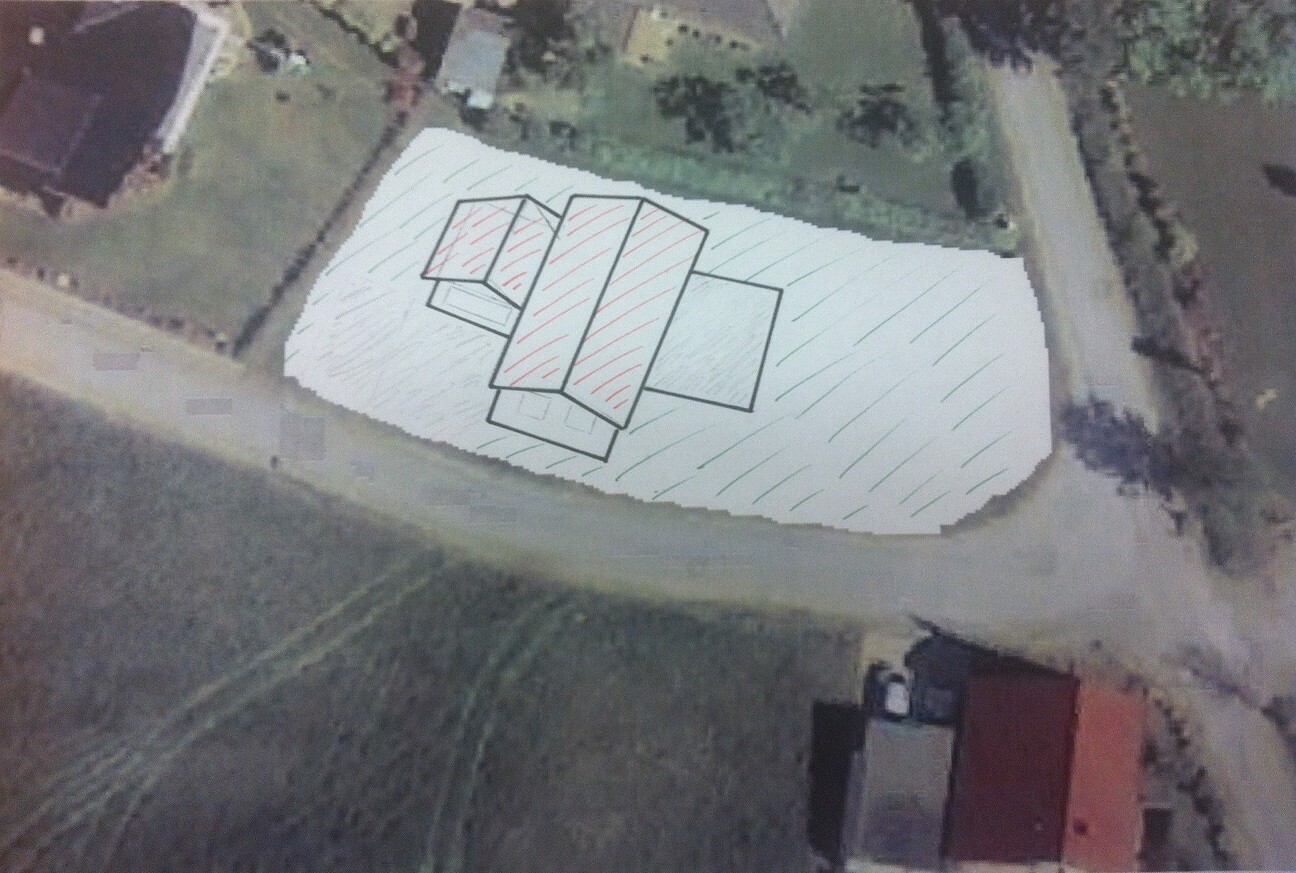
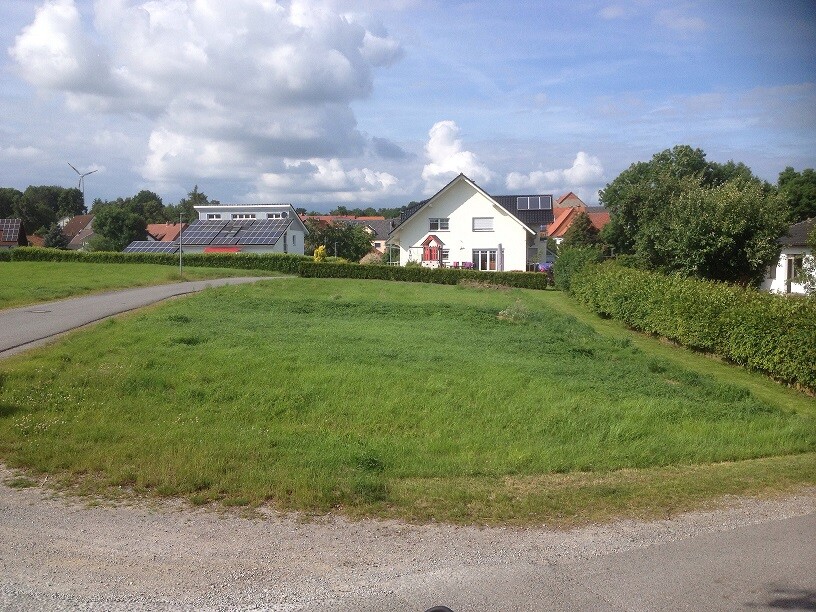
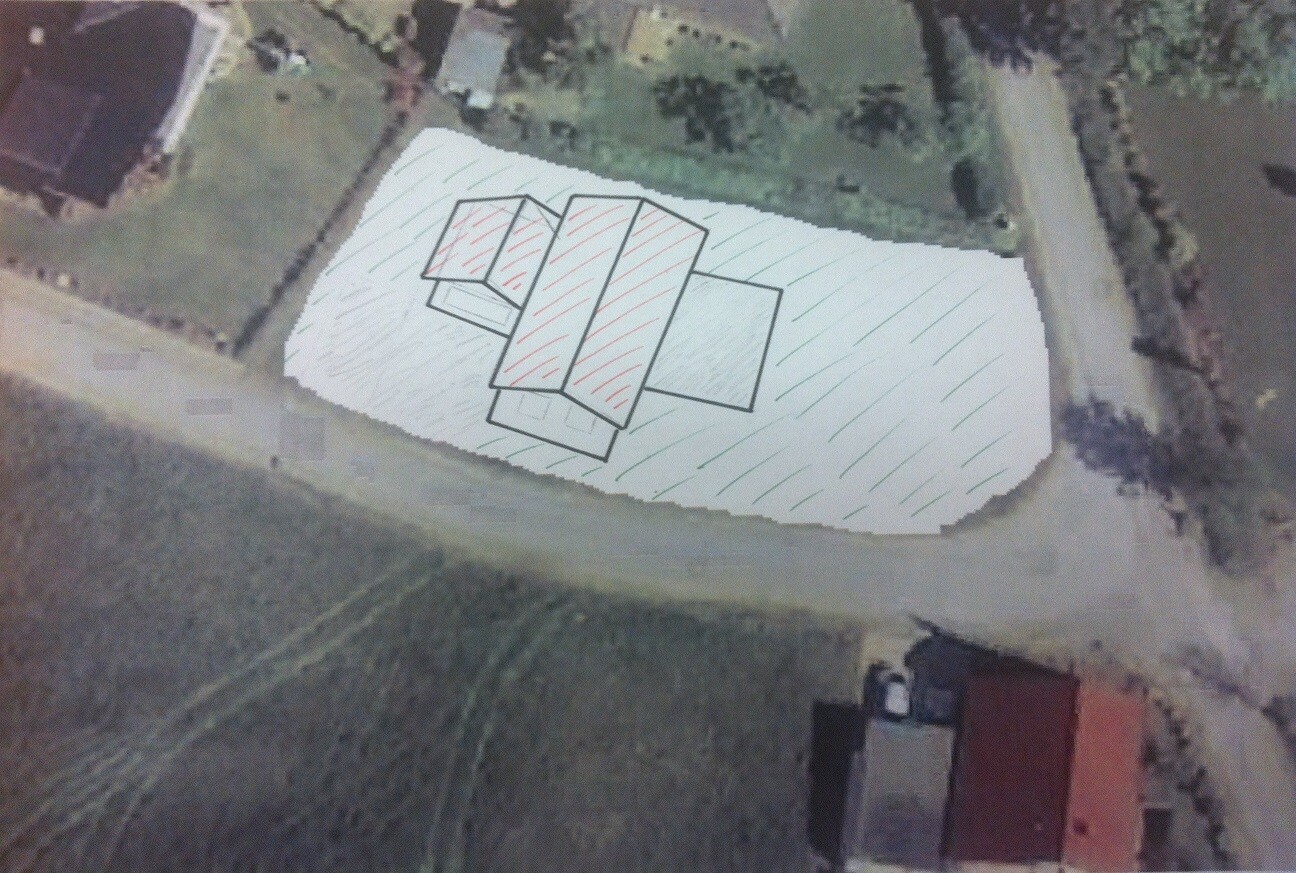
I’m attaching a photo of the plot where the house will be built, views from three sides, as well as the first hand sketch (the proportions here are not accurate; it was only about the position of the building).
(Edit: For better clarity, I also attached the photos to the first post.)
my children are 3 years and 7 months old. I am 30, and my wife is 29.
First of all, thanks to the previous posters for the criticism—that was exactly my point. At first, I wanted to defend "my" design, but I have to admit that all the points raised are valid.
As I said, we are still at the very beginning. The plot is reserved and will be purchased as soon as the construction becomes definite. Our approach was to first think about what we wanted, create a sketch and a wish list, and then take it to the architect. You can see the result. Our priorities were:
1. On the ground floor, there should be a free room that can be used as a guest room, office, etc.
2. I wanted direct access from the garage into the house, but which room? (You/boiler room or guest room? No.) That’s how the entrance vestibule (mudroom) came about.
3. All the technical installations were supposed to be in the basement, but due to the huge extra costs, the basement was canceled, so there is no longer space for the utility room. This was then planned behind the entrance vestibule, which I actually liked because it provides, for example, direct access outside to hang laundry right away. In the end, however, the vestibule was somewhat compromised as a cloakroom, since the door to the utility room leaves little room for a large storage area.
4. We probably got the bay window the wrong way around. For aesthetic reasons (outside view), we went with it, but the interior implementation is not optimal. Everyone says the bay window costs significantly more. Could someone roughly estimate the extra cost compared to a straight wall? That would probably be money wasted.
Of course, I’d like to fit everything comfortably into the house and optimize the floor plan, but I think fitting everything nicely on 10 by 10 meters (33 by 33 feet) is quite difficult. You have to know your financial limits, after all. For example, we visited several show homes, which are great because there’s room for everything… but they all have foundations of 13 by 14 meters (43 by 46 feet) or larger.
This was a first draft that basically suited us but has details that need improvement. There are more appointments coming up where new drafts will be created. This time I will step back and just hand over my “wish list.”
I’m attaching a photo of the plot where the house will be built, views from three sides, as well as the first hand sketch (the proportions here are not accurate; it was only about the position of the building).
(Edit: For better clarity, I also attached the photos to the first post.)
Similar topics