
ᐅ New Build KfW 55 EE: Differing Opinions Between Energy Consultant and General Contractor
Created on: 4 Feb 2022 22:19
H
HausJam
Hello everyone,
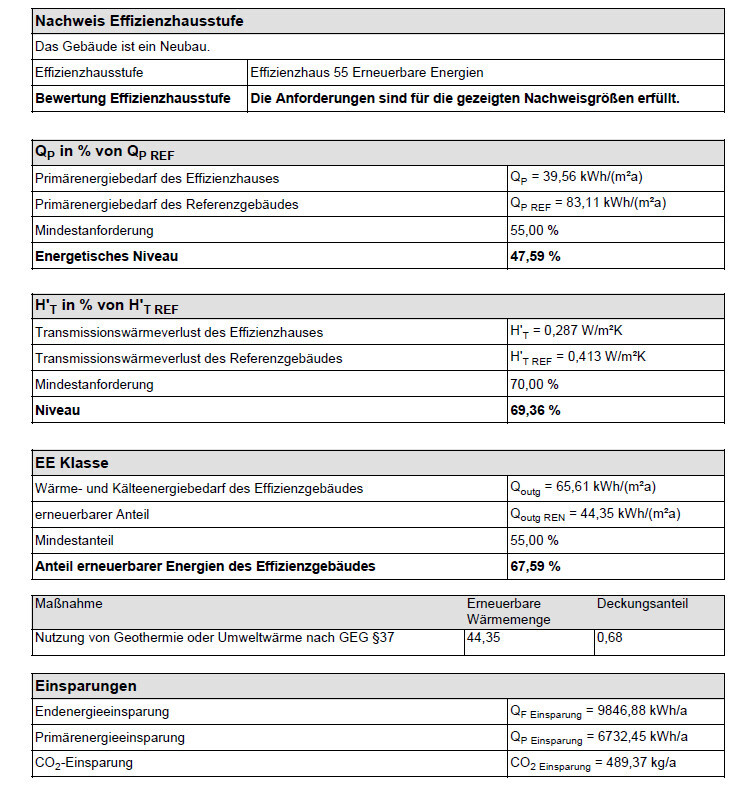
We are currently in the final stages of planning our KfW 55 EE single-family house (the application has already been approved).
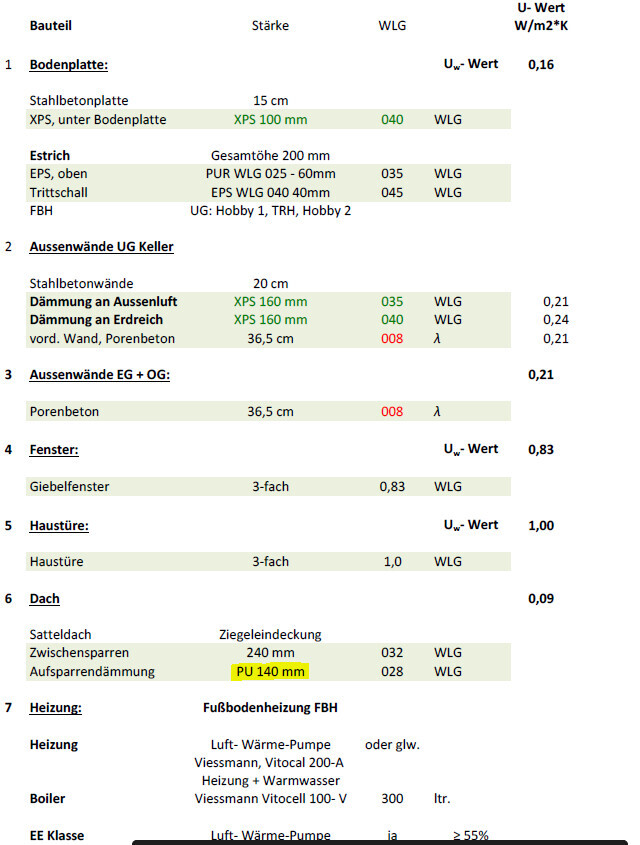
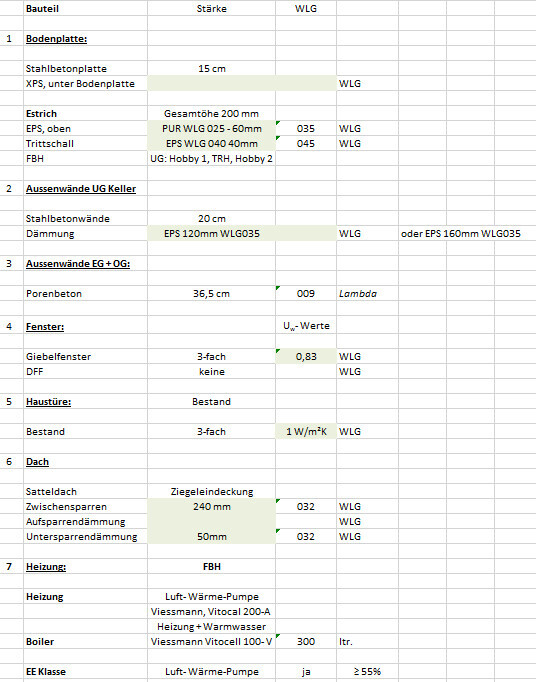
During the planning phase, our main contractor provided the energy consultant with a list of building components, which the consultant then used to complete the KfW 55 EE calculation. However, the energy consultant considers the listed components insufficient and therefore recommends the following changes to meet the KfW 55 EE standard:
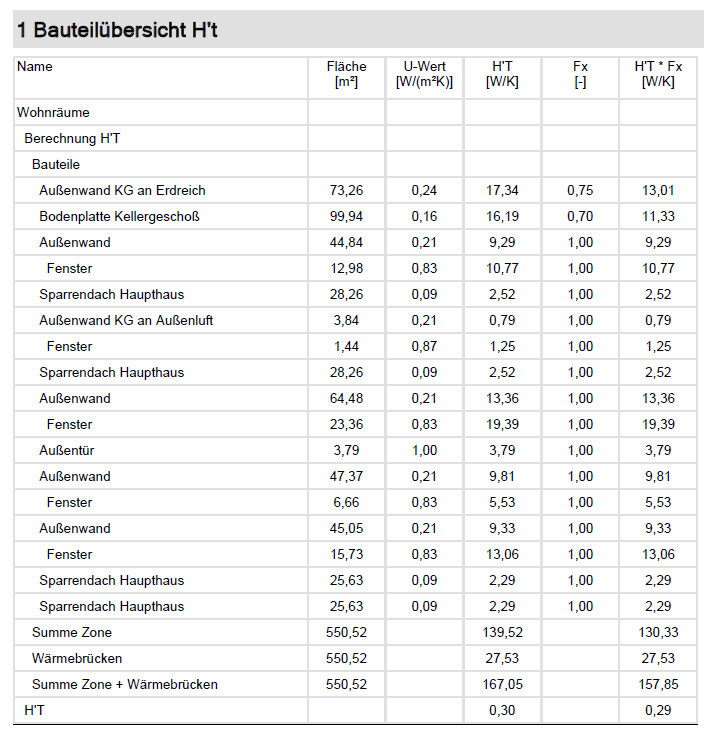
The main contractor now believes that the additional insulation measures are unnecessary and only included because the energy consultant applied a blanket calculation for thermal bridges.
We now have the following questions:
Thanks in advance!
HausJam
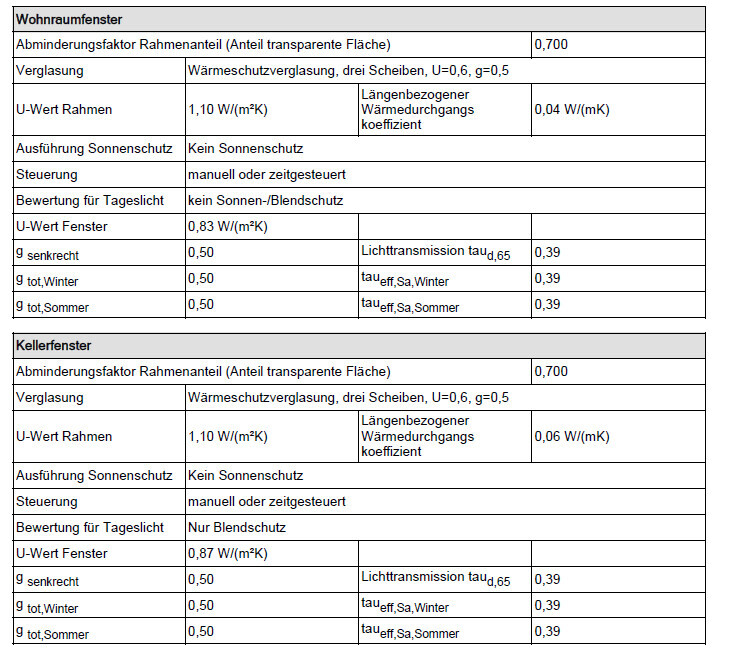
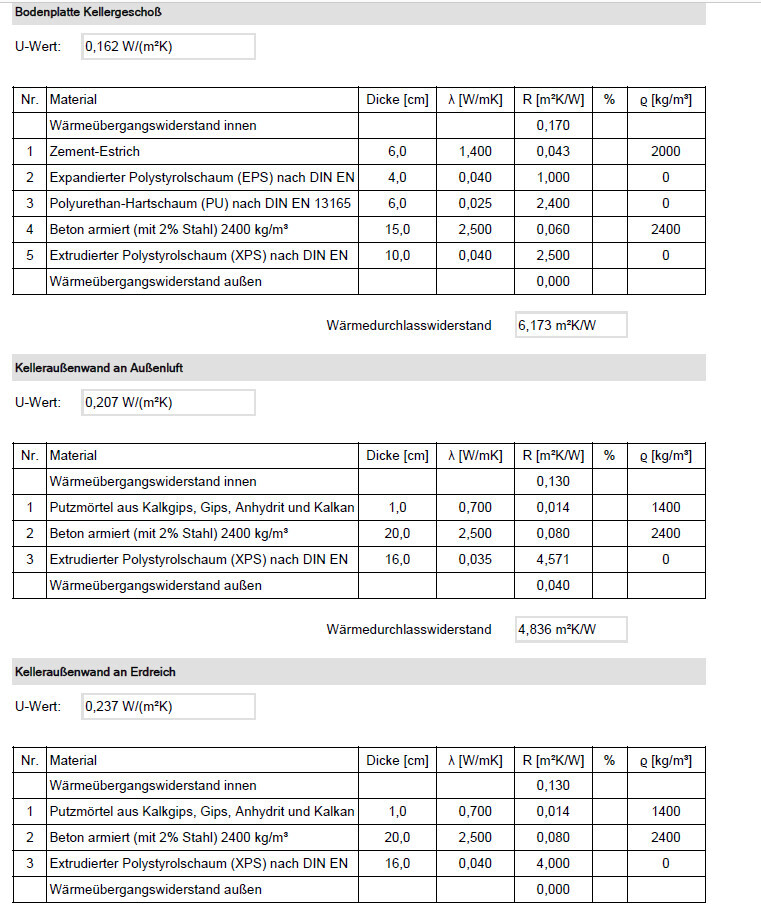
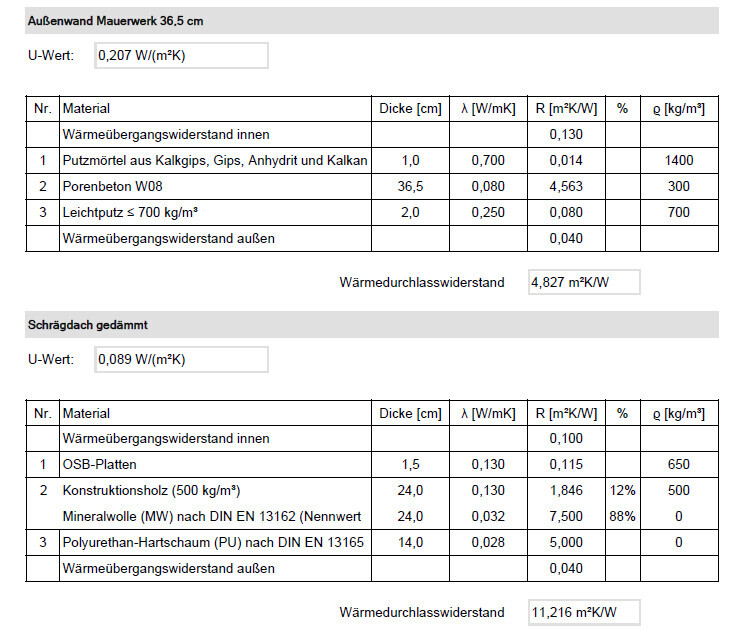
We are currently in the final stages of planning our KfW 55 EE single-family house (the application has already been approved).
During the planning phase, our main contractor provided the energy consultant with a list of building components, which the consultant then used to complete the KfW 55 EE calculation. However, the energy consultant considers the listed components insufficient and therefore recommends the following changes to meet the KfW 55 EE standard:
- Ground slab
- Additional insulation below the ground slab: XPS 100 mm (4 inches)
- Exterior basement walls (north, east, south)
- Insulation: XPS 160 mm (6 inches) instead of EPS 120 mm (5 inches)
- Exterior basement wall (west only) + exterior walls on the ground floor and upper floor
- Aerated concrete 008 instead of 009
- Roof
- Above-rafter insulation PU 140 mm (6 inches) instead of under-rafter insulation 50 mm (2 inches) glass wool
The main contractor now believes that the additional insulation measures are unnecessary and only included because the energy consultant applied a blanket calculation for thermal bridges.
We now have the following questions:
- Are the building components proposed by the main contractor sufficient for a KfW 55 EE house, or are they far from the standard?
- Are the extra measures demanded by the energy consultant unnecessary?
- How much heating cost savings can roughly be expected from the additional insulation?
- Can anyone provide a rough estimate of the costs for the additional measures?
Thanks in advance!
HausJam
parcus schrieb:
Why should living space be lost at the expense of the builder?
Besides, a solid construction in monolithic form is often preferred.Why should living space be lost? Just make the foundation slab 5m² (54 sq ft) larger.And what about the construction costs of the additional area...?
Furthermore, the building envelopes will not become larger, so the external dimensions might even be situated over the setback areas.
However, none of us know the agreements. So it’s a matter of speculation, but generally, I would be cautious at first.
Furthermore, the building envelopes will not become larger, so the external dimensions might even be situated over the setback areas.
However, none of us know the agreements. So it’s a matter of speculation, but generally, I would be cautious at first.

guckuck2 schrieb:
To what extent can the thickness of the stones used indicate the sawing effort?You can’t tell from the stones themselves, but do the math: TmMike_2 schrieb:
17.5cm (7 inches) sand-lime brick, 20cm (8 inches) insulation, 2cm (1 inch) air gap, 11.5cm (4.5 inches) facing brick.Here, the structural wall layer is set 22cm (9 inches) behind the facing wall layer. That doesn’t align with a full mortar joint pattern. So either the facing wall layer is positioned correctly, which causes the structural wall layer to be out of pattern; or the structural wall layer is aligned with the pattern, which means the facing brick layer has to use a less regular bond. guckuck2 schrieb:
Besides, you regularly overestimate this. Let go of that mantra. Sawing is totally normal and not a big effort.With sand-lime bricks it’s manageable, but with aerated clay bricks it’s a messy hassle. Just take a close look at the shell construction photos here and everywhere else: millions of poor workmanship spots prove my point.https://www.instagram.com/11antgmxde/
https://www.linkedin.com/company/bauen-jetzt/

11ant schrieb:
The structural masonry shell here is set back 22 cm (9 inches) from the facing brick shell. That is not a full joint pattern.Is the joint pattern 12.5 cm (5 inches)? Then this is practically impossible with facing brickwork. 12.5 cm (5 inches) is definitely not enough space for insulation and an air gap. And 25 cm (10 inches) is quite a lot—even 22 cm (9 inches) is already above average. Typically, insulation thickness is closer to 16 cm (6.5 inches).
Similar topics