
ᐅ New Build KfW 55 EE: Differing Opinions Between Energy Consultant and General Contractor
Created on: 4 Feb 2022 22:19
H
HausJam
Hello everyone,
We are currently in the final stages of planning our KfW 55 EE single-family house (the application has already been approved).
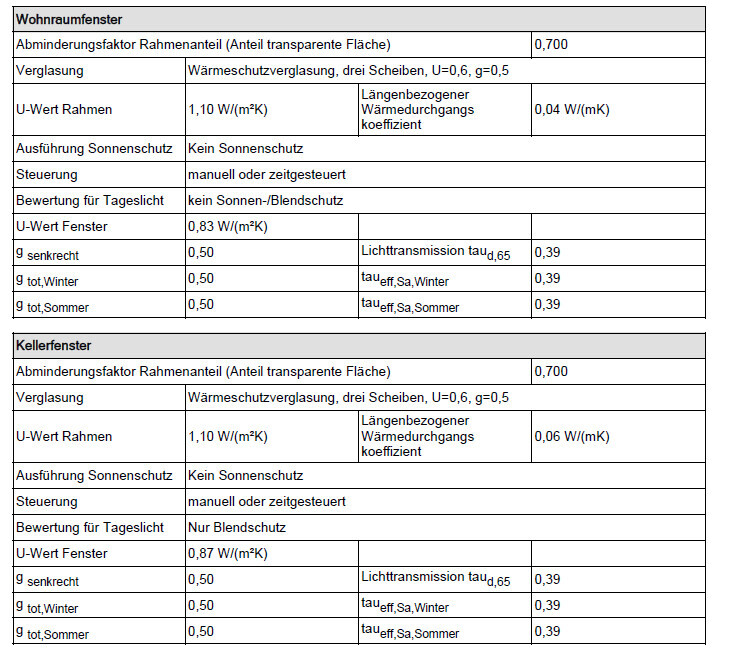
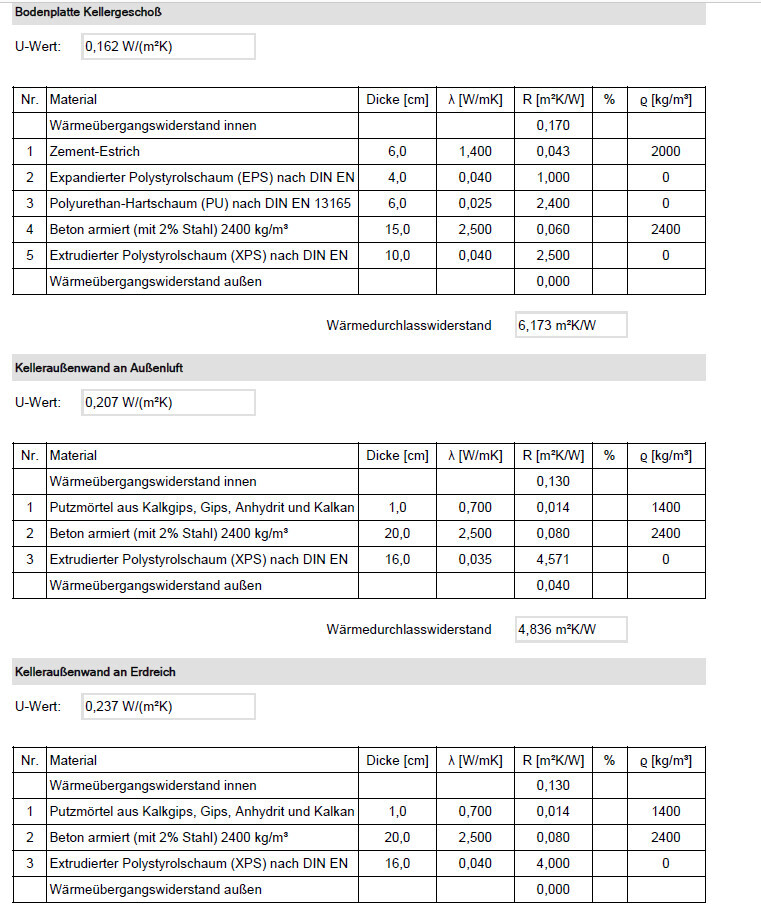
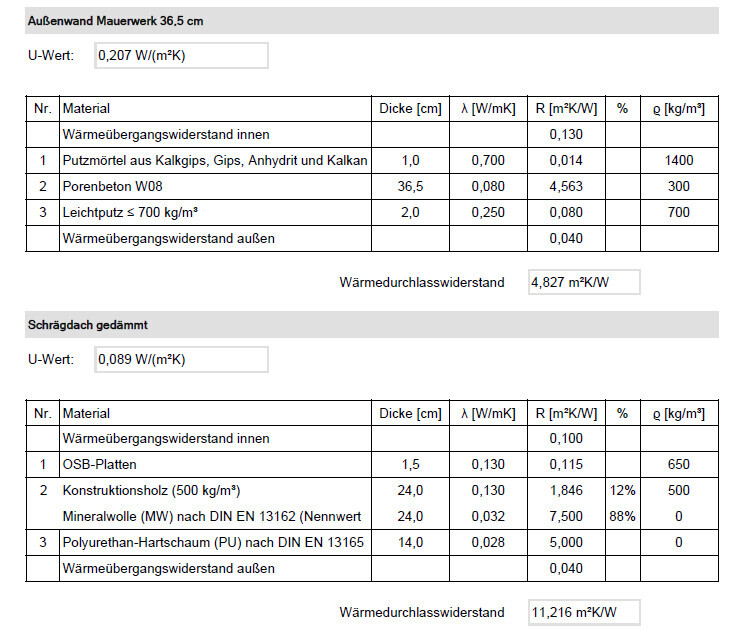
During the planning phase, our main contractor provided the energy consultant with a list of building components, which the consultant then used to complete the KfW 55 EE calculation. However, the energy consultant considers the listed components insufficient and therefore recommends the following changes to meet the KfW 55 EE standard:
The main contractor now believes that the additional insulation measures are unnecessary and only included because the energy consultant applied a blanket calculation for thermal bridges.
We now have the following questions:
Thanks in advance!
HausJam
We are currently in the final stages of planning our KfW 55 EE single-family house (the application has already been approved).
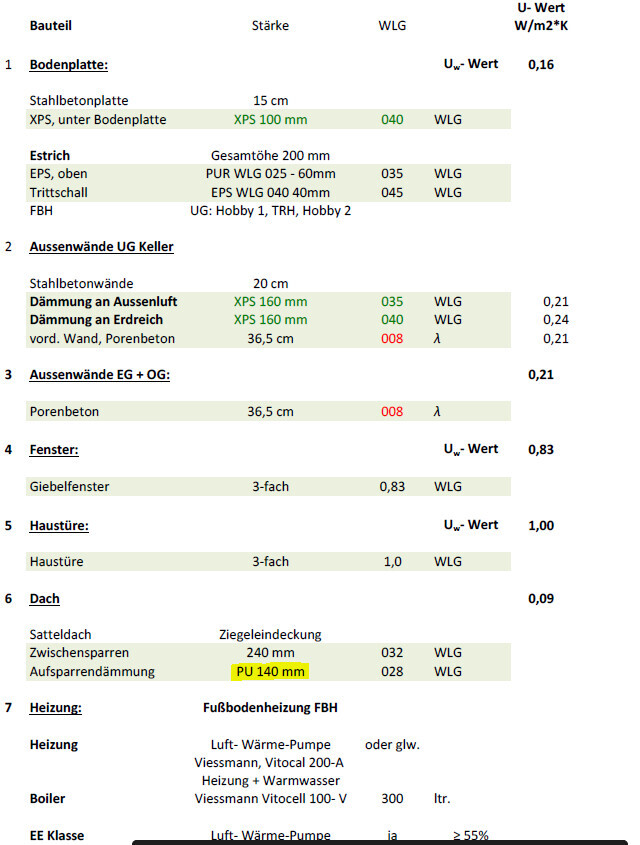
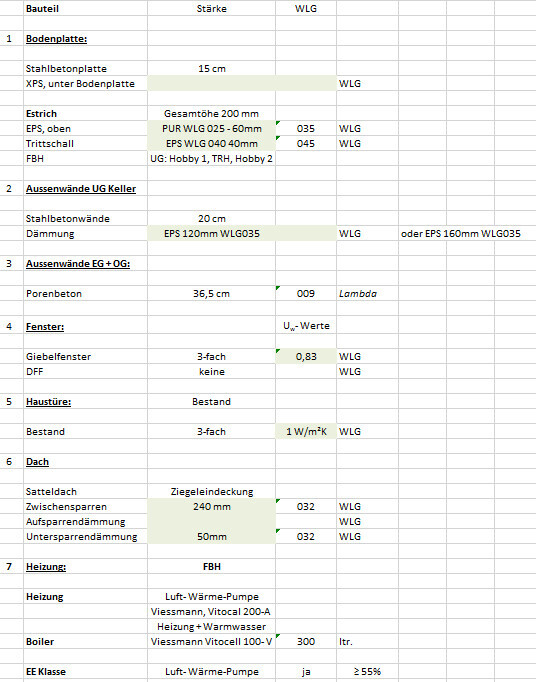
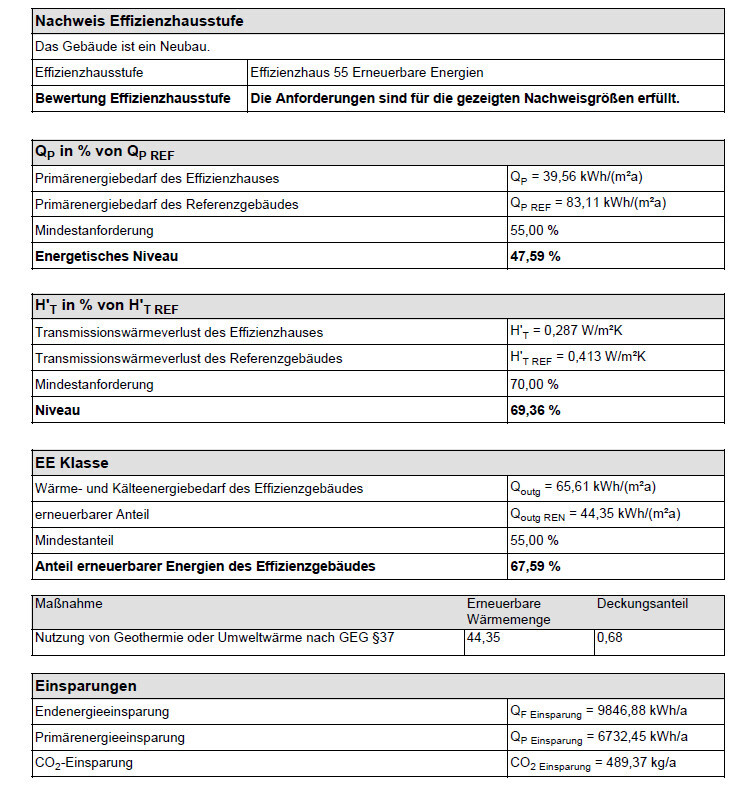
During the planning phase, our main contractor provided the energy consultant with a list of building components, which the consultant then used to complete the KfW 55 EE calculation. However, the energy consultant considers the listed components insufficient and therefore recommends the following changes to meet the KfW 55 EE standard:
- Ground slab
- Additional insulation below the ground slab: XPS 100 mm (4 inches)
- Exterior basement walls (north, east, south)
- Insulation: XPS 160 mm (6 inches) instead of EPS 120 mm (5 inches)
- Exterior basement wall (west only) + exterior walls on the ground floor and upper floor
- Aerated concrete 008 instead of 009
- Roof
- Above-rafter insulation PU 140 mm (6 inches) instead of under-rafter insulation 50 mm (2 inches) glass wool
The main contractor now believes that the additional insulation measures are unnecessary and only included because the energy consultant applied a blanket calculation for thermal bridges.
We now have the following questions:
- Are the building components proposed by the main contractor sufficient for a KfW 55 EE house, or are they far from the standard?
- Are the extra measures demanded by the energy consultant unnecessary?
- How much heating cost savings can roughly be expected from the additional insulation?
- Can anyone provide a rough estimate of the costs for the additional measures?
Thanks in advance!
HausJam
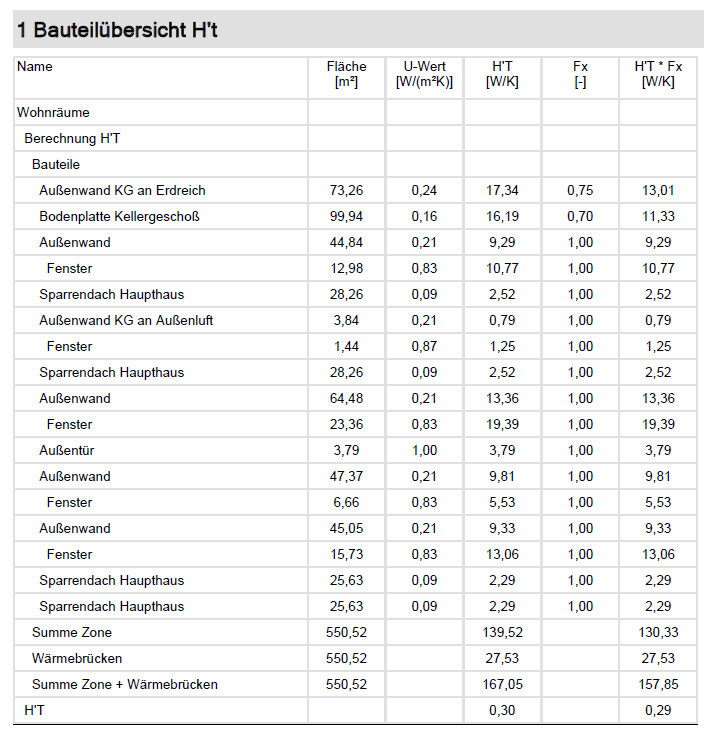
An important value for any builder is HT', as this indicates the performance of the building envelope and thus directly affects the building’s heating load. It is also worth prompting the energy consultant for a thermal bridge verification since the thermal bridge surcharge is included in HT'—this is often initially estimated and later revised. If, as in this case, there is almost no buffer, this could cause problems even for a KfW 55 EE standard during final confirmation.
It is also important to keep in mind that political regulations set specific values for these calculations. Since heat pumps failed the requirements up to the previous energy saving ordinance, the primary energy factor was simply set to zero here, which does not reflect the current electricity mix. Furthermore, once a photovoltaic system is added, an infinitely large battery capacity is implicitly assumed, meaning up to 100% self-sufficiency. This is the case even when no battery is included in the system design, whereas a more realistic self-sufficiency value without storage would be around 25%.
It is also important to keep in mind that political regulations set specific values for these calculations. Since heat pumps failed the requirements up to the previous energy saving ordinance, the primary energy factor was simply set to zero here, which does not reflect the current electricity mix. Furthermore, once a photovoltaic system is added, an infinitely large battery capacity is implicitly assumed, meaning up to 100% self-sufficiency. This is the case even when no battery is included in the system design, whereas a more realistic self-sufficiency value without storage would be around 25%.
parcus schrieb:
The relatively poor exterior walls have to be compensated for somehow, as their surface area is simply too large.
Often, only the roof and windows are left for improvement, hence the ideal values 🙂
For me, the main question would be about the thermal bridge verification, or rather, what kind of thermal bridge allowance was used. The thermal bridges are specified in the KfW application as a flat rate of 0.05 W/(m²K).
Regarding the exterior walls, this is probably why the energy consultant adjusted from aerated concrete 0.09 to 0.08 W/(m²K)?!
Yes, walls with a thickness of 36.5cm (14.4 inches) currently comply more with the Building Energy Act, while the BEG standard requires closer to 42.5cm (16.7 inches). As you can see, the better value still results in a U-value above 0.20.
The thermal bridge allowance must be verified by the energy assessor, even if they use the more conservative value of 0.05.
This can be done either through an equivalence verification, which depends on whether the designer has followed DIN 4108 Beiblatt 2, or through an individual verification. In all other cases, the thermal bridge allowance will be higher, causing your H’t value to fail, and consequently the KfW55EE certification.
The thermal bridge allowance must be verified by the energy assessor, even if they use the more conservative value of 0.05.
This can be done either through an equivalence verification, which depends on whether the designer has followed DIN 4108 Beiblatt 2, or through an individual verification. In all other cases, the thermal bridge allowance will be higher, causing your H’t value to fail, and consequently the KfW55EE certification.

HausJam schrieb:
Ah, sorry, that wasn’t very clear. Funding from KfW.Then I actually don’t see any question here, just build as submitted.HausJam schrieb:
The contract with the general contractor is not signed yet. There were still a few points to clarify regarding the scope of work, but the KfW application had to be submitted beforehand.Well then, good luck with the price negotiation.https://www.instagram.com/11antgmxde/
https://www.linkedin.com/company/bauen-jetzt/
Similar topics