
ᐅ New Construction – Energy Consumption of the Heat Pump / Electric Auxiliary Heater
Created on: 8 Nov 2018 19:08
J
Jan Latta
We built a solid single-family house with a heat pump. We moved in on September 1 of this year. I am quite concerned about our heat pump, as it has consumed 1500 kWh in just two months. Today the consumption has increased by nearly another 200 kWh. September and October were unusually mild, with only two days experiencing frost on the ground. Both the heating technician and the construction company consider this usage reasonable, so I have not discussed it with them again.
I researched how these heat pumps operate and took a closer look at the energy consumption of my unit (see photo). I found that the highest consumption is attributed to the electric auxiliary heater—1288 kWh.
What do you think about this? Could there be something wrong with the settings? Is the compressor not working efficiently? Shouldn’t the auxiliary heater only activate at significantly lower temperatures?
The heat pump is an air-to-water Logatherm WPLS 8kW from the company Buderus.
Thank you for your opinions.
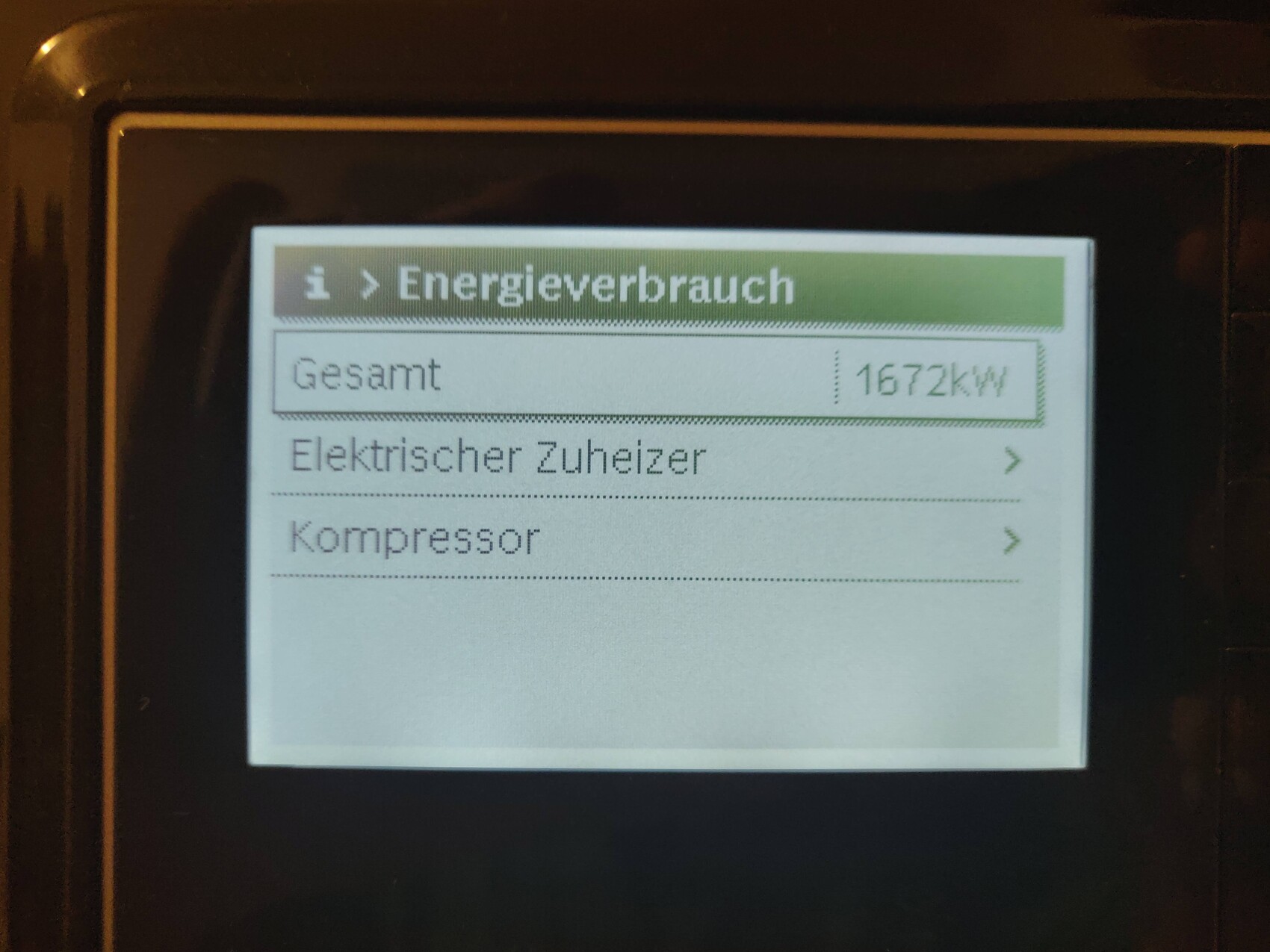
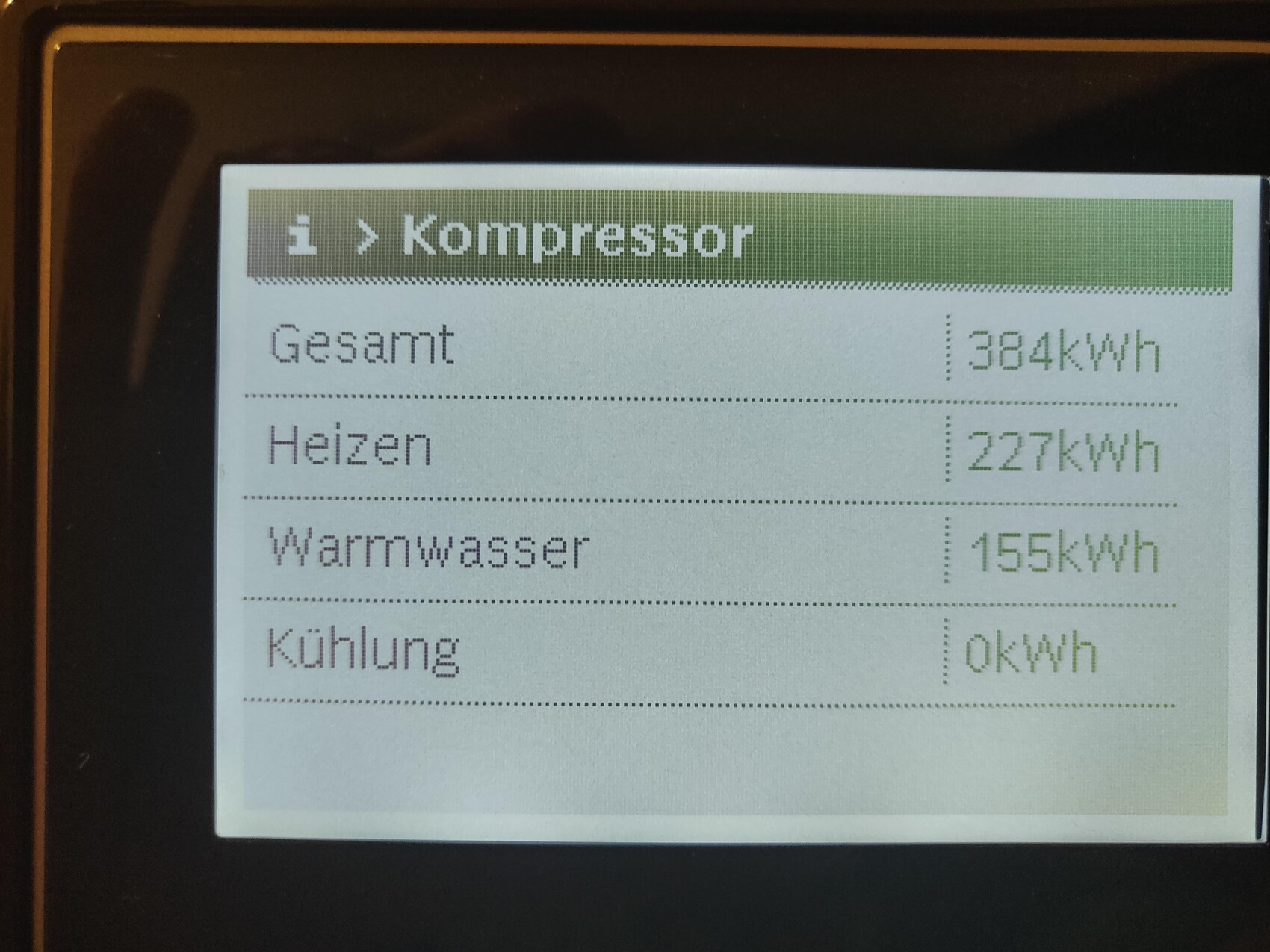
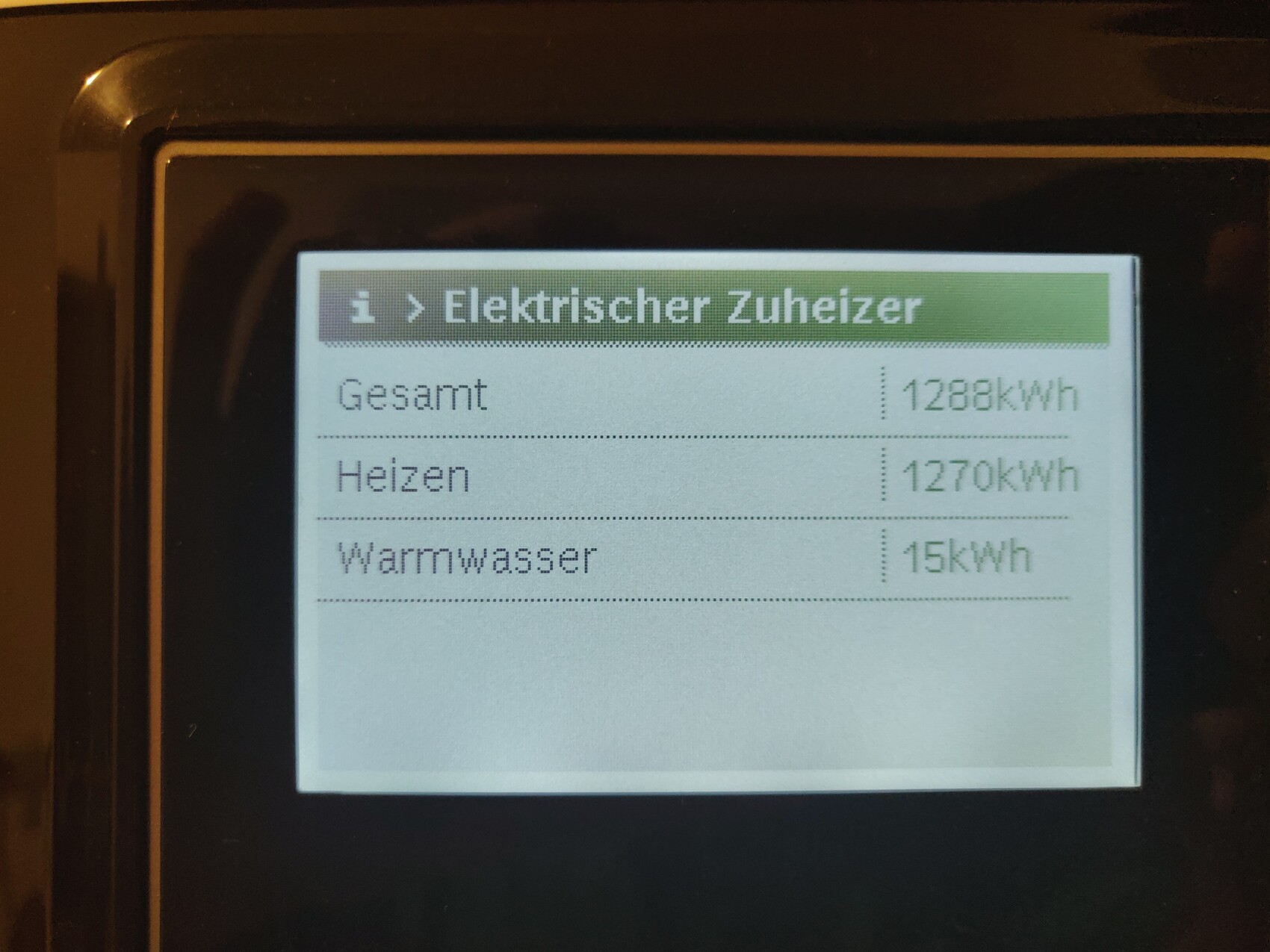
I researched how these heat pumps operate and took a closer look at the energy consumption of my unit (see photo). I found that the highest consumption is attributed to the electric auxiliary heater—1288 kWh.
What do you think about this? Could there be something wrong with the settings? Is the compressor not working efficiently? Shouldn’t the auxiliary heater only activate at significantly lower temperatures?
The heat pump is an air-to-water Logatherm WPLS 8kW from the company Buderus.
Thank you for your opinions.
D
Deliverer9 Nov 2018 10:53Other than a formal written complaint to the heating engineer, I wouldn’t take any action here. Afterwards, you can try to recover the additional costs incurred...

 schubert7910 Nov 2018 11:52
Something is definitely going wrong.
Hi Jan,
As previous speakers have already mentioned, something seems fundamentally wrong here.
If you moved in on September 1st, what was the meter reading on that day? The screed must have been drying as well, which definitely requires more electricity. But even then, in my opinion, the split between the heating element and the compressor doesn’t fit the mild temperatures.
From experience, your total consumption for the year is probably around 4,000-5,000 kWh.
Since you apparently built with a company (general contractor / developer), I would recommend reporting the issue in writing to the site manager and requesting a fix. Afterwards, you could ask for reimbursement of the extra costs due to excessive consumption.
If you start changing the settings yourself, it might be harder later to get your money back or to prove that the system was set up incorrectly.
For comparison:
Since September 2018, we have used about 65 m³ (2,295 cubic feet) of gas, which corresponds to roughly 700 kWh of heat. Assuming a deliberately modest coefficient of performance of 2.5 for an air-source heat pump (and it was very warm), this corresponds to maybe 300 kWh of electricity.
Try googling “heat pump consumption database” and click on “Consumption Table” on the left side of the first result. There you will find values from other users, including the floor areas of their homes.
As previous speakers have already mentioned, something seems fundamentally wrong here.
If you moved in on September 1st, what was the meter reading on that day? The screed must have been drying as well, which definitely requires more electricity. But even then, in my opinion, the split between the heating element and the compressor doesn’t fit the mild temperatures.
From experience, your total consumption for the year is probably around 4,000-5,000 kWh.
Since you apparently built with a company (general contractor / developer), I would recommend reporting the issue in writing to the site manager and requesting a fix. Afterwards, you could ask for reimbursement of the extra costs due to excessive consumption.
If you start changing the settings yourself, it might be harder later to get your money back or to prove that the system was set up incorrectly.
For comparison:
Since September 2018, we have used about 65 m³ (2,295 cubic feet) of gas, which corresponds to roughly 700 kWh of heat. Assuming a deliberately modest coefficient of performance of 2.5 for an air-source heat pump (and it was very warm), this corresponds to maybe 300 kWh of electricity.
Try googling “heat pump consumption database” and click on “Consumption Table” on the left side of the first result. There you will find values from other users, including the floor areas of their homes.
J
Jan Latta16 Nov 2018 08:45Thank you to everyone,
my concerns were justified after all. I will primarily discuss it with the construction company.
The meter readings were at 0, and the screed had been dried using an external heater with construction power before the pump installation.
I am curious to see how the construction company will respond.
Thanks again to everyone.
my concerns were justified after all. I will primarily discuss it with the construction company.
The meter readings were at 0, and the screed had been dried using an external heater with construction power before the pump installation.
I am curious to see how the construction company will respond.
Thanks again to everyone.
J
Jan Latta11 Jan 2019 08:25Deliverer schrieb:
Apart from sending a written complaint to the heating installer, I wouldn’t do anything else here.
And then try to reclaim the additional costs incurred...Hello,
I’m back again. Following your advice, I filed a formal complaint about the issue and discussed it several times with the heating installer. It has been confirmed that the bivalence point was set at +10°C (50°F), and despite my request to lower it, it remains set at that level. I then made a written request to adjust it. The response was that the bivalence point is not mandatory and that it is a matter of comfort. I also provided the company with brochures downloaded from the internet from Buderus, showing recommendations regarding the bivalence point. After further inquiries, I received a written reply saying that I should adjust the bivalence point myself if I am so familiar with the technical details.
Is this a statement I am supposed to accept? From a user’s perspective, this is not possible.
From the user level, I was able to program the electric auxiliary heater to turn on from 00:00 to 23:45 whenever the outdoor temperature is below -7°C (19°F) — a recommendation for my location. This has reduced energy consumption, although it still remains around 180 kWh per week, which is higher than expected.
Thank you very much for your opinions.
Similar topics