
ᐅ New Beam Ends in Old Masonry Walls – Ventilated or Insulated, Connections?
Created on: 18 Mar 2026 07:47
L
Lupus23Hello everyone,
I have a question regarding a detail in a renovation of an older building.
Situation:
Old building from around 1890
Brick masonry, externally insulated with 5 cm EPS (2 inches)
A new wooden beam ceiling was installed between the ground floor and the upper floor
New beam ends rest on masonry supports
The beam ends are exposed to air on the sides and top
These cavities are currently still accessible from the upper floor, which is still a shell. The ground floor is already finished.
Now I have reviewed the construction photos from last year. I think the connection of the beams on the ground floor was probably not executed in an airtight manner.
My question is:
Should I loosely fill the side and top cavities around the beam ends with glass wool insulation, or leave them open?
My considerations:
If warm indoor air from the ground floor can actually reach the edge of the ceiling, it might condense on the colder beam ends. If insulation wool is installed, it would reduce thermal bridging and condensation, but it might also dry less effectively.
Leave open or fill with mineral wool?
Is the main issue here the lack of airtightness at the wall-ceiling connection rather than the cavity at the beam end itself?
These are new, dry-installed beam ends, currently without any visible moisture problems.
Thanks for your assessments.
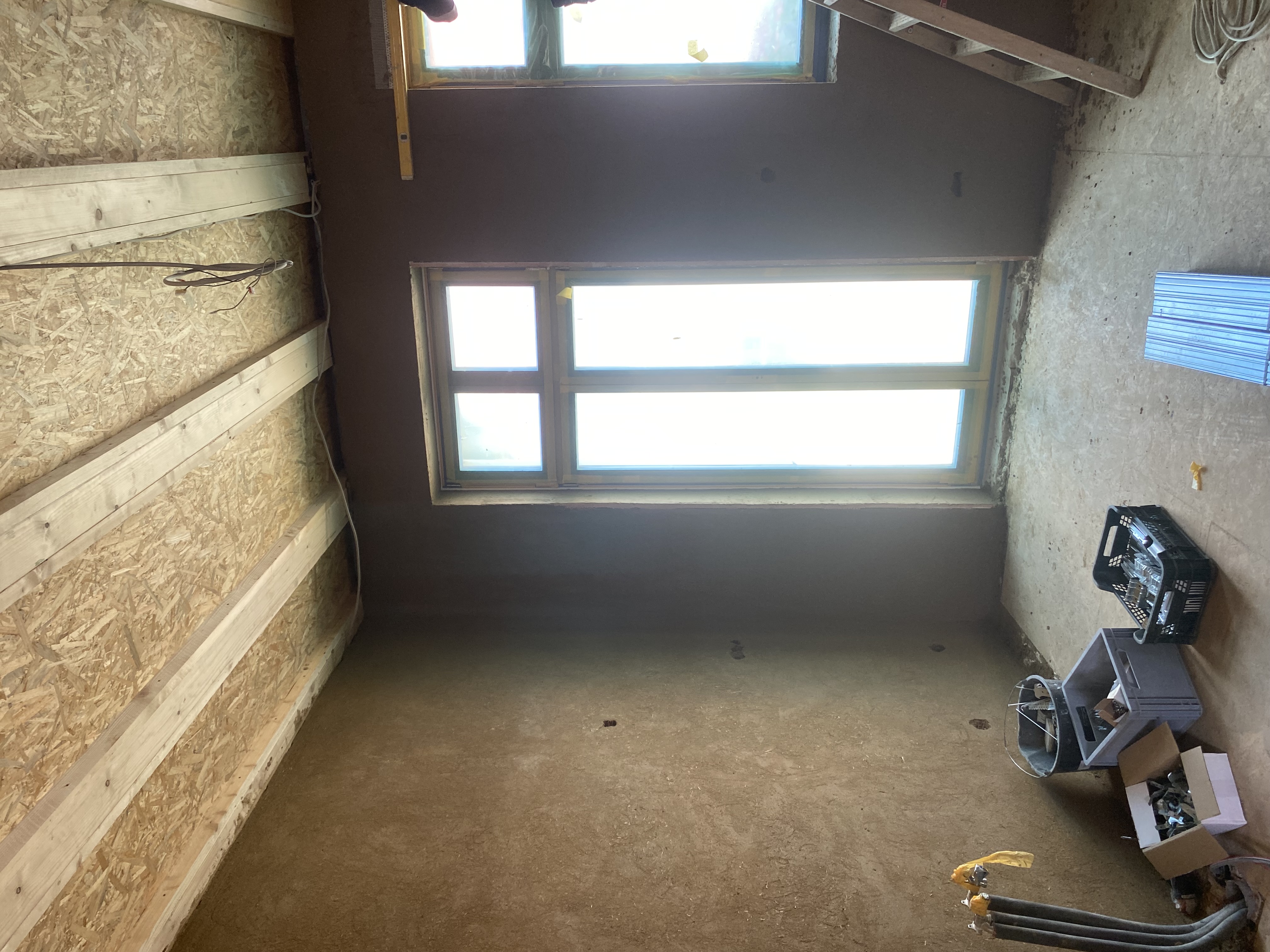
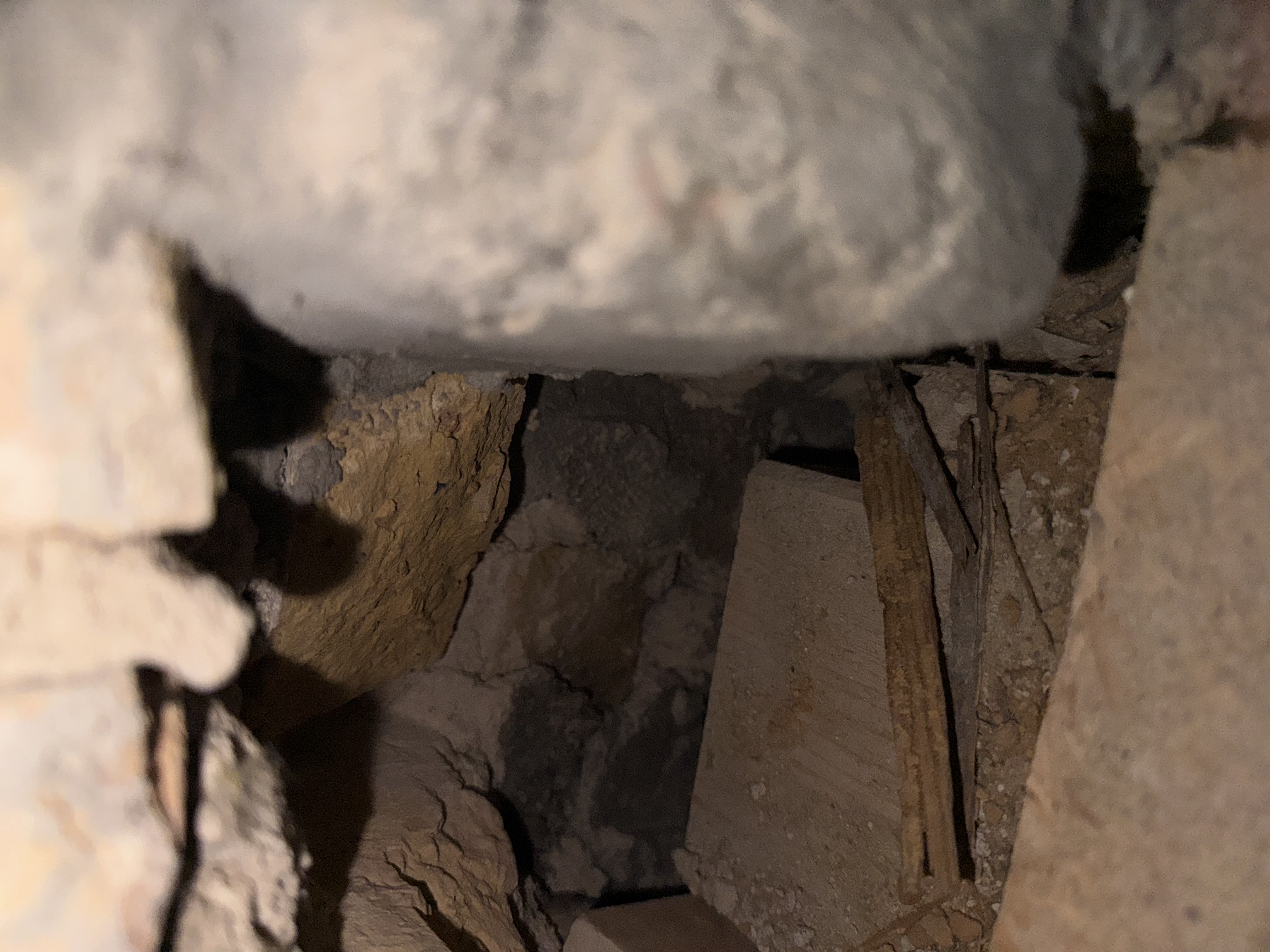
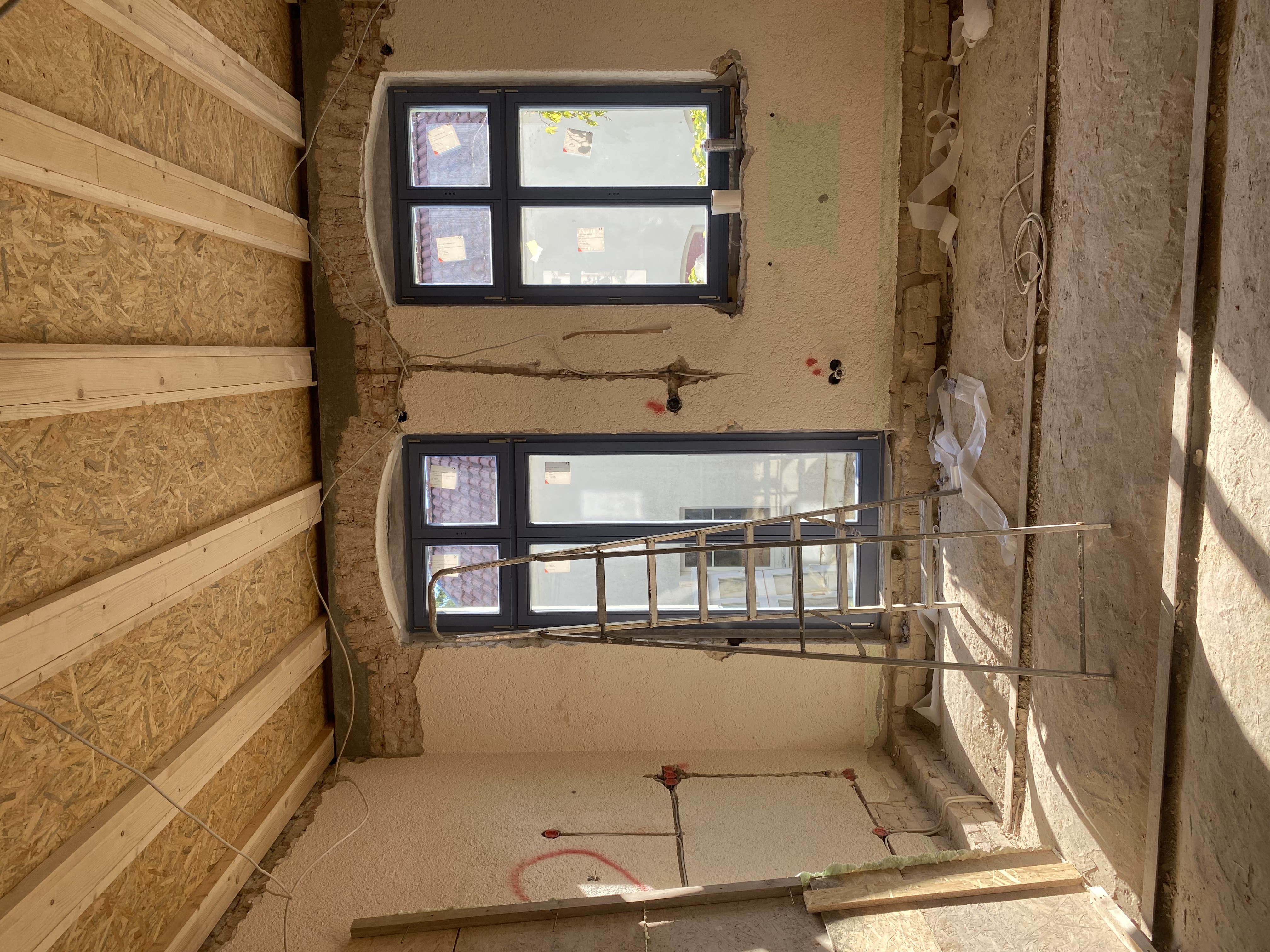
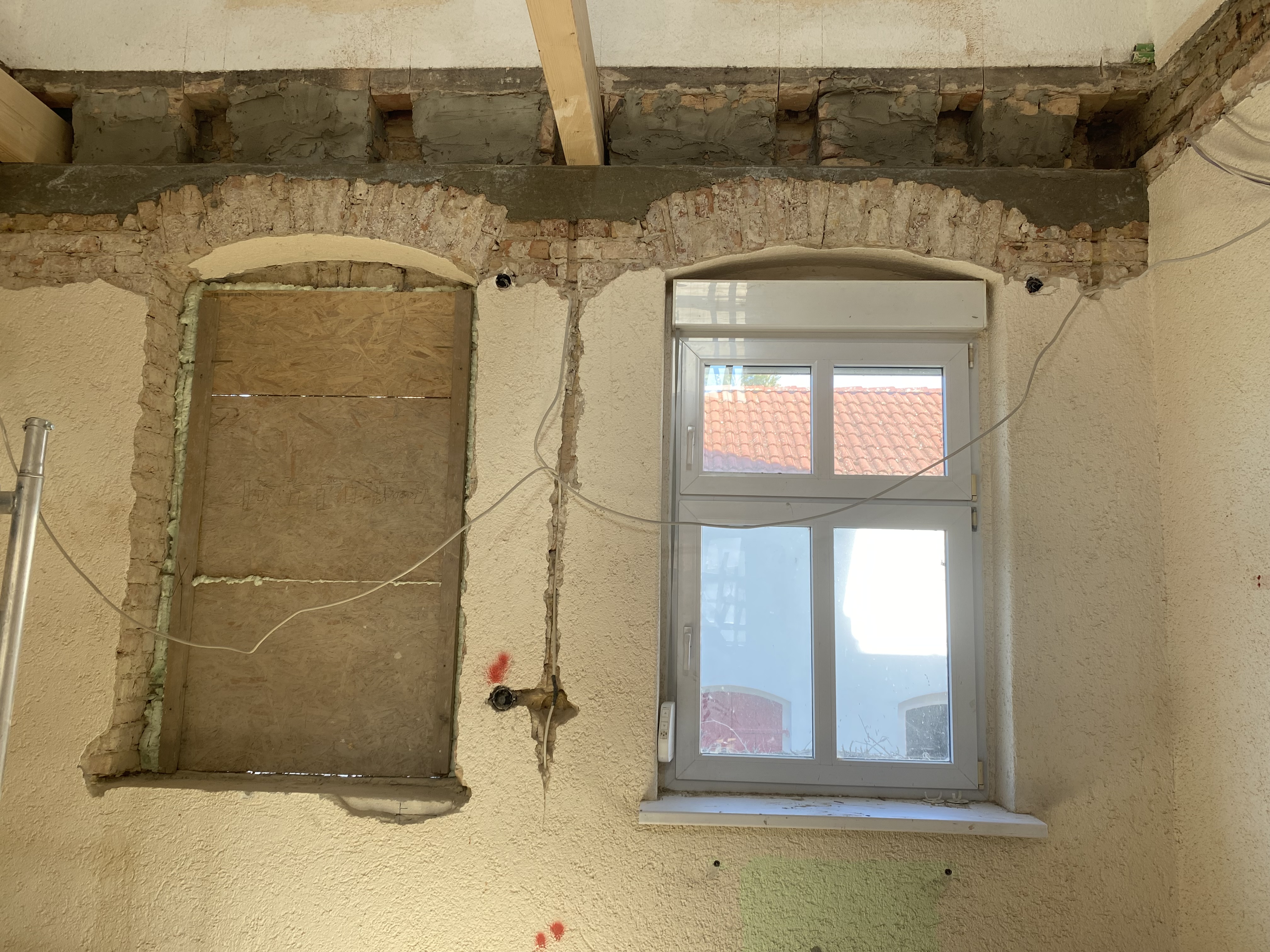
Photos attached from various construction stages in the ground floor showing parts of the beam supports and connections, as well as photos from the upper floor looking into the supports.
I have a question regarding a detail in a renovation of an older building.
Situation:
Old building from around 1890
Brick masonry, externally insulated with 5 cm EPS (2 inches)
A new wooden beam ceiling was installed between the ground floor and the upper floor
New beam ends rest on masonry supports
The beam ends are exposed to air on the sides and top
These cavities are currently still accessible from the upper floor, which is still a shell. The ground floor is already finished.
Now I have reviewed the construction photos from last year. I think the connection of the beams on the ground floor was probably not executed in an airtight manner.
My question is:
Should I loosely fill the side and top cavities around the beam ends with glass wool insulation, or leave them open?
My considerations:
If warm indoor air from the ground floor can actually reach the edge of the ceiling, it might condense on the colder beam ends. If insulation wool is installed, it would reduce thermal bridging and condensation, but it might also dry less effectively.
Leave open or fill with mineral wool?
Is the main issue here the lack of airtightness at the wall-ceiling connection rather than the cavity at the beam end itself?
These are new, dry-installed beam ends, currently without any visible moisture problems.
Thanks for your assessments.
Photos attached from various construction stages in the ground floor showing parts of the beam supports and connections, as well as photos from the upper floor looking into the supports.

Hi,
you are on the right track, even though it sounds a bit like an either-or situation, while the real issue lies elsewhere. The cavity at the beam end is rarely the cause; rather, it’s more of a receiver for what uncontrolled air from the ground floor is flowing in. And the key point is the airtightness at the wall-ceiling junction, not whether there is glass wool insulation in there or not.
When warm indoor air rises, just a few liters per hour are enough to cause condensation on the cooler bricks or wood under winter conditions. Mineral wool reduces the temperature difference somewhat, yes, but it does not prevent convection. On the contrary, if air still gets in, you might actually be hiding the problem because it dries out more slowly.
Leaving it open is more correct from a building physics perspective, but it is only uncritical if absolutely no warm air is coming through. So my question is: do you have any chance to make the connection airtight afterwards, for example by a proper sealing in the upper floor before the structure is closed up?
Adding 5cm (2 inches) of EPS insulation on the outside in an older building is a tricky matter—it shifts the temperature zone significantly inward, making the beam ends more sensitive than before. It’s not dramatic, but it leaves less room for error.
So I would focus less on whether to “fill or not,” and more on how to minimize leakage. Insulation can be added, but airtightness cannot be easily ignored.
you are on the right track, even though it sounds a bit like an either-or situation, while the real issue lies elsewhere. The cavity at the beam end is rarely the cause; rather, it’s more of a receiver for what uncontrolled air from the ground floor is flowing in. And the key point is the airtightness at the wall-ceiling junction, not whether there is glass wool insulation in there or not.
When warm indoor air rises, just a few liters per hour are enough to cause condensation on the cooler bricks or wood under winter conditions. Mineral wool reduces the temperature difference somewhat, yes, but it does not prevent convection. On the contrary, if air still gets in, you might actually be hiding the problem because it dries out more slowly.
Leaving it open is more correct from a building physics perspective, but it is only uncritical if absolutely no warm air is coming through. So my question is: do you have any chance to make the connection airtight afterwards, for example by a proper sealing in the upper floor before the structure is closed up?
Adding 5cm (2 inches) of EPS insulation on the outside in an older building is a tricky matter—it shifts the temperature zone significantly inward, making the beam ends more sensitive than before. It’s not dramatic, but it leaves less room for error.
So I would focus less on whether to “fill or not,” and more on how to minimize leakage. Insulation can be added, but airtightness cannot be easily ignored.
Hello,
Thank you for your answers.
Yes, the cleanest solution would probably be to ensure airtightness. It might be possible from above if you open the ceiling locally again. But that is quite labor-intensive. How would you best proceed with this – compressible tape or something similar around the beam, then plaster over it?
The question is, what happens if I don’t do this now?
I had a calculation done – the dew point (outside -5°C (23°F), inside 20°C (68°F), indoor relative humidity 50%) would be within the insulation. Even at 60%, it would still be inside.
However, the situation with significant leaks is indeed more complex than that and probably more critical, right?
Will my joists really start to decay quickly? Is airtightness at the support typically handled this way?
Best regards
Thank you for your answers.
Yes, the cleanest solution would probably be to ensure airtightness. It might be possible from above if you open the ceiling locally again. But that is quite labor-intensive. How would you best proceed with this – compressible tape or something similar around the beam, then plaster over it?
The question is, what happens if I don’t do this now?
I had a calculation done – the dew point (outside -5°C (23°F), inside 20°C (68°F), indoor relative humidity 50%) would be within the insulation. Even at 60%, it would still be inside.
However, the situation with significant leaks is indeed more complex than that and probably more critical, right?
Will my joists really start to decay quickly? Is airtightness at the support typically handled this way?
Best regards
So, airtightness is always a tricky issue in older buildings, especially when you address it afterward. I understand that you might think it could become too complicated, but if you see the crack in the beam as a symptom of a deeper construction problem, then a proper solution in the right place is actually the long-term approach.
In such cases, compressible sealing tape is indeed a common option. The key is to install it correctly – meaning all connections must be sealed tightly without causing further damage to the wall structure. This solution is often underestimated, especially when it comes to truly stopping the air exchange. Otherwise, you end up in a situation where you simply cannot control condensation over time. That, in turn, leads to the beam ends deteriorating faster than you would like.
The question of whether this is “commonly done as a rule” is always difficult to answer in older building cases. Particularly at the beam supports, perfect airtightness is rarely seen – and this can cause problems during prolonged or harsh winters. In your situation, the risk of damaging the building fabric over time without proper sealing is real. Whether the beam ends will “break down quickly” unfortunately only becomes clear when it’s too late.
Be honest with yourself: Do you feel the crack is changing or growing over time? Or is it currently more like a shadow of poor building conditions? This might help estimate how urgent the issue really is.
In such cases, compressible sealing tape is indeed a common option. The key is to install it correctly – meaning all connections must be sealed tightly without causing further damage to the wall structure. This solution is often underestimated, especially when it comes to truly stopping the air exchange. Otherwise, you end up in a situation where you simply cannot control condensation over time. That, in turn, leads to the beam ends deteriorating faster than you would like.
The question of whether this is “commonly done as a rule” is always difficult to answer in older building cases. Particularly at the beam supports, perfect airtightness is rarely seen – and this can cause problems during prolonged or harsh winters. In your situation, the risk of damaging the building fabric over time without proper sealing is real. Whether the beam ends will “break down quickly” unfortunately only becomes clear when it’s too late.
Be honest with yourself: Do you feel the crack is changing or growing over time? Or is it currently more like a shadow of poor building conditions? This might help estimate how urgent the issue really is.
Similar topics