
Hello everyone,
I am currently thinking about the shading for my 5x5m (16x16 ft) wooden deck, which will be used as an outdoor dining area. Normally, I would have installed a louvered roof without hesitation. Until I saw this:
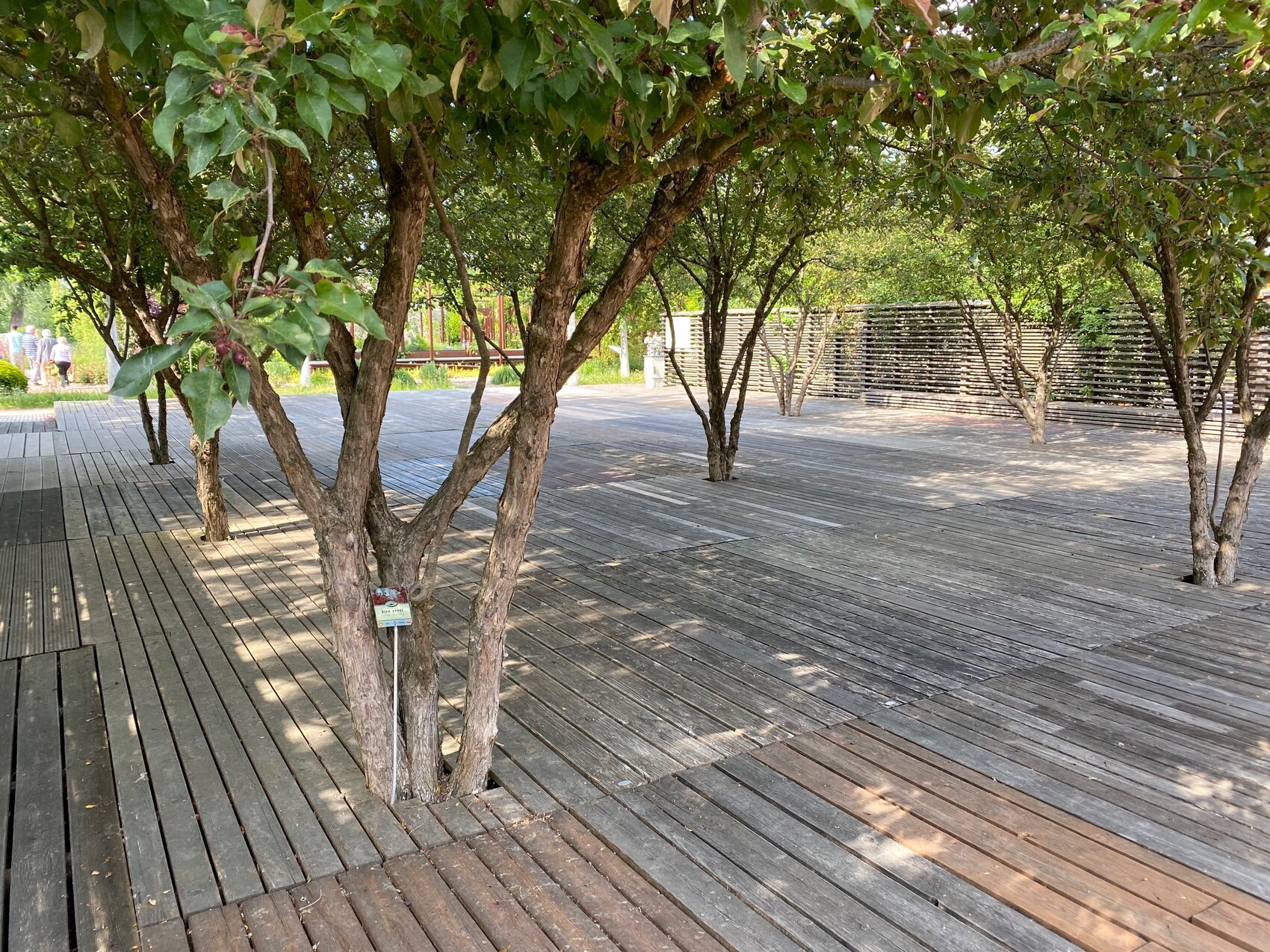
Is such natural shading practical? The distance between the crab apple trees is exactly 5m (16 ft), which matches our dimensions perfectly. Which plants are suitable for this? Preferably not ones that attract a lot of insects...
I am currently thinking about the shading for my 5x5m (16x16 ft) wooden deck, which will be used as an outdoor dining area. Normally, I would have installed a louvered roof without hesitation. Until I saw this:
Is such natural shading practical? The distance between the crab apple trees is exactly 5m (16 ft), which matches our dimensions perfectly. Which plants are suitable for this? Preferably not ones that attract a lot of insects...
A
Alessandro10 Aug 2020 08:16Yes, I have already done all of that, but as you can see, the tree should have a nice canopy that also provides shade. What use is a birch tree for that?
Maple trees are often used for avenues, which is why I assumed it would be a low-maintenance tree.
I plan to buy the trees at an appropriate size rather than growing them from seedlings.
The Japanese maple was recommended to me by the nursery for my needs.
Maple trees are often used for avenues, which is why I assumed it would be a low-maintenance tree.
I plan to buy the trees at an appropriate size rather than growing them from seedlings.
The Japanese maple was recommended to me by the nursery for my needs.

 Winniefred10 Aug 2020 12:32
Well, birches can also be trained differently, and there are several types of birches, beeches, and maples with varying heights, requirements, and crown shapes. Some of them can indeed be trained to grow exactly as you want. There are also examples in fruit trees that you wouldn’t expect. Personally, I like maple trees; we have one in our garden (don’t ask me about the species), and I have never watered it—it still looks great. For a project like this, you probably won’t find trees that are already shaped exactly how you need them. It requires patience. The older the tree, the more expensive it is, and the more difficult it is for it to establish itself. And training is unavoidable—trees won’t grow by themselves like in the pictures or as you see them in parks. It takes care and often several years since planting.

A
Alessandro10 Aug 2020 13:11Winniefred schrieb:
Birches can also be trained differently, and there are several species of birch, beech, and maple with varying heights, requirements, and crown shapes. Some can even be shaped according to your preferences. You can see similar examples in fruit trees as well, which might surprise you. Personally, I like maple—we have one in the garden (don’t ask me the species), and I’ve never watered it, yet it looks great. For a project like this, you probably won’t find trees that are already shaped exactly how you want. It takes patience. The older the tree, the more expensive and challenging it is for the tree to establish itself. Training is essential too; trees don’t grow on their own like in pictures or parks—there’s care and often several years of effort involved since planting. You can definitely buy them already shaped like that. They cost a bit more, but that doesn’t bother me.
PS: Birches make a huge mess.
My dream would be to plant a fully grown weeping willow in the garden, but in terms of mess, they’re comparable to birches.
Alessandro schrieb:
You can buy those ready-made. They just cost a bit more, but I don’t mind.
PS: Birches create a lot of mess.
My dream would be to plant a full-grown weeping willow in the garden, but the mess they make is comparable to birches. However, they need to be pruned regularly at the top if you want them to keep that shape. I imagine that can be quite challenging.
Best regards,
Sabine
Similar topics