
With our new house, I finally became the proud owner of a wood-fired oven in the garden. I had been dreaming of this for such a long time! Baking your own bread, and doing it properly in an oven that was heated with wood beforehand.
The installation took place as part of the garden landscaping, although the garden landscaper didn’t do the work. My husband built the foundation, and then a stove setter installed the oven.
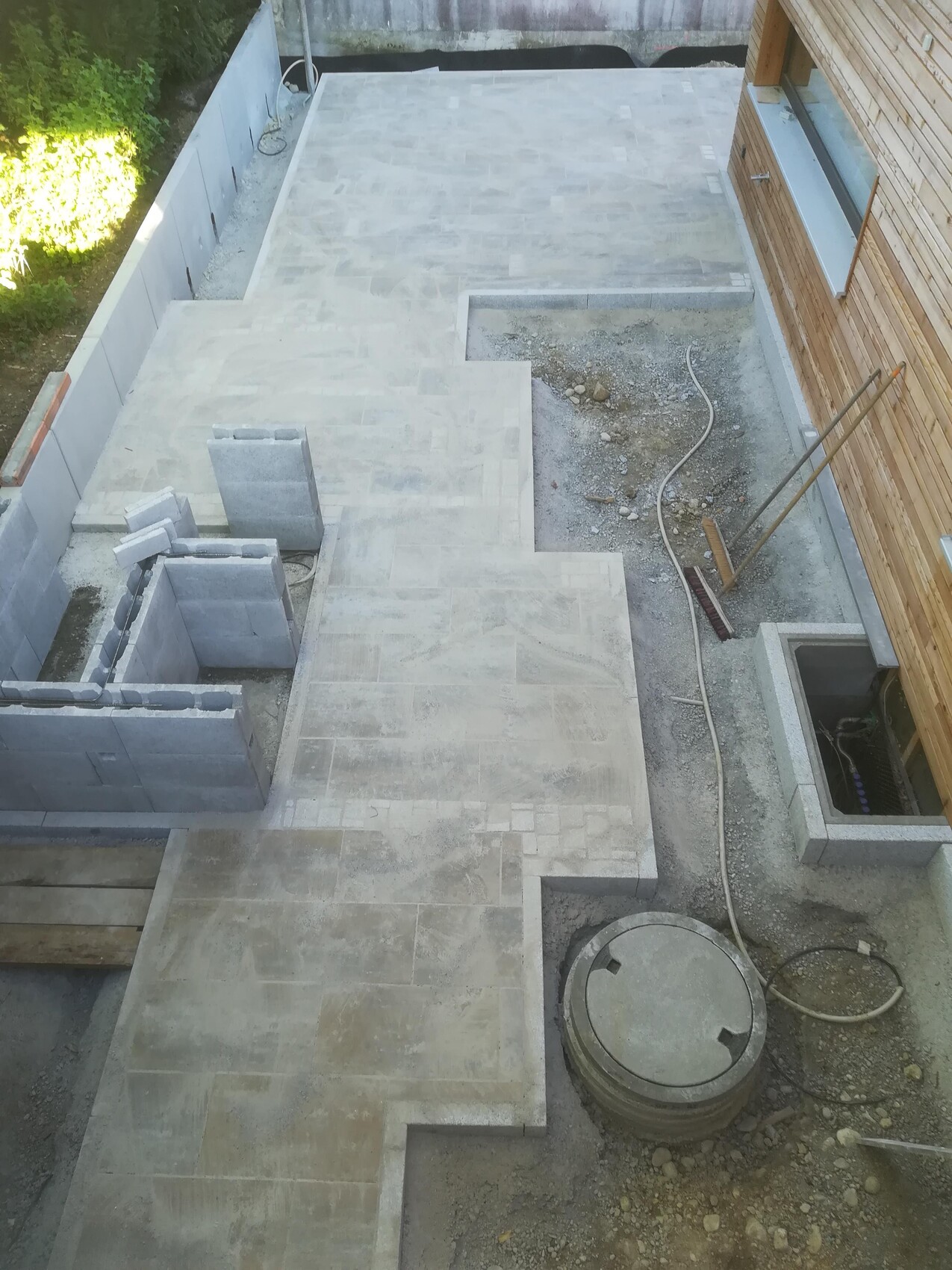
The masonry foundation:
Now plastered:
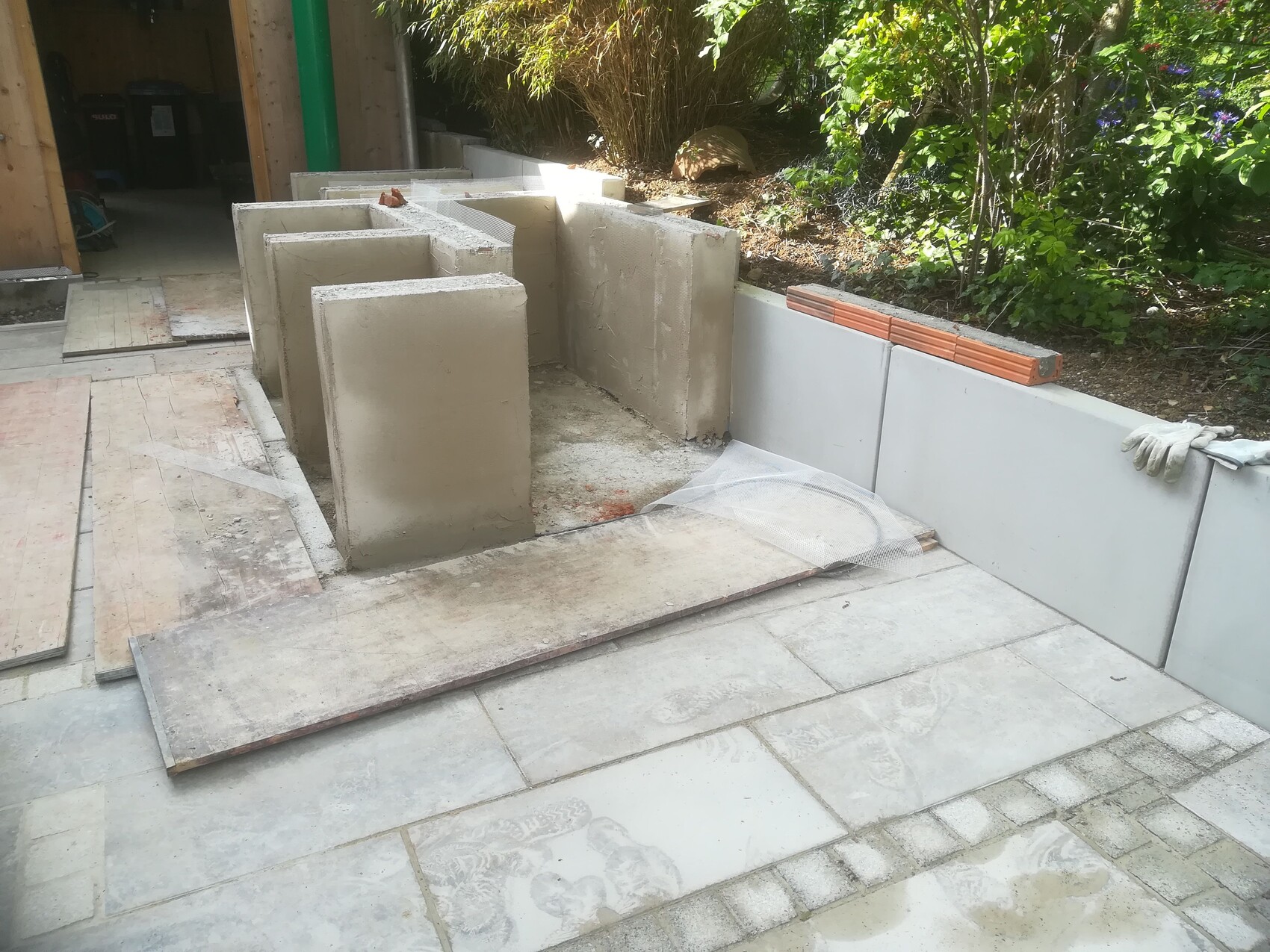
Then brick lintels were placed on top:

And finally, the oven was installed (it was a kit from Kandern Feuerfest):
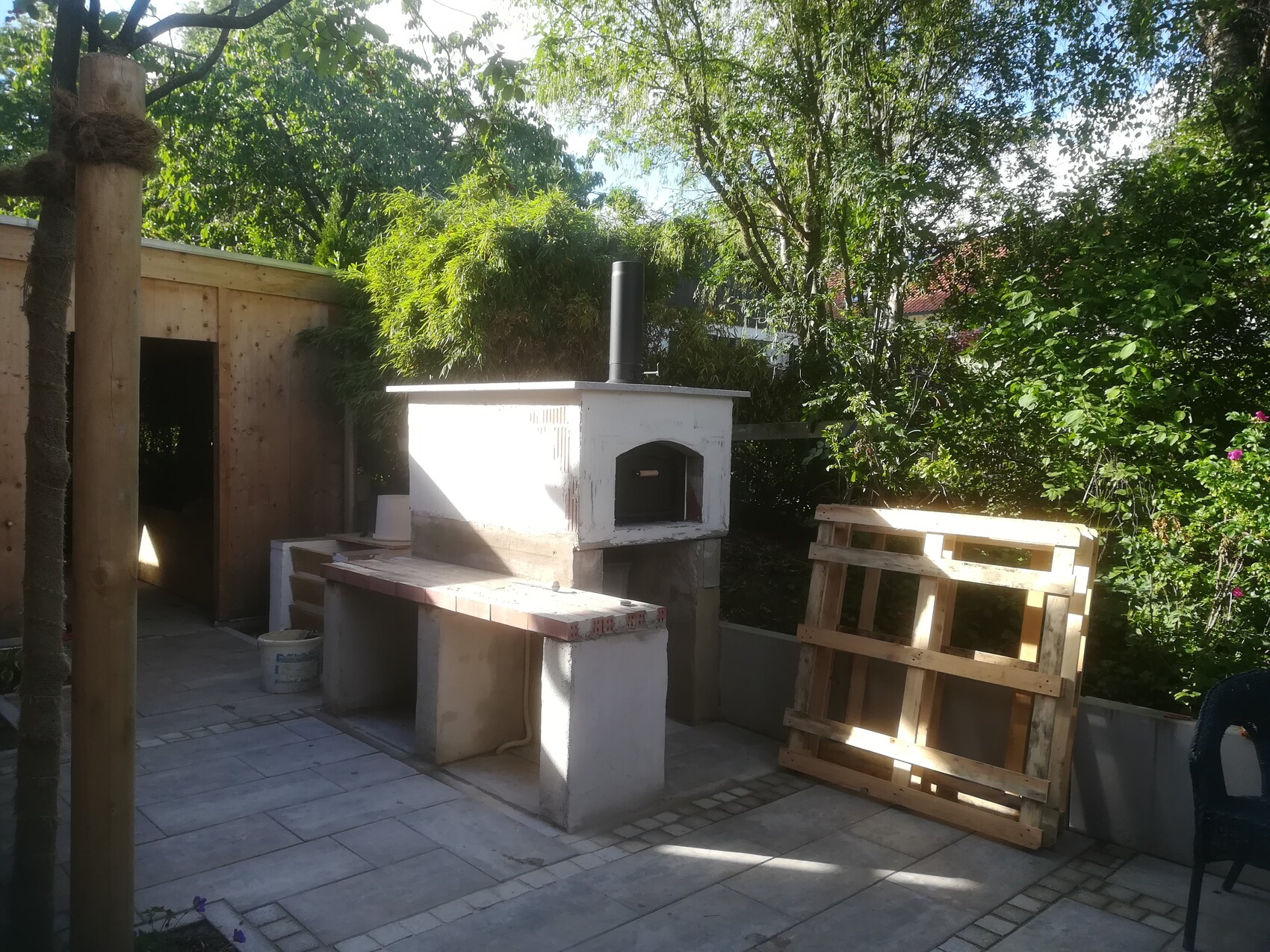
On top, granite slabs were added, and the work surface next to the oven now also has a granite slab that we had cut to size.
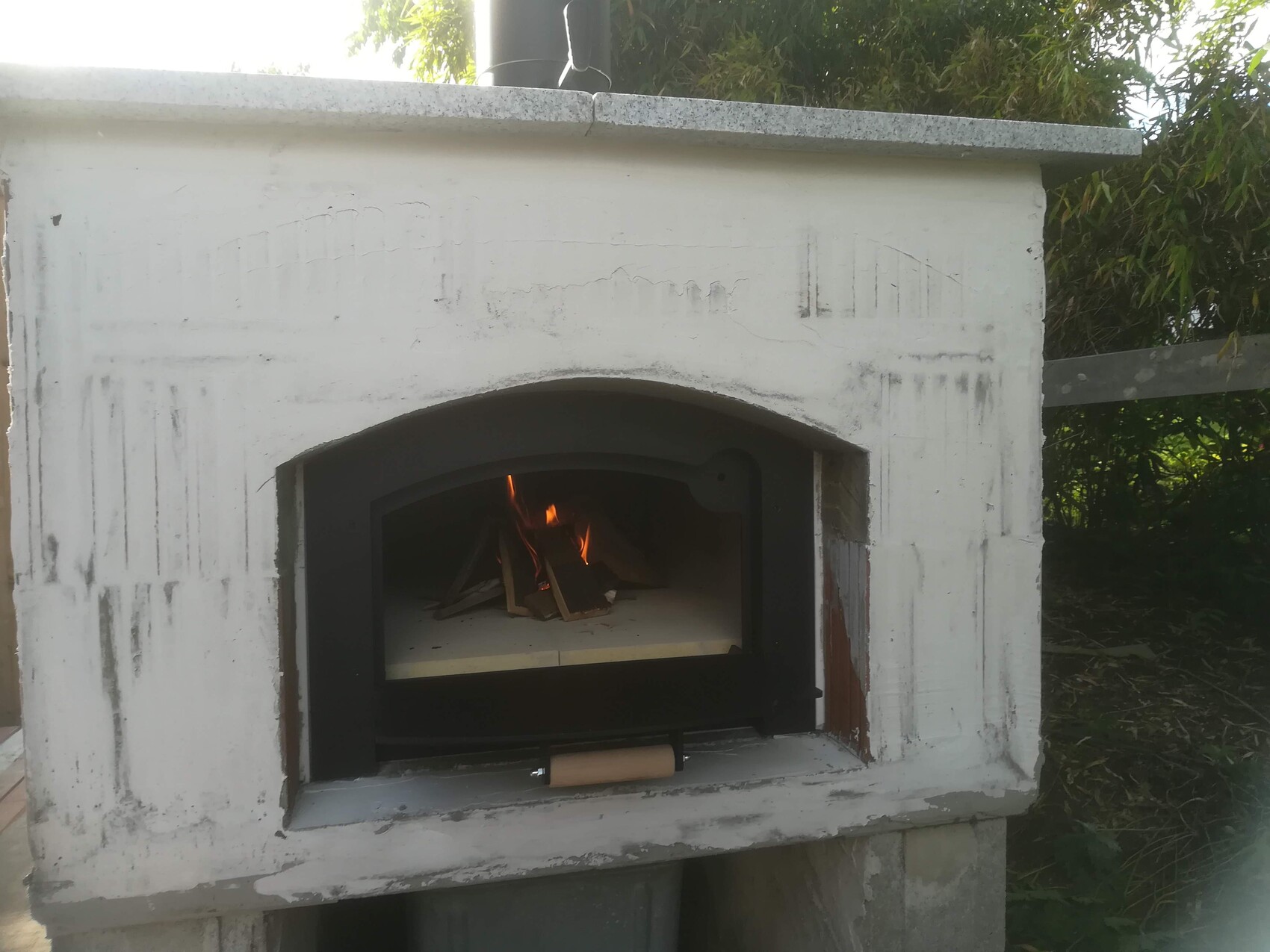
After a few days, the oven was cured. This meant starting slowly with small loads of wood until it was possible to use the full amount, making the oven fully operational. This is a process that takes several days:
Finally, we were able to use the oven for the first time! Since I didn’t have any sourdough starter yet, we baked a bread using ready-made sourdough (which can no longer be used as a leavening agent, but only adds flavor) and a ciabatta:
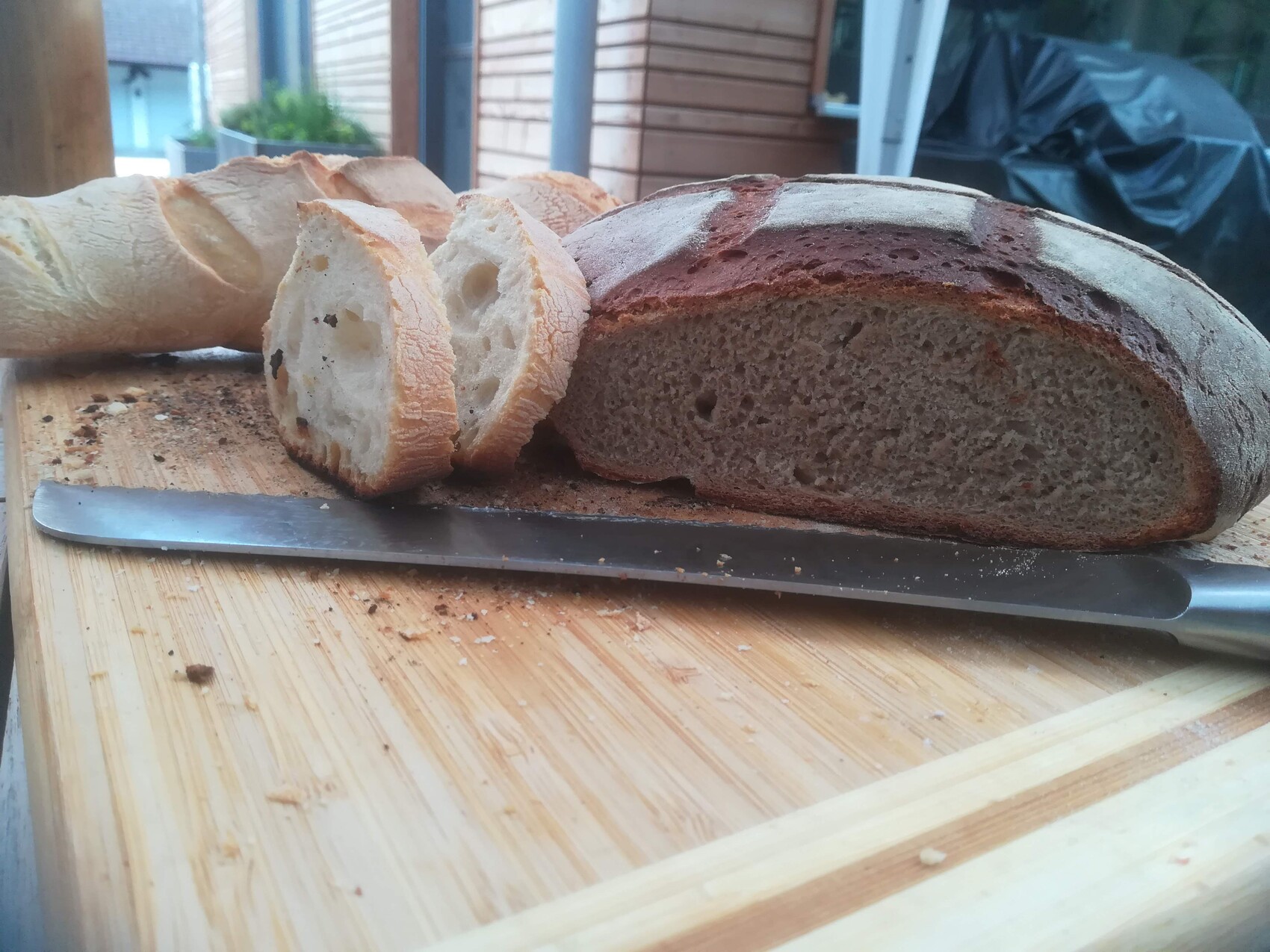
We were already very impressed. You can always use the residual heat for all kinds of slow-cooked dishes:
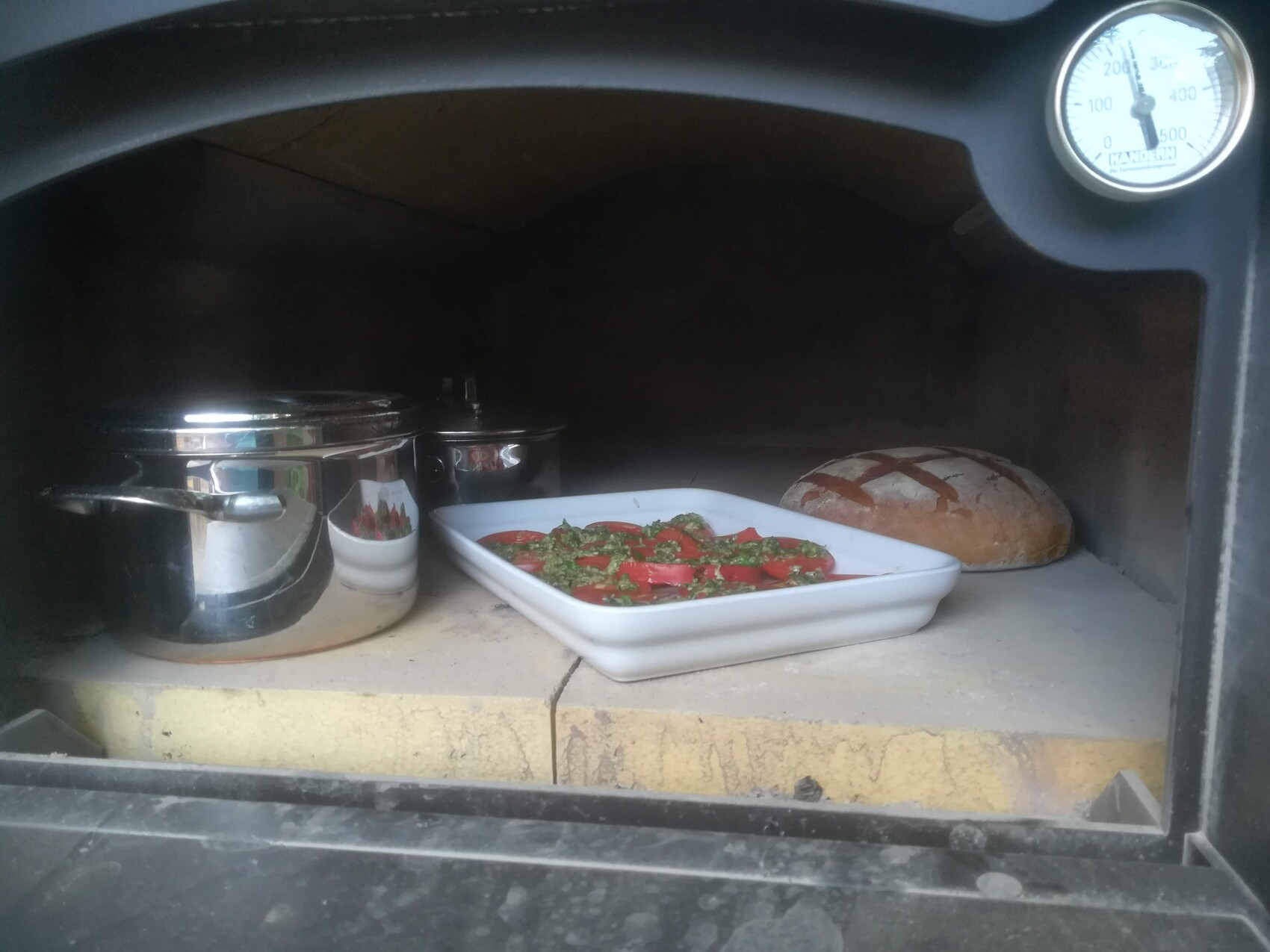
By now, we have become pros. Whether venison leg, layered meat, rabbit, or goulash — there is always something we put into the oven after baking bread, and without any extra effort, we have wonderfully tender meat dishes after a few hours or overnight.
Of course, you need to upgrade your equipment:
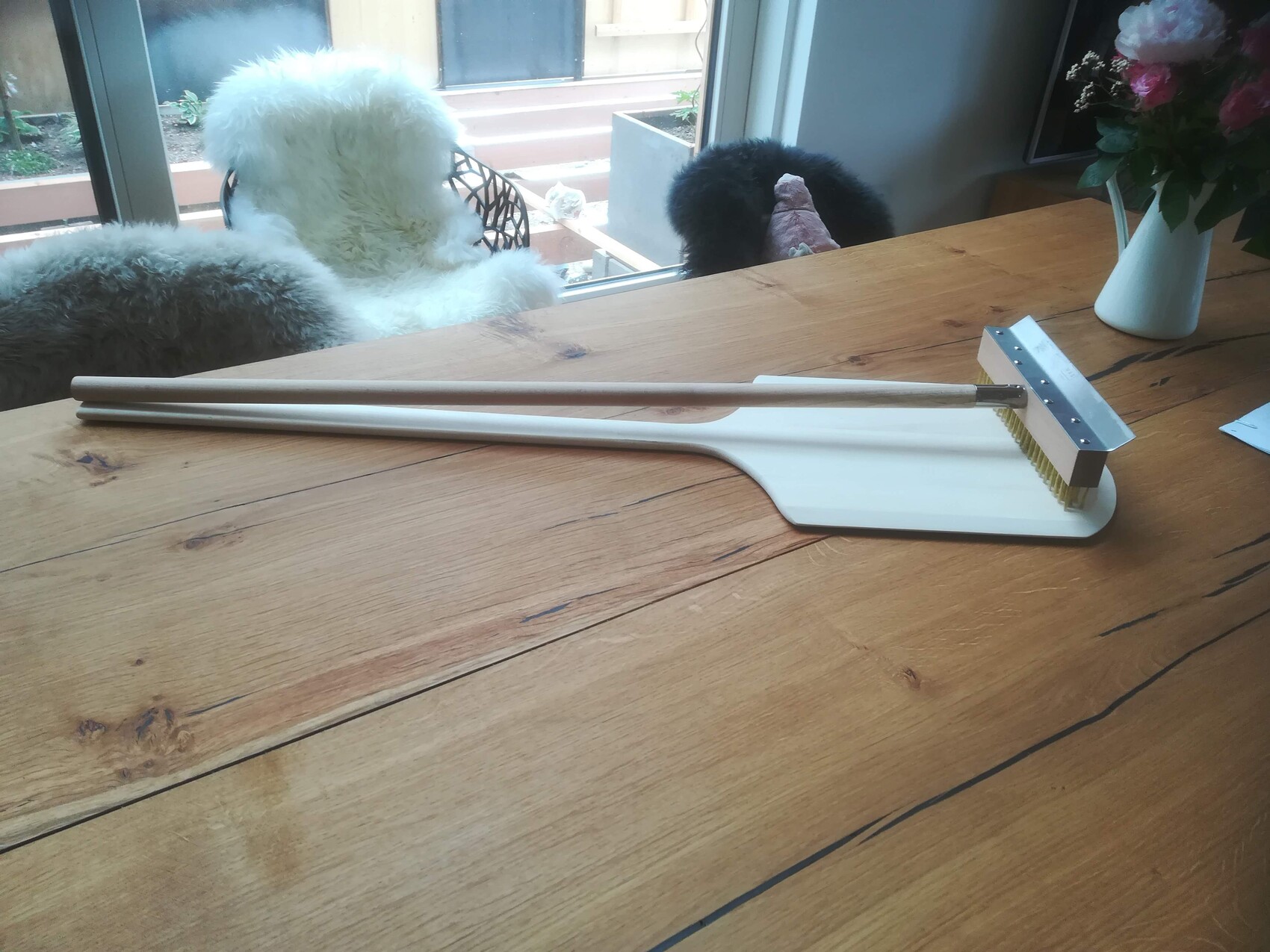
A bread peel and a fire rake with a brush to clean the baking chamber after heating. We knew that we would need these.
The installation took place as part of the garden landscaping, although the garden landscaper didn’t do the work. My husband built the foundation, and then a stove setter installed the oven.
The masonry foundation:
Now plastered:
Then brick lintels were placed on top:
And finally, the oven was installed (it was a kit from Kandern Feuerfest):
On top, granite slabs were added, and the work surface next to the oven now also has a granite slab that we had cut to size.
After a few days, the oven was cured. This meant starting slowly with small loads of wood until it was possible to use the full amount, making the oven fully operational. This is a process that takes several days:
Finally, we were able to use the oven for the first time! Since I didn’t have any sourdough starter yet, we baked a bread using ready-made sourdough (which can no longer be used as a leavening agent, but only adds flavor) and a ciabatta:
We were already very impressed. You can always use the residual heat for all kinds of slow-cooked dishes:
By now, we have become pros. Whether venison leg, layered meat, rabbit, or goulash — there is always something we put into the oven after baking bread, and without any extra effort, we have wonderfully tender meat dishes after a few hours or overnight.
Of course, you need to upgrade your equipment:
A bread peel and a fire rake with a brush to clean the baking chamber after heating. We knew that we would need these.
H
hampshire20 Aug 2020 13:43pffreestyler schrieb:
A call for excessive consumptionThat’s one way to interpret it, but I’m sure that’s not the intention. I think it’s good to buy things consciously and put some thought into it:- Do I really need this?
- If yes: Which option is sustainable / healthy / fair...?
- If no:
- Do I really want it = does it contribute to my quality of life in the long term?
- If yes: Which option is sustainable / healthy / fair...?
- If no: do not buy
- Can I afford it?
- If no: do not buy.
- If yes: Compare the additional cost of the "best" option and don’t make cost the sole criterion.
Certainly, at least in my decisions, there is often a degree of cognitive dissonance involved. That’s pretty much the case in itself when building your own home.