
ᐅ My house design? Feedback welcome! Suggestions for improvements?
Created on: 12 Sep 2014 15:18
W
wolfgangp
Hello,
Since I would like to design my house myself, I am now sharing my draft here. Of course, the next step will be to consult a builder / structural engineer, but first I want to put my own ideas on paper.
Some key data about the plan:
- Plot size: approx. 1350m² (left west, bottom south)
- Sloped site (zero point is in the west) with about 6m (20 feet) elevation change
- Planned as a solid masonry house with 50cm (20 inches) bricks
- Garage is thermally separated from the house
- Heating: geothermal with deep drilling, possibly with additional solar heating
- The street on the west side is only a 3m (10 feet) wide dead-end and leads to just one other house
- No light wells included in the plan yet
- A sliding door will be installed between the entrance hall and the living / dining room
- Roof has a 45-degree pitch and should have an interior height of about 2m (6.5 feet) in the center for the attic, so that an additional room could possibly be created there in the future
- Knee wall height on the top floor is 1.4m (4.5 feet)
- To the left of the fireplace on the ground floor there is a skylight to bring light from the living room into the entrance hall
- Bay window will be equipped with Venetian blinds
- One option could be to extend the upper floor over the bay window:
1. Balcony only
2. Additional room
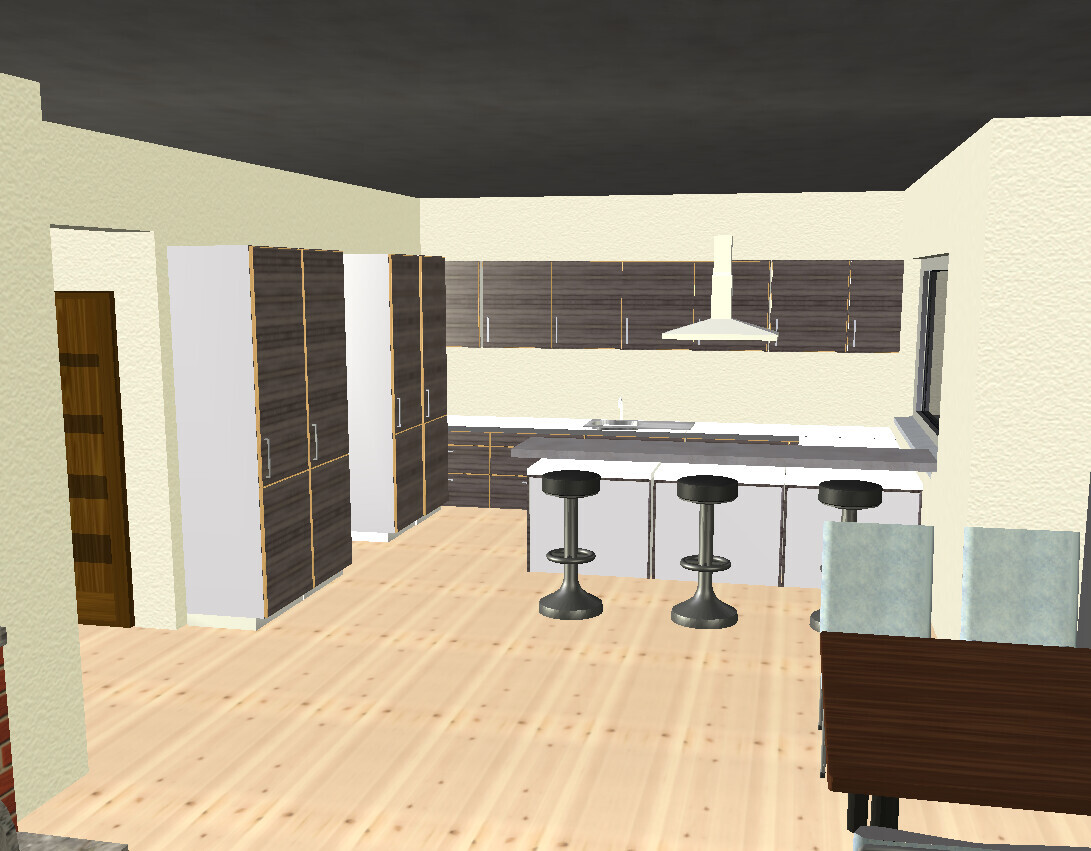
- Kitchen layout is only set by shape so far, without appliances etc.
- The fireplace is intended to be a corner glass fireplace (like, for example, by Brunner)
Questions:
- What do you think about the layout, what would you improve?
- Where is the best place for the garbage bins? (in the garage or outside?)
- The chimney pipe exits through the ridge; will that cause any problems?
- Would it make sense to extend the upper floor over the bay window?
- Is one roof window on the north side sufficient for the upstairs bathroom?
- What improvements could I make regarding the windows?
Best regards, Wolfgang
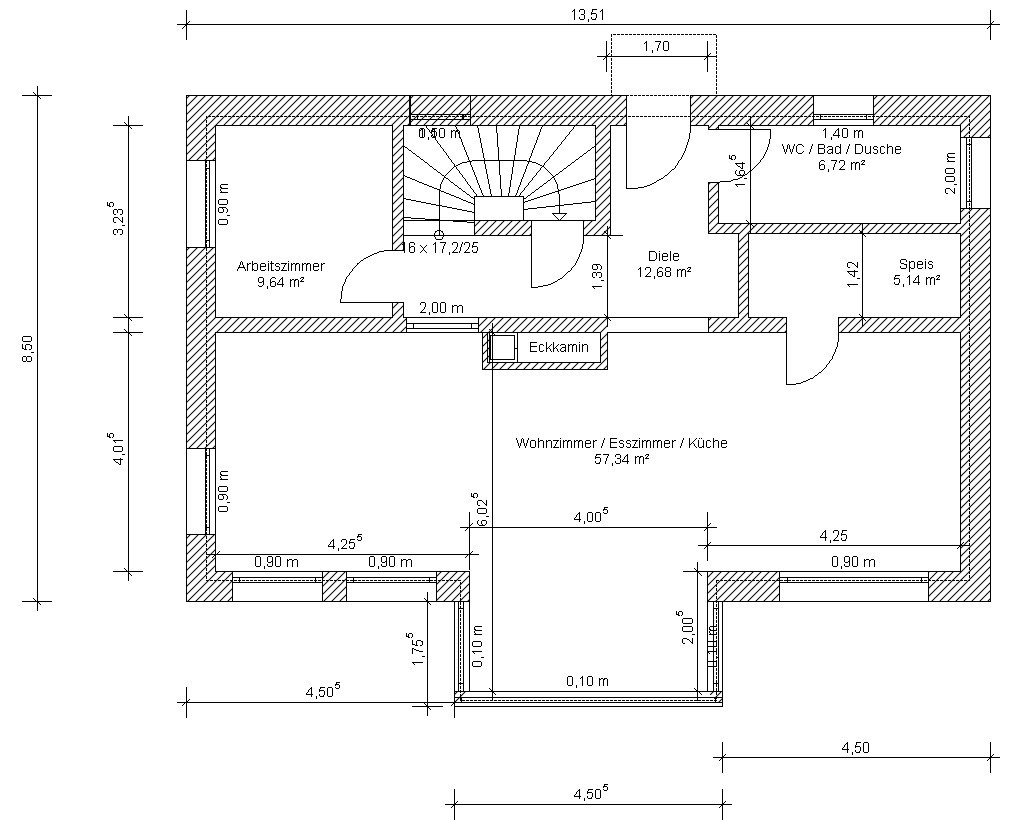
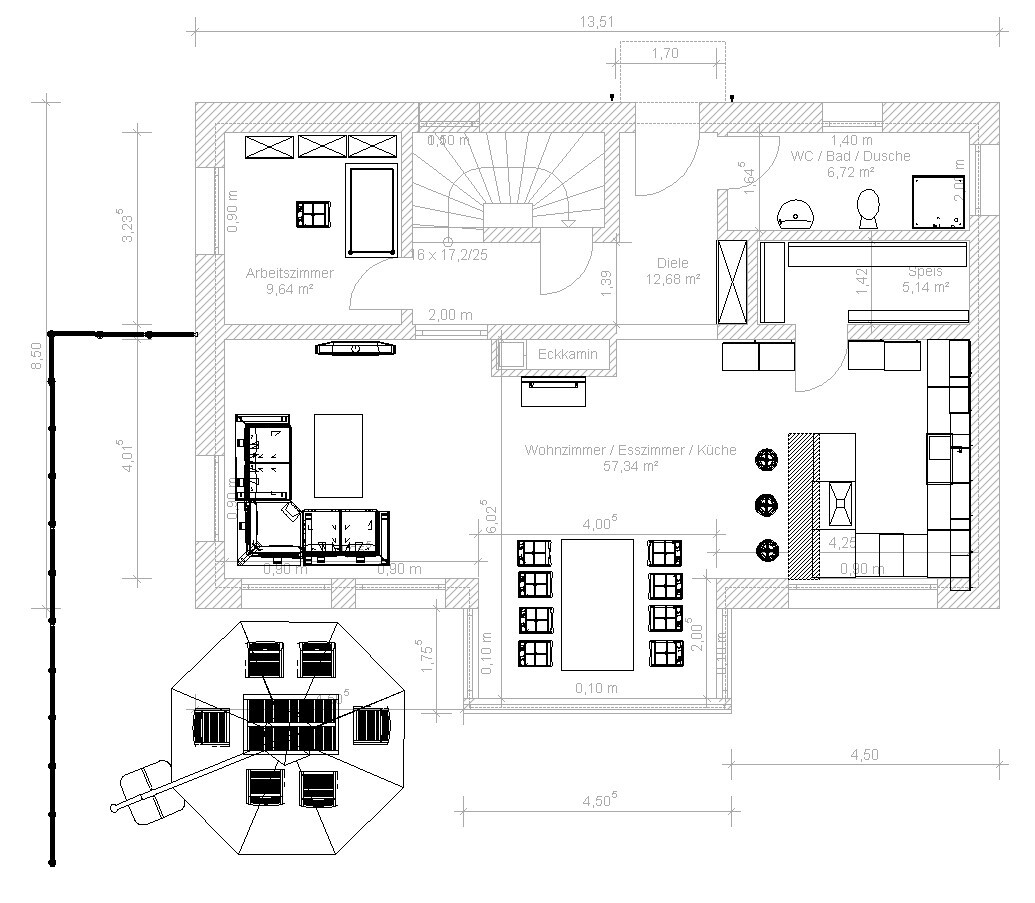
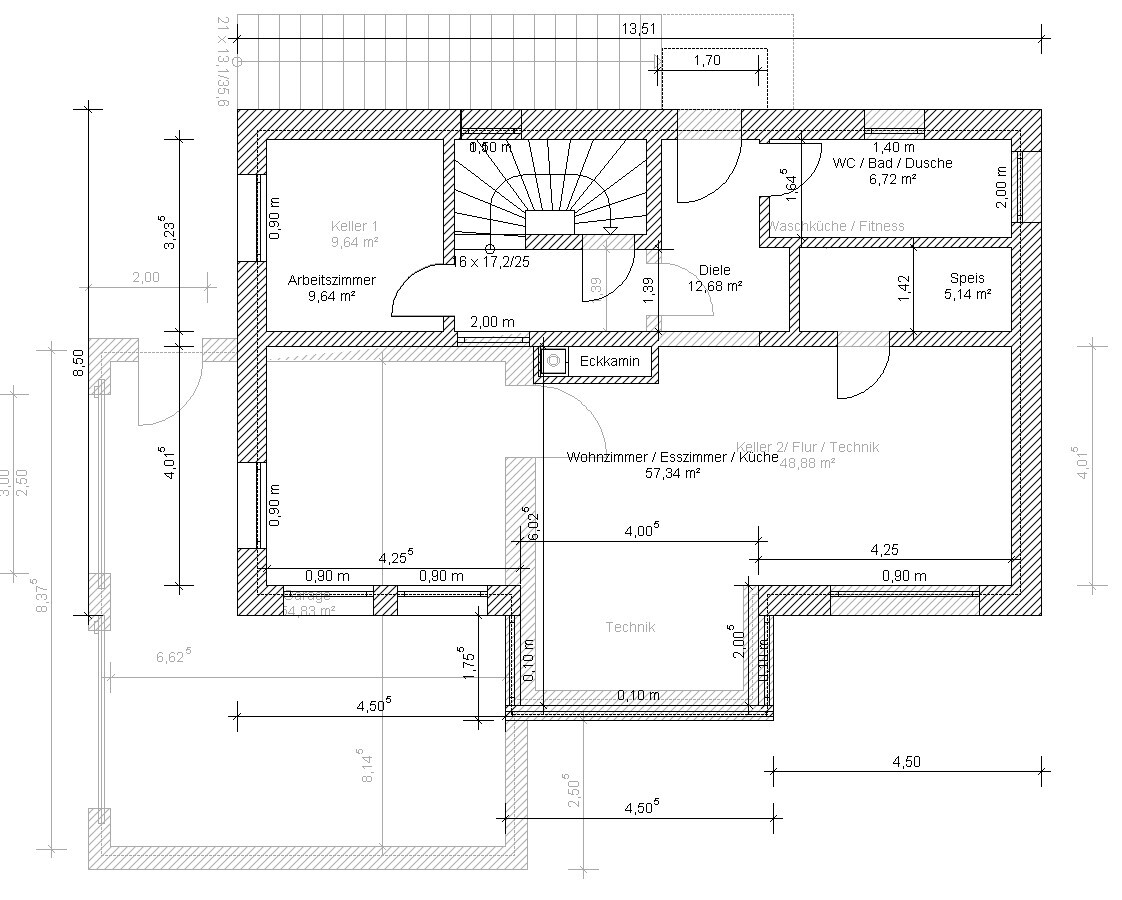
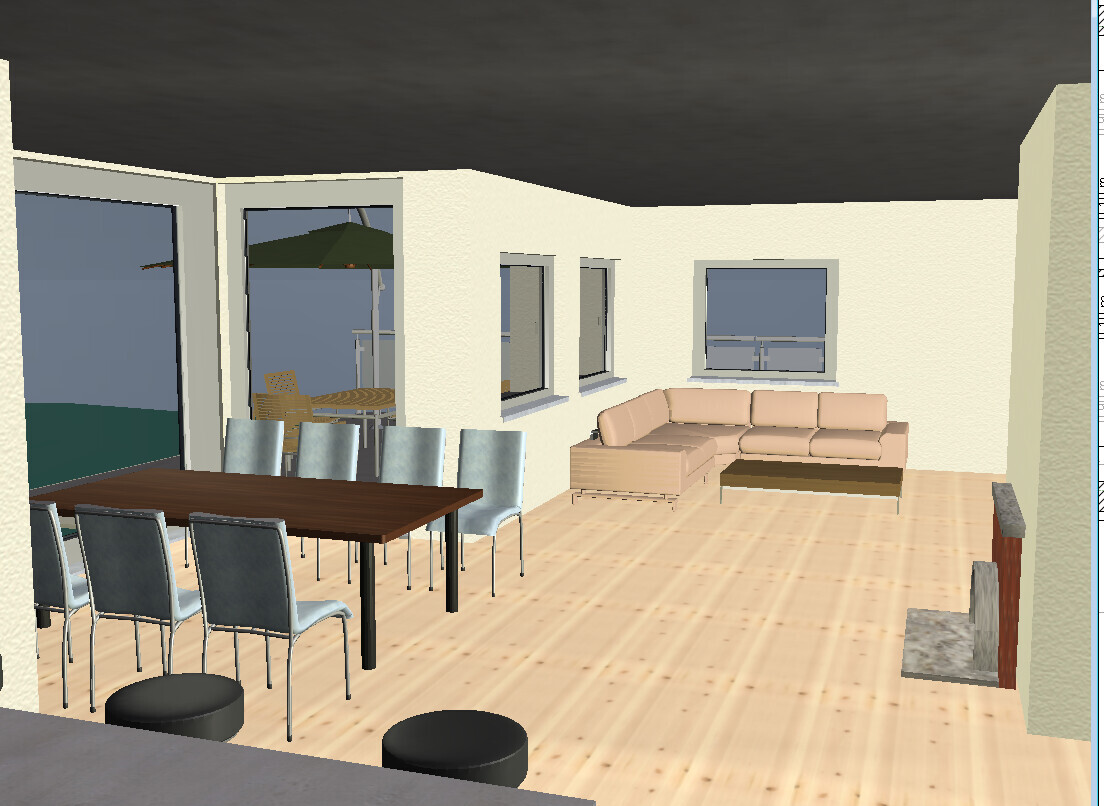
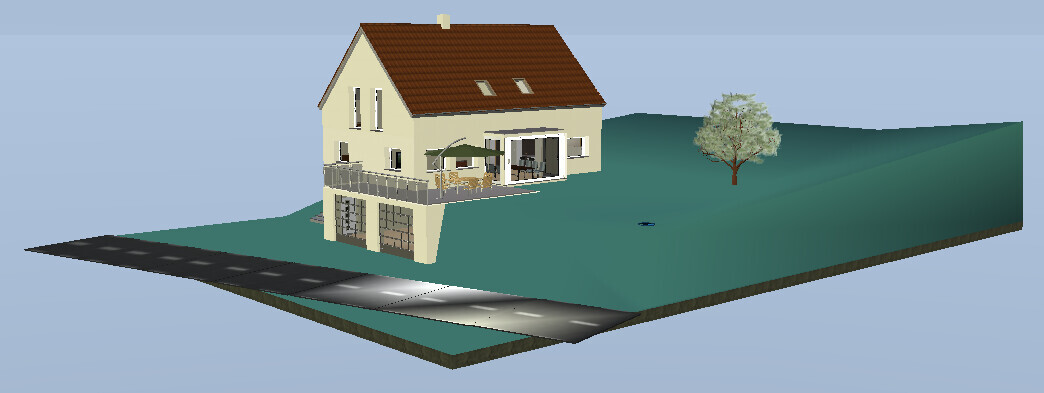
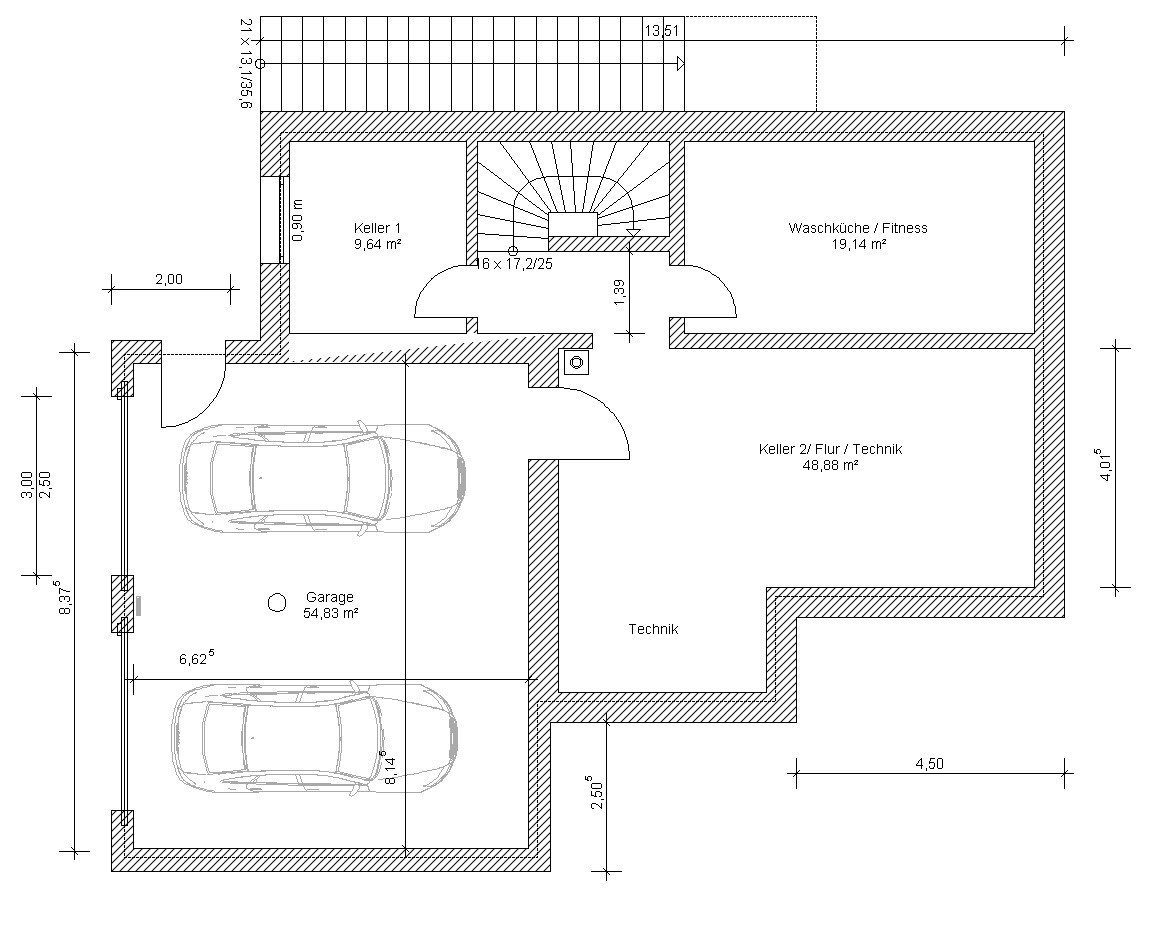


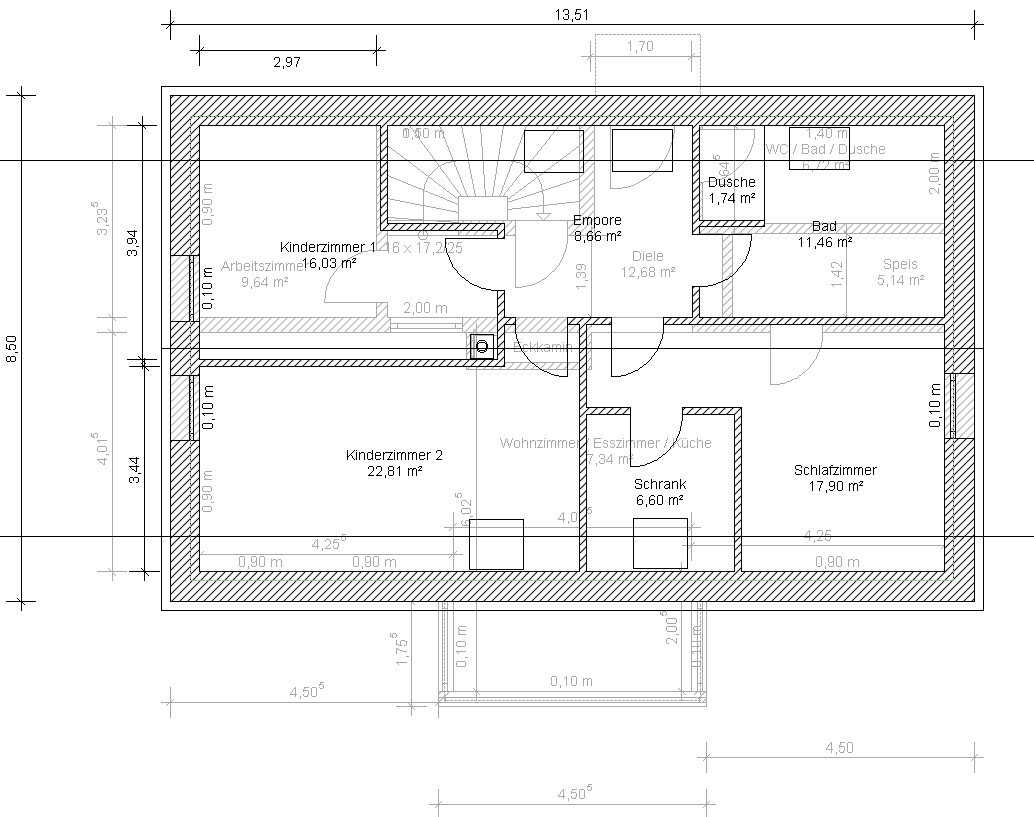
Since I would like to design my house myself, I am now sharing my draft here. Of course, the next step will be to consult a builder / structural engineer, but first I want to put my own ideas on paper.
Some key data about the plan:
- Plot size: approx. 1350m² (left west, bottom south)
- Sloped site (zero point is in the west) with about 6m (20 feet) elevation change
- Planned as a solid masonry house with 50cm (20 inches) bricks
- Garage is thermally separated from the house
- Heating: geothermal with deep drilling, possibly with additional solar heating
- The street on the west side is only a 3m (10 feet) wide dead-end and leads to just one other house
- No light wells included in the plan yet
- A sliding door will be installed between the entrance hall and the living / dining room
- Roof has a 45-degree pitch and should have an interior height of about 2m (6.5 feet) in the center for the attic, so that an additional room could possibly be created there in the future
- Knee wall height on the top floor is 1.4m (4.5 feet)
- To the left of the fireplace on the ground floor there is a skylight to bring light from the living room into the entrance hall
- Bay window will be equipped with Venetian blinds
- One option could be to extend the upper floor over the bay window:
1. Balcony only
2. Additional room
- Kitchen layout is only set by shape so far, without appliances etc.
- The fireplace is intended to be a corner glass fireplace (like, for example, by Brunner)
Questions:
- What do you think about the layout, what would you improve?
- Where is the best place for the garbage bins? (in the garage or outside?)
- The chimney pipe exits through the ridge; will that cause any problems?
- Would it make sense to extend the upper floor over the bay window?
- Is one roof window on the north side sufficient for the upstairs bathroom?
- What improvements could I make regarding the windows?
Best regards, Wolfgang
Wastl schrieb:
The door at the top of the stairs is not allowed.
Sloped stair treads are difficult. What is the height at the outermost point? People usually walk on the outer side because the steps are wider there.No, the problem is not the sloped steps, but the roof structure obstructs walking upright upstairs. The staircase is definitely in the wrong location.
Even if it might just fit, it would probably be too tight to move larger furniture upstairs.
W
wolfgangp13 Sep 2014 16:53Wastl schrieb:
The door at the top of the stairs is not allowed. There is no door at the top of the stairs. The door shown is the one leading down to the basement.
The minimum height for the exterior steps is 1.80 m (5 feet 11 inches) for a few square centimeters, as the roof rises immediately at a 45-degree angle. The knee wall is currently at 1.4 m (4 feet 7 inches).
Yes, I’ve heard several times that these stairs aren’t practical. I’m currently redesigning it to be a landing staircase, shifted outward because I need more space for it. The entrance will then be at the landing.
kaho674 schrieb:
This closet arrangement in the bedroom creates a dark, narrow entrance. I always find that unpleasant. That’s true, I don’t like it either.
klblb schrieb:
The dining table always gets in the way on the way to the terrace. The bay window is 4 m (13 feet) wide on the inside. The table is placed across it. Maybe the plan shows it poorly, but there should be about 1 m (3 feet 3 inches) of space so that you can easily pass the occupied table.
As soon as the plan is finalized, I’ll post it again. I’m also meeting with a builder today who will take a look at it.
W
wolfgangp17 Sep 2014 00:01I have now considered a few other designs for the staircase. Some time ago, I had already thought about the staircase shape and decided on a half-turn staircase at that time.
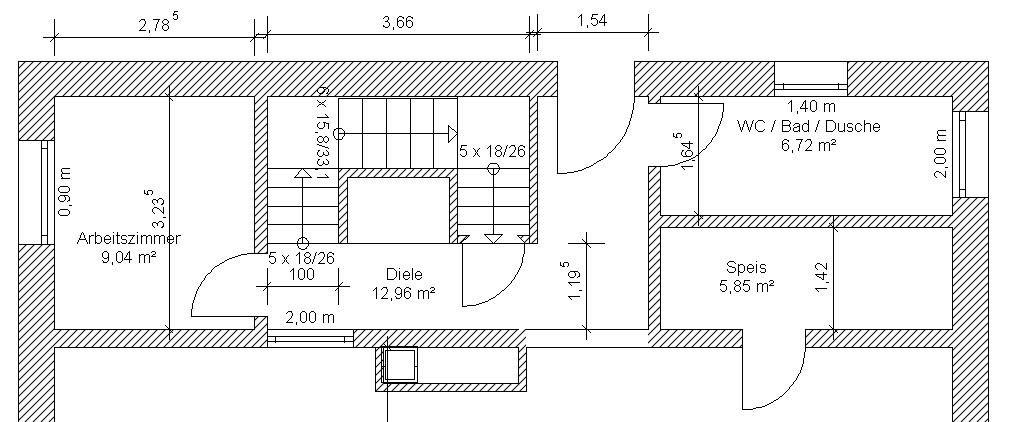
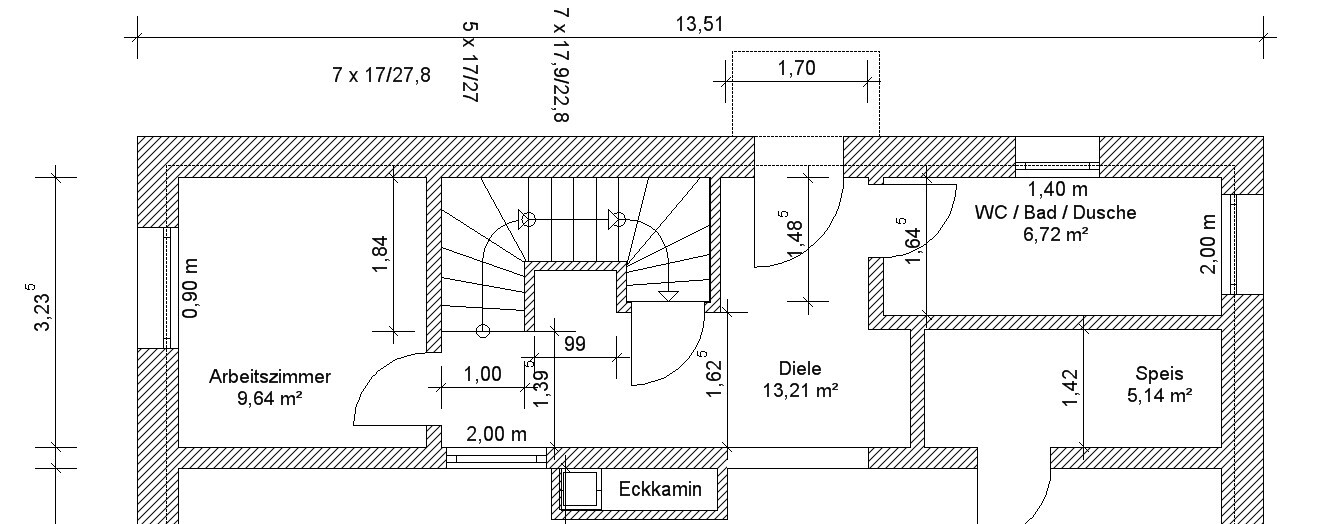
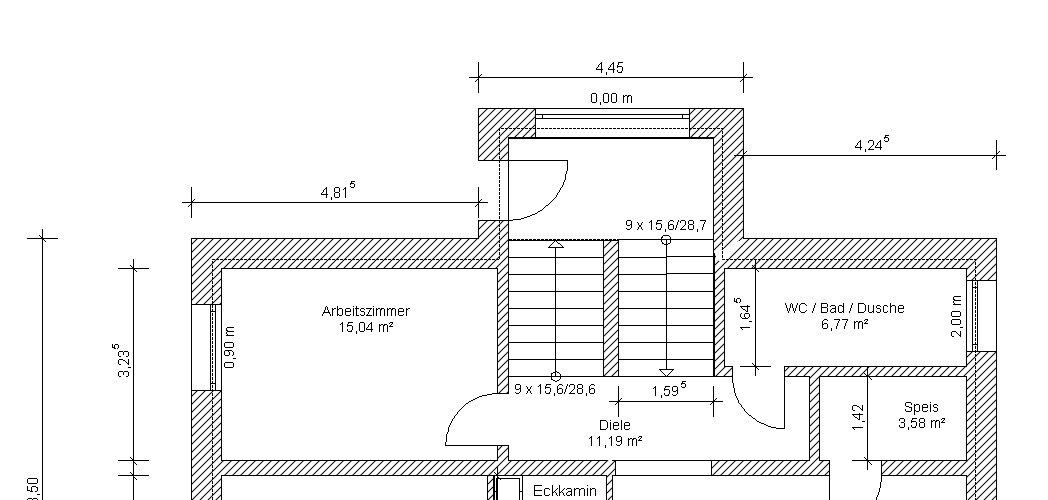
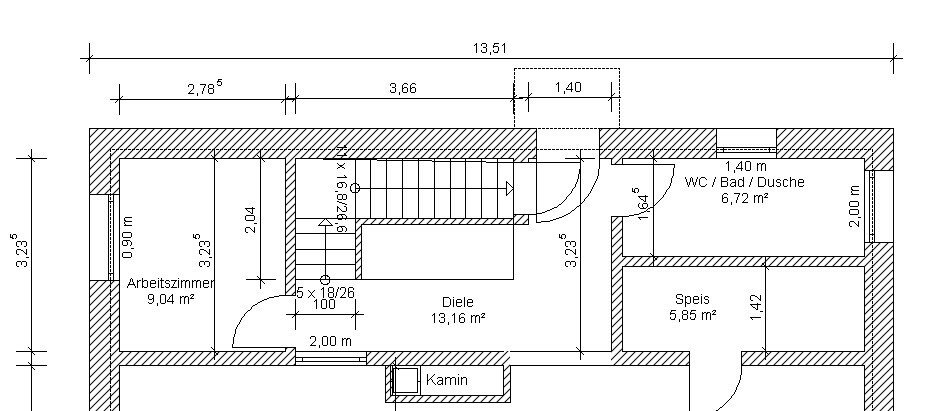
The different options:
- Half-turn 1: The staircase may look inconvenient in the floor plan at first glance, but it is designed with very generous dimensions. (Tread width 1.2m (4 feet))
Advantages: The staircase has at least 2m (6 feet 6 inches) clearance from the roof slope on the outer side (no dormer needed, as knee wall is 1.4m (4 feet 7 inches))
- Three-flight: Tread width 1m (3 feet 3 inches)
Advantages: The staircase has at least 2m (6 feet 6 inches) clearance from the roof slope on the outer side (no dormer needed)
Large stairwell opening
Disadvantages: Hallway passage becomes narrower
- Bay window with landing: Main entrance on the middle landing, tread width variable
Advantages: Tread width can be designed more generously; study room becomes larger; no separate entrance needed
Disadvantages: Large bay window visible from outside (2.5 stories); pantry becomes smaller because access to the bathroom is otherwise not possible
- Quarter-turn: 1m (3 feet 3 inches) tread width
Advantages: No angled steps, large stairwell opening for wardrobe space
Disadvantages: Dormer needed as the exit is at the roof edge; basement door and front door may block each other
- Side landing staircase (no sketch):
Disadvantages: The house would need to be widened to place the ascent, descent, and hallway to the study room side by side
- Half-turn 2: Tread width 1m (3 feet 3 inches)
Advantages: Generously designed: 16-17 steps with 27cm (11 inches) tread depth and 17cm (7 inches) riser height.
The staircase has at least 2m (6 feet 6 inches) clearance from the roof slope on the outer side (no dormer needed)
Hallway wide enough
Disadvantages: Mostly angled steps. In my opinion, however, not disturbing.
I haven’t found many more ways to arrange the staircase. Personally, I would choose half-turn staircase number 2. I have also read here in the forum on the topic of staircase shapes that whether angled steps are perceived as uncomfortable is rather a matter of personal taste or feeling. From my perspective, I see no disadvantages if it is designed generously.
Which staircase design would you choose?

The different options:
- Half-turn 1: The staircase may look inconvenient in the floor plan at first glance, but it is designed with very generous dimensions. (Tread width 1.2m (4 feet))
Advantages: The staircase has at least 2m (6 feet 6 inches) clearance from the roof slope on the outer side (no dormer needed, as knee wall is 1.4m (4 feet 7 inches))
- Three-flight: Tread width 1m (3 feet 3 inches)
Advantages: The staircase has at least 2m (6 feet 6 inches) clearance from the roof slope on the outer side (no dormer needed)
Large stairwell opening
Disadvantages: Hallway passage becomes narrower
- Bay window with landing: Main entrance on the middle landing, tread width variable
Advantages: Tread width can be designed more generously; study room becomes larger; no separate entrance needed
Disadvantages: Large bay window visible from outside (2.5 stories); pantry becomes smaller because access to the bathroom is otherwise not possible
- Quarter-turn: 1m (3 feet 3 inches) tread width
Advantages: No angled steps, large stairwell opening for wardrobe space
Disadvantages: Dormer needed as the exit is at the roof edge; basement door and front door may block each other
- Side landing staircase (no sketch):
Disadvantages: The house would need to be widened to place the ascent, descent, and hallway to the study room side by side
- Half-turn 2: Tread width 1m (3 feet 3 inches)
Advantages: Generously designed: 16-17 steps with 27cm (11 inches) tread depth and 17cm (7 inches) riser height.
The staircase has at least 2m (6 feet 6 inches) clearance from the roof slope on the outer side (no dormer needed)
Hallway wide enough
Disadvantages: Mostly angled steps. In my opinion, however, not disturbing.
I haven’t found many more ways to arrange the staircase. Personally, I would choose half-turn staircase number 2. I have also read here in the forum on the topic of staircase shapes that whether angled steps are perceived as uncomfortable is rather a matter of personal taste or feeling. From my perspective, I see no disadvantages if it is designed generously.
Which staircase design would you choose?
Similar topics