
ᐅ Motion sensors and pets, or additional switches? Experiences?
Created on: 16 Jun 2020 19:02
K
kati1337
Hello again!
We still haven’t finalized our electrical planning. For the upper floor, we would like to install a motion sensor that turns on the hallway lighting when someone opens a door or enters the hallway. According to our electrician, the hallway is quite suitable for this (I attached a picture – the red dot indicates the planned position of the motion sensor).
Now we’re a bit concerned because we have two cats. We want to avoid the cats turning the lights on all night when they move around.
We thought about trying it anyway, hoping the cats won’t trigger the sensor.
However, we also asked if it would be possible to have an additional, regular light switch near the bedroom/guest room area, in case we experience issues with the cats and occasionally want to turn off the automatic mode.
If it’s not possible to use the motion sensor together with a regular light switch, would you still take the risk? Are there any smart alternatives we might be missing?
Best regards
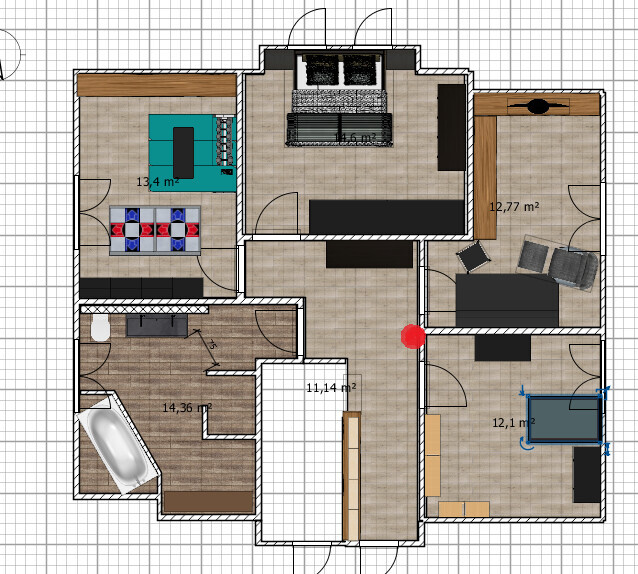
We still haven’t finalized our electrical planning. For the upper floor, we would like to install a motion sensor that turns on the hallway lighting when someone opens a door or enters the hallway. According to our electrician, the hallway is quite suitable for this (I attached a picture – the red dot indicates the planned position of the motion sensor).
Now we’re a bit concerned because we have two cats. We want to avoid the cats turning the lights on all night when they move around.
We thought about trying it anyway, hoping the cats won’t trigger the sensor.
However, we also asked if it would be possible to have an additional, regular light switch near the bedroom/guest room area, in case we experience issues with the cats and occasionally want to turn off the automatic mode.
If it’s not possible to use the motion sensor together with a regular light switch, would you still take the risk? Are there any smart alternatives we might be missing?
Best regards
The hallway is actually quite suitable. However, there are more drawbacks than just the cats, which can only be avoided by using a switch.
So it would indeed be possible and is not a big effort.
Especially on the upper floor, it’s very annoying when the light turns on at full brightness if you have to go to the toilet at night. The same applies in the morning. You enter the bathroom and suddenly find yourself in the spotlight. Personally, I really can’t stand that, but of course, it’s a matter of personal preference.
We hardly ever have the light on in the hallway upstairs because it’s basically a passageway and you rarely spend time there. If you do spend more time on the upper floor and need to work in the rooms, you can just use regular switches.
It would be different on the ground floor. There you often move between the kitchen, utility room, toilet, etc. Especially in the evening or when guests are visiting, but normally you’re still awake and not half asleep...
Here, I would have had traditional push-buttons installed.
So it would indeed be possible and is not a big effort.
Especially on the upper floor, it’s very annoying when the light turns on at full brightness if you have to go to the toilet at night. The same applies in the morning. You enter the bathroom and suddenly find yourself in the spotlight. Personally, I really can’t stand that, but of course, it’s a matter of personal preference.
We hardly ever have the light on in the hallway upstairs because it’s basically a passageway and you rarely spend time there. If you do spend more time on the upper floor and need to work in the rooms, you can just use regular switches.
It would be different on the ground floor. There you often move between the kitchen, utility room, toilet, etc. Especially in the evening or when guests are visiting, but normally you’re still awake and not half asleep...
Here, I would have had traditional push-buttons installed.

 Vicky Pedia16 Jun 2020 21:09
I think this is one of the 99 reasons why I don’t like cats. But anyway. The sensors can be adjusted so that they almost never trigger for cats. You can also minimize the "light on" time. And if the cat does set it off at night and the light stays on for 30 seconds, then so be it. That’s just what you get when you have a cat.
Steven schrieb:
Hello,
Besides the “regular” lighting, I also have wall lighting fitted with a dim LED. It is controlled by switches located on both the left and right sides of the bed.
You could also control the motion sensor from the bed.
Steven Thanks, that actually sounds pretty handy. But we also want it to work for our guests and the child, so we prefer it in the hallway.
We decided to go with the motion sensor now. The electrician double-checked internally, and in their opinion, the cat shouldn’t trigger it. We’ll see.
We chose to do it without an extra switch because I believe the cats will mostly stay outside at night, and if they’re inside, they tend to sleep on the other floor. The litter box is there as well, and we’ll have to install a baby gate at the stairs for the first few years. So hopefully, it won’t be an issue.
Similar topics