
Dear Home Building Forum,We have purchased a terraced house from the 1980s and are now dealing with DIY repairs for the first time. That’s why I’m registering here and asking our first question, or rather describing the problem.
According to the building inspector, the house had no defects, but now that the previous owner is moving out, they have noticed mold on an interior wall that is adjacent to the chimney flue (there was a cabinet placed tightly against it for 30 years). Attached is a photo. We would like to know initially:
- Can I try to fix this myself by removing the wallpaper and reapplying new wallpaper?
- Should we use a type of wallpaper that also provides insulation, like a thicker one?
- Does the wall need any special treatment even if it doesn’t feel damp?
As a layperson, I assume it shouldn’t be a structural issue in the first floor (1st floor / upstairs)? There is no water in the chimney flue… It might be worse in the basement?
Thank you in advance for any advice!
Peter
PS: So far, we have not found mold in any other areas near the chimney flue.
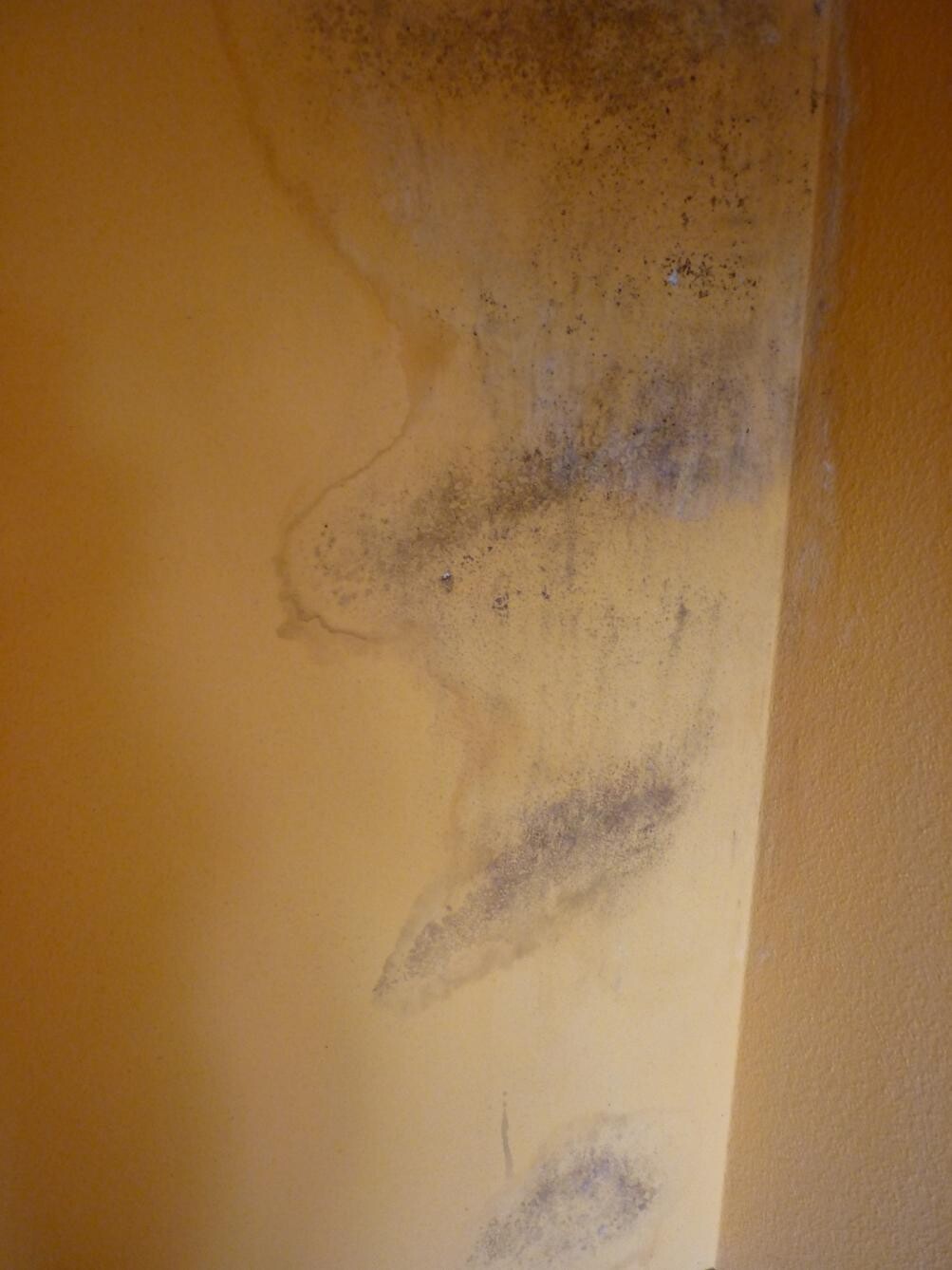
According to the building inspector, the house had no defects, but now that the previous owner is moving out, they have noticed mold on an interior wall that is adjacent to the chimney flue (there was a cabinet placed tightly against it for 30 years). Attached is a photo. We would like to know initially:
- Can I try to fix this myself by removing the wallpaper and reapplying new wallpaper?
- Should we use a type of wallpaper that also provides insulation, like a thicker one?
- Does the wall need any special treatment even if it doesn’t feel damp?
As a layperson, I assume it shouldn’t be a structural issue in the first floor (1st floor / upstairs)? There is no water in the chimney flue… It might be worse in the basement?
Thank you in advance for any advice!
Peter
PS: So far, we have not found mold in any other areas near the chimney flue.
B
Bauexperte4 Sep 2013 01:02Hello,
Regards, Bauexperte
litti schrieb:What qualifications did this lady have, how did you find her, and what does the report say about liability?
According to the building expert, the house had no defects
Regards, Bauexperte
B
Bauexperte4 Sep 2013 09:17Hello Peter,
After my mother passed away, I took over the family house. As soon as I entered the house, I noticed a slightly "musty" smell, which in my opinion was not due to the house being empty for a few days. Following the smell, I found a damp wall behind a wardrobe upstairs. We immediately moved the wardrobe, removed the moldy wallpaper and the mold itself. Our first idea—a leaking chimney on the roof side—turned out to be the cause. After hiring a specialist to waterproof the masonry, the moisture and smell were gone. By the way, the actual chimney is located exactly opposite the previously damp area; water finds its own way.
What I want to express with this is that based on my experience, I find it hard to believe that the owner was not aware of the water damage; wardrobe or no wardrobe. Odors inevitably spread and do not stop at a barrier.
Once that’s done, I would present the engineer’s invoice and this to the seller and see what can be done—especially if the repair involves a significant expense. Maybe you’re lucky, and it can be fixed for a few hundred euros.
Best regards, Bauexperte
litti schrieb:That is more than frustrating...
It also doesn’t say expert report, but rather “purchase advice.”
litti schrieb:To be honest, I’m not as sure about that as you are.
Proving to the seller that he knew about it is almost impossible (and he probably really didn’t, the cabinet was right in front of it).
After my mother passed away, I took over the family house. As soon as I entered the house, I noticed a slightly "musty" smell, which in my opinion was not due to the house being empty for a few days. Following the smell, I found a damp wall behind a wardrobe upstairs. We immediately moved the wardrobe, removed the moldy wallpaper and the mold itself. Our first idea—a leaking chimney on the roof side—turned out to be the cause. After hiring a specialist to waterproof the masonry, the moisture and smell were gone. By the way, the actual chimney is located exactly opposite the previously damp area; water finds its own way.
What I want to express with this is that based on my experience, I find it hard to believe that the owner was not aware of the water damage; wardrobe or no wardrobe. Odors inevitably spread and do not stop at a barrier.
litti schrieb:If the actual source of the water ingress is not found and fixed, the measures you mentioned will barely help, in my opinion. Water is entering somewhere—most likely at the roof; you need to locate that spot.
According to the building surveyor, the house had no defects, [...] We just want to know initially:
- can I try to fix this myself by removing the wallpaper and re-wallpapering?
- and should I use a wallpaper that also insulates, like a thicker one?
- does the wall need any special treatment, even if it’s not damp?
Once that’s done, I would present the engineer’s invoice and this to the seller and see what can be done—especially if the repair involves a significant expense. Maybe you’re lucky, and it can be fixed for a few hundred euros.
Best regards, Bauexperte

Hello and thanks again for your additional tips. Yes, the moisture must be coming from somewhere.
Here is what I found out:
- According to the floor plan, there is a pipe running from the oil heating system to the right chimney flue. Since the moisture on the wallpaper is not coming from the left side, in my opinion, the unused pipe is not the cause. However, the very old floor plan might not be accurate; by the way, three pipes are marked there, or rather three of these black-and-white boxes.
- On the last chimney sweep invoice (from before our time), the flue gas temperature was listed as 198 degrees Celsius (388°F). According to Google, soot deposits should hardly be possible at that temperature, right?
- If you look closely at the horizontal gray areas on the wallpaper, you can see joints: Isn’t a chimney usually built with flat bricks rather than with such tall blocks? The spacing of the dark "lines" in the photo is about 30cm (12 inches).
So, if the unused pipe and soot deposits are not the cause, the moisture must be coming from rain. We will see what the chimney sweep says – his last visit was less than six months ago. Any leaking covers should have been noticed by then. In any case, a small roof or cap on top seems like a good idea.
I hope that by fixing the leaking spot, we will soon have a dry chimney, hopefully without needing any brickwork repairs...
Here is what I found out:
- According to the floor plan, there is a pipe running from the oil heating system to the right chimney flue. Since the moisture on the wallpaper is not coming from the left side, in my opinion, the unused pipe is not the cause. However, the very old floor plan might not be accurate; by the way, three pipes are marked there, or rather three of these black-and-white boxes.
- On the last chimney sweep invoice (from before our time), the flue gas temperature was listed as 198 degrees Celsius (388°F). According to Google, soot deposits should hardly be possible at that temperature, right?
- If you look closely at the horizontal gray areas on the wallpaper, you can see joints: Isn’t a chimney usually built with flat bricks rather than with such tall blocks? The spacing of the dark "lines" in the photo is about 30cm (12 inches).
So, if the unused pipe and soot deposits are not the cause, the moisture must be coming from rain. We will see what the chimney sweep says – his last visit was less than six months ago. Any leaking covers should have been noticed by then. In any case, a small roof or cap on top seems like a good idea.
I hope that by fixing the leaking spot, we will soon have a dry chimney, hopefully without needing any brickwork repairs...
Similar topics