
Hello everyone,
We moved into our new house in 2020, and now I have discovered some mold spots in the attic space. These spots are all located around the opening of the loft ladder. We have an unheated roof space.
This can only be related to warm air rising upwards (due to missing or insufficient insulation) and then condensing when it meets the cold air, right? At first glance, I could not see any damaged vapor barrier. The mold or damp areas are only visible in some isolated spots at the opening. Other areas are intact and dry.
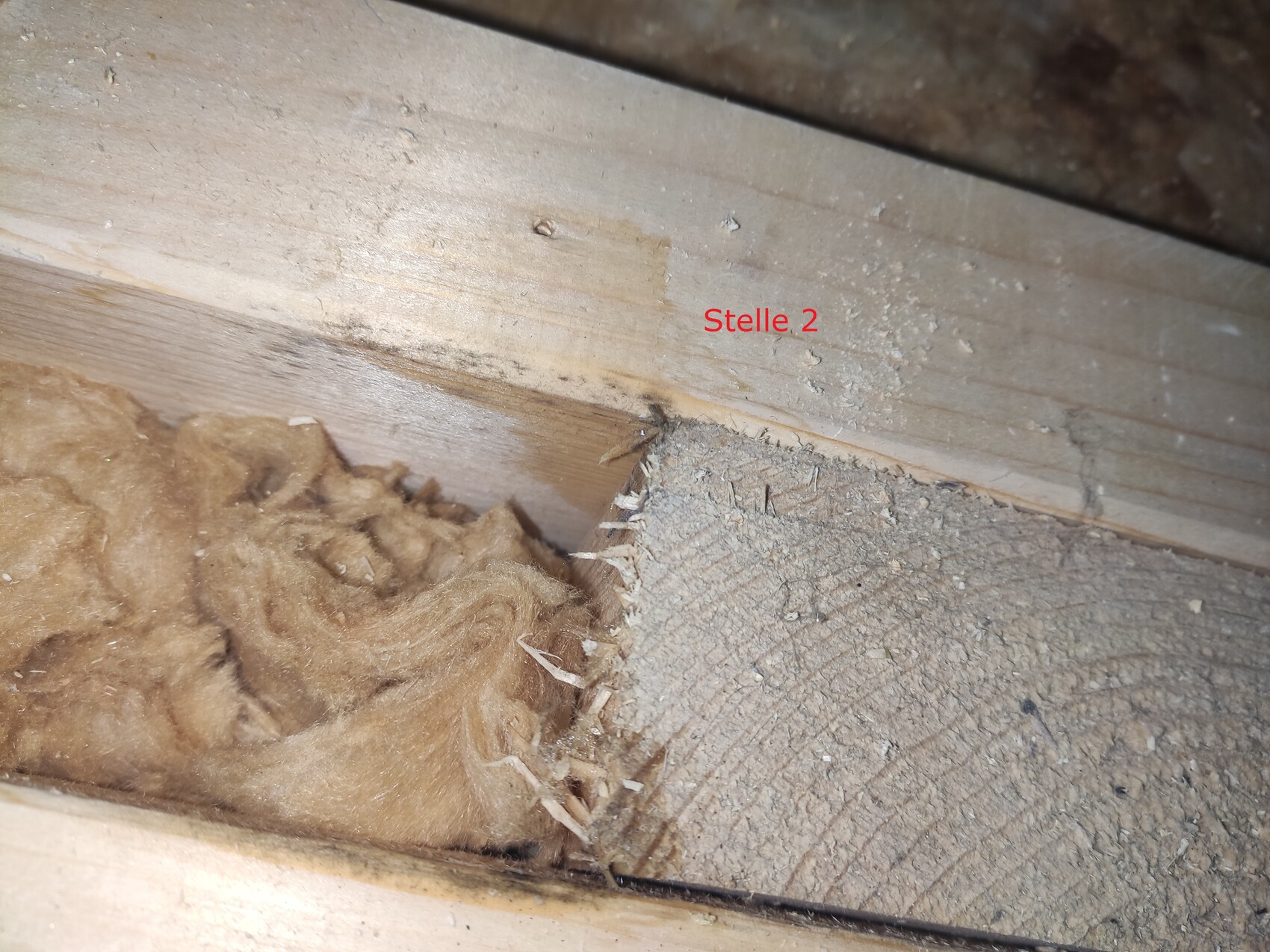
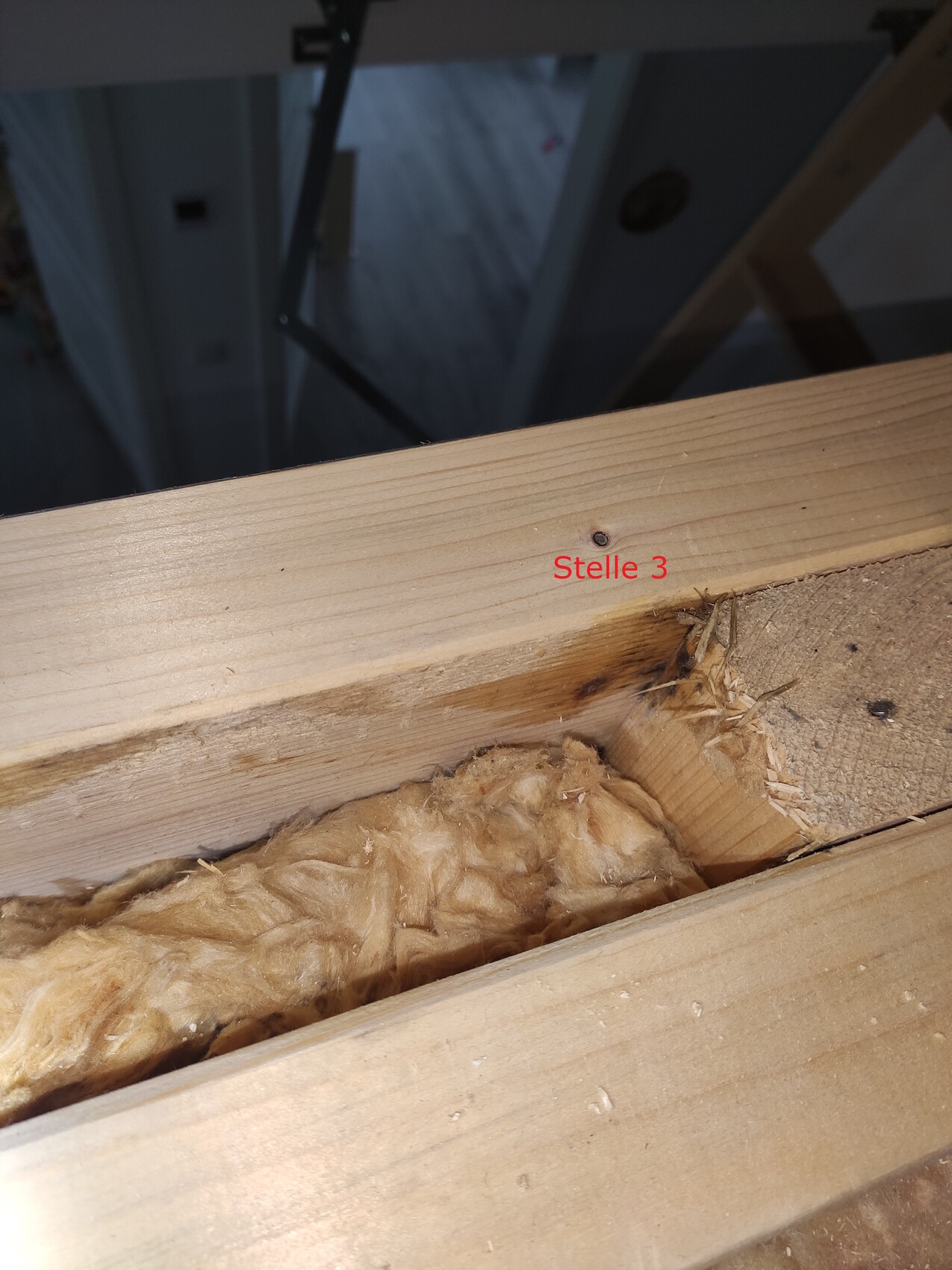
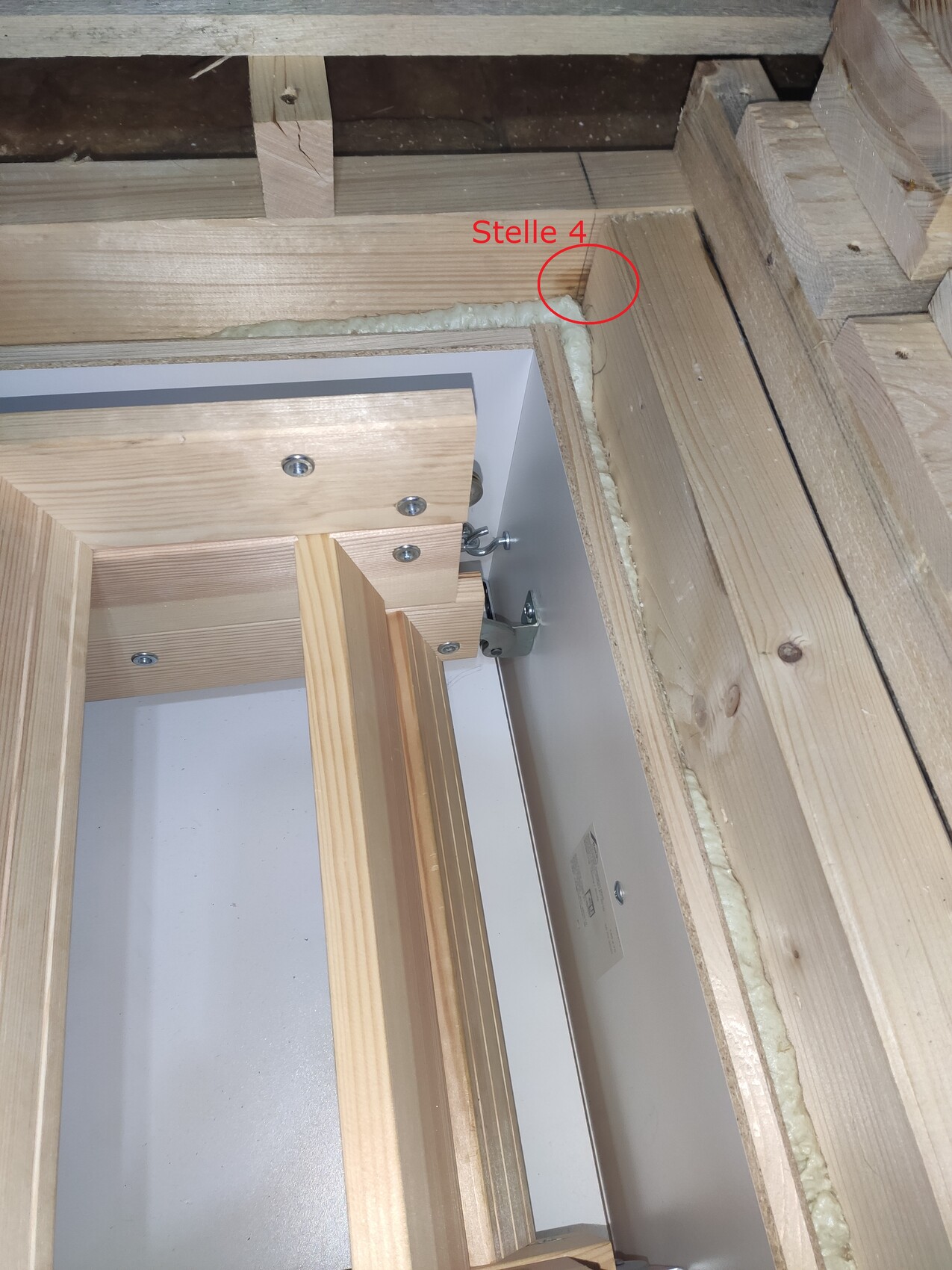
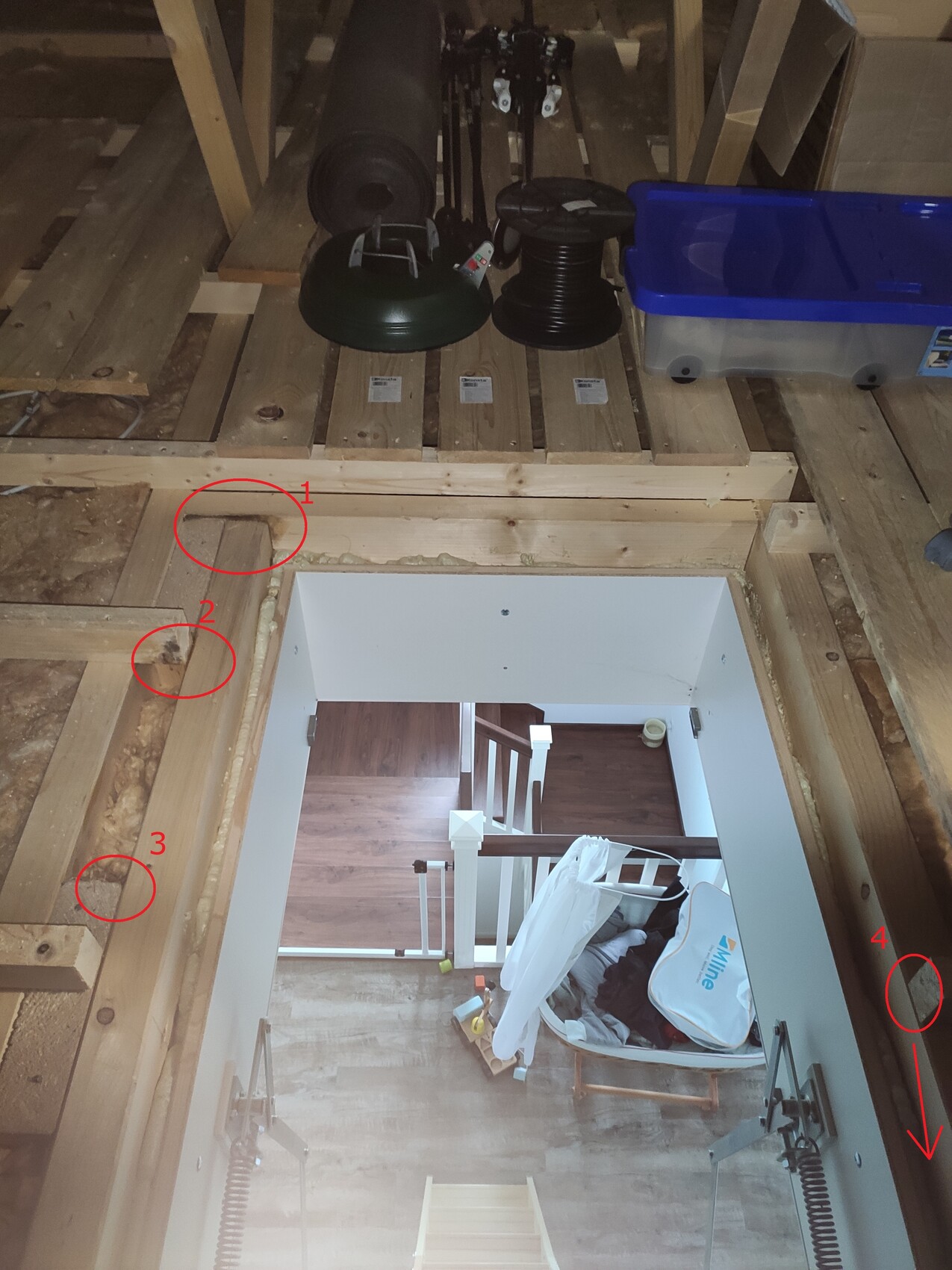
I have attached a few photos of the affected spots (spots 1 to 4). In the narrow gap at spot 1, I can see the vapor barrier at the bottom. So there is no insulation or foam sealant in this gap. Warm air could therefore rise freely there and cause condensation on the wood, correct?
I have labeled the photos accordingly: one overall view with the markings of the four spots as well as detailed photos.
Originally, I wanted to use a thermal imaging camera on cold days to check if warm air is really rising at the affected spots and then contact the construction company. But actually, I might save myself the effort (I would have to borrow such a camera from a tool shop) and just contact the company directly and ask for repairs.
What do you think?

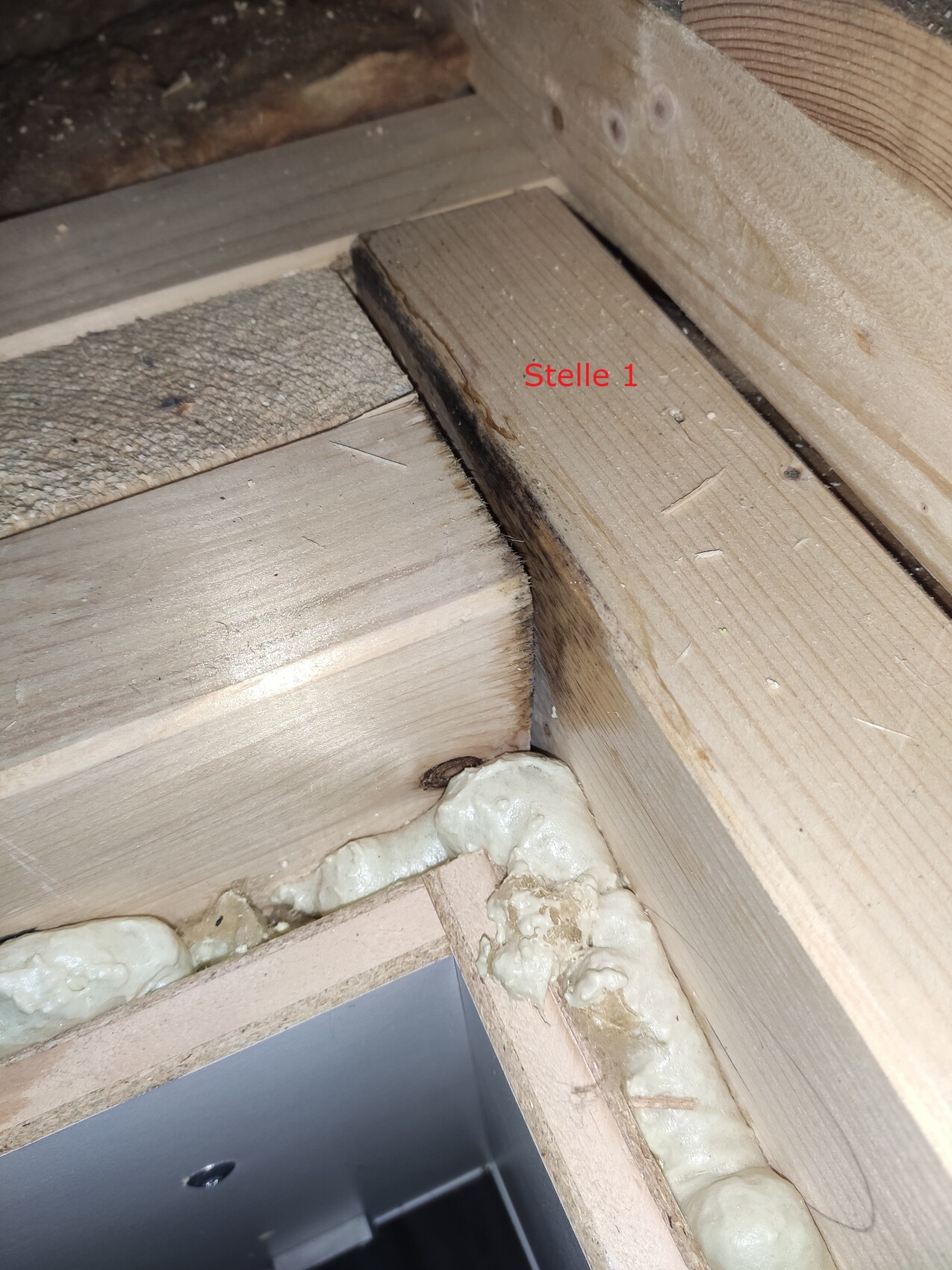
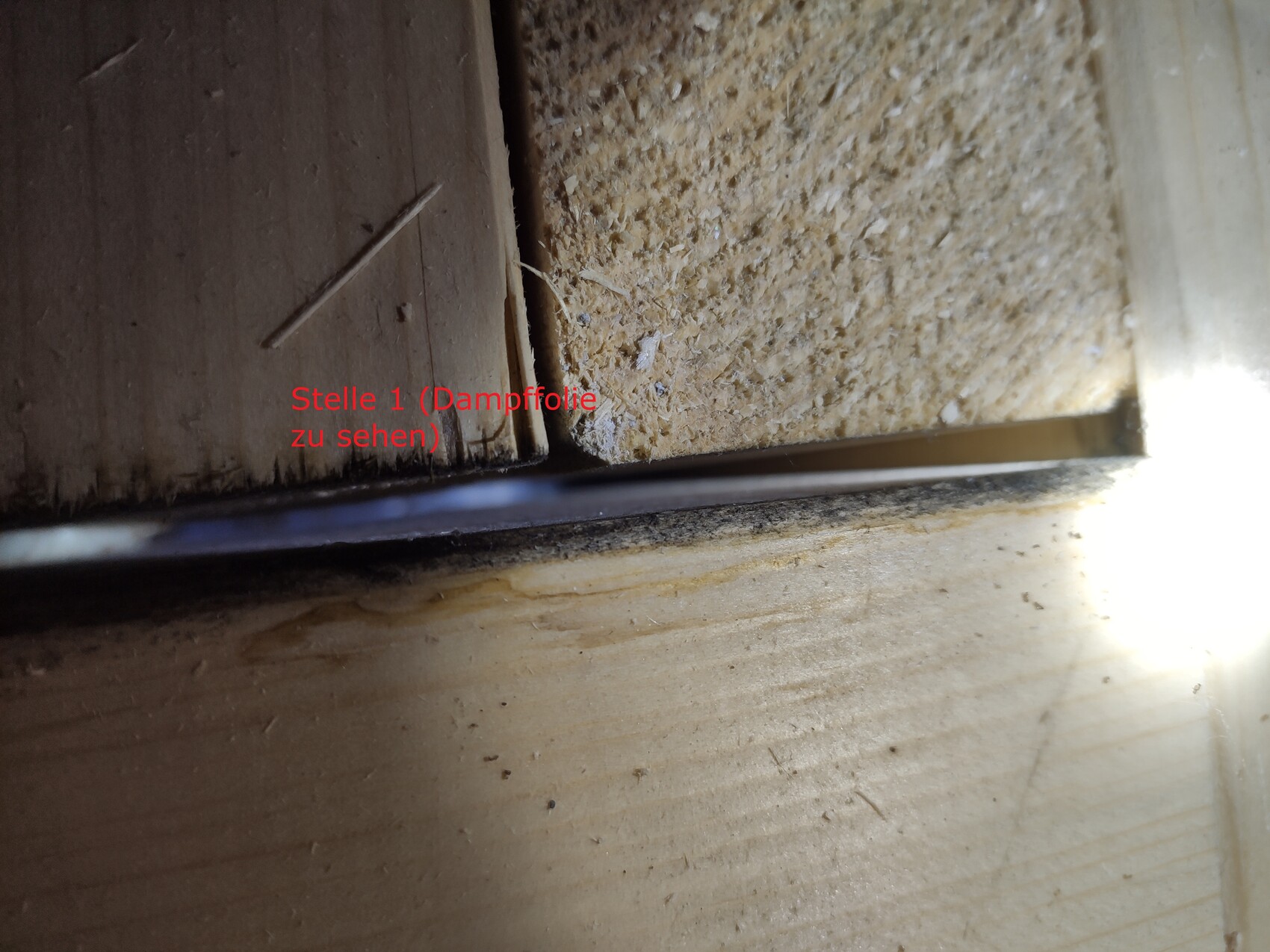
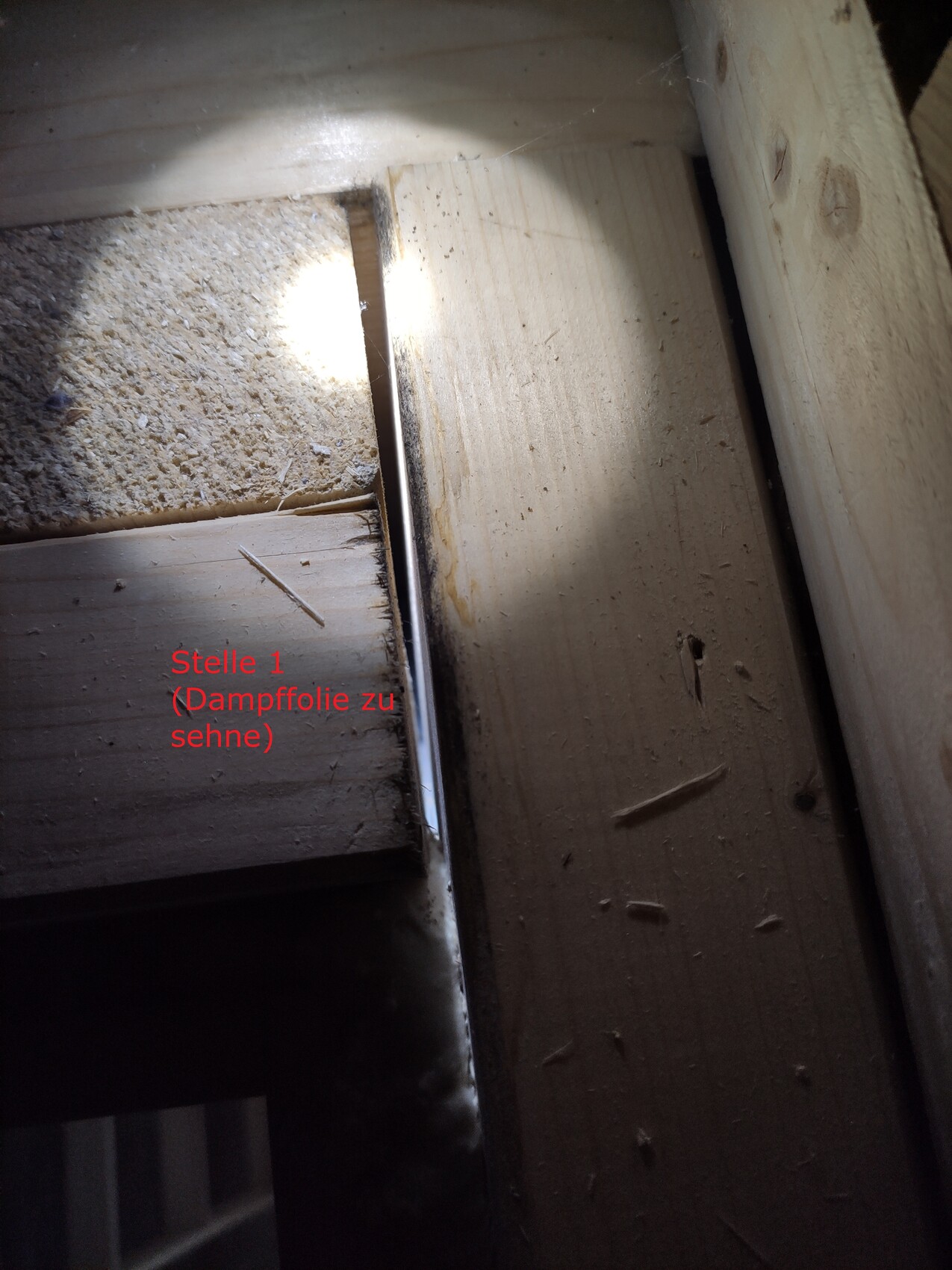
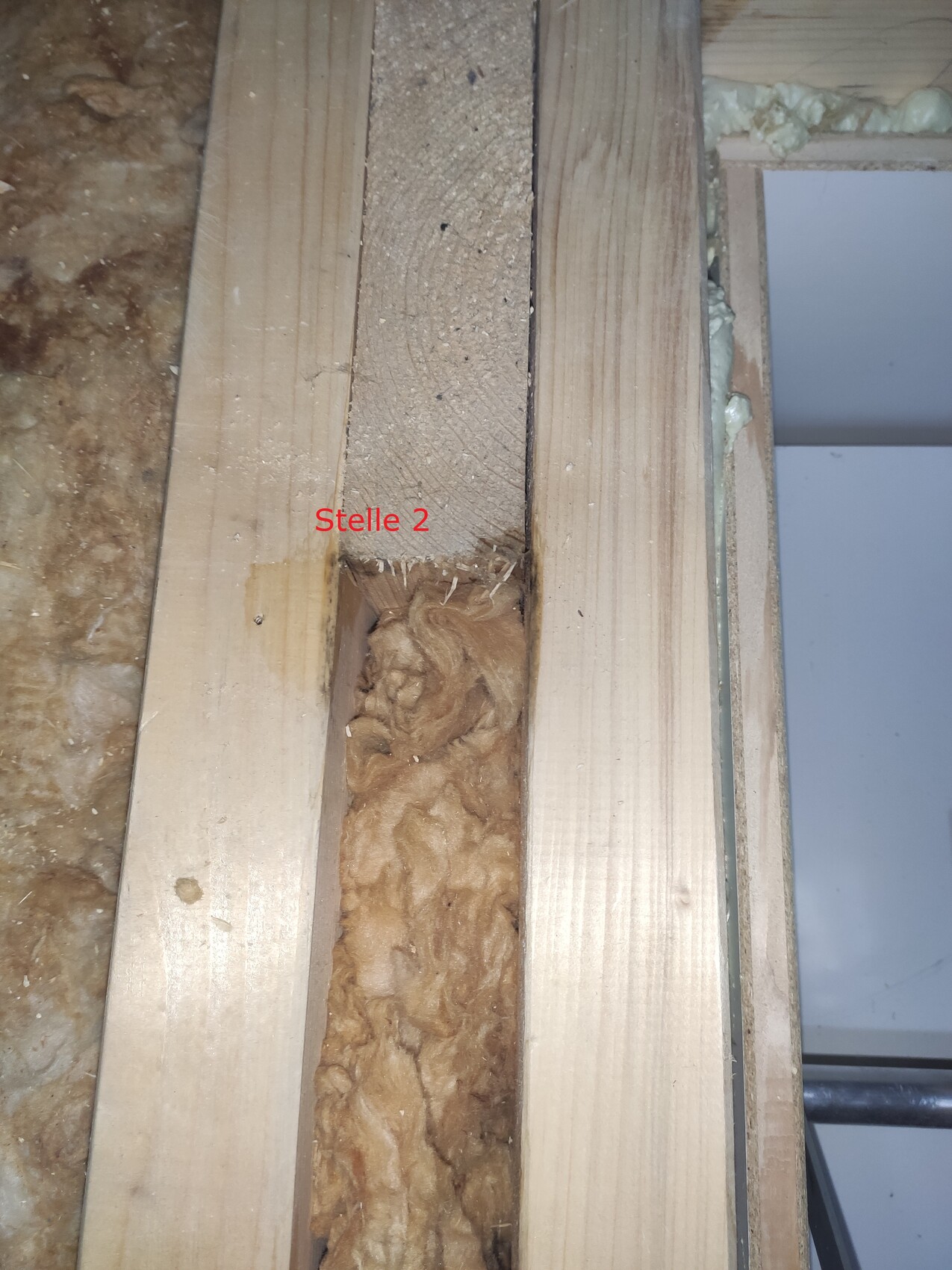
We moved into our new house in 2020, and now I have discovered some mold spots in the attic space. These spots are all located around the opening of the loft ladder. We have an unheated roof space.
This can only be related to warm air rising upwards (due to missing or insufficient insulation) and then condensing when it meets the cold air, right? At first glance, I could not see any damaged vapor barrier. The mold or damp areas are only visible in some isolated spots at the opening. Other areas are intact and dry.
I have attached a few photos of the affected spots (spots 1 to 4). In the narrow gap at spot 1, I can see the vapor barrier at the bottom. So there is no insulation or foam sealant in this gap. Warm air could therefore rise freely there and cause condensation on the wood, correct?
I have labeled the photos accordingly: one overall view with the markings of the four spots as well as detailed photos.
Originally, I wanted to use a thermal imaging camera on cold days to check if warm air is really rising at the affected spots and then contact the construction company. But actually, I might save myself the effort (I would have to borrow such a camera from a tool shop) and just contact the company directly and ask for repairs.
What do you think?
Well, doing it yourself is sometimes better. In our case, it was done but apparently not 100% correctly.
Now it will be interesting to see how the construction company handles it. I can easily imagine that they just want to spray some expanding foam around it and call it done.
The proper way would be to remove the entire attic hatch, re-seal the vapor barrier, and then reinstall the attic hatch. Including all the additional work required by this process, such as replacing any damaged OSB boards around it, reapplying filler, sanding, applying fleece, and painting. 😱
Now it will be interesting to see how the construction company handles it. I can easily imagine that they just want to spray some expanding foam around it and call it done.
The proper way would be to remove the entire attic hatch, re-seal the vapor barrier, and then reinstall the attic hatch. Including all the additional work required by this process, such as replacing any damaged OSB boards around it, reapplying filler, sanding, applying fleece, and painting. 😱
W
WilderSueden23 Nov 2022 13:31Cutting corners and repairing later always ends up costing more than doing it right the first time. Unfortunately, unnoticed shortcuts are still the cheapest option...