
ᐅ Moisture is seeping through the floor-to-ceiling windows in the new build.
Created on: 18 Jan 2021 10:41
H
HansHack
Hello everyone,
We are currently building our single-family house, and so far everything has gone well.
However, after installing the floor-to-ceiling windows on the ground floor, we noticed that moisture is penetrating through the masonry barrier into the interior of the house through all three windows. The ground floor windows were installed on the masonry barrier, whereas on the upper floor this is not the case. There, the windows were mounted on the concrete slab.
Inside the ground floor, the floor-to-ceiling windows were sealed with a sealing tape. On the outside, such a sealing tape has not yet been applied (although it has been used on all the other “standard” windows).
The window installer will come back to the site soon, and I plan to address this issue with them then. However, I wanted to get some opinions beforehand so I might have some arguments ready.
Thank you very much!
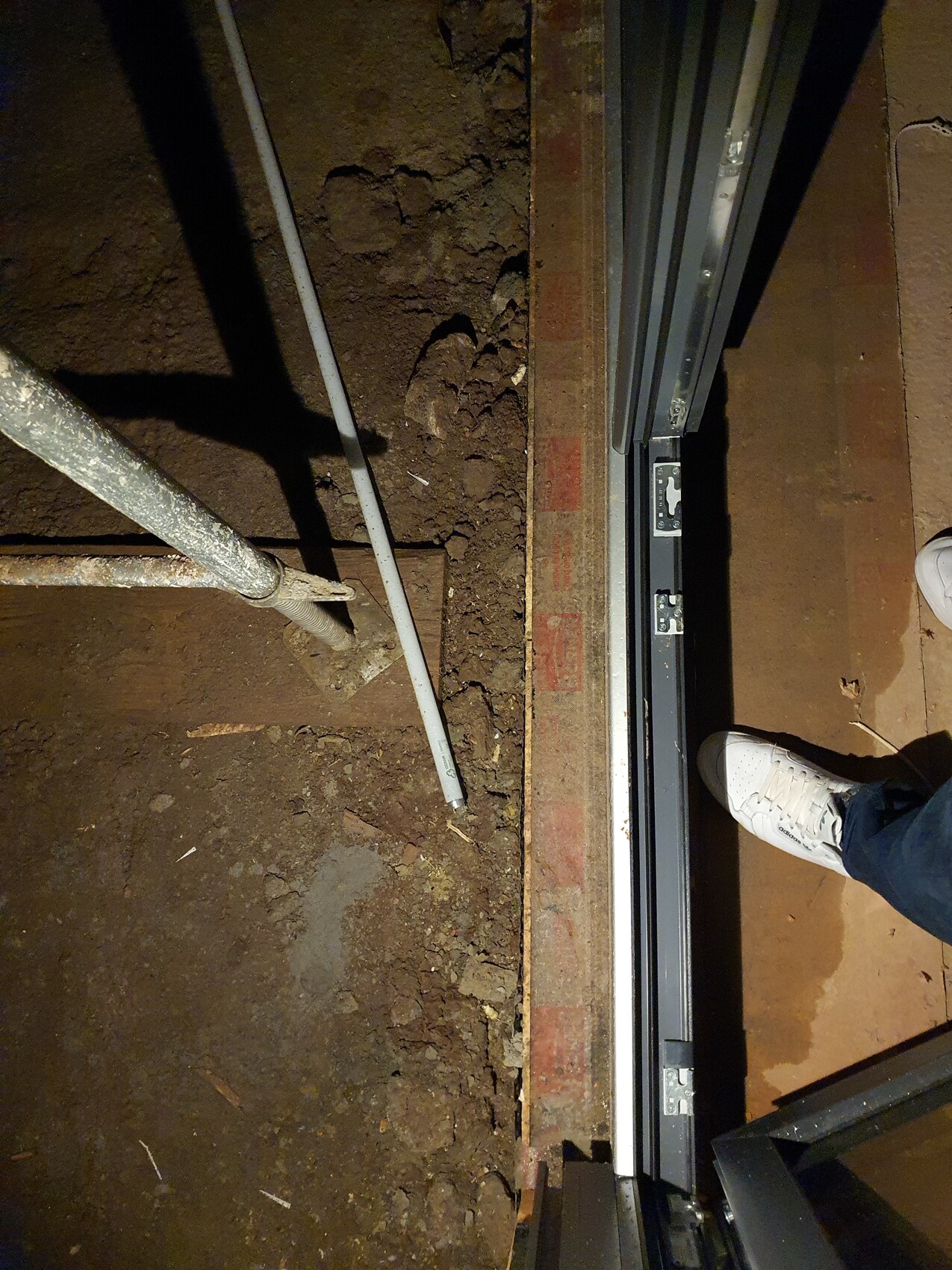
We are currently building our single-family house, and so far everything has gone well.
However, after installing the floor-to-ceiling windows on the ground floor, we noticed that moisture is penetrating through the masonry barrier into the interior of the house through all three windows. The ground floor windows were installed on the masonry barrier, whereas on the upper floor this is not the case. There, the windows were mounted on the concrete slab.
Inside the ground floor, the floor-to-ceiling windows were sealed with a sealing tape. On the outside, such a sealing tape has not yet been applied (although it has been used on all the other “standard” windows).
The window installer will come back to the site soon, and I plan to address this issue with them then. However, I wanted to get some opinions beforehand so I might have some arguments ready.
Thank you very much!
Bookstar schrieb:
That’s ideal. However, I think nothing will happen if you apply it over the insulation. Of course, only if you don’t have groundwater. It’s often done this way because of the drainage. Our building inspector said it’s okay, but not according to DIN standards.How is the waterproofing usually done above the insulation to prevent anything from seeping between the liquid applied membrane and the insulation? I still need to do that myself. Also with a liquid applied membrane? I roughly sketched it in the attachment (I mean the red part). Is a liquid applied membrane used here as well, or is it just a smooth layer of concrete?
hippjoha schrieb:
How is it usually sealed above the insulation to prevent anything from seeping between the liquid plastic membrane and the insulation? I still need to do this part as well. Also with liquid plastic membrane? I roughly sketched it in the attachment (I'm referring to the red area). Is liquid plastic membrane used here too, or just a smooth layer of concrete?
[ATTACH alt="Aufbau_bod_Fenster.png"]56330[/ATTACH] You have drawn it correctly. To do this after the perimeter insulation, the insulation must definitely be removed at the gap between the window and the concrete slab. Then the sealing is applied about 30cm (12 inches) down (yellow). The small piece of insulation in front of the window is then reattached.
At least the insulation on the side of the basement can remain there. The important thing is the gap, which must be sealed properly.
Bookstar schrieb:
You have drawn it correctly. To install the insulation after the perimeter insulation, the insulation must definitely be removed at the gap between the window and the concrete slab. Then you seal about 30cm (12 inches) down (yellow). The small piece of insulation in front of the window is then stuck back on.
At least the insulation on the side of the basement can remain there. The important thing is that the gap must be properly sealed. What I meant, though, is how the red part is sealed. I have the liquid-applied membrane (green in the image) behind the insulation. But now, something must also be applied over the insulation (red in the image) so that nothing can get between the liquid-applied membrane and the insulation, right?
hippjoha schrieb:
I was asking about how the red part is sealed. I have the liquid waterproofing membrane (shown in green in the picture) behind the insulation. But now, something also needs to be placed over the insulation (shown in red in the picture) to prevent anything from getting between the liquid waterproofing membrane and the insulation, right? No, you don’t need anything more there. Why shouldn’t water be able to get in? The exterior plasterer will apply the waterproof slurry over it, and that takes care of it.
ElisaN34 schrieb:
So, if water gets in between the insulation and the liquid-applied waterproofing membrane, is that not a problem?No, that is not an issue. If necessary, the water can also drain out again. What is important is that water cannot enter the building.However, the insulation must not be constantly washed out or exposed to water flow, as this would reduce its insulating performance. That is why I mentioned that if there is groundwater or similar conditions, the sealing must be done much more thoroughly. In such cases, it is best to consult a professional.
Similar topics