
Hello dear forum,
the moisture from the night is moving from the sand into the plaster (there is insulation behind the plaster). This is how it looks every morning. During the day, it usually dries completely again.
Should the company have installed some kind of separation between the house and the paving?
Should I sweep out the sand again? Can the insulation be damaged? Either by the moisture or possibly later by frost?
Would it help to remove as much sand as possible and replace it with gravel or something similar?
I hope someone here can help me.
Best regards
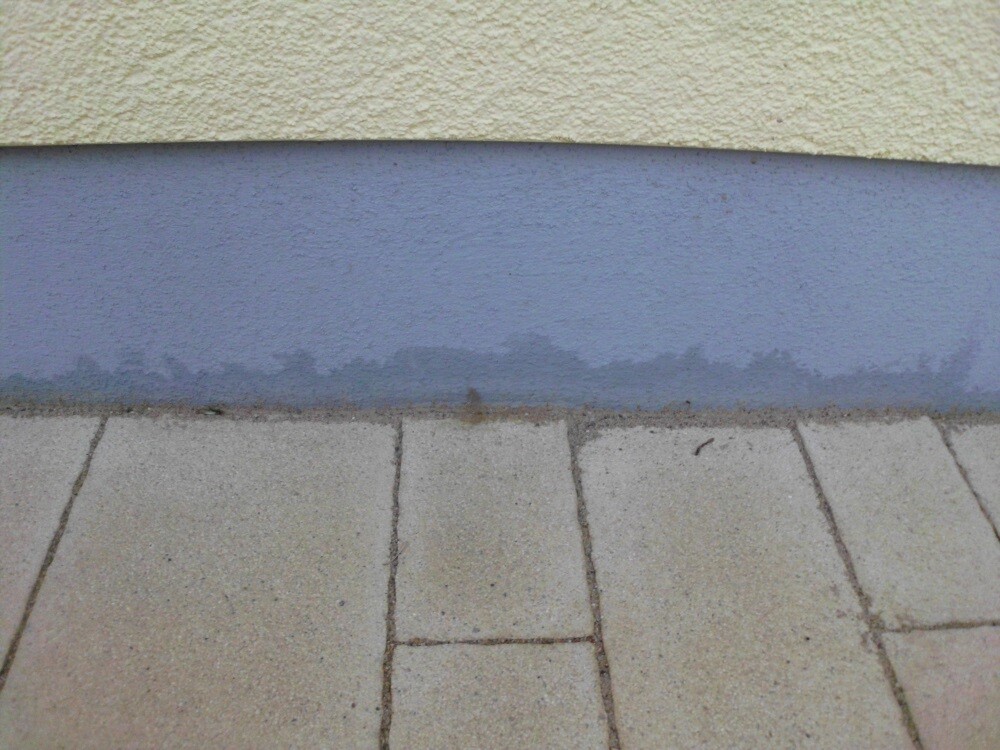
the moisture from the night is moving from the sand into the plaster (there is insulation behind the plaster). This is how it looks every morning. During the day, it usually dries completely again.
Should the company have installed some kind of separation between the house and the paving?
Should I sweep out the sand again? Can the insulation be damaged? Either by the moisture or possibly later by frost?
Would it help to remove as much sand as possible and replace it with gravel or something similar?
I hope someone here can help me.
Best regards
 projekthausbau30 Oct 2014 17:04
I have exactly the same problem.
N
nordanney30 Oct 2014 17:18You laid the paving directly against the house wall? No vertical moisture barrier such as a dimpled membrane (look it up)? This will cause moisture to keep rising up.
projekthausbau30 Oct 2014 17:40We already have a vertical barrier installed everywhere, except on this one side, because here we are at ground level.
 Fassadendoc30 Oct 2014 19:20
Basically, paving should not be laid directly up to the facade. The waterproofing of an external thermal insulation composite system (ETICS) is applied using a sealing slurry according to the manufacturer's guidelines up to ground level and is connected at the bottom, where the insulation ends, to the existing masonry waterproofing.
projekthausbau30 Oct 2014 19:40I am only concerned with the short section leading to the basement. Is there anything I can do afterwards?

Similar topics