
Hello everyone,
On the holiday, I noticed that an exterior wall (double brick masonry) in our bedroom looks slightly damp at the bottom. Here are some details:
- Basement is slightly damp
- The basement is only 1.30m (4 ft 3 in) below ground level, so the living space starts about 1.00m (3 ft 3 in) above ground level
- I have a moisture meter, but its probes only penetrate about 0.5cm (0.2 inches) into the wall. At the described spots, I am measuring values between 5-7% moisture
- The bedroom has laminate flooring, which is installed on a wooden subfloor
- The heating in the bedroom is usually off
Here are my questions:
- Could the moisture be coming from the basement?
- Should I remove the laminate and inspect the wall’s condition underneath?
- Is the wall actually “damp” based on the measurement data?
I understand that this is not an expert report and remote diagnosis is difficult. Still, I look forward to your professional advice and opinions.
Best regards
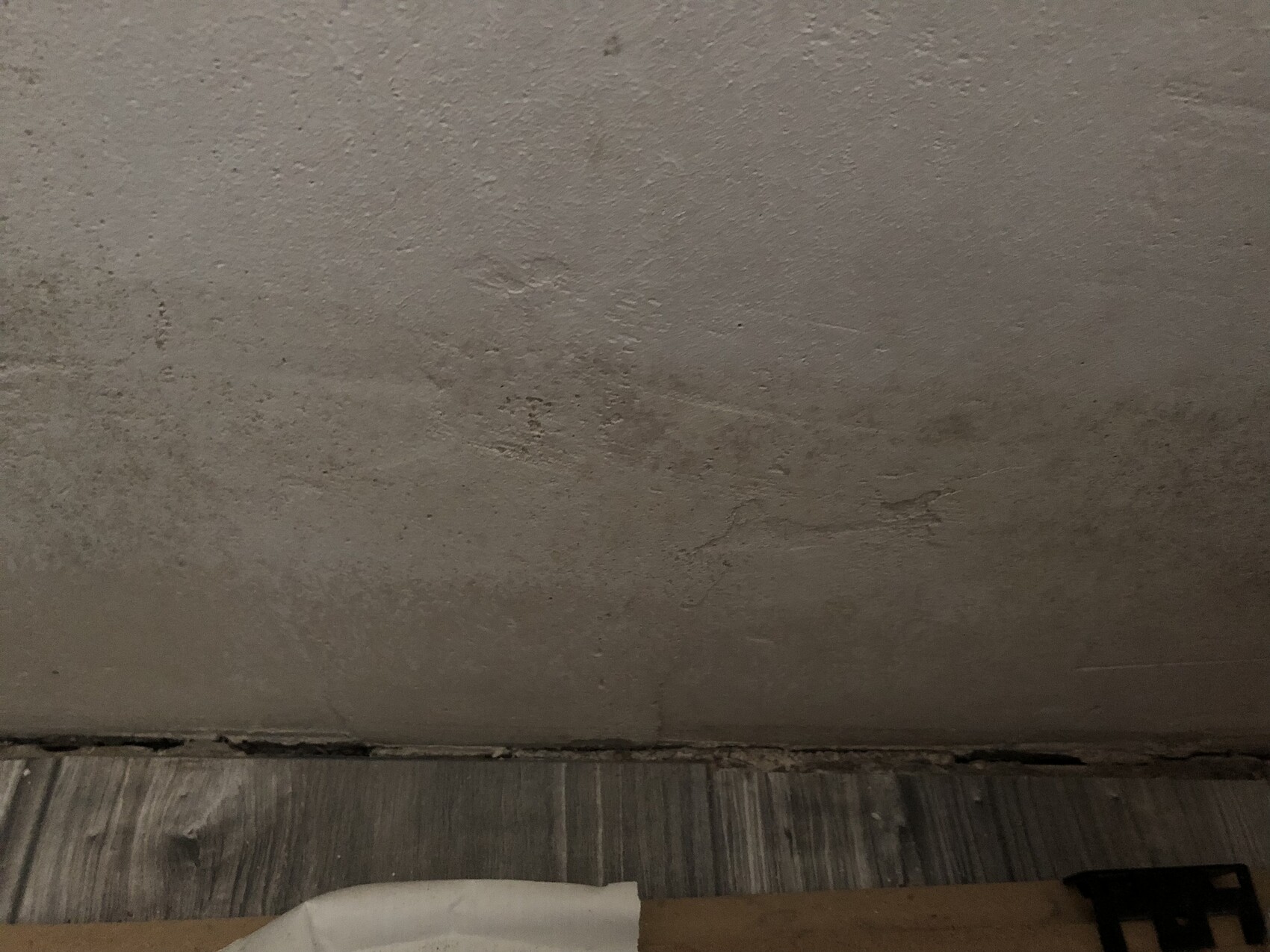
On the holiday, I noticed that an exterior wall (double brick masonry) in our bedroom looks slightly damp at the bottom. Here are some details:
- Basement is slightly damp
- The basement is only 1.30m (4 ft 3 in) below ground level, so the living space starts about 1.00m (3 ft 3 in) above ground level
- I have a moisture meter, but its probes only penetrate about 0.5cm (0.2 inches) into the wall. At the described spots, I am measuring values between 5-7% moisture
- The bedroom has laminate flooring, which is installed on a wooden subfloor
- The heating in the bedroom is usually off
Here are my questions:
- Could the moisture be coming from the basement?
- Should I remove the laminate and inspect the wall’s condition underneath?
- Is the wall actually “damp” based on the measurement data?
I understand that this is not an expert report and remote diagnosis is difficult. Still, I look forward to your professional advice and opinions.
Best regards

Cold outdoor temperature and lack of heating = cooled-down masonry
Now warm, moist air from the heated areas of the living space flows into your bedroom and condenses on the cold exterior wall, leading to damp walls. The area near the junction with the basement wall is probably especially cold because, in older buildings, there is typically a thermal bridge there, which is why you notice it first in that spot.
Solution: Either ventilate properly and/or heat the bedroom. Otherwise, see @Soroka
Edit: I wouldn’t be surprised if the moisture in the basement is caused by the same issue.
Edit2: And no, "properly" ventilating does not mean simply leaving the bedroom window open ;-)
Now warm, moist air from the heated areas of the living space flows into your bedroom and condenses on the cold exterior wall, leading to damp walls. The area near the junction with the basement wall is probably especially cold because, in older buildings, there is typically a thermal bridge there, which is why you notice it first in that spot.
Solution: Either ventilate properly and/or heat the bedroom. Otherwise, see @Soroka
Edit: I wouldn’t be surprised if the moisture in the basement is caused by the same issue.
Edit2: And no, "properly" ventilating does not mean simply leaving the bedroom window open ;-)
Baumi87 schrieb:
An exterior wall (double-brick masonry) appears slightly damp at the bottom.ypg schrieb:
Or is it not a new building?@ypg Double-brick constructions are probably only found near the equator.
Baumi87 schrieb:
Or do you think that the lack of heating is already the reason why the wall looks damp?Yes and no. Heating the room during the day will definitely help. At night, especially if the heating is turned off, enough moisture will still accumulate in the bedroom to condense on surfaces where the temperature falls below the dew point. This typically occurs at the junctions between floor and wall, ceiling and wall, and especially in corners or poorly ventilated areas, for example behind wardrobes.
So, 1. Heat during the day, ventilate by quick airing in the evening and morning, and keep the bedroom door open at night so that the residents’ moisture does not accumulate only in that room.
2. A double-brick wall 24cm (9.5 inches) thick has a U-value of about 2.0 W/m²K. I am not a fan of adding insulation to external walls afterwards, and I would generally leave walls with a U-value below 1.0 W/m²K as they are—but in this case, I would strongly recommend it. Not only to save energy but especially to improve comfort and reduce such issues.
dertill schrieb:
@ypg New constructions with double brick rows are probably found only near the equator😀 yes, I'm not very familiar with that... but I do know that heating is necessary 🙂
My father-in-law doesn’t heat his bedroom either. And what does he have behind the wardrobe…. :p
It’s like he could start a cheese factory with all the mold growing back there. Terrible. Just too clueless to create a proper indoor climate.
@TE, insulation and ventilation will only help you to a limited extent. Better start heating properly, or the damp walls will soon be your least of your problems.
It’s like he could start a cheese factory with all the mold growing back there. Terrible. Just too clueless to create a proper indoor climate.
@TE, insulation and ventilation will only help you to a limited extent. Better start heating properly, or the damp walls will soon be your least of your problems.
Similar topics