
ᐅ Moist Walls in New Construction (Base Area) – Exterior Wall
Created on: 2 Feb 2018 23:02
N
Neubau2017N
Neubau20172 Feb 2018 23:02Good evening!
We moved into a new end-terrace house with our young child (1 1/2 years old) on June 28, 2017, and today, by chance, we noticed these spots on the exterior wall near the base.
Could this be moisture? If so, should the developer come to inspect it personally? Or would it be better to involve a building expert right away?
We always heat the living room with underfloor heating and try to remember to ventilate regularly.
It might also be worth mentioning that we had shutters installed later in October 2017.
Could water ingress be the cause? But then in the base area?
We have also noticed some settlement cracks, which we were told about repeatedly. However, these cracks are wider than the limit of 0.02mm.
I really hope to get some support or advice from this forum because somehow our developer does not seem to take responsibility...
Additionally, a door frame on the converted attic was installed incorrectly (we have already requested written repairs/replacement, but have received no written response here either).
There are unfortunately several issues worrying us, but the suspected moisture problem is the final straw :-(
Best regards
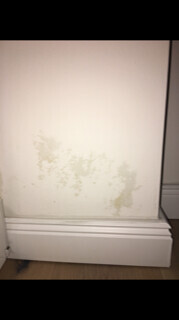

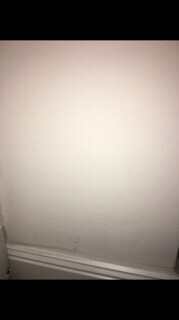
We moved into a new end-terrace house with our young child (1 1/2 years old) on June 28, 2017, and today, by chance, we noticed these spots on the exterior wall near the base.
Could this be moisture? If so, should the developer come to inspect it personally? Or would it be better to involve a building expert right away?
We always heat the living room with underfloor heating and try to remember to ventilate regularly.
It might also be worth mentioning that we had shutters installed later in October 2017.
Could water ingress be the cause? But then in the base area?
We have also noticed some settlement cracks, which we were told about repeatedly. However, these cracks are wider than the limit of 0.02mm.
I really hope to get some support or advice from this forum because somehow our developer does not seem to take responsibility...
Additionally, a door frame on the converted attic was installed incorrectly (we have already requested written repairs/replacement, but have received no written response here either).
There are unfortunately several issues worrying us, but the suspected moisture problem is the final straw :-(
Best regards
T
toxicmolotof2 Feb 2018 23:10Photos? Otherwise, it’s just guessing and no recommendations can be made.
I can show you settlement cracks in every room. Several. On almost every wall.
I can show you settlement cracks in every room. Several. On almost every wall.
N
Neubau20172 Feb 2018 23:14Hello,
I have now uploaded the photos.
Thank you very much for the quick response.
I hope the details are clear in the pictures.
I have now uploaded the photos.
Thank you very much for the quick response.
I hope the details are clear in the pictures.
N
Neubau20172 Feb 2018 23:25These are our suspected settlement cracks.
Would it be advisable to consult a building surveyor?
Thank you very much for your help!
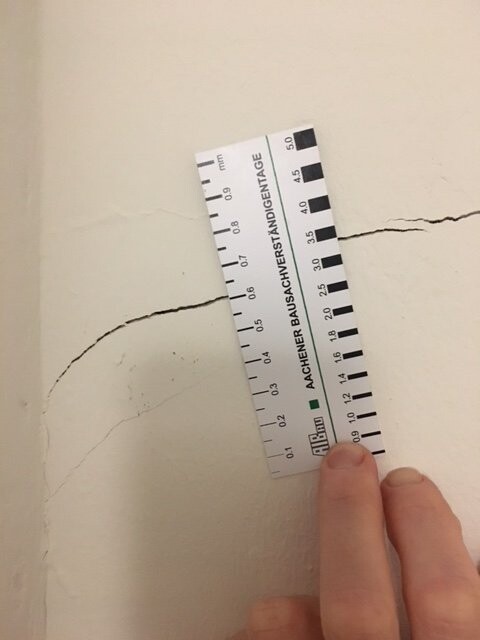
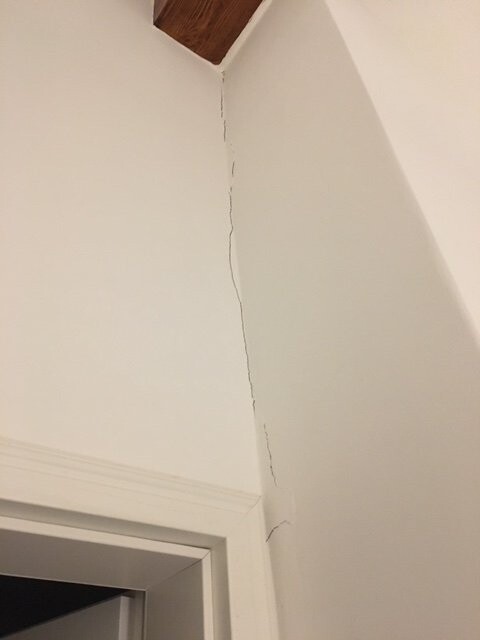
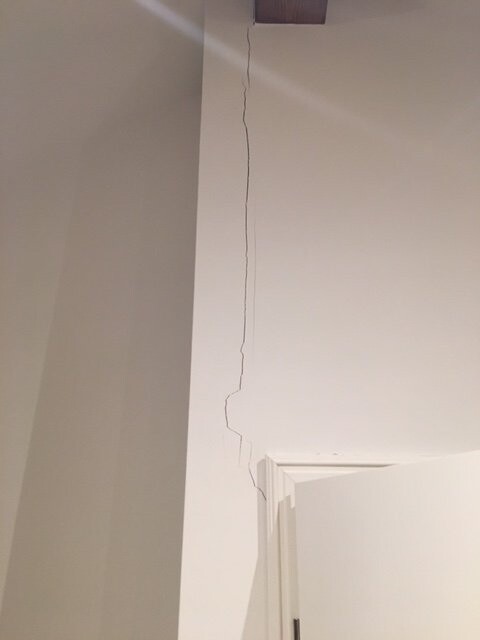
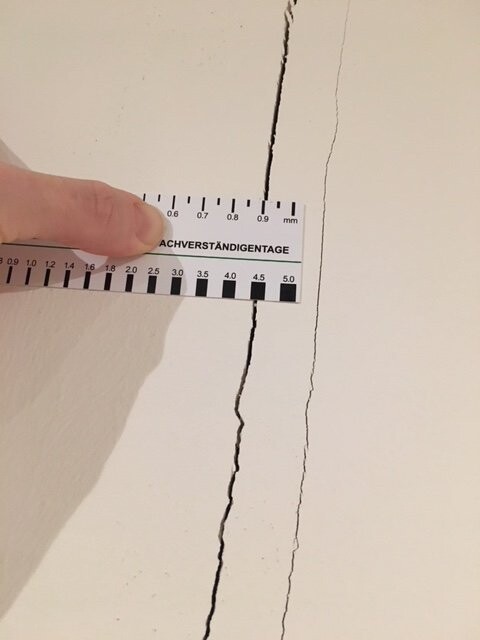
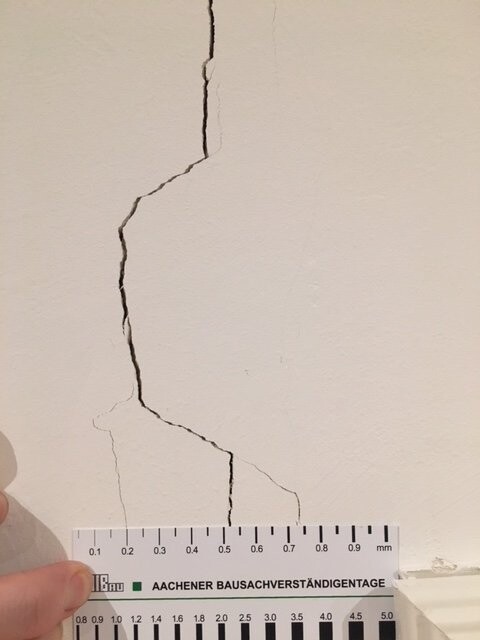
Would it be advisable to consult a building surveyor?
Thank you very much for your help!
B
Baumfachmann2 Feb 2018 23:48Hello, in any case, an expert should be appointed here. Remote diagnoses are always tricky, but judging from the pictures, these are not typical settlement cracks, and the moisture issue is certainly not due to ventilation or heating. Action should be taken here. From my experience with clients, I have often seen that people wait too long. In any case, report the defect with a deadline and hire an expert or assessor. The moisture issue may not be a major problem, but the cracks definitely need to be inspected. After 40 years of professional experience, I can only say: don’t wait too long. Best regards from Bavaria
We also had moisture issues in one room. Serious problem: a leak!
It can be fixed. We didn’t need an expert because the plumber responded, inspected, and repaired it. In our case, it was the outdoor water tap.
We have cracks as well. The house will not collapse.
But the construction manager should take a look at them. For us, it was partly due to missing mesh in the plaster, but also, as you can see in your corner, this is normal. After about a year, these are sealed with acrylic. This is part of the painter’s work, which was probably done by you on-site.
You likely also have a Q2 plaster finish, which is meant to be wallpapered. If you skip that step, you have to accept some cracking.
The wider cracks should be examined.
First, you should file a defect notice with a deadline. Templates are available online. Send it by registered mail. Don’t write a sloppy three-line note, but a proper one!
If there is no response after the deadline, you should hire a construction lawyer to take further action.
You only call in an expert if the builder refuses to acknowledge it as a construction defect. But be careful: not everything that looks like a defect is actually one.
It can be fixed. We didn’t need an expert because the plumber responded, inspected, and repaired it. In our case, it was the outdoor water tap.
We have cracks as well. The house will not collapse.
But the construction manager should take a look at them. For us, it was partly due to missing mesh in the plaster, but also, as you can see in your corner, this is normal. After about a year, these are sealed with acrylic. This is part of the painter’s work, which was probably done by you on-site.
You likely also have a Q2 plaster finish, which is meant to be wallpapered. If you skip that step, you have to accept some cracking.
The wider cracks should be examined.
First, you should file a defect notice with a deadline. Templates are available online. Send it by registered mail. Don’t write a sloppy three-line note, but a proper one!
If there is no response after the deadline, you should hire a construction lawyer to take further action.
You only call in an expert if the builder refuses to acknowledge it as a construction defect. But be careful: not everything that looks like a defect is actually one.
Similar topics