
ᐅ Missing plastering around ventilation ducts on the interior.
Created on: 24 May 2020 12:46
S
Stefan2.84
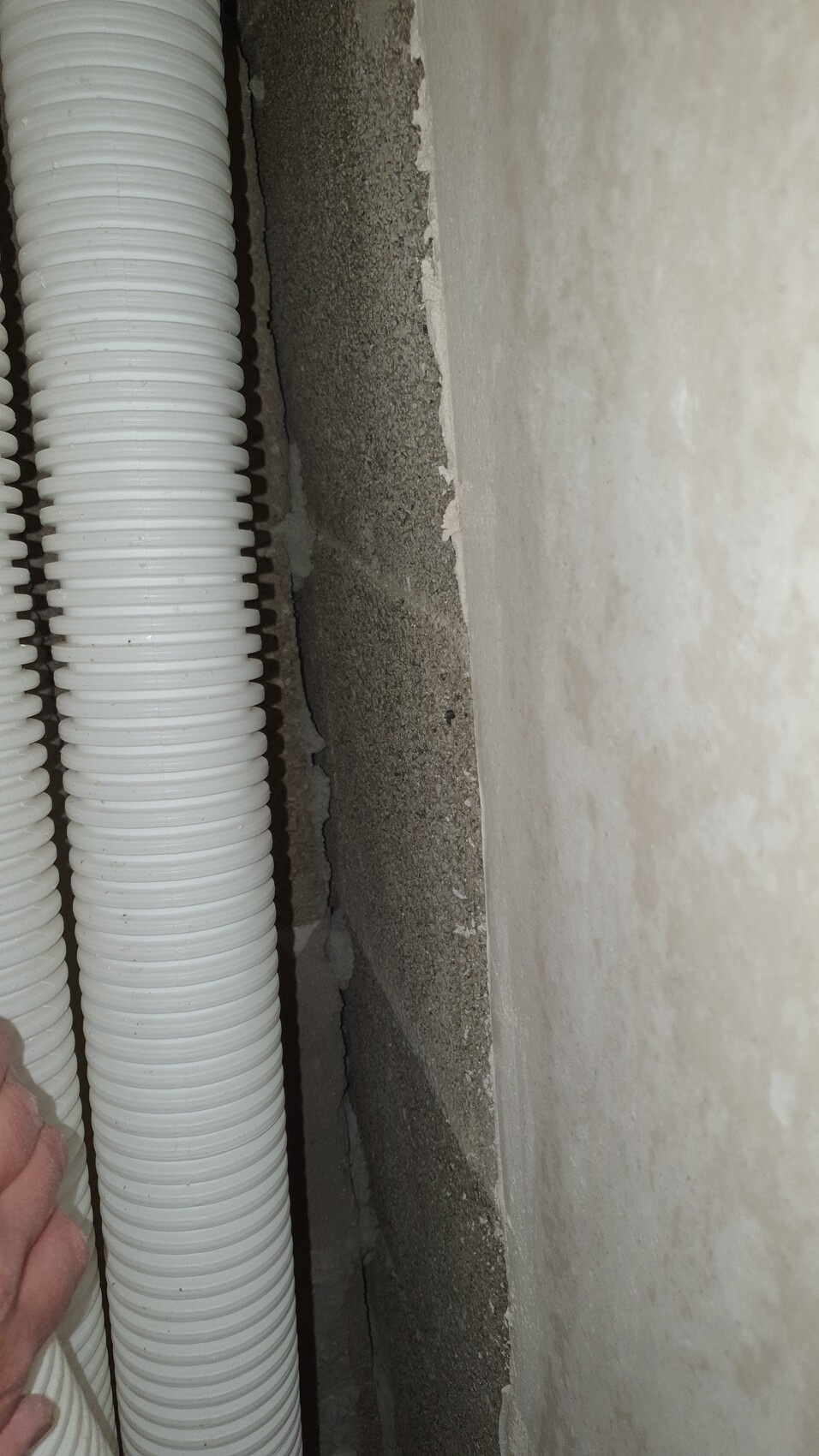
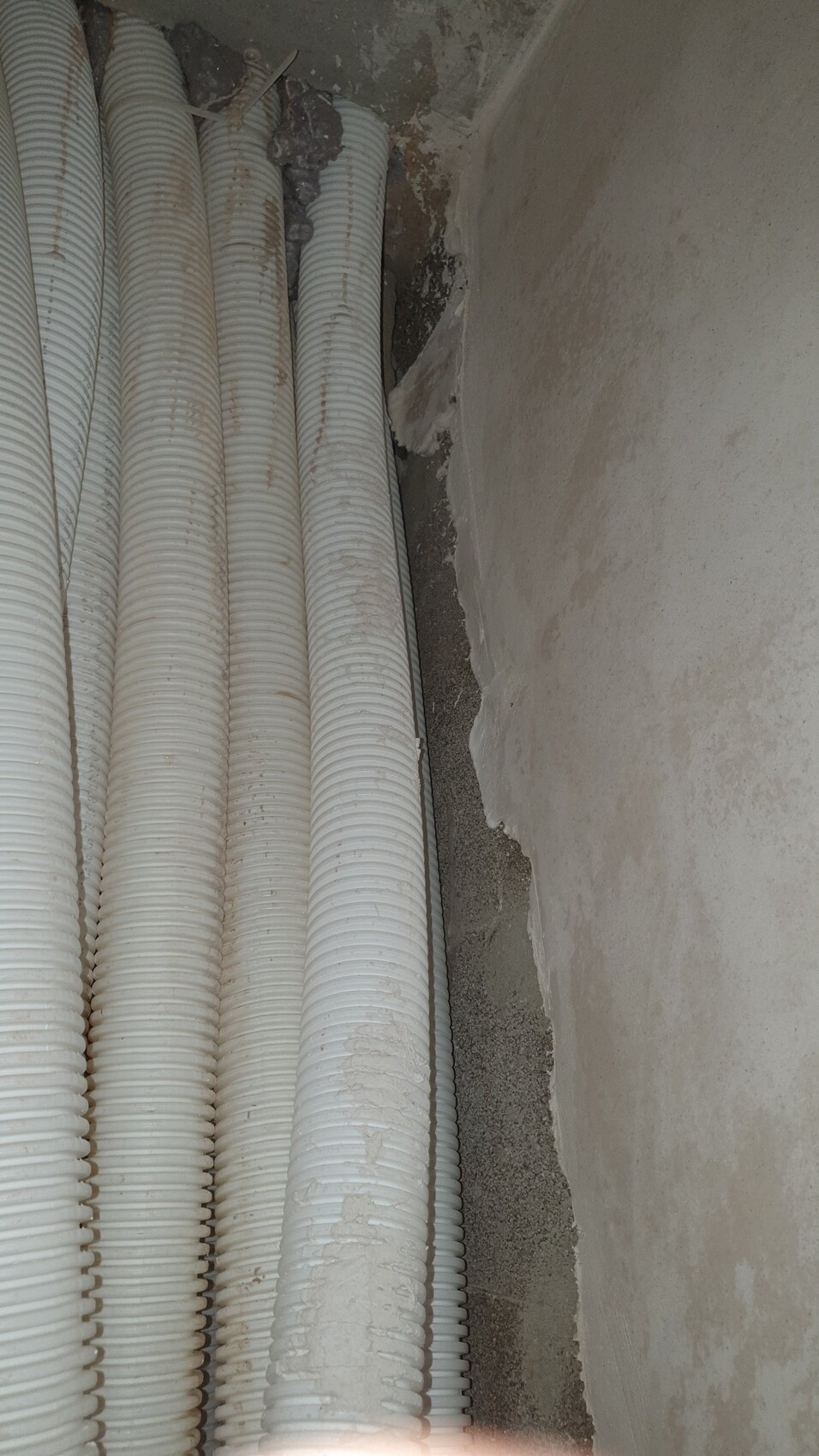
Hello everyone, the ventilation ducts run through a small storage room on the ground floor. During the interior plastering, a strip about 30cm (12 inches) wide along the pipes was left unplastered. Since this is an external wall, the question is whether it is absolutely necessary to plaster that section. I hope the picture makes clear what I mean. The adjacent wall is an internal wall.
Thank you
Thank you
nordbayer schrieb:
This was also the case with my brick walls on the gable of the insulated attic floor—they remained unplastered. I then considered whether to include plastering in the contract. Several contacts, including the energy consultant, said it was unnecessary and mainly for aesthetic purposes. Apparently, the exterior render already provides the necessary airtightness. This is incorrect, and you should urgently seek new contacts. They might be better off baking cakes than building or designing houses.
Bookstar schrieb:
An exterior wall must be plastered on the insideWhy is that actually necessary? I have never understood this.
I will try to explain. There are always penetrations through the exterior plaster, such as outdoor electrical outlets or light fixtures. But also ventilation, kitchen exhaust fans, possibly windows and window sills. Air can enter the wall structure at these points. The masonry itself is not airtight, so air can circulate throughout the entire wall.
Only a complete interior plaster layer can prevent leaks. There are vapor pressure studies showing that even a small gap of a few millimeters can cause several liters of water to condense during winter. This leads to mold or other problems, such as moisture in insulation or electrical outlets, which can result in short circuits.
Only a complete interior plaster layer can prevent leaks. There are vapor pressure studies showing that even a small gap of a few millimeters can cause several liters of water to condense during winter. This leads to mold or other problems, such as moisture in insulation or electrical outlets, which can result in short circuits.
 Winniefred10 Sep 2020 17:34
Hm, how is this handled with other house types? For example, timber framing? In that case, only the infill panels are plastered while the beams remain exposed – is that possible because the structure isn’t meant to be airtight? Also, it used to be (or still is) trendy to leave brickwork exposed, so-called facing brickwork. Is that only possible on interior walls?
Similar topics