
Hello, in our guest bathroom (new solid construction), the connections for the bidet were incorrectly placed (too far apart, meant for a different model) and have now been "corrected" for the Villeroy & Boch Subway 2.0 Compact.
The situation left by the HSK installer is shown in the picture; he removed a lot of material, leaving only a small amount of calcium silicate brick and a lot of foam.
The tiler said he has encountered similar situations more often in renovations of older buildings. He applies plenty of tile adhesive, lets it set, and then tiles over it.
We find this questionable because the bidet’s bolts are barely anchored in the calcium silicate brick, and the tile that the bidet is mounted on is glued onto a substrate of 4 cm (1.5 inches) tile adhesive and 10 cm (4 inches) construction foam.
For a stable substrate for tiling, I would like to reduce the construction foam and let the wall "regenerate." Without much knowledge of masonry and concrete, I am thinking of small reinforcing rods—like bolts or threaded rods—inserted into the existing calcium silicate brick above and to the side, possibly some form of formwork (or cutting the existing foam to act as formwork or adding some additional formwork by foaming) and then concreting it.
Is this sensible/feasible? If yes, what type of concrete/mortar could I use for this? Or are there better ways to rebuild a wall that is non-elastic? At what thickness, for example, would a small Wedi board be stable enough?
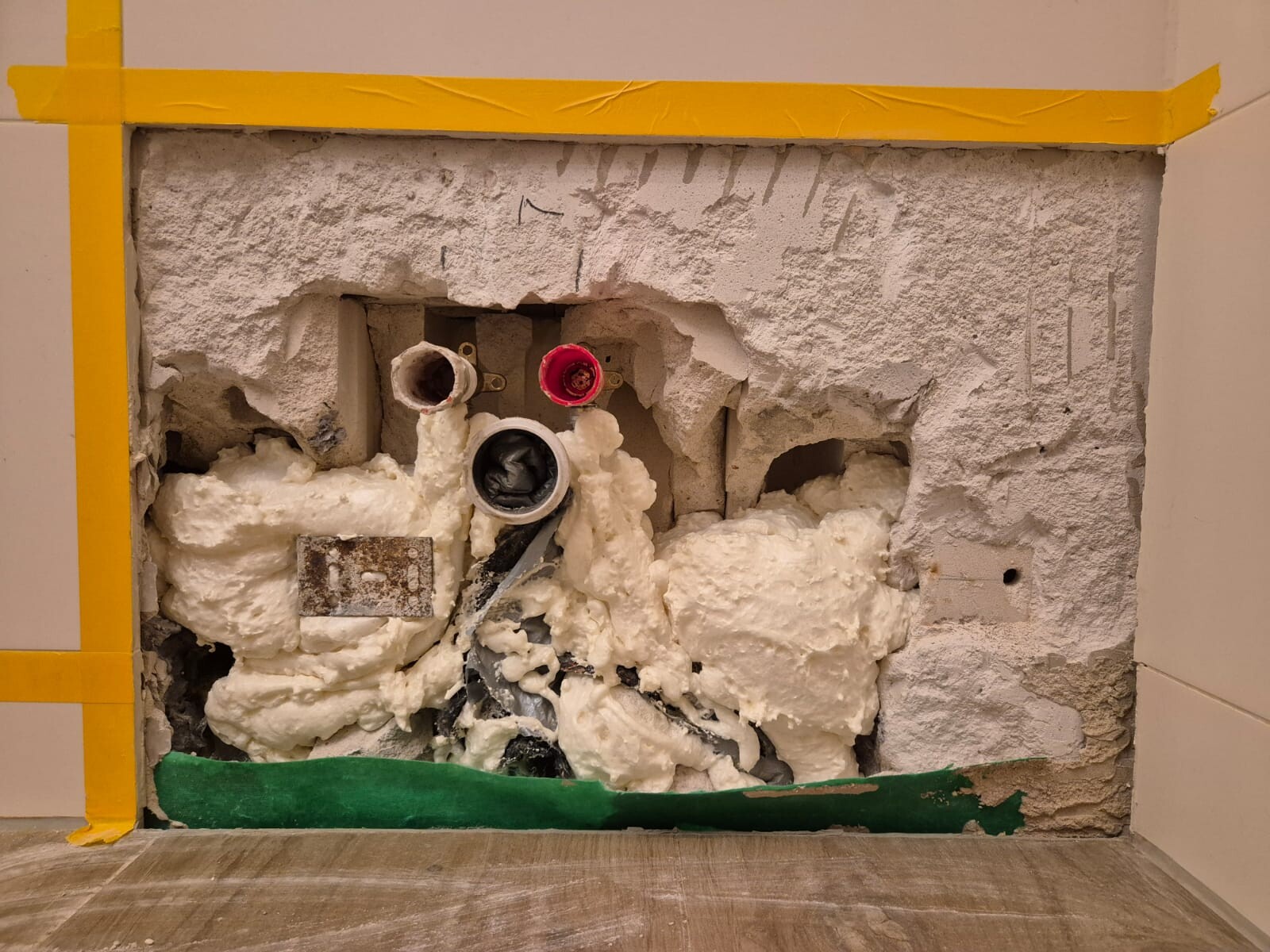
The situation left by the HSK installer is shown in the picture; he removed a lot of material, leaving only a small amount of calcium silicate brick and a lot of foam.
The tiler said he has encountered similar situations more often in renovations of older buildings. He applies plenty of tile adhesive, lets it set, and then tiles over it.
We find this questionable because the bidet’s bolts are barely anchored in the calcium silicate brick, and the tile that the bidet is mounted on is glued onto a substrate of 4 cm (1.5 inches) tile adhesive and 10 cm (4 inches) construction foam.
For a stable substrate for tiling, I would like to reduce the construction foam and let the wall "regenerate." Without much knowledge of masonry and concrete, I am thinking of small reinforcing rods—like bolts or threaded rods—inserted into the existing calcium silicate brick above and to the side, possibly some form of formwork (or cutting the existing foam to act as formwork or adding some additional formwork by foaming) and then concreting it.
Is this sensible/feasible? If yes, what type of concrete/mortar could I use for this? Or are there better ways to rebuild a wall that is non-elastic? At what thickness, for example, would a small Wedi board be stable enough?
Ok, I solved it. I removed as much expanding foam as possible on both sides, drilled holes into the sand-lime bricks, cut two stainless steel threaded rods with a diameter of 8mm (0.3 inches) into pieces, and anchored them in the drilled holes using quick-setting cement. Then, I built a kind of small-scale reinforced concrete around the threaded rods with a very cement-rich mortar and applied a layer of cement mortar on top.
I removed the remaining gypsum plaster and glued a Wediplate onto the resulting surface.
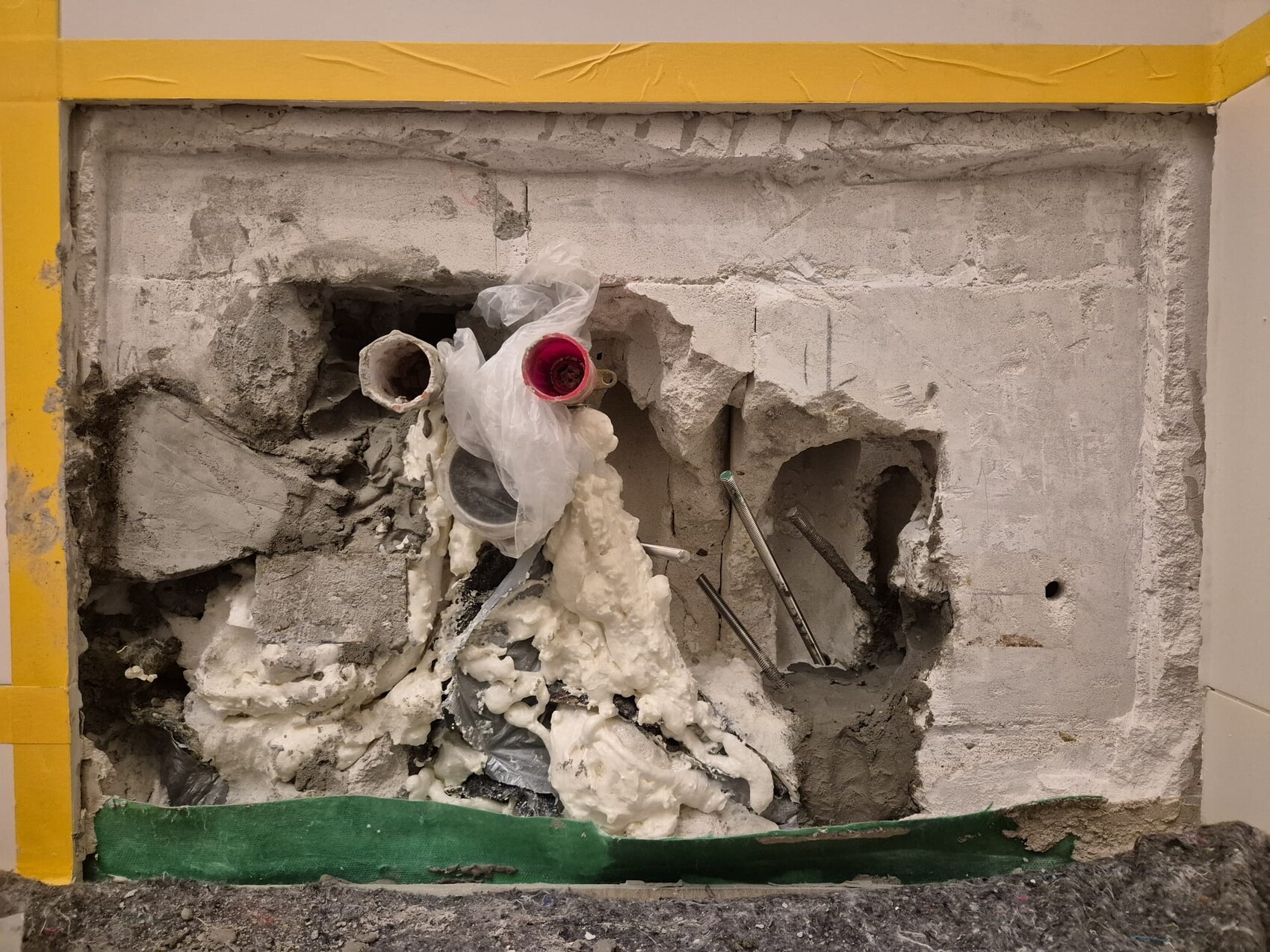
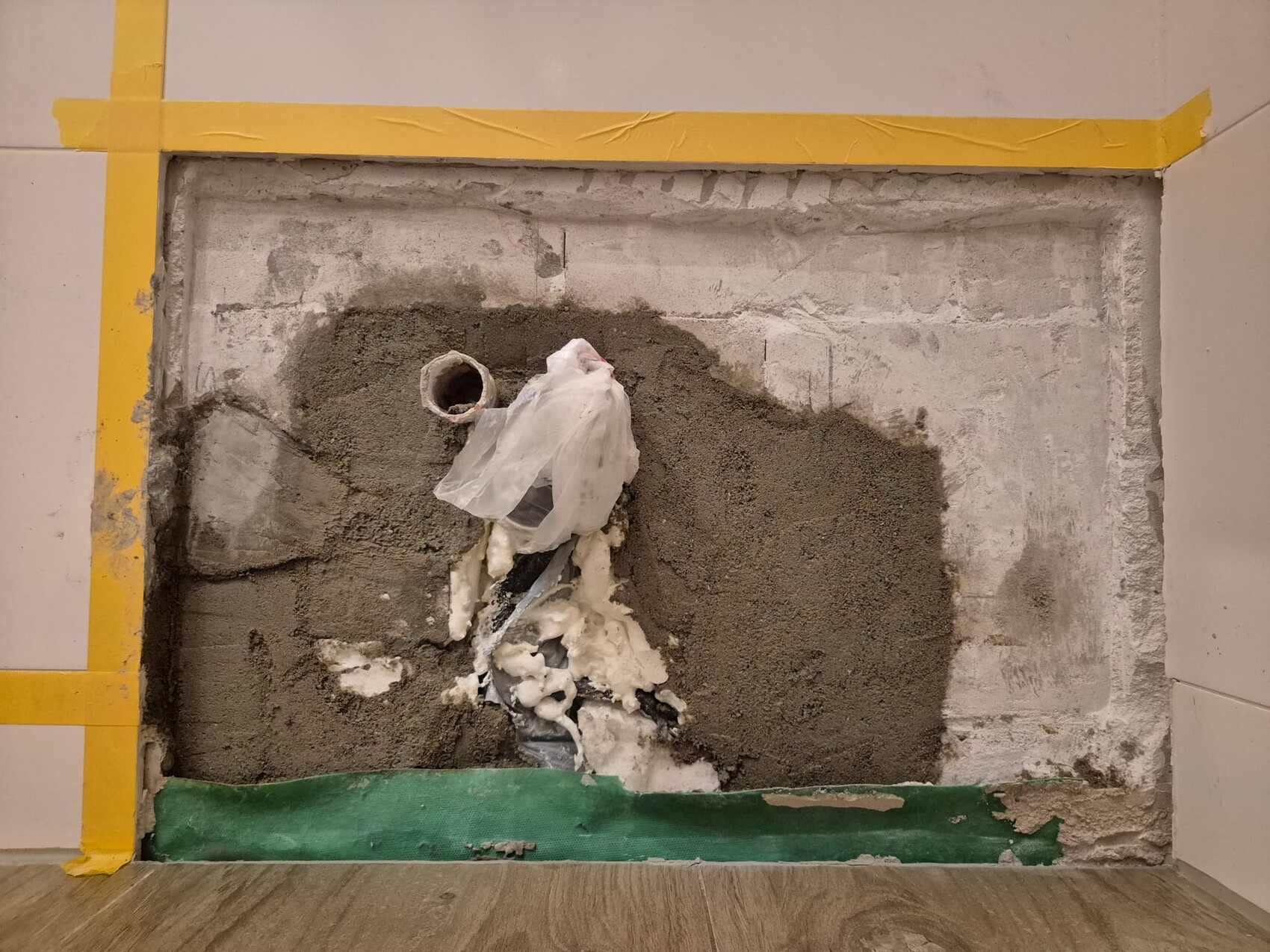
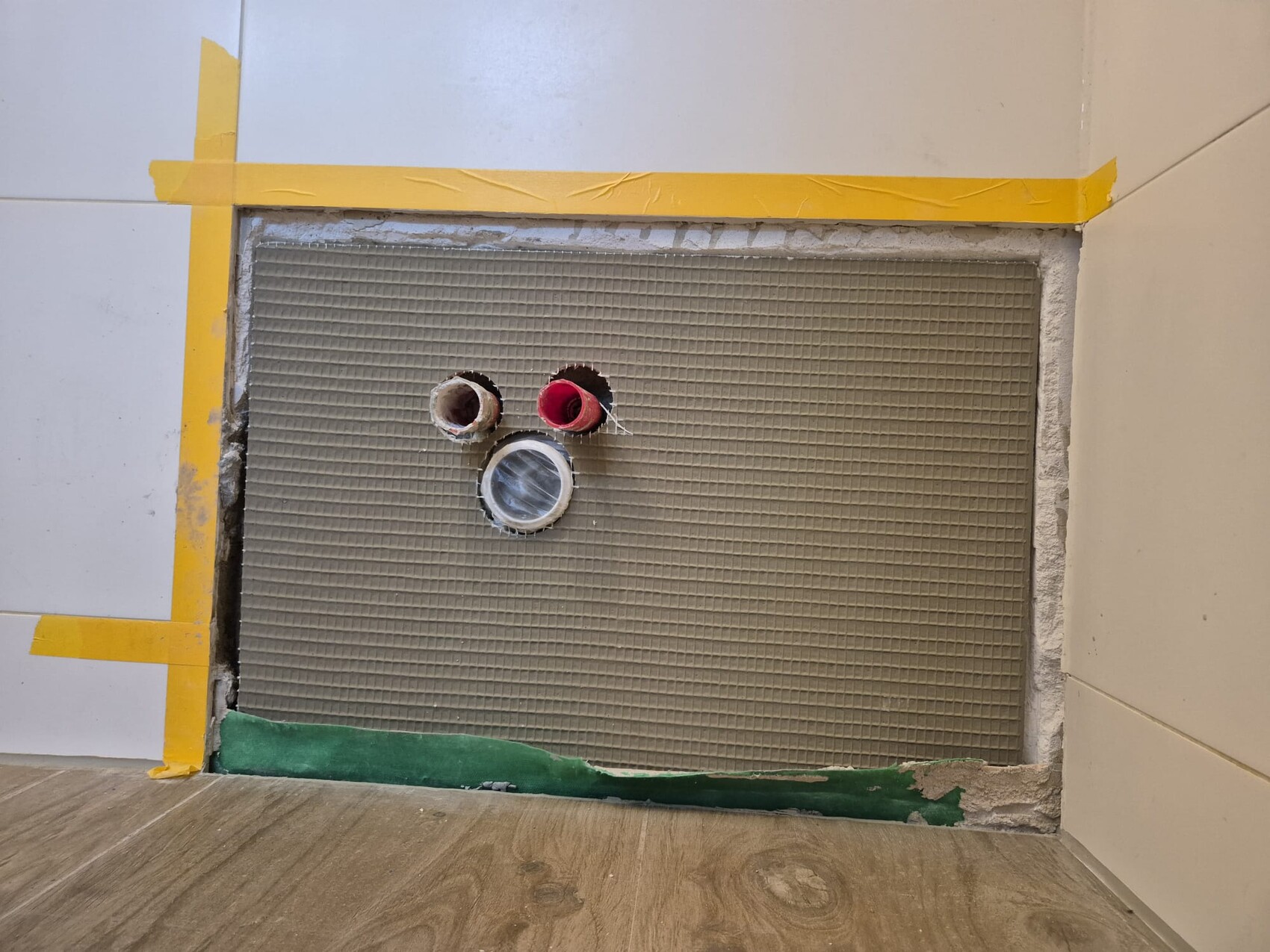
I removed the remaining gypsum plaster and glued a Wediplate onto the resulting surface.
Tim1979 schrieb:
… reinforced concrete for the common man …Very nice, that made me laugh!Similar topics