
Hello everyone,
our sliding door feels a bit stiff. Of course, it’s necessary to clean the sliding system from time to time, which is planned for next week. Have you found an ideal product to lubricate or spray the sliding door tracks?
Many oils or greases tend to become sticky or gummy. I was thinking of products like Caramba, WD-40, or something similar. Do you have any recommendations?
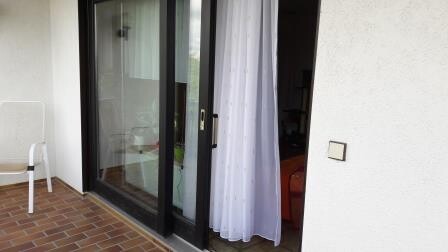
our sliding door feels a bit stiff. Of course, it’s necessary to clean the sliding system from time to time, which is planned for next week. Have you found an ideal product to lubricate or spray the sliding door tracks?
Many oils or greases tend to become sticky or gummy. I was thinking of products like Caramba, WD-40, or something similar. Do you have any recommendations?
WD40 – Does Many Things, But None Very Well
We currently have a lift-and-slide door that needs maintenance. I’ve already tried WD40, but its lubricating effect only lasts temporarily. I’m still looking for a better solution. WD40 also fails after a short time on squeaky interior doors.
I have been recommended Teflon spray. However, with these suggestions, you have to be careful that it’s not essentially just the same as WD40. The mention of PTFE spray fits with this, because as far as I know, that would be a WD40, Caramba, or similar product.
We currently have a lift-and-slide door that needs maintenance. I’ve already tried WD40, but its lubricating effect only lasts temporarily. I’m still looking for a better solution. WD40 also fails after a short time on squeaky interior doors.
I have been recommended Teflon spray. However, with these suggestions, you have to be careful that it’s not essentially just the same as WD40. The mention of PTFE spray fits with this, because as far as I know, that would be a WD40, Caramba, or similar product.
Sure, WD40 can do something wonderful. It’s great for removing WD40 stains.
Well, it also cleans old grease pretty well since it’s basically just petroleum with some solvents. That’s why its (lasting) lubricating effect is unfortunately almost zero...
MOS² and graphite are a huge mess because they are black. I wouldn’t use them in living spaces.
What I would recommend here is:
Interflon Fin Super
It’s a bit expensive, but worth every cent. Thanks to the Teflon content, it also provides very long-lasting lubrication while still having all the advantages of a good penetrating oil. Right now, there is little on the market that matches its quality.
Best regards from mechanical engineering
P.S. If you ever need a similarly good spray grease, you should check out Interflon Fin Grease. After application, it is thicker and doesn’t run off easily, but of course it also penetrates less. So, it’s more intended for lubricating disassembled or very accessible bearings. By the way, this grease is also approved for incidental food contact.
Well, it also cleans old grease pretty well since it’s basically just petroleum with some solvents. That’s why its (lasting) lubricating effect is unfortunately almost zero...
MOS² and graphite are a huge mess because they are black. I wouldn’t use them in living spaces.
What I would recommend here is:
Interflon Fin Super
It’s a bit expensive, but worth every cent. Thanks to the Teflon content, it also provides very long-lasting lubrication while still having all the advantages of a good penetrating oil. Right now, there is little on the market that matches its quality.
Best regards from mechanical engineering
P.S. If you ever need a similarly good spray grease, you should check out Interflon Fin Grease. After application, it is thicker and doesn’t run off easily, but of course it also penetrates less. So, it’s more intended for lubricating disassembled or very accessible bearings. By the way, this grease is also approved for incidental food contact.
(The thread is quite old, but I was just directed here by my search engine. It still seems to be read.)
So: Clean the aluminum tracks thoroughly with 80-grit sandpaper ... actually, you should not do that, but rather use an old wool sock and soapy water, possibly with a piece of plastic that has a sharp edge. This significantly improved the movement of my 40-year-old lift-and-slide door. Old lubricant deposits had hardened into a bumpy ridge. Now, only a very thin layer (!) of aluminum maintenance wax (or car hard wax, of course polished afterward) is applied to the running edge for the rollers.
Additionally, the end grain of the vertical frame section was scraping in places on the aluminum track. This was clearly visible from the sanding marks. Over a spot without sanding marks, where there was air under the end grain, I could still use the 80-grit sandpaper profitably. A reduction of just under one millimeter (0.04 inches) was enough.
I am satisfied with the result, hope it works well for you too, and thank the other forum members for sharing their experiences so I didn’t have to figure it all out myself.
So: Clean the aluminum tracks thoroughly with 80-grit sandpaper ... actually, you should not do that, but rather use an old wool sock and soapy water, possibly with a piece of plastic that has a sharp edge. This significantly improved the movement of my 40-year-old lift-and-slide door. Old lubricant deposits had hardened into a bumpy ridge. Now, only a very thin layer (!) of aluminum maintenance wax (or car hard wax, of course polished afterward) is applied to the running edge for the rollers.
Additionally, the end grain of the vertical frame section was scraping in places on the aluminum track. This was clearly visible from the sanding marks. Over a spot without sanding marks, where there was air under the end grain, I could still use the 80-grit sandpaper profitably. A reduction of just under one millimeter (0.04 inches) was enough.
I am satisfied with the result, hope it works well for you too, and thank the other forum members for sharing their experiences so I didn’t have to figure it all out myself.