
Hello community,
I need your help. I want to make my cold attic floor accessible so I can store some items like Christmas decorations, old school supplies from the kids, and similar things.
A suitable retractable attic ladder is already installed. Otherwise, the ceiling structure is as follows (from the living space upward):
Plasterboard -> counter battens -> vapor barrier -> ceiling joists with insulation in between.
I now want to cover the whole thing with 25mm (1 inch) tongue-and-groove boards. I have already had these boards stored in the attic since September.
The ceiling joists are about 8cm (3 inches) wide and spaced about 60cm (24 inches) apart.
Since I cannot screw the tongue-and-groove boards directly onto the joists to ensure proper ventilation behind them, I will need a substructure made of battens. What do I need to consider for this?
- What thickness should the battens have?
- Is one layer of battens enough, or is it better to use two layers to improve air circulation?
- What spacing should the battens have?
- What clearance should be left at the edges near the gable wall and the wall plate to ensure air circulation?
- Should I treat the tongue-and-groove boards for protection? If yes, with what?
- Should I also treat the rest of the timber structure in the cold attic? If yes, with what?
- What else should I keep in mind?
I look forward to your tips, suggestions, and feedback.
Best regards, Lars
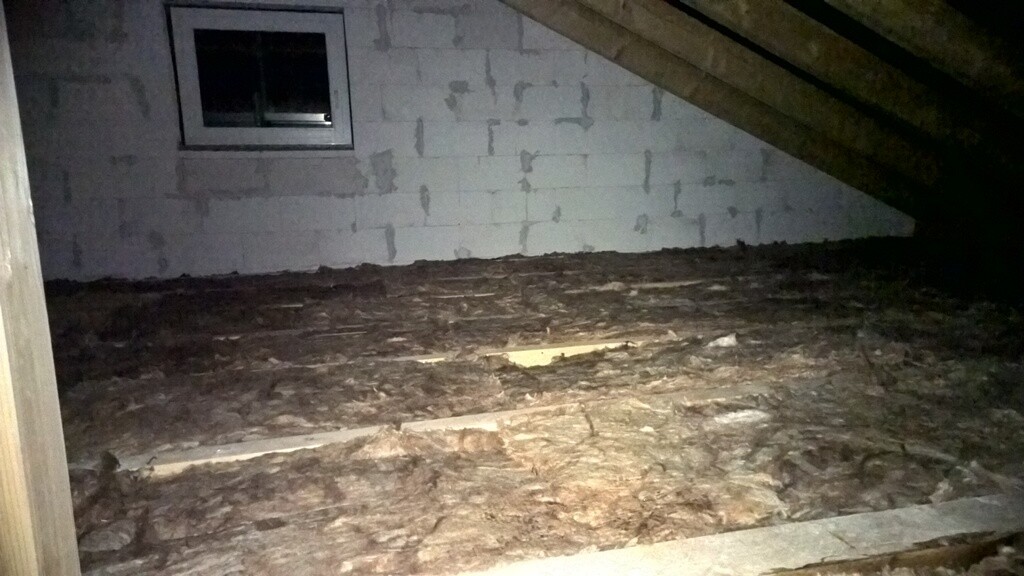
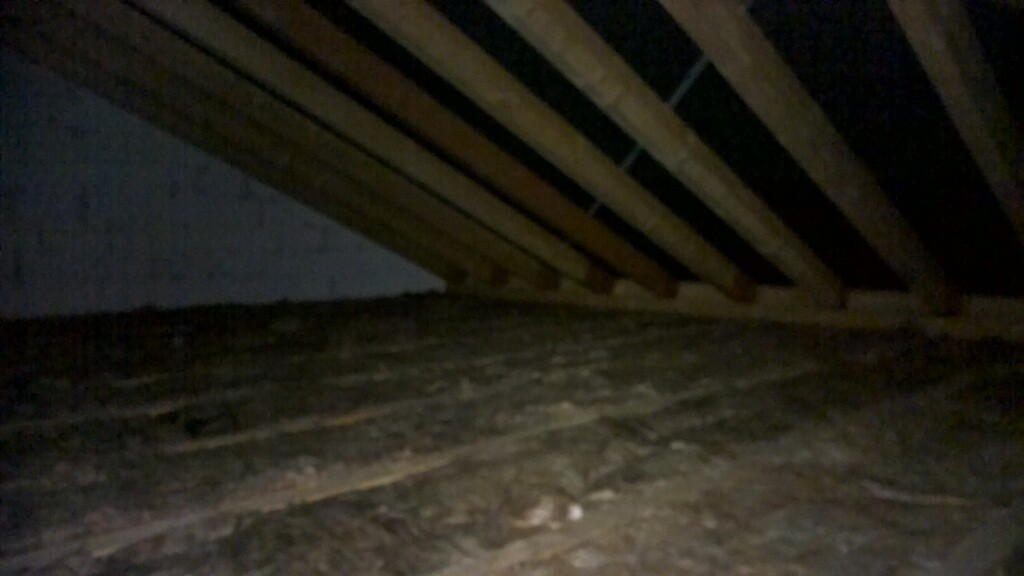
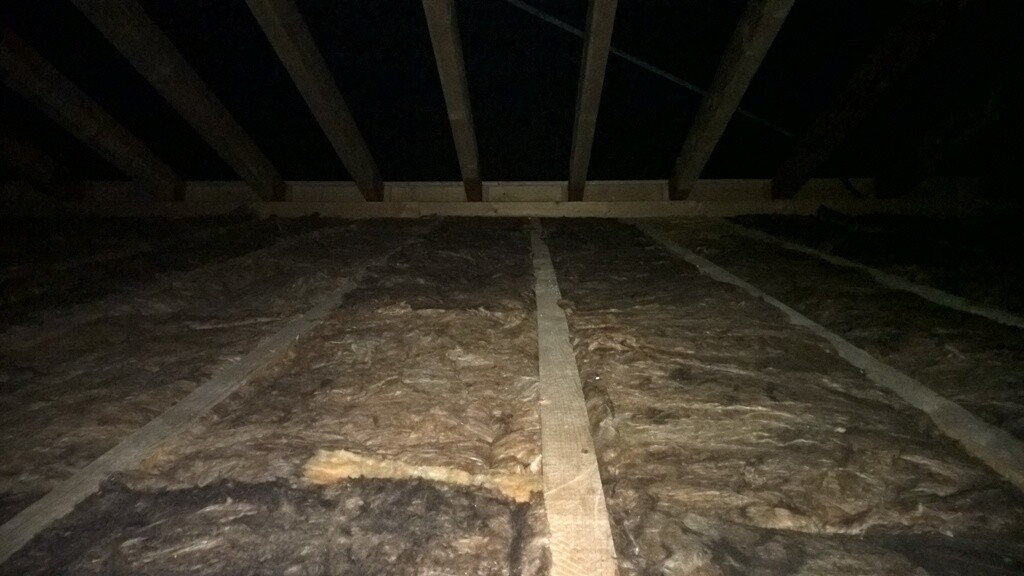
I need your help. I want to make my cold attic floor accessible so I can store some items like Christmas decorations, old school supplies from the kids, and similar things.
A suitable retractable attic ladder is already installed. Otherwise, the ceiling structure is as follows (from the living space upward):
Plasterboard -> counter battens -> vapor barrier -> ceiling joists with insulation in between.
I now want to cover the whole thing with 25mm (1 inch) tongue-and-groove boards. I have already had these boards stored in the attic since September.
The ceiling joists are about 8cm (3 inches) wide and spaced about 60cm (24 inches) apart.
Since I cannot screw the tongue-and-groove boards directly onto the joists to ensure proper ventilation behind them, I will need a substructure made of battens. What do I need to consider for this?
- What thickness should the battens have?
- Is one layer of battens enough, or is it better to use two layers to improve air circulation?
- What spacing should the battens have?
- What clearance should be left at the edges near the gable wall and the wall plate to ensure air circulation?
- Should I treat the tongue-and-groove boards for protection? If yes, with what?
- Should I also treat the rest of the timber structure in the cold attic? If yes, with what?
- What else should I keep in mind?
I look forward to your tips, suggestions, and feedback.
Best regards, Lars
DragonyxXL schrieb:
My understanding was that rough-sawn tongue-and-groove boards are more vapor-permeable compared to OSB panels, allowing moisture to pass through the wood.I would like to ask: What kind of moisture are you referring to? From where to where would it move?
Our new build also has an uninsulated roof with an insulated ceiling between floors. Some gaps allow air to flow through up there, preventing moisture buildup. Since it is a precast concrete slab ceiling, I hope that nothing from the floor below penetrates upwards. Best regards, Steffi.
As far as I know, this is often standard practice, especially with all the city villas. The cold roof is sufficiently ventilated through a few gaps. For the top floor ceiling, it makes sense to use tongue and groove boards. Any moisture from the living area passes through the insulation and is released through the joints of the tongue and groove boards into the air in the cold roof. This moisture escapes through the gaps.
B
Bieber08154 Mar 2017 09:09Joedreck schrieb:
Any moisture from the living floor passes through the insulation Normally, there is a vapor barrier installed to ensure that the heated living space is sealed airtight and vapor-tight.
My understanding is as follows:
Above the insulation in the cold roof space, there is ambient air, which is warm and humid in summer. When the weather changes or between day and night, this air cools down. If the air layer above the insulation is essentially trapped and poorly ventilated, excess moisture condenses and wets the insulation and other building components*. Therefore, it is advisable to provide good ventilation in the roof space. Either the insulation is left exposed, or if the goal is to make it walkable, the construction should be designed to allow good airflow. This effectively rules out very dense building materials to some extent. (In my opinion, having sufficient clearance from the insulation and an adequately wide free edge strip are more important than the choice between tongue-and-groove boards or OSB.)
* For the same reason, desiccants are included in various packaging for professionals or overseas shipping. Everyone has probably seen those small packets.
K
Knallkörper4 Mar 2017 23:42Bieber0815 schrieb:
In my opinion, sufficient distance from the insulation and a sufficiently wide free edge strip are more important than the choice between tongue-and-groove boards or OSB.I strongly disagree with that. The "ventilation gap" ultimately has no effect because it lacks any driving force. OSB boards act like a vapor barrier. In our garage, there is a corner where the flat roof (OSB board) is not properly ventilated from underneath. There, moisture from plaster and screed remained for so long that mold started to develop. Our house roof is fully boarded with tongue-and-groove boards, and it always stays dry. One Christmas, some water accumulated there because the floor hatch was left open—but the water dried quickly.
B
Bieber08155 Mar 2017 09:16Knallkörper schrieb:
Our house roof has a solid boarding made of tongue-and-groove boards, which is always dry. How do you know that? Can you see behind it?
K
Knallkörper5 Mar 2017 09:36I am referring to the visible side. For this, I compared it to the visible side of the OSB board. OSB is as dense as a membrane, so nothing diffuses through it; the only solution is to ensure air movement, which you cannot achieve under the attic. Building damage is then inevitable, in my humble opinion.
Similar topics